

Recent research highlights a decline in reading for enjoyment, with significant portions of the population, especially younger individuals, engaging less frequently in reading activities.
The study investigates the brain structures associated with reading skills, identifying specific differences in the anatomy of good readers’ brains.
Brain Structure in Readers
Fewer people are reading for pleasure these days. According to research by The Reading Agency, 50% of UK adults say they don’t read regularly, up from 42% in 2015. Among young people aged 16-24, nearly one in four report never having been regular readers.
What does this mean for our brains? Could shifting from text to video impact how our brains function—or even shape human evolution? And what makes the brains of skilled readers different? My new study, published in Neuroimage, explored these questions.
By analyzing open-source data from more than 1,000 participants, I found that people with different reading abilities also had distinct brain structures.
Specifically, two key regions in the brain’s left hemisphere, essential for language processing, showed unique characteristics in proficient readers.
Anatomical Differences in Good Readers
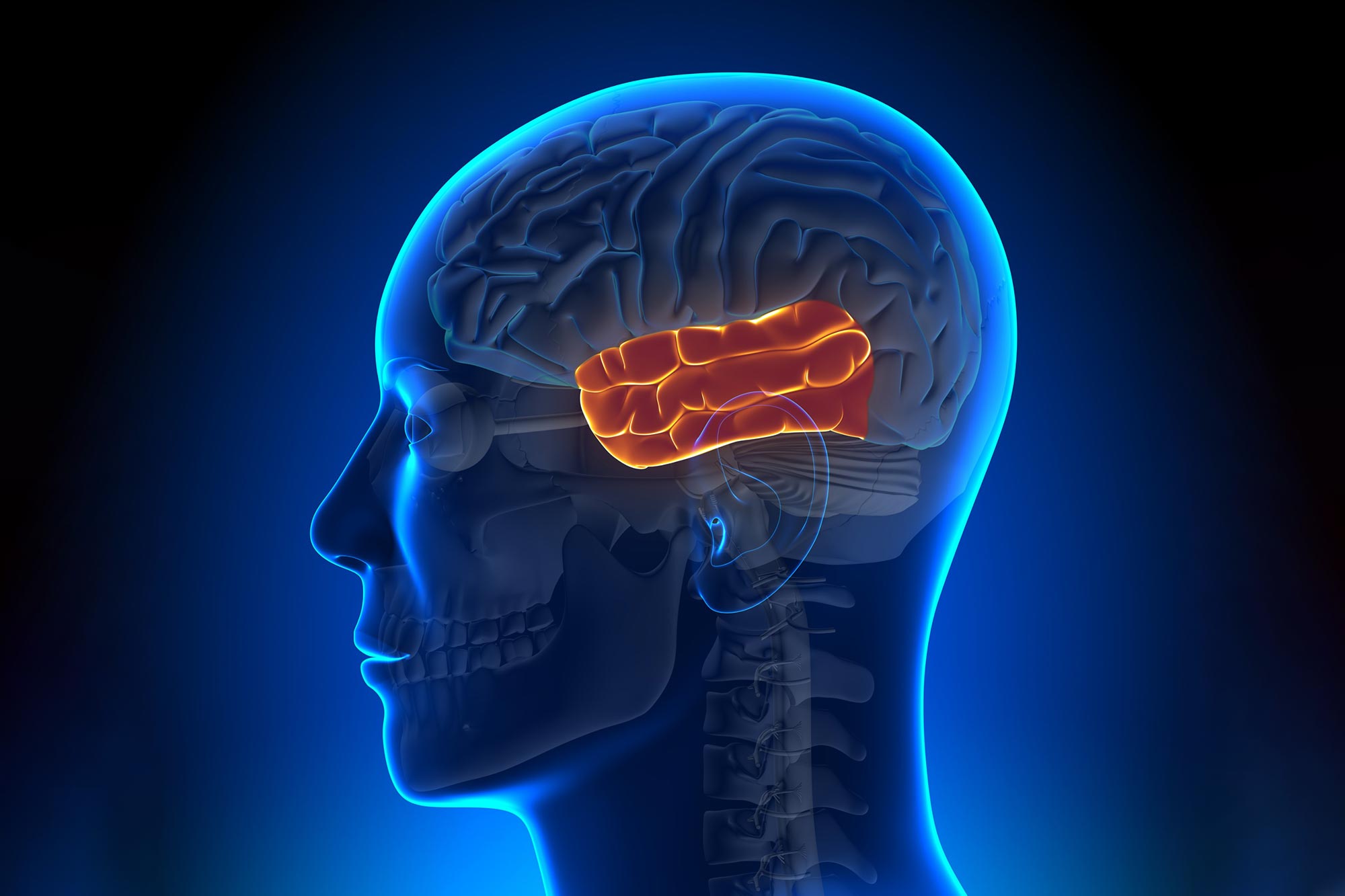
One was the anterior part of the temporal lobe. The left temporal pole helps associate and categorize different types of meaningful information. To assemble the meaning of a word such as leg, this brain region associates the visual, sensory, and motor information conveying how legs look, feel, and move.
The other was Heschl’s gyrus, a fold on the upper temporal lobe which hosts the auditory cortex (the cortex is the outermost layer of the brain). Better reading ability was linked to a larger anterior part of the temporal lobe in the left hemisphere compared to the right. It makes sense that having a larger brain area dedicated to meaning makes it easier to understand words and, therefore, to read.
What might seem less intuitive is that the auditory cortex would be related to reading. Isn’t reading mainly a visual skill? Not only. To pair letters with speech sounds, we first need to be aware of the sounds of the language. This phonological awareness is a well-established precursor to children’s reading development.
A thinner left Heschl’s gyrus has previously been related to dyslexia, which involves severe reading difficulties. My research shows that this variation in cortical thickness does not draw a simple dividing line between people with or without dyslexia. Instead, it spans the larger population, in which a thicker auditory cortex correlates with more adept reading.
Impact of Cortical Thickness on Reading Ability
Is thicker always better? When it comes to cortical structure, no, not necessarily. We know the auditory cortex has more myelin in the left hemisphere of most people. Myelin is a fatty substance that acts as an insulator for nerve fibers. It increases neural communication speed and can also insulate columns of brain cells from each other. Neural columns are believed to function as small processing units.
Their increased isolation and rapid communication in the left hemisphere can be thought to enable the fast, categorical processing necessary for language. We need to know if a speaker uses the category d or t when saying dear or tear rather than detecting the exact point where the vocal folds start vibrating.
According to the “balloon model” of cortical growth, the larger amount of myelin squeezes out left-hemispheric cortical areas, making them flatter but more extended. So while the left auditory cortex may be thicker in good readers, it is still thinner (but much more extended) than the corresponding right cortex.
This hypothesis was corroborated in the recent research. The left hemisphere had generally larger but thinner cortical areas with a higher degree of myelin.
So is thinner better, then? Again, the answer is no, not necessarily. Complex abilities that require integrating information tend to benefit from a thicker cortex. The anterior temporal lobe with its complex way of integrating information is indeed the thickest structure of all cortical areas. An underlying mechanism might be the existence of more overlapping, interacting neurons that process information more holistically.
Phonology is a highly complex skill, where different sound and motor features are integrated into speech sounds. It appears to correlate with a thicker cortex in an area near the left Heschl’s gyrus. While it is unclear to what extent phonology is processed in Heschl’s gyrus, the fact that phoneticians often have multiple left Heschl’s gyri suggests it is linked to speech sounds.
The Plasticity of the Brain and Future Implications
Clearly, brain structure can tell us a lot about reading skills. Importantly, though, the brain is malleable — it changes when we learn a new skill or practice an already acquired one.
For instance, young adults who studied language intensively increased their cortical thickness in language areas. Similarly, reading is likely to shape the structure of the left Heschl’s gyrus and temporal pole. So, if you want to keep your Heschl’s thick and thriving, pick up a good book and start reading.
Finally, it’s worth considering what might happen to us as a species if skills like reading become less prioritized. Our capacity to interpret the world around us and understand the minds of others would surely diminish. In other words, that cosy moment with a book in your armchair isn’t just personal – it’s a service to humanity.
Written by Mikael Roll, Professor of Phonetics, Lund University.
Adapted from an article originally published in The Conversation.
Never miss a breakthrough: Join the SciTechDaily newsletter.
Follow us on Google and Google News.
5 Comments
Great article but the link back to the original article only takes us to the landing page for the Conversation, NOT the actual article!
If I were interviewing people for a job, I would ask how many books they read in the last year and what are their names. Then I would choose one and ask them to tell me about the book.
If they answered that they did not read any books in the last year and/or could not convincedly discuss any of the books they read, then they fail the interview. Thanks for coming…
btw: A good way to organize your thoughts about books you read is write and post a review at a place like Goodreads. This site also provides a record of all the books you have ever read, as long as you add the books when you have finished them.
Maybe if I was looking for a job as a librarian.
And here is me in my dotage thinking that “reading” is an “activity” even though I sit down, fairly inactive, whilst doing so whilst doing a “reading activity”. Must ‘a gone to the wrong skool.
Don’t you see all the people walking about reading stuff on their cell phones?