
A new article reflects on how two generations of scientists reshaped thinking on aging, linking hormonal regulation in the brain to molecular growth pathways.
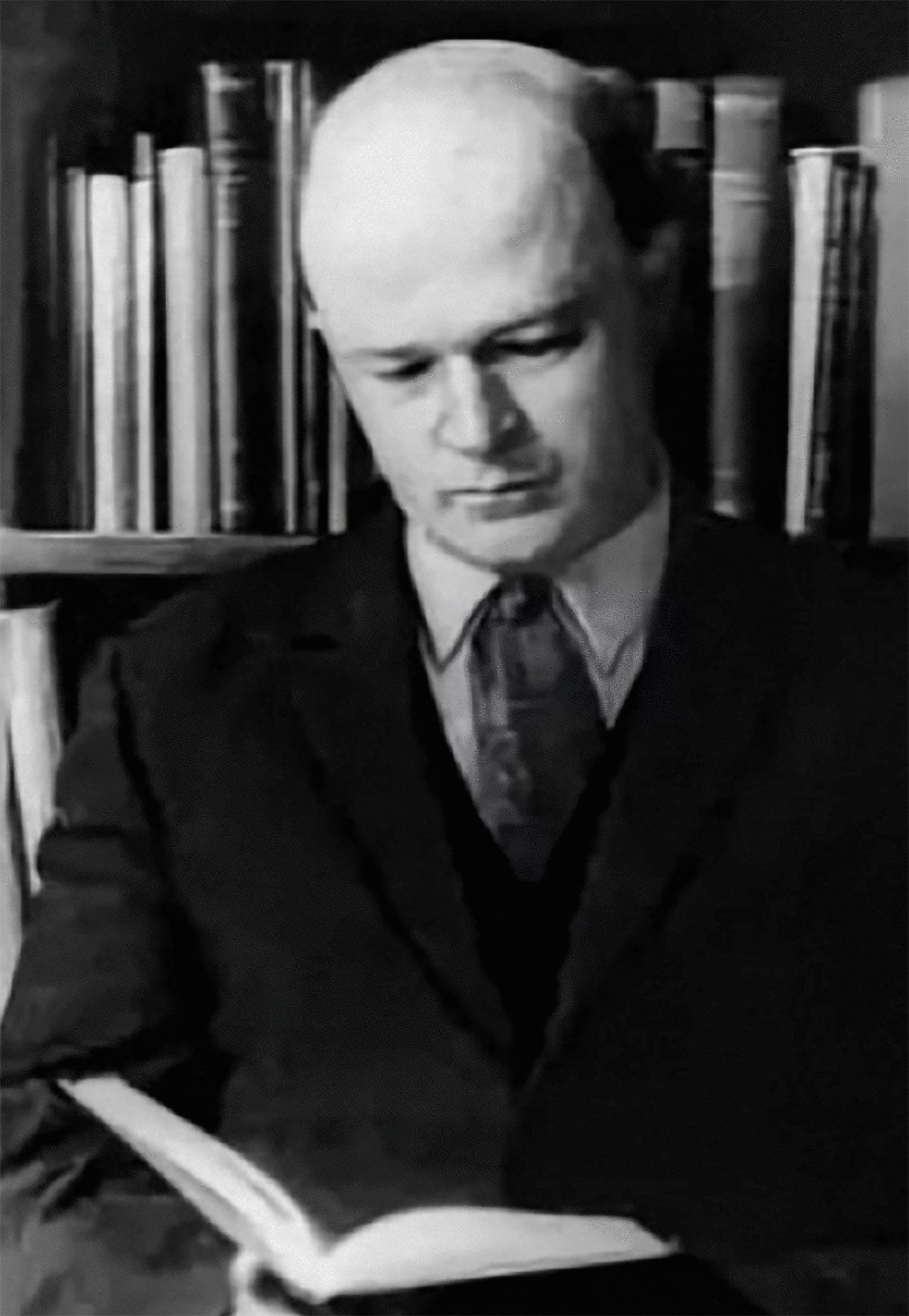
Mikhail Blagosklonny spent his career arguing that aging is not slow decay, but biology stuck in “overdrive.” Only now is it becoming widely appreciated that this idea is deeply rooted in the work of another Russian scientist—his father, Vladimir Dilman.
In a new reflective essay published in the journal Aging, biogerontologist Aleksei G. Golubev, of the N.N. Petrov National Medical Research Center of Oncology, traces how Dilman’s neuroendocrine view of aging anticipated, and helped shape, Blagosklonny’s influential “hyperfunction theory.” Along the way, he makes a broader point: much of what we call “modern” aging research stands on foundations laid by under-cited, often overlooked Soviet-era scientists.
Aging as overactivity, not decline
Conventional views portray aging as progressive breakdown: damage accumulates, functions fail, and systems run down. Dilman and Blagosklonny both flipped that narrative.
Dilman’s “elevation theory” proposed that aging begins when the hypothalamus—a key brain region that coordinates hormones, metabolism, and reproduction—gradually becomes less sensitive to feedback signals. To compensate, the body elevates hormone and metabolite levels. What once supported growth and adaptation eventually pushes the organism into a state of chronic metabolic and hormonal overdrive.
Blagosklonny’s “hyperfunction theory” translated that logic to the molecular scale. He argued that growth-promoting pathways such as mTOR (mechanistic Target of Rapamycin) keep driving cell growth and activity long after development is complete. Aging, in this view, is what happens when growth programs don’t fully switch off: cells and tissues do “too much” of what was once beneficial, leading to hypertension, organ hypertrophy, fibrosis, and cancer.
Golubev’s essay emphasizes the family resemblance between these two frameworks. Dilman framed the hypothalamus as a master regulator whose sensitivity threshold keeps rising. Decades later, Blagosklonny described mTOR as a kind of “molecular hypothalamus,” integrating nutrient, growth, and stress signals and driving age-related pathology when overactive.
Both theories cast aging not as simple loss, but as persistent, amplified function that overshoots its developmental purpose.
Rediscovering neglected foundations of geroscience
Golubev also argues that many themes now central to geroscience, links between metabolic syndrome and cancer, the role of insulin resistance and hyperlipidemia, the idea of “metabolic immunodepression,” and even the use of antidiabetic biguanides like metformin and phenformin as anti-cancer or anti-aging agents, were explored in Dilman’s Soviet-era laboratory long before they became mainstream.
Later discoveries that biguanides and rapamycin act, in part, through mTOR signaling inadvertently closed a conceptual loop that began with Dilman’s hypothalamic elevation theory and culminated in Blagosklonny’s hyperfunction model.
Because much of this work was published in Russian, behind the Iron Curtain and before digital indexing, it remains sparsely cited in today’s literature. Golubev sees this not just as a historical oversight, but as a cautionary tale: when early contributions are forgotten, especially those from non-Western traditions, fields risk repeating old ideas without learning from prior insights or mistakes.
Reference: “On the intergenerational transfer of ideas in aging and cancer research: from the hypothalamus according to V.M. Dilman to the mTOR protein complex according to M.V. Blagosklonny” by Aleksei G. Golubev, 19 November 2025, Aging.
DOI: 10.18632/aging.206338
Never miss a breakthrough: Join the SciTechDaily newsletter.
Follow us on Google and Google News.