
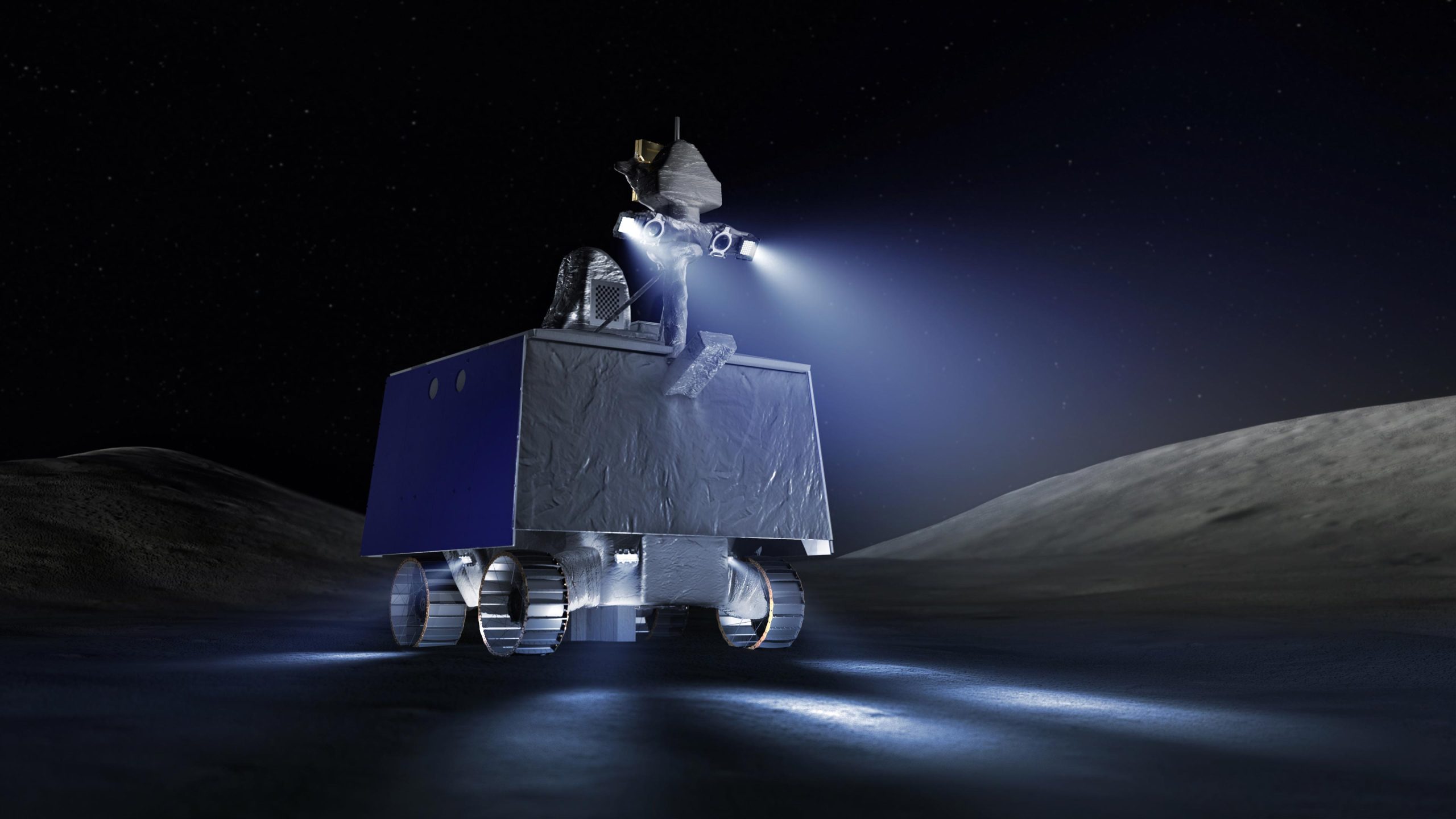
VIPER Rover’s new mast enhances its capability to explore and study the lunar South Pole, featuring advanced navigation tools and communication antennas essential for its 100-day mission.
NASA’s VIPER – short for the Volatiles Investigating Polar Exploration Rover – now stands taller and more capable than ever. And that’s thanks to its mast.
VIPER’s mast, and the suite of instruments affixed to it, looks a lot like the rover’s “neck” and “head.” The mast instruments are designed to help the team of rover drivers and real-time scientists send commands and receive data while the rover navigates around hazardous crater slopes, boulders, and places that risk communications blackouts. The team will use these instruments, along with four science payloads, to scout the lunar South Pole. During its approximately 100-day mission, VIPER seeks to better understand the origin of water and other resources on the Moon, as well as the extreme environment where NASA plans to send astronauts as part of the Artemis campaign.
VIPER’s Navigation and Communication Capabilities
The tip of VIPER’s mast stands approximately eight feet (2.5 meters) above its wheel rims and is equipped with a pair of stereo navigation cameras, a pair of powerful LED headlights, as well as a low- and high-gain antenna to transmit data to and receive data from the Deep Space Network (DSN) antennas on Earth.
The stereo navigation cameras – the “eyes” of the rover – are mounted to a part of the mast that gimbals, allowing the team to pan them as much as 400 degrees around and tilt them up and down as much as 75 degrees. The VIPER team will use the navigation cameras to take sweeping panoramas of the rover’s surroundings and images to detect and further study surface features such as rocks and craters as small as four inches (10 cm) in diameter – or about the length of a pencil – from as far as 50 feet (15 meters) away. And because the navigation cameras are mounted up high, it gives the VIPER team a near human-like perspective as the rover explores areas of scientific interest around the Moon’s South Pole.
Unique Features and Data Transmission
Due to the extremes of light and darkness found on the Moon, VIPER will be the first planetary rover to have headlights. The headlights will cast a narrow, long-distance beam – much like a car’s high beams – to help the team reveal obstacles or interesting terrain features that would otherwise stay hidden in the shadows. Positioned next to the rover’s two navigation cameras, the lights feature arrays of blue LEDs that the rover navigation team determined would provide the best visibility given the challenging lighting conditions on the Moon.
In order to transmit large amounts of data across the 240,000 miles (384,000 km) that separate Earth and the Moon, VIPER has a gimballing precision-pointed, high-gain antenna that will send information along a very focused, narrow beam. Its low-gain antenna also will send data but using radio waves at a much lower data rate. The ability for the antennas to maintain the correct orientation, even while driving, serves a critical function: without it, the rover cannot receive commands while in motion on the Moon and cannot transmit any of its data back to Earth for scientists to achieve their mission goals. All that data is then transferred from the DSN to the Multi-Mission Operations and Control Center at NASA’s Ames Research Center in California’s Silicon Valley, where rover operations are based.
Testing and Mission Preparation
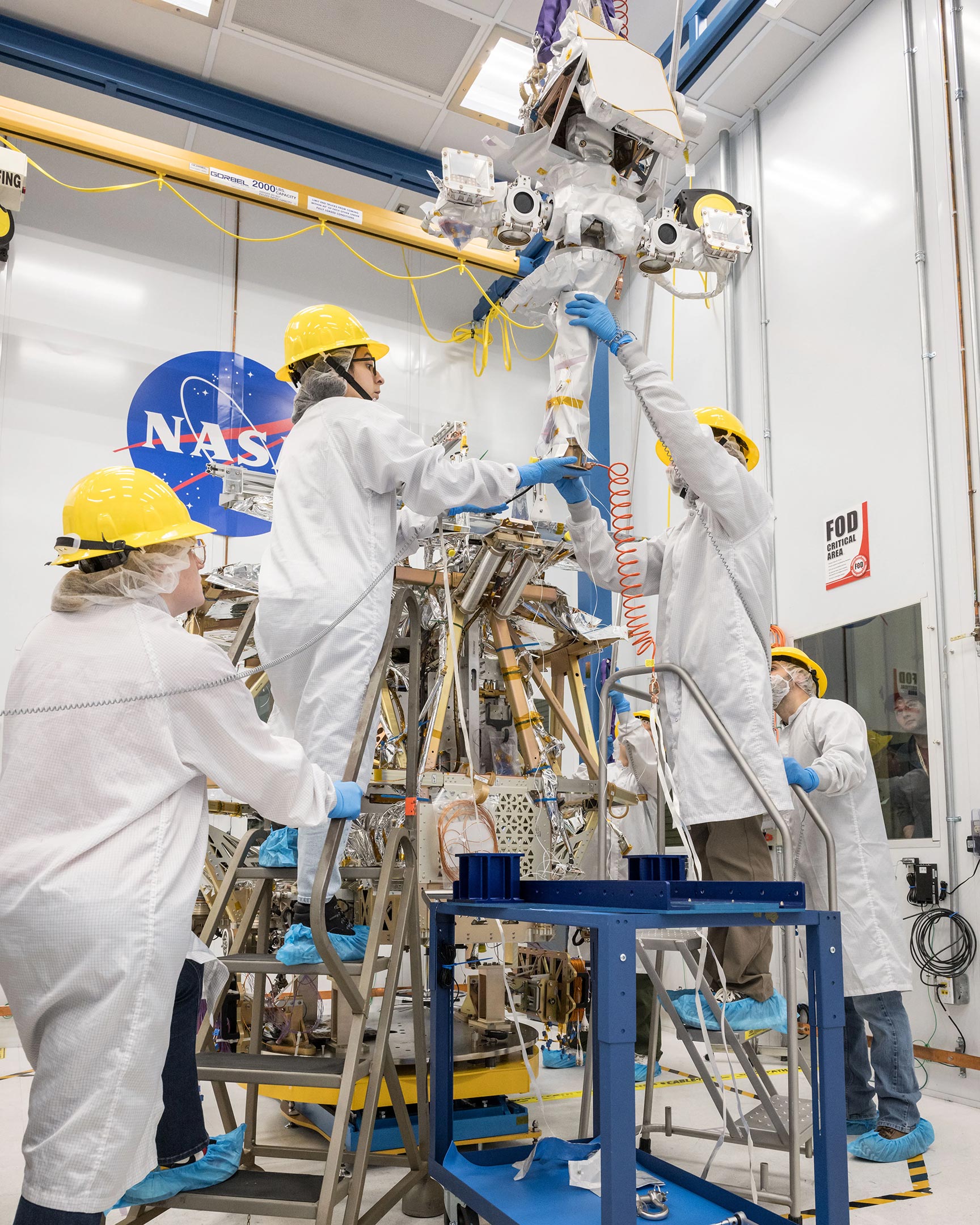
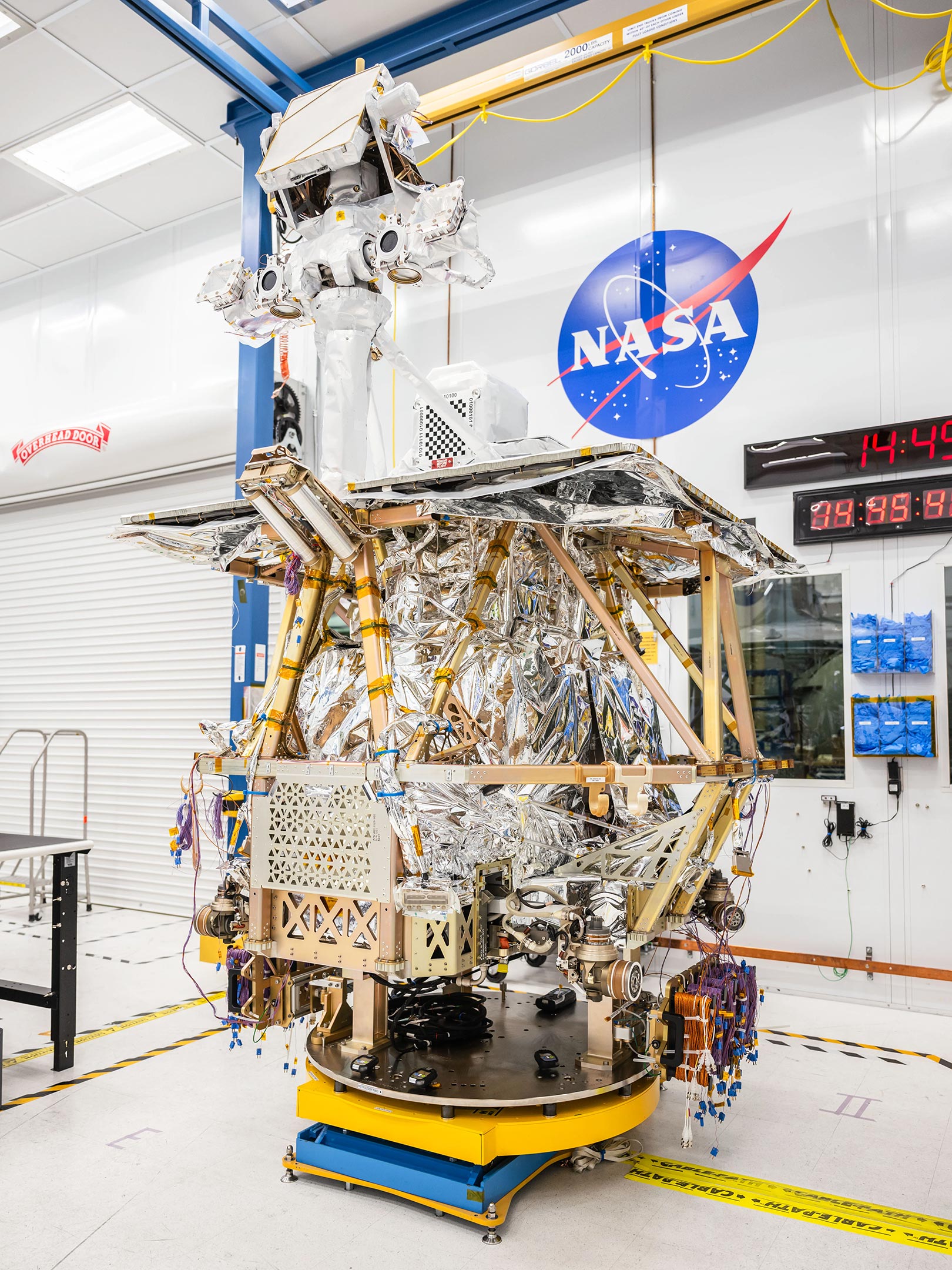
Prior to installation on the rover, engineers put the mast through a variety of testing. This included time in a thermal vacuum chamber to verify the white coating surrounding the mast insulates as intended. After the mast’s integration in the clean room at NASA’s Johnson Space Center in Houston, the team also successfully performed check-outs of its components and for the first time sent data through the rover using its antennas.
VIPER is part of the Lunar Discovery and Exploration Program and is managed by the Planetary Science Division of NASA’s Science Mission Directorate at NASA Headquarters in Washington. VIPER will launch to the Moon aboard Astrobotic’s Griffin lunar lander on a SpaceX Falcon Heavy rocket as part of NASA’s Commercial Lunar Payload Services initiative. It will reach its destination at Mons Mouton near the Moon’s South Pole.
Never miss a breakthrough: Join the SciTechDaily newsletter.
Follow us on Google and Google News.