
Close Menu
    Facebook X (Twitter) Instagram
    SciTechDaily
    • Biology
    • Chemistry
    • Earth
    • Health
    • Physics
    • Science
    • Space
    • Technology
    Facebook X (Twitter) Pinterest YouTube RSS
    SciTechDaily
    Home»Space»Hubble Image of the Week – Different Generations
    Space

    Hubble Image of the Week – Different Generations

    By MATHIAS JÄGER, ESA/HUBBLENovember 20, 2018No Comments2 Mins Read
    Facebook Twitter Pinterest Telegram LinkedIn WhatsApp Email Reddit
    Share
    Facebook Twitter LinkedIn Pinterest Telegram Email Reddit
    NGC 1866
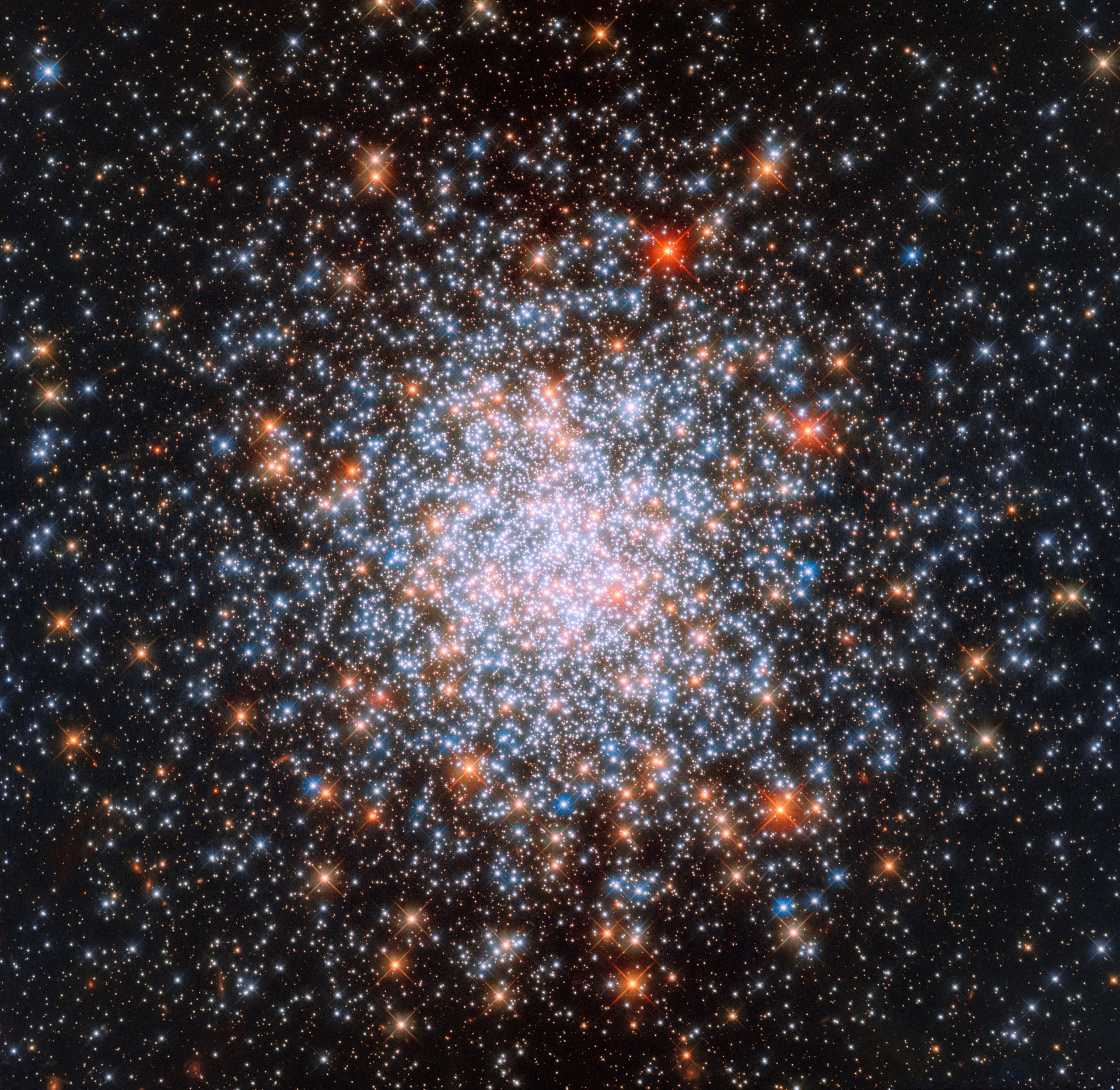
    This star-filled image is star cluster NGC 1866. It is found at the very edges of the Large Magellanic Cloud, a small galaxy located near the Milky Way.  Credit: ESA/Hubble & NASA

    Star clusters are common structures throughout the Universe, each made up of hundreds of thousands of stars all bound together by gravity. This star-filled image, taken with the NASA/ESA Hubble Space Telescope’s Wide Field Camera 3 (WFC3), shows one of them: NGC 1866.

    NGC 1866 is found at the very edges of the Large Magellanic Cloud, a small galaxy located near the Milky Way. The cluster was discovered in 1826 by Scottish astronomer James Dunlop, who cataloged thousands of stars and deep-sky objects during his career.

    However, NGC 1866 is no ordinary cluster. It is a surprisingly young globular cluster situated close enough to us that its stars can be studied individually — no mean feat given the mammoth distances involved in studying the cosmos! There is still debate over how globular clusters form, but observations such as this have revealed that most of their stars are old and have a low metallicity. In astronomy, ‘metals’ are any elements other than hydrogen and helium; since stars form heavier elements within their core as they carry out nuclear fusion throughout their lifetimes, a low metallicity indicates that a star is very old, as the material from which it formed was not enriched with many heavy elements. It’s possible that the stars within globular clusters are so old that they were actually some of the very first to form after the Big Bang.

    In the case of NGC 1866, though, not all stars are the same. Different populations, or generations, of stars are thought to coexist within the cluster. Once the first generation of stars formed, the cluster may have encountered a giant gas cloud that sparked a new wave of star formation and gave rise to a second, younger, generation of stars — explaining why it seems surprisingly youthful.

    Never miss a breakthrough: Join the SciTechDaily newsletter.
    Follow us on Google and Google News.

    Astronomy Hubble Space Telescope
    Share. Facebook Twitter Pinterest LinkedIn Email Reddit

    Related Articles

    A Morphing Spiral Galaxy Amongst Friends

    Hubble Views Magnificent Lopsided Galaxy NGC 2276

    Hubble Captures Fantastic Detail of Eponymous Spiral Galaxy NGC 691

    Spectacular Image Captured by Hubble Shows a Strangely Contorted Spiral Galaxy

    A Distant Spiral in Virgo: Extraordinary Detail Seen in a Galaxy 150 Million Light-Years Away From Earth

    Magnetic Monsters: Hubble Tracks Down Location of Mysterious Radio Signals From Intergalactic Space

    A Menagerie of Galaxies: Hubble Captures a Cluster With Galaxies of All Shapes and Sizes

    How Habitable Are Planets That Orbit Red Dwarfs – The Most Common Type of Stars in the Galaxy?

    Cosmic Silver Lining: Hubble Spots V565 Surrounded by Four Prominent Diffraction Spikes

    Leave A Reply Cancel Reply

    • Facebook
    • Twitter
    • Pinterest
    • YouTube

    Don't Miss a Discovery

    Subscribe for the Latest in Science & Tech!

    Trending News

    This Alien Planet Has Rock Clouds That Vaporize Before Sunset

    The Simple Habit That Could Lower Your Cancer Risk

    146,000-Year-Old Discovery Rewrites the Story of Human Creativity

    The Type of Alcohol You Drink Could Affect How Long You Live

    This Common Vitamin May Help Stop Prediabetes From Turning Into Diabetes

    Scientists Finally Solve the Mystery of “Clockwork” Earthquakes

    Breakthrough Parkinson’s Drug Targets Disease at Its Genetic Roots

    Just 4 Weeks of Simple Diet Changes Reversed Signs of Aging in Older Adults

    Follow SciTechDaily
    • Facebook
    • Twitter
    • YouTube
    • Pinterest
    • Newsletter
    • RSS
    SciTech News
    • Biology News
    • Chemistry News
    • Earth News
    • Health News
    • Physics News
    • Science News
    • Space News
    • Technology News
    Recent Posts
    • Scientists Discover Common Medications May Secretly Alter Your Gut for Years
    • New Vitamin B12-Based Therapy Could Change How Brain Cancer Is Treated
    • This Common Fat Could Be Fueling Type 2 Diabetes, Researchers Warn
    • Scientists Discover Low-Cost Route To Clean Hydrogen Production
    • Scientists Crack Key Mystery Behind High-Temperature Superconductors
    Copyright © 1998 - 2026 SciTechDaily. All Rights Reserved.
    • Science News
    • About
    • Contact
    • Editorial Board
    • Privacy Policy
    • Terms of Use

    Type above and press Enter to search. Press Esc to cancel.