
Close Menu
    Facebook X (Twitter) Instagram
    SciTechDaily
    • Biology
    • Chemistry
    • Earth
    • Health
    • Physics
    • Science
    • Space
    • Technology
    Facebook X (Twitter) Pinterest YouTube RSS
    SciTechDaily
    Home»Space»Hubble Reveals the Secrets of the Quintuplet Cluster
    Space

    Hubble Reveals the Secrets of the Quintuplet Cluster

    By SciTechDailyJuly 13, 2015No Comments3 Mins Read
    Facebook Twitter Pinterest Telegram LinkedIn WhatsApp Email Reddit
    Share
    Facebook Twitter LinkedIn Pinterest Telegram Email Reddit
    Hubble Views the Quintuplet Cluster
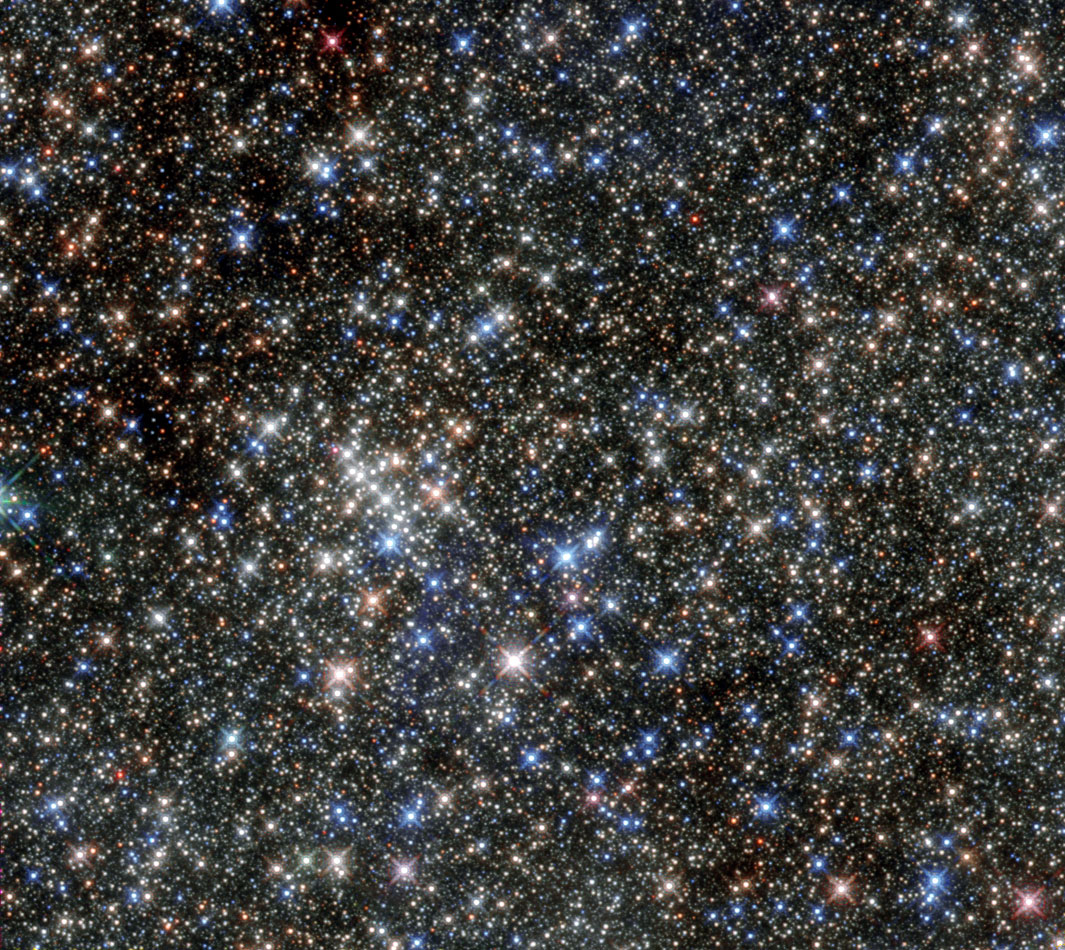
    Quintuplet Cluster is located close to the Arches Cluster and just 100 light-years from the center of our galaxy. Credit: ESA/Hubble & NASA

    This newly released Hubble image shows the Quintuplet Cluster, which is located 100 light-years from the center of our galaxy.

    Although this cluster of stars gained its name due to its five brightest stars, it is home to hundreds more. The huge number of massive young stars in the cluster is clearly captured in this NASA/ESA Hubble Space Telescope image.

    The cluster is located close to the Arches Cluster and is just 100 light-years from the center of our galaxy. The cluster’s proximity to the dust at the center of the galaxy means that much of its visible light is blocked, which helped to keep the cluster unknown until its discovery in 1990, when it was revealed by observations in the infrared. Infrared images of the cluster, like the one shown here, allow us to see through the obscuring dust to the hot stars in the cluster.

    The Quintuplet Cluster hosts two extremely rare luminous blue variable stars: the Pistol Star and the lesser known V4650 Sgr. If you were to draw a line horizontally through the center of this image from left to right, you could see the Pistol Star hovering just above the line about one-third of the way along it. The Pistol Star is one of the most luminous known stars in the Milky Way and takes its name from the shape of the Pistol Nebula that it illuminates, but which is not visible in this infrared image. The exact age and future of the Pistol Star are uncertain, but it is expected to end in a supernova or even a hypernova in one to three million years.

    The cluster also contains a number of red supergiants. These stars are among the largest in the galaxy and are burning their fuel at an incredible speed, meaning they will have a very short lifetime. Their presence suggests an average cluster age of nearly four million years. At the moment these stars are on the verge of exploding as supernovae. During their spectacular deaths, they will release vast amounts of energy which, in turn, will heat the material — dust and gas — between the other stars.

    This observation shows the Quintuplet Cluster in the infrared and demonstrates the leap in Hubble’s performance since its 1999 image of the same object.


    Never miss a breakthrough: Join the SciTechDaily newsletter.
    Follow us on Google and Google News.

    Astronomy Hubble Space Telescope Stars
    Share. Facebook Twitter Pinterest LinkedIn Email Reddit

    Related Articles

    Astronomy & Astrophysics 101: White Dwarf

    Astronomy & Astrophysics 101: Star

    Astronomy & Astrophysics 101: Red Giant

    Cosmic Record Broken: Hubble Finds the Most Distant Star Ever Seen

    Hubble Spots Farthest Star Ever Seen Thanks to Lucky Cosmic Alignment – “We Almost Didn’t Believe It”

    Hubble Find Surprises Astronomers: White Dwarfs Can Still Undergo Stable Thermonuclear Activity

    Bizarre, Metallic Star Spotted Hurtling Out of the Milky Way at 2 Million Miles an Hour

    A Scattering of Stars Shows Us Something New About the Universe and the Hubble Space Telescope

    Hubble Observes Rare Blue Stars in Andromeda’s Core

    Leave A Reply Cancel Reply

    • Facebook
    • Twitter
    • Pinterest
    • YouTube

    Don't Miss a Discovery

    Subscribe for the Latest in Science & Tech!

    Trending News

    Scientists Discover Cheap, Natural Remedy for High Blood Pressure

    Earth’s Upper Atmosphere Is Cooling Fast and Scientists Finally Know Why

    32,000 Olympic Pools of Magma Nearly Erupted Beneath Atlantic Island

    Exercise Changes the Heart in a Way Researchers Never Expected

    Too Much Sleep May Age Your Body Faster, New Study Warns

    Scientists Uncover Promising New Strategy To Stop Parkinson’s in Its Tracks

    Experts Reveal the Surprising Cancer Link Behind a Common Vitamin

    This Strange “Golden Orb” Found 2 Miles Deep Stumped Scientists for Years

    Follow SciTechDaily
    • Facebook
    • Twitter
    • YouTube
    • Pinterest
    • Newsletter
    • RSS
    SciTech News
    • Biology News
    • Chemistry News
    • Earth News
    • Health News
    • Physics News
    • Science News
    • Space News
    • Technology News
    Recent Posts
    • The Type of Alcohol You Drink Could Affect How Long You Live
    • 19-Year Study Reveals the Surprising Truth About Sitting and Dementia
    • This Common Vitamin May Help Stop Prediabetes From Turning Into Diabetes
    • Canada’s Billion-Year-Old Rocks Could Hold the Future of Clean Energy
    • Climate Change Is Quietly Choking Rivers Across the Planet
    Copyright © 1998 - 2026 SciTechDaily. All Rights Reserved.
    • Science News
    • About
    • Contact
    • Editorial Board
    • Privacy Policy
    • Terms of Use

    Type above and press Enter to search. Press Esc to cancel.