
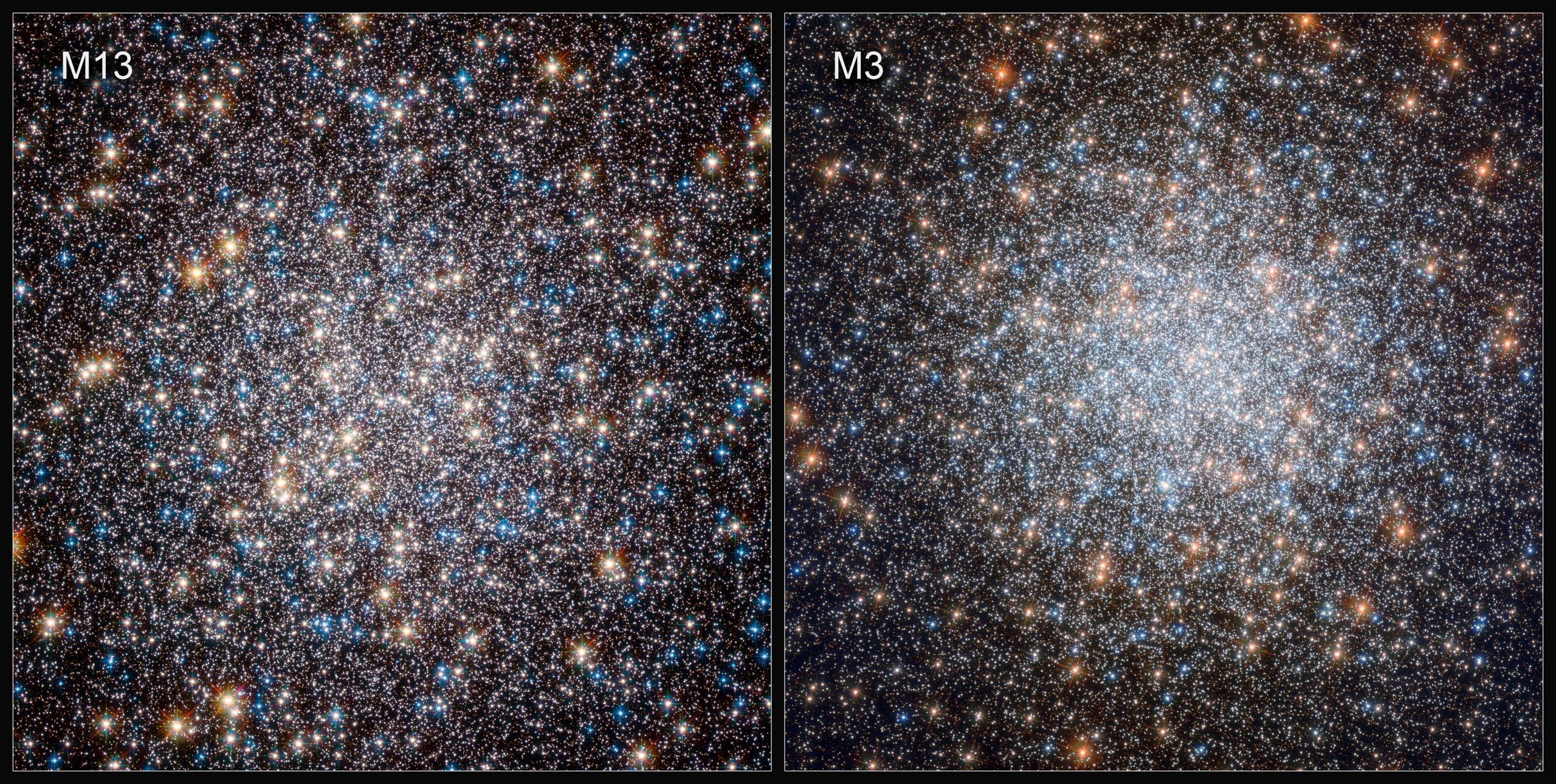
Could dying stars hold the secret to looking younger? New evidence from the NASA/ESA Hubble Space Telescope suggests that white dwarfs could continue to burn hydrogen in the final stages of their lives, causing them to appear more youthful than they actually are. This discovery could have consequences for how astronomers measure the ages of star clusters.
The prevalent view of white dwarfs as inert, slowly cooling stars has been challenged by observations from the NASA/ESA Hubble Space Telescope. An international group of astronomers have discovered the first evidence that white dwarfs can slow down their rate of aging by burning hydrogen on their surface.
“We have found the first observational evidence that white dwarfs can still undergo stable thermonuclear activity,” explained Jianxing Chen of the Alma Mater Studiorum Università di Bologna and the Italian National Institute for Astrophysics, who led this research. “This was quite a surprise, as it is at odds with what is commonly believed.”
White dwarfs are the slowly cooling stars that have cast off their outer layers during the last stages of their lives. They are common objects in the cosmos; roughly 98% of all the stars in the Universe will ultimately end up as white dwarfs, including our own Sun.[1] Studying these cooling stages helps astronomers understand not only white dwarfs, but also their earlier stages as well.
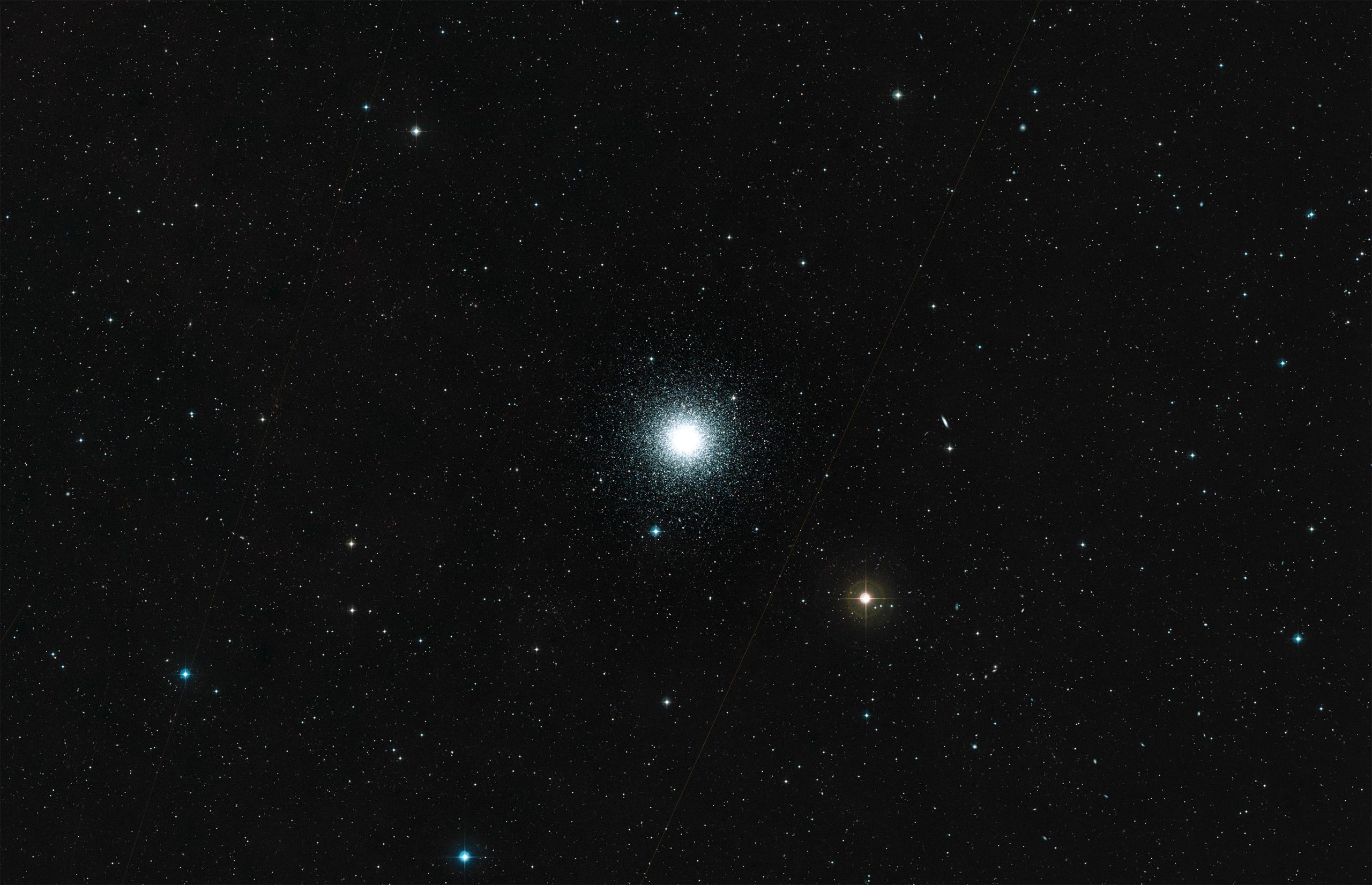
To investigate the physics underpinning white dwarf evolution, astronomers compared cooling white dwarfs in two massive collections of stars: the globular clusters M3 and M13.[2] These two clusters share many physical properties such as age and metallicity[3] but the populations of stars that will eventually give rise to white dwarfs are different. In particular, the overall color of stars at an evolutionary stage known as the Horizontal Branch are bluer in M13, indicating a population of hotter stars. This makes M3 and M13 together a perfect natural laboratory in which to test how different populations of white dwarfs cool.
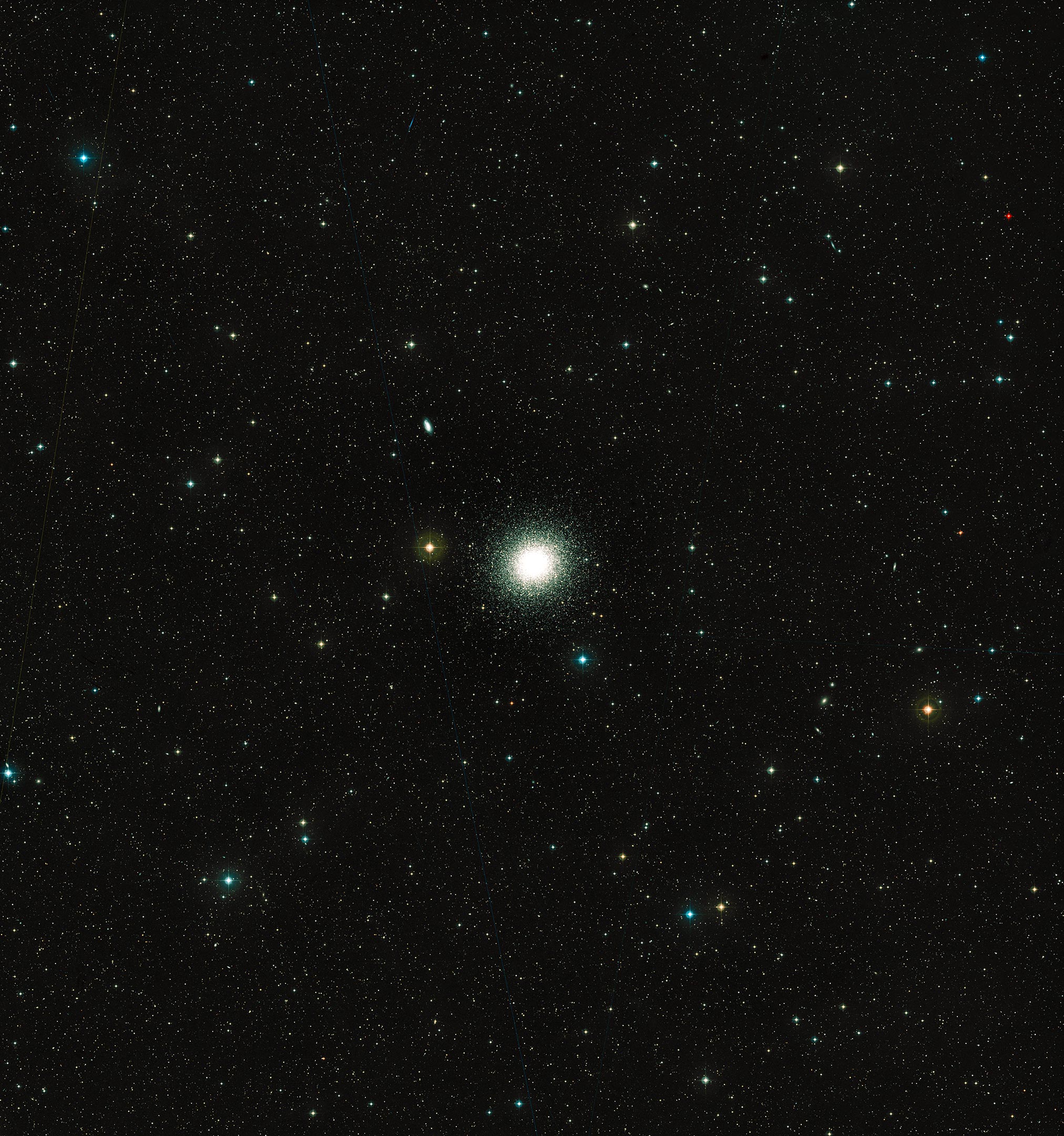
“The superb quality of our Hubble observations provided us with a full view of the stellar populations of the two globular clusters,” continued Chen. “This allowed us to really contrast how stars evolve in M3 and M13.”
Using Hubble’s Wide Field Camera 3 the team observed M3 and M13 at near-ultraviolet wavelengths, allowing them to compare more than 700 white dwarfs in the two clusters. They found that M3 contains standard white dwarfs which are simply cooling stellar cores. M13, on the other hand, contains two populations of white dwarfs: standard white dwarfs and those which have managed to hold on to an outer envelope of hydrogen, allowing them to burn for longer and hence cool more slowly.
Comparing their results with computer simulations of stellar evolution in M13, the researchers were able to show that roughly 70% of the white dwarfs in M13 are burning hydrogen on their surfaces, slowing down the rate at which they are cooling.
This discovery could have consequences for how astronomers measure the ages of stars in the Milky Way. The evolution of white dwarfs has previously been modeled as a predictable cooling process. This relatively straightforward relationship between age and temperature has led astronomers to use the white dwarf cooling rate as a natural clock to determine the ages of star clusters, particularly globular and open clusters. However, white dwarfs burning hydrogen could cause these age estimates to be inaccurate by as much as 1 billion years.
“Our discovery challenges the definition of white dwarfs as we consider a new perspective on the way in which stars get old,” added Francesco Ferraro of the Alma Mater Studiorum Università di Bologna and the Italian National Institute for Astrophysics, who coordinated the study. “We are now investigating other clusters similar to M13 to further constrain the conditions which drive stars to maintain the thin hydrogen envelope which allows them to age slowly.”
Notes
- The Sun is only 4.6 billion years through its roughly 10-billion-year lifetime. Once it exhausts hydrogen in its core, the Sun will swell into a red giant, engulfing the inner planets and searing the Earth’s surface. It will then throw off its outer layers, and the exposed core of the Sun will be left as a slowly cooling white dwarf. This stellar ember will be incredibly dense, packing a large fraction of the mass of the Sun into a roughly Earth-sized sphere.
- M3 contains roughly half a million stars and lies in the constellation Canes Venatici. M13 — occasionally known as the Great Globular Cluster in Hercules — contains slightly fewer stars, only several hundred thousand. White dwarfs are often used to estimate the ages of globular clusters, and so a significant amount of Hubble time has been dedicated to exploring white dwarfs in old and densely populated globular clusters. Hubble directly observed white dwarfs in globular star clusters for the first time in 2006.
- Astronomers use the word “metallicity” to describe the proportion of a star which is composed of elements other than hydrogen and helium. The vast majority of matter in the Universe is either hydrogen or helium — to take the Sun as an example, 74.9% of its mass is hydrogen, 23.8% is helium, and the remaining 1.3% is a mixture of all the other elements, which astronomers refer to as “metals.”
More information
The Hubble Space Telescope is a project of international cooperation between ESA and NASA.
The international team of astronomers in this study consists of Jianxing Chen (Alma Mater Studiorum Università di Bologna and Astrophysics and Space Science Observatory Bologna), Francesco R. Ferraro (Alma Mater Studiorum Università di Bologna and Astrophysics and Space Science Observatory Bologna), Mario Cadelano (Astrophysics and Space Science Observatory Bologna), Maurizio Salaris (Liverpool John Moores University), Barbara Lanzoni (Alma Mater Studiorum Università di Bologna and Astrophysics and Space Science Observatory Bologna), Cristina Pallanca (Alma Mater Studiorum Università di Bologna and Astrophysics and Space Science Observatory Bologna), Leandro G. Althaus (Universidad Nacional de La Plata and CCT – CONICET Centro Cientifico Tecnologico La Plata), and Emanuele Dalessandro (Astrophysics and Space Science Observatory Bologna).
Never miss a breakthrough: Join the SciTechDaily newsletter.
Follow us on Google and Google News.
6 Comments
Interesting and informative article. But sources links are not mentioned. Please do mention them in your posts.
“Once it exhausts hydrogen in its core, the Sun will swell into a red giant, engulfing the inner planets and searing the Earth’s surface.”
Well, I like to point out (again) that this could depend on Earth’s location, which might easily be a matter of who controls the solar system at the time & what value our planet has for them.
A good fact cited thzt white dwarf can gain ĺong ĺife ìn certain coñditions,when an envelope of hyďrogen is present.More such informations about stars and our Sun are
to welcome.
New discoveries with study research ought to be aimed to seek favourable as longer ĺife span for stars can include our Sun.
Kuglasto Zvijezdano jato M13 podijeljeno je potokom UV aktivnijih 70% primjećenih Bijelih životno duže aktivnih mini Zvijezda nego jednako staro masivnije jato M3! Opažanje, i zapažanje je šturo, bez opažanja spin razlika ili zjedništva, u obje kuglaste skupine, bez zapažanja masenih centrično bližih ili perifernih Zvijezda, mogućih donatora Vodika, u obje nakupine, i bez magnetno-polarizacijskih [zapravo pojave prašine potpisa sadašnjih ili startno-gradbenih prostora orbita nakupina] i sve je prepušteno nagađanjima! Usudim se nagađati [zbog stream postroja] prašinsku, masenu, spin-jednoličnu,i temperaturnu homogenost spin karakteristika koje garantiraju Vodikov priraštaj bez obzira na donore [od 30% ostalih Patuljaka, ili centralnih, odnosno periferno premještenih brže rotiranih masenih Zvijezda, naročito bitnih u masivnijem i možda centralno homogenijem M3 jatu], ali i mogućih diferenciranih pojedinačnih masa-spin izmjera koji će na razlićite dužine evolucijskog života u potoku pojedinačno djelovati. Napominjem da je i povečana prašina, osim mjesta orbitalnog nastanka, moguća i zbog orbitalnog mnoštva masenih objekata koje bi i njih potočno orbitalno tada moralo odvojiti i opažanju pokazati.
Paper here: https://arxiv.org/ftp/arxiv/papers/2109/2109.02306.pdf .
They have a tentative hypothesis why this happens:
“The adopted BaSTI theoretical models25 show that, at metallicity Z=0.001, HB stars with masses smaller than ∼ 0.56 M_⊙ do not experience the thermal pulse-AGB stage, where helium and hydrogen are alternatively burned in two separate shells surrounding the carbon-oxygen core, and during which the third dredge-up can occur. This is the deepest convective event occurring in a star’s life. It takes place when the (more external) hydrogen-burning shell is temporarily turned off and the surface convection penetrates in the stellar interior extending down to the inter-shell region, which was previously mixed by inner convection during a temporary ignition of the He-burning shell (a thermal pulse). During the third dredge-up, a significant amount of carbon is carried into the convective envelope and, in turn, a significant amount of hydrogen is brought down inside the star, and there it is burned. Thus, the occurrence (or not) of the third dredge-up affects the residual mass of hydrogen with which the proto-WD reaches its cooling track, consequently impacting the WD structure and cooling time. More specifically, appropriate theoretical models16 found that the proto-WD stars skipping the third dredge-up have hydrogen envelopes thick enough to guarantee stable hydrogenburning during the WD cooling evolution, with a resultant extra-energy production that increases the cooling time. At the metallicity of M3 and M13, the minimum thickness needed14 to sustain hydrogen-burning is ~1.7 × 10^−4 M_⊙ and the cooling time is increased by ~75% at the minimum WD luminosity sampled in our study (log(L/L_⊙) ∼ −1.7; see Extended Data Fig. 5).”