
Close Menu
    Facebook X (Twitter) Instagram
    SciTechDaily
    • Biology
    • Chemistry
    • Earth
    • Health
    • Physics
    • Science
    • Space
    • Technology
    Facebook X (Twitter) Pinterest YouTube RSS
    SciTechDaily
    Home»Space»Hubble Space Telescope Spies Newly Forming Star Incubating in Reflection Nebula
    Space

    Hubble Space Telescope Spies Newly Forming Star Incubating in Reflection Nebula

    By NASA's Goddard Space Flight CenterNovember 19, 2021No Comments2 Mins Read
    Facebook Twitter Pinterest Telegram LinkedIn WhatsApp Email Reddit
    Share
    Facebook Twitter LinkedIn Pinterest Telegram Email Reddit
    Reflection Nebula IC 2631
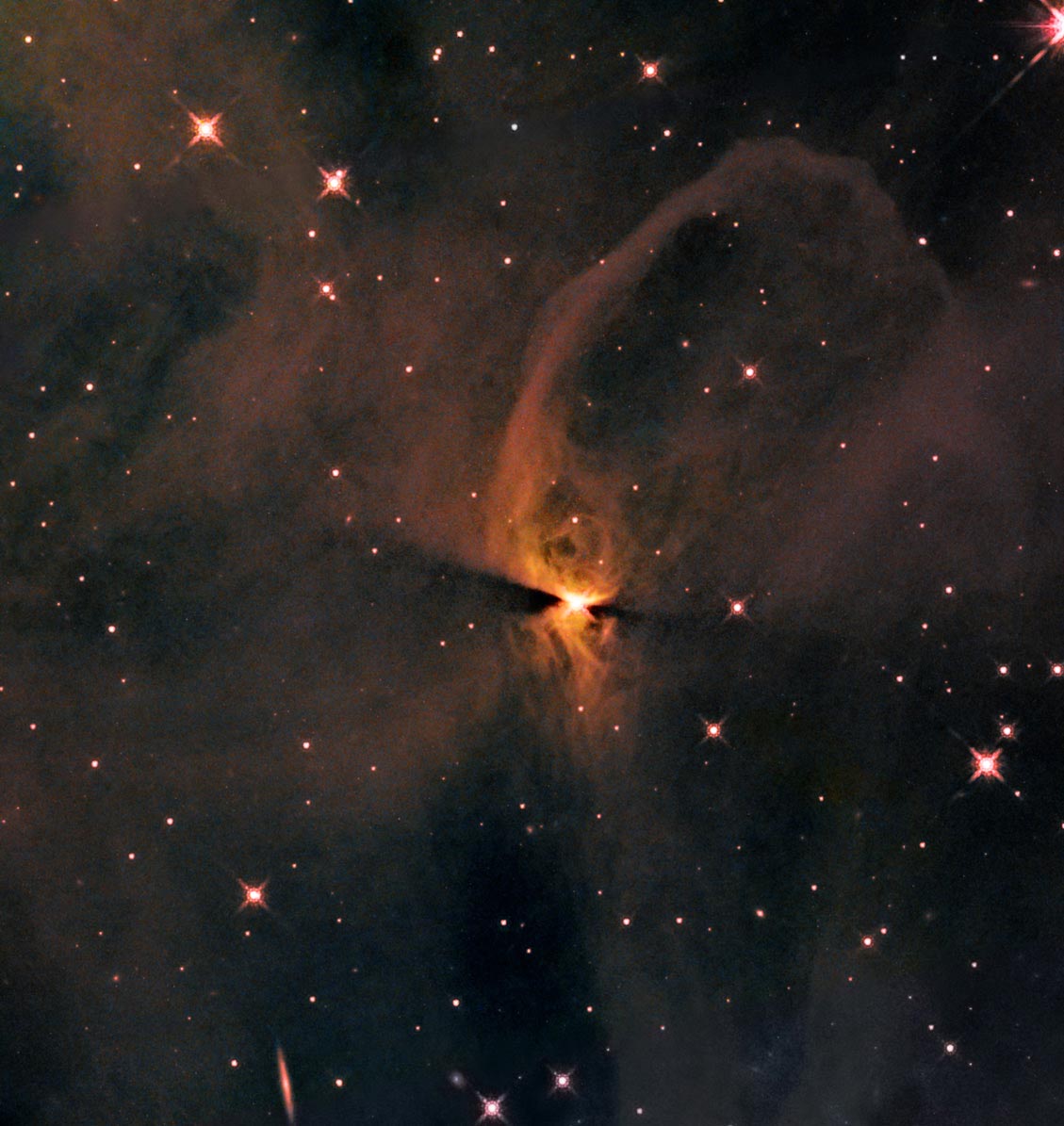
    Hubble Space Telescope captures a protostar in the reflection nebula IC 2631.Credit: NASA, ESA, T. Megeath (University of Toledo), and K. Stapelfeldt (Jet Propulsion Laboratory); Processing: Gladys Kober (NASA/Catholic University of America)

    Hubble imaged a protostar in the Chamaeleon constellation, showcasing the early stage of star formation.

    Stars are born from clouds of gas and dust that collapse under their own gravitational attraction. As the cloud collapses, a dense, hot core forms and begins gathering dust and gas, creating an object called a “protostar.”

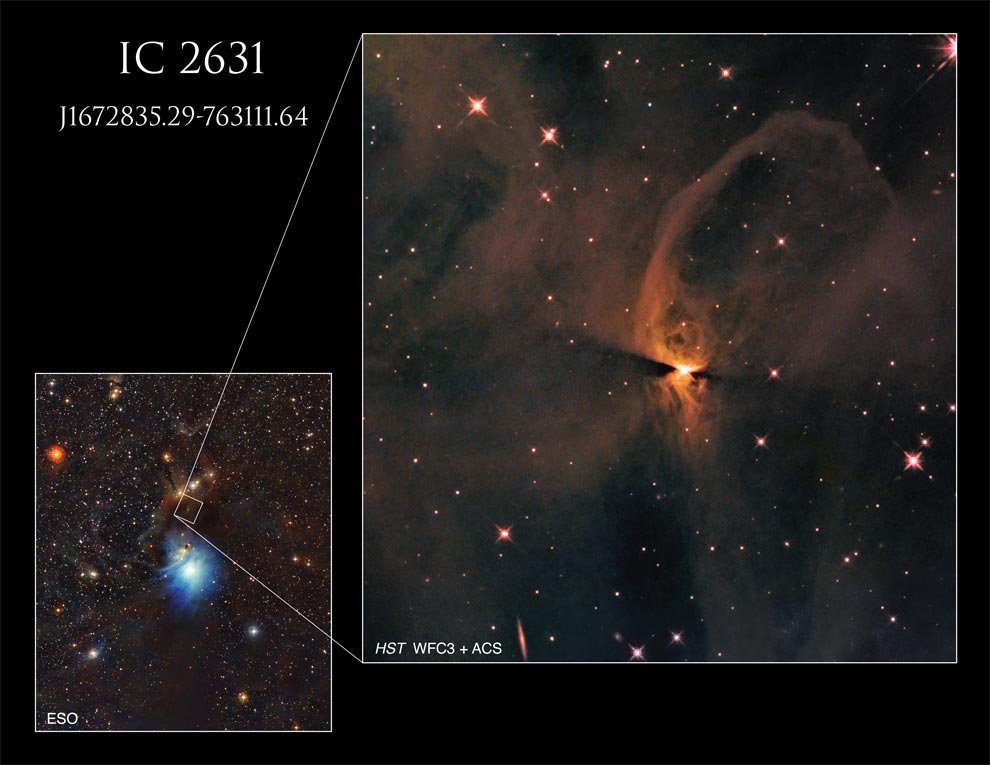
    This Hubble infrared image captures a protostar designated J1672835.29-763111.64 in the reflection nebula IC 2631, part of the Chamaeleon star-forming region in the southern constellation Chamaeleon. Protostars shine with the heat energy released by clouds contracting around them and the accumulation of material from the nearby gas and dust. Eventually, enough material collects, and the core of a protostar becomes hot and dense enough for nuclear fusion to begin, and the transformation into a star is complete. The leftover gas and dust can become planets, asteroids, comets, or remain as dust.

    This image is part of a Hubble survey targeting 312 protostars within molecular clouds previously identified with the Spitzer and Herschel infrared space observatories. Protostars are visible primarily in infrared light since they emit a lot of heat energy, and their visible light is obscured by the dust around them. Hubble’s advanced infrared capabilities could better resolve the protostars and examine their structure, including the accumulating gas and dust and faint companion objects.
    IC 2631
    Hubble’s sharp eye captures a protostar designated J1672835.29-763111.64 in the reflection nebula IC 2631. Credit: NASA, ESA, T. Megeath (University of Toledo), K. Stapelfeldt (Jet Propulsion Laboratory), and ESO; Processing: Gladys Kober (NASA/Catholic University of America)

    Never miss a breakthrough: Join the SciTechDaily newsletter.
    Follow us on Google and Google News.

    Astronomy Hubble Space Telescope NASA NASA Goddard Space Flight Center
    Share. Facebook Twitter Pinterest LinkedIn Email Reddit

    Related Articles

    Astronomers Finally Solve Betelgeuse’s Biggest Mystery

    The Andromeda Mystery: Hubble Discovers Strange Galactic Behavior

    3.7 Billion Miles Away: Hubble Uncovers a Hidden Trio That Could Rewrite Kuiper Belt History

    Historic Discovery: Twin Titans Clash As NASA Unveils Closest Supermassive Black Hole Duo

    The Great Escape: NASA’s Hubble and MAVEN Help Solve Mystery of Mars’ Vanishing Water

    Into the Rosy Depths: Hubble’s Journey Through Andromeda

    Hubble Observes a Lonely Beacon in the Cosmic Dark

    What Lies Within? Hubble’s Deep Dive Into the Structured Chaos of Leo A

    Hubble Spots Billowing Bubbles of Stellar Floss Across 1,000 Light-Year Expanse

    Leave A Reply Cancel Reply

    • Facebook
    • Twitter
    • Pinterest
    • YouTube

    Don't Miss a Discovery

    Subscribe for the Latest in Science & Tech!

    Trending News

    First-of-Its-Kind Discovery: Homer’s Iliad Found Embedded in a 1,600-Year-Old Egyptian Mummy

    Beyond Inflammation: Scientists Uncover New Cause of Persistent Rheumatoid Arthritis

    A Simple Molecule Could Unlock Safer, Easier Weight Loss

    Scientists Just Built a Quantum Battery That Charges Almost Instantly

    Researchers Unveil Groundbreaking Sustainable Solution to Vitamin B12 Deficiency

    Millions of People Have Osteopenia Without Realizing It – Here’s What You Need To Know

    Researchers Discover Boosting a Single Protein Helps the Brain Fight Alzheimer’s

    World-First Study Reveals Human Hearts Can Regenerate After a Heart Attack

    Follow SciTechDaily
    • Facebook
    • Twitter
    • YouTube
    • Pinterest
    • Newsletter
    • RSS
    SciTech News
    • Biology News
    • Chemistry News
    • Earth News
    • Health News
    • Physics News
    • Science News
    • Space News
    • Technology News
    Recent Posts
    • New Research Challenges Long-Held Beliefs About How the Brain Makes Decisions
    • Breakthrough Technology Reveals New Treatment Targets for Cancer
    • Scientists Discover New Way To Make Drug-Resistant Cancer Treatable Again
    • This Simple Exercise Trick Builds Muscle With Less Effort, Study Finds
    • Middle Age Is Becoming a Breaking Point in America, Study Reveals
    Copyright © 1998 - 2026 SciTechDaily. All Rights Reserved.
    • Science News
    • About
    • Contact
    • Editorial Board
    • Privacy Policy
    • Terms of Use

    Type above and press Enter to search. Press Esc to cancel.