
Close Menu
    Facebook X (Twitter) Instagram
    SciTechDaily
    • Biology
    • Chemistry
    • Earth
    • Health
    • Physics
    • Science
    • Space
    • Technology
    Facebook X (Twitter) Pinterest YouTube RSS
    SciTechDaily
    Home»Space»Hubble Views Supernova SN1995E in Spiral Galaxy NGC 2441
    Space

    Hubble Views Supernova SN1995E in Spiral Galaxy NGC 2441

    By Hubble Space TelescopeJune 23, 2014No Comments2 Mins Read
    Facebook Twitter Pinterest Telegram LinkedIn WhatsApp Email Reddit
    Share
    Facebook Twitter LinkedIn Pinterest Telegram Email Reddit
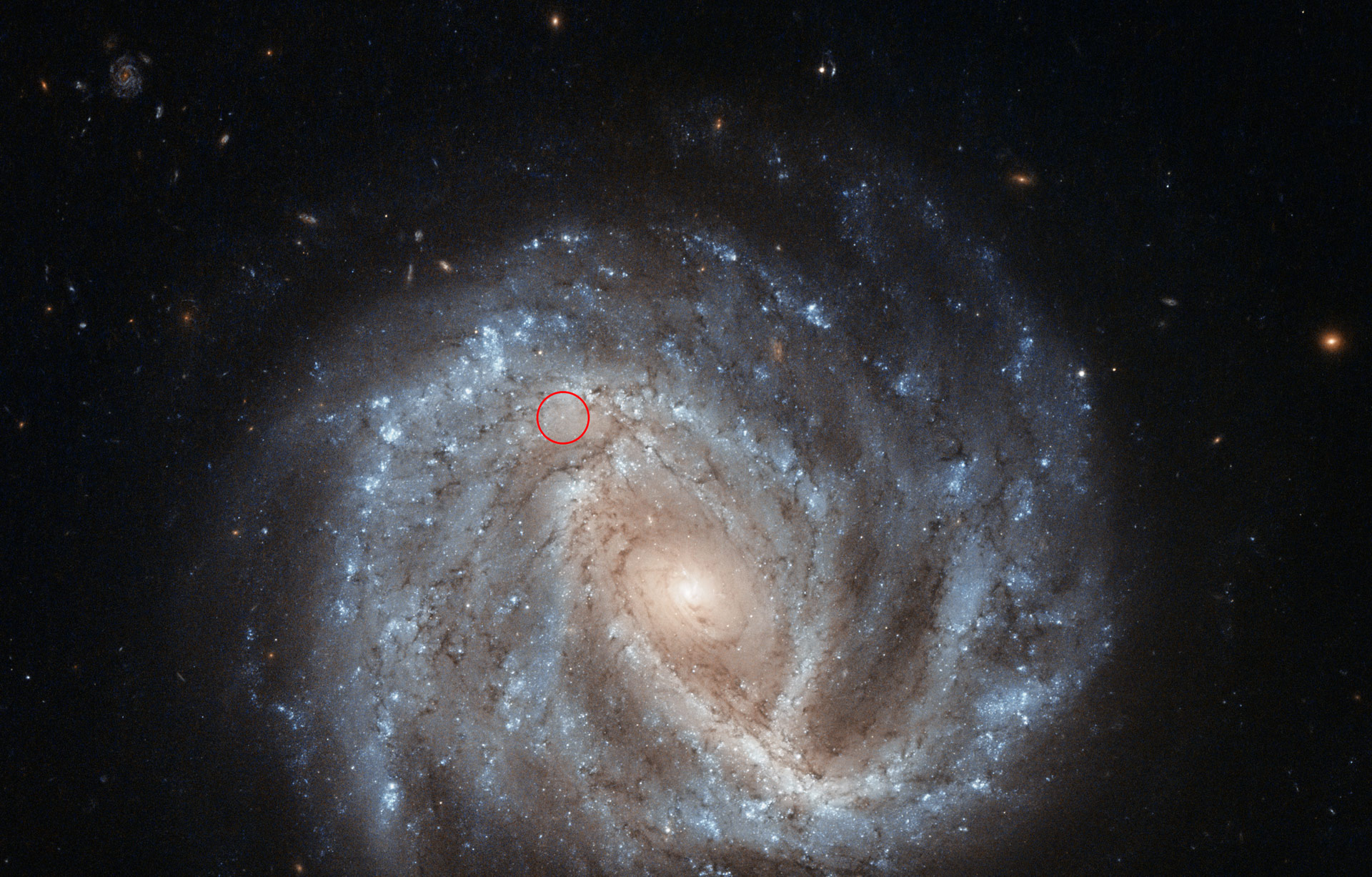
    Hubble Views Spiral Galaxy NGC 2441
    Annotated view of supernova SN1995E in NGC 2441. Credit: ESA/Hubble & NASA; Acknowledgement: Nick Rose

    This newly released Hubble image shows spiral galaxy NGC 2441 and supernova SN1995E.

    This bright spiral galaxy is known as NGC 2441, located in the northern constellation of Camelopardalis (The Giraffe). However, NGC 2441 is not the only subject of this new Hubble image; the galaxy contains an intriguing supernova named SN1995E, visible as a small dot at the approximate center of this image.

    Supernova SN1995E, discovered in 1995 as its name suggests is a type Ia supernova. This kind of supernova is found in binary systems, where one star — a white dwarf — drags matter from its orbiting companion until it becomes unstable and explodes violently. White dwarf stars all become unbalanced once they reach the same mass, meaning that they all form supernovae with the same intrinsic brightness. Because of this, they are used as standard candles to measure distances in the Universe.

    But SN1995E may be useful in another way. More recent observations of this supernova have suggested that it may display a phenomenon known as a light echo, where light is scattered and deflected by dust along our line of sight, making it appear to “echo” outwards from the source. In 2006, Hubble observed SN1995E to be fading in a way that suggested its light was being scattered by a surrounding spherical shell of dust. These echoes can be used to probe both the environments around cosmic objects like supernovae, and the characteristics of their progenitor stars. If SN1995E does indeed have a light echo, it would belong to a very elite club; only two other type Ia supernovae have been found to display light echoes.

    NGC 2441 was first seen by Wilhelm Tempel in 1882, a German astronomer with a keen eye for comets. In total, Tempel observed and documented some 21 comets, several of which were named after him.

    A version of this image was entered into the Hubble’s Hidden Treasures image processing competition by contestant Nick Rose.

    Never miss a breakthrough: Join the SciTechDaily newsletter.
    Follow us on Google and Google News.

    Astronomy Hubble Space Telescope Supernova
    Share. Facebook Twitter Pinterest LinkedIn Email Reddit

    Related Articles

    Galactic Wonders: Hubble Explores a Supernova Factory

    Gone but Not Forgotten: A Supernova 2.5 Billion Times Brighter Than the Sun

    Astronomy & Astrophysics 101: Supernova

    Secrets of an Earlier Universe Revealed by Red-Supergiant Supernova

    Hubble Reveals Surviving Companion Star in Aftermath of Titanic Supernova Explosion

    Hubble Captures the Unusual Shredded Remains of a Massive Cosmic Explosion

    Supernova Déjà-Vu: Astronomers Spot the Same Stellar Explosion Three Times – And Predict a Fourth Sighting in 16 Years

    Supernova Requiem: Rerun of Massive Blast From Exploding Star Expected To Appear in 2037

    Bizarre, Metallic Star Spotted Hurtling Out of the Milky Way at 2 Million Miles an Hour

    Leave A Reply Cancel Reply

    • Facebook
    • Twitter
    • Pinterest
    • YouTube

    Don't Miss a Discovery

    Subscribe for the Latest in Science & Tech!

    Trending News

    Breakthrough Parkinson’s Drug Targets Disease at Its Genetic Roots

    Just 4 Weeks of Simple Diet Changes Reversed Signs of Aging in Older Adults

    Scientists May Have Finally Solved Why Humans Are Right-Handed

    NASA’s Hubble Accidentally Witnesses a Comet Shattering in Space

    Researchers Discover the Body’s Hidden “Off Switch” for Inflammation

    Scientists Discover Metformin Doesn’t Work the Way We Thought

    Tea or Coffee? Your Daily Choice Could Affect Osteoporosis Risk

    Vitamin C May Fight Cancer in a Surprising Way

    Follow SciTechDaily
    • Facebook
    • Twitter
    • YouTube
    • Pinterest
    • Newsletter
    • RSS
    SciTech News
    • Biology News
    • Chemistry News
    • Earth News
    • Health News
    • Physics News
    • Science News
    • Space News
    • Technology News
    Recent Posts
    • Scientists Stunned by Hybrid California Bees That Beat Deadly Mites
    • Scientists Discover Terrifying Giant Crocodile That Hunted Human Ancestors
    • Scientists Finally Think They Know Why T. rex Had Tiny Arms
    • Scientists Are Turning Ocean Trash Into Roads – and It’s Actually Working
    • This Alien Planet Has Rock Clouds That Vaporize Before Sunset
    Copyright © 1998 - 2026 SciTechDaily. All Rights Reserved.
    • Science News
    • About
    • Contact
    • Editorial Board
    • Privacy Policy
    • Terms of Use

    Type above and press Enter to search. Press Esc to cancel.