
Close Menu
    Facebook X (Twitter) Instagram
    SciTechDaily
    • Biology
    • Chemistry
    • Earth
    • Health
    • Physics
    • Science
    • Space
    • Technology
    Facebook X (Twitter) Pinterest YouTube RSS
    SciTechDaily
    Home»Biology»Illuminating the Brain’s Hidden Scaffold: New Insights From ECM Research
    Biology

    Illuminating the Brain’s Hidden Scaffold: New Insights From ECM Research

    By University of Utah HealthSeptember 23, 2024No Comments3 Mins Read
    Facebook Twitter Pinterest Telegram LinkedIn WhatsApp Email Reddit
    Share
    Facebook Twitter LinkedIn Pinterest Telegram Email Reddit
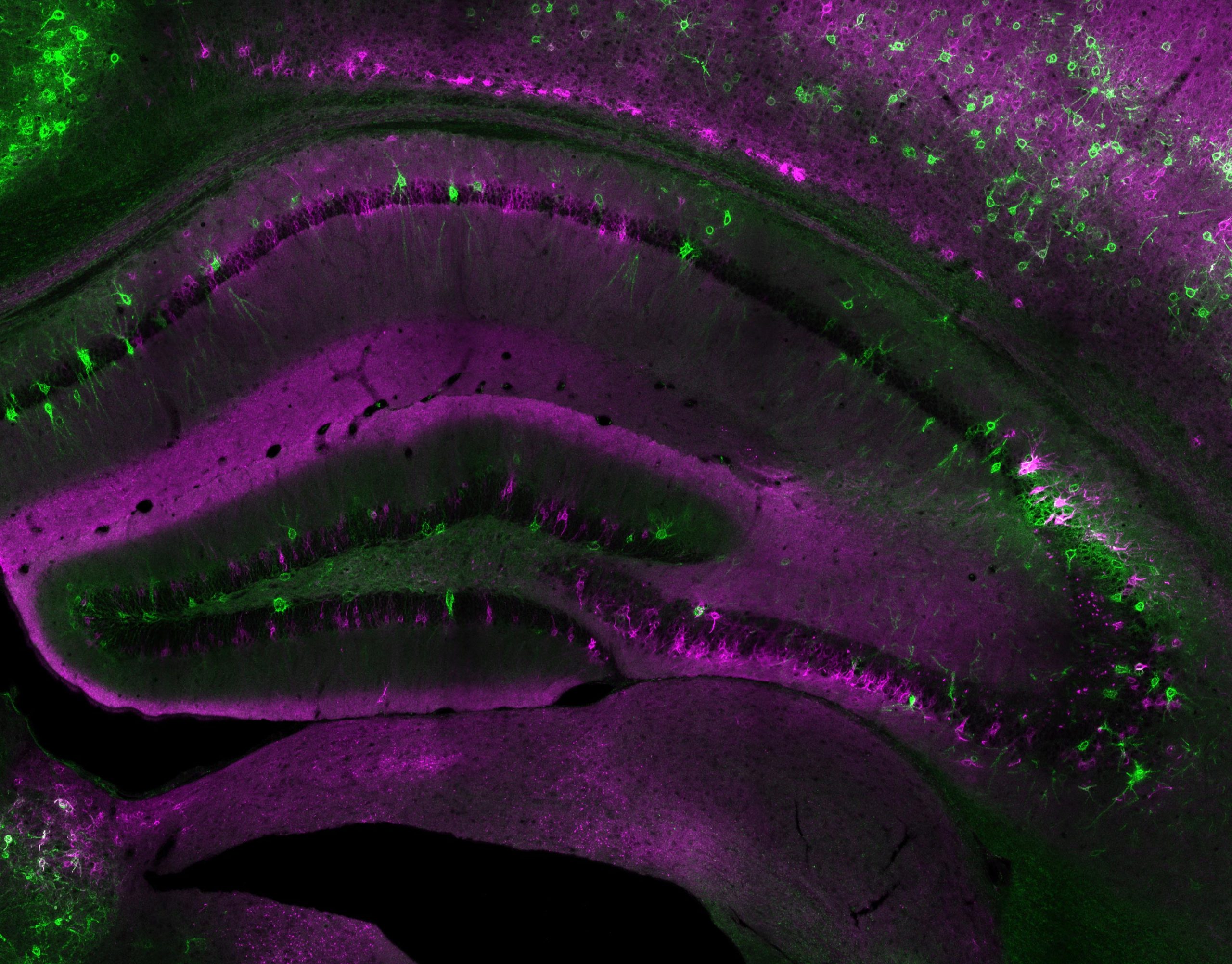
    Fluorescent Microscopy Image of Mouse Hippocampus
    Fluorescent microscopy image of a section of mouse brain. Green is a conventional brain ECM marker. Magenta is the new tool developed by the researchers. Credit: Igal Sterin et al., J Neurosci 2024, e0666242024

    Researchers have developed a groundbreaking tool that offers new insights into the brain’s extracellular matrix (ECM), revealing how it changes over time and interacts with neurons during development, cognitive processes, and aging.

    This tool uses a combination of proteins and fluorescent dyes to visualize and track the dynamic structure of ECM in rodent brain cells.

    Brain Extracellular Matrix

    Between and around the billions of neurons in the human brain is an equally vital scaffold, the extracellular matrix (ECM). An interlinked net of proteins and sugars that surrounds brain cells, the ECM is more than simple structural support; changes in the ECM can regulate complex brain functions including memory, learning, and behavior. However, studies of the brain’s ECM have been limited by the lack of tools to observe dynamic changes to its structure.

    Now, a new genetic labeling tool developed by University of Utah Health researchers Igal Sterin, PhD, and Sungjin Park, PhD, has revealed new patterns in brain ECM in mice, including differences in the amount of matrix deposited on different types of neurons. A major advantage of the tool is that it can detect changes in the ECM over time, giving new insights into how the brain develops.

    How the New Tool Works

    The new tool has two main parts: a protein that binds to the main ingredients of the brain ECM, fused to another protein that irreversibly sticks to a variety of synthetic fluorescent dyes. When scientists introduced the tool into neurons, it bound to the surrounding matrix; then, they added a fluorescent dye to make matrix structures visible. Using this tool, the researchers were able to watch as ECM was deposited over time in cultured rodent brain cells, making out dense clusters of matrix that appeared on only certain neurons and at different times.

    Implications for Future Brain Studies

    The researchers were also able to measure changes in brain ECM in mice by adding different fluorescent dyes at different times. They could infer that ECM structures that were marked by the second dye, but not the first, had developed in the time between the two dyes were added.

    The scientists hope that this tool will open the door to many further studies of how the ECM contributes to brain function in complex ways. “In the brain, the ECM regulates neuronal plasticity and cognitive function, but its structural features remain poorly understood,” Park says. “By using our longitudinal genetic tool to track ECM dynamics, we can visualize how neurons assemble and remodel ECM during development, cognitive processes, and aging.”

    Reference: “Dynamic organization of neuronal extracellular matrix revealed by HaloTag-HAPLN1” by Igal Sterin, Ava Niazi, Jennifer Kim, Joosang Park and Sungjin Park, 8 September 2024, Journal of Neuroscience.
    DOI: 10.1523/JNEUROSCI.0666-24.2024

    Never miss a breakthrough: Join the SciTechDaily newsletter.
    Follow us on Google and Google News.

    Brain Microscopy Neuroscience University of Utah
    Share. Facebook Twitter Pinterest LinkedIn Email Reddit

    Related Articles

    Scientists Discover Brain Cells That Switch Anxiety On and Off

    Neuroscientists Have Pinpointed the Origins of Creativity in the Brain

    Scientists Discover Unexpected Importance of “Time Cells” for Complex Learning

    Scientists Unveil Unprecedented “Live” View Into the Brain’s Complexity

    Human Brains Take Longer to Wire Up Than Simian Ones

    Researchers Use fMRI to Study How Humor Activates Kids’ Brain Regions

    Neuroscientists Decode Correlation Between Sound and Brain Activity

    Mother’s Nurturing Results in Larger Hippocampus in Children

    Neuroscientists Study Cortical Areas Specialized in Processing Visual Inputs in Mice

    Leave A Reply Cancel Reply

    • Facebook
    • Twitter
    • Pinterest
    • YouTube

    Don't Miss a Discovery

    Subscribe for the Latest in Science & Tech!

    Trending News

    Scientists Uncover Potential Brain Risks of Popular Fish Oil Supplements

    Scientists Discover a Surprising Way To Make Bread Healthier and More Nutritious

    After 60 Years, Scientists Uncover Unexpected Brain Effects of Popular Diabetes Drug Metformin

    New Research Uncovers Hidden Side Effects of Popular Weight-Loss Drugs

    Scientists Rethink Extreme Warming After Surprising Ocean Discovery

    Landmark Study Links Never Marrying to Significantly Higher Cancer Risk

    Researchers Discover Unknown Beetle Species Just Steps From Their Lab

    Largest-Ever Study Finds Medicinal Cannabis Ineffective for Anxiety, Depression, PTSD

    Follow SciTechDaily
    • Facebook
    • Twitter
    • YouTube
    • Pinterest
    • Newsletter
    • RSS
    SciTech News
    • Biology News
    • Chemistry News
    • Earth News
    • Health News
    • Physics News
    • Science News
    • Space News
    • Technology News
    Recent Posts
    • Scientists Solve Mystery of Where the Colorado River Vanished Millions of Years Ago
    • Not Just Alzheimer’s: Scientists Uncover Clues to a Second, Overlooked Disorder
    • Scientists Uncover Dangerous Connection Between Serotonin and Heart Valve Disease
    • Scientists Discover a “Protector” Protein That Could Help Reverse Hair Loss
    • Powerful Lasers Reveal How Matter Becomes Plasma in Trillionths of a Second
    Copyright © 1998 - 2026 SciTechDaily. All Rights Reserved.
    • Science News
    • About
    • Contact
    • Editorial Board
    • Privacy Policy
    • Terms of Use

    Type above and press Enter to search. Press Esc to cancel.