
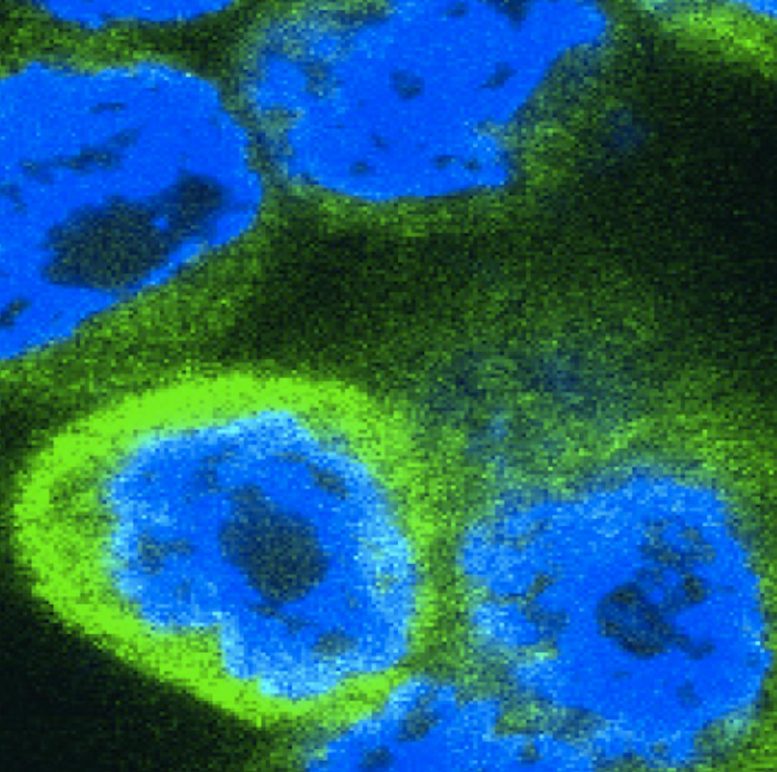
Researchers revealed that Interleukin-37, previously considered an immune suppressant, triggers inflammation via a key skin receptor, providing insights into immune system regulation and inflammatory disease treatment.
An important breakthrough in understanding how inflammation is regulated has been made by scientists from Trinity College Dublin. They have just discovered that a key immune alarm protein previously believed to calm down the immune response actually does the opposite.
Their work has numerous potential impacts, especially in the context of understanding and responding to autoimmune disorders and inflammation.
Our immune system serves a very important function in protecting us from infection and injury. However, when immune responses become too aggressive this can lead to damaging inflammation, which occurs in conditions such as rheumatoid arthritis and psoriasis. Inflammation is triggered when our bodies produce “alarm proteins” (interleukins), which ramp up our defenses against infection and injury by switching on different components of our immune system.
Understanding how and when such alarm proteins are produced and how they activate our immune system has led to major breakthroughs in the treatment of many immune conditions.
Unexpected Function of Interleukin-37
Now, scientists from the Smurfit Institute of Genetics at Trinity College Dublin, led by Seamus Martin, Smurfit Professor of Genetics, have found that Interleukin-37 has an unexpected function as an immune-activating molecule, as previous studies suggested that this interleukin instead served as an “off switch” for the immune system.
Professor Martin said:
“Interleukins play key roles in regulating our immune systems in response to bacterial and fungal infections. However, Interleukin-37 has long remained an enigma, as it isn’t found in mammals such as mice. This has presented a major obstacle to figuring out what it does as much of what we know about the human immune system has first been discovered in model organisms whose biological make-ups are similar to ours.”
Pro-Inflammatory Discovery
Prior to the new study, Interleukin-37 was thought to have immune-suppressive functions but how exactly it switched off inflammation was hotly debated. However, the Trinity scientists now report that, when activated in the correct way, Interleukin-37 displays potent pro-inflammatory activity.
Professor Martin added:
“This pro-inflammatory impact was highly unexpected. Our work shows that the protein binds to an interleukin receptor in the skin that is known to play a key role in driving psoriasis. And, to add further intrigue to the story, this brings the total number of immune alarm molecules that signal via this particular interleukin receptor to four.
“Why there are so many interleukins that bind to the same receptor is a mystery, but if we were to speculate it may be because this receptor serves a very important sentinel function in our skin, and that one alarm protein may simply not be enough to respond to the many different infectious agents that our skin encounters. Our skin is the major barrier between our bodies and the outside world that microbes must breach if they are to gain entry to our bodies and, in many respects, represents the first line of defense in our immune systems.”
As such, Interleukin-37 and other immune alarm proteins may have evolved to become distinct variations on the same theme that enable our bodies to detect different types of infection by becoming activated by enzymes that are distinct to each infectious agent.
Reference: “Myeloid cell–derived proteases produce a proinflammatory form of IL-37 that signals via IL-36 receptor engagement” by Graeme P. Sullivan, Pavel Davidovich, Natalia Muñoz-Wolf, Ross W. Ward, Yasmina E. Hernandez Santana, Danielle M. Clancy, Aoife Gorman, Zaneta Najda, Boris Turk, Patrick T. Walsh, Ed C. Lavelle and Seamus J. Martin, 16 December 2022, Science Immunology.
DOI: 10.1126/sciimmunol.ade5728
The research has just been published in the internationally renowned journal, Science Immunology, and was a collaboration between several Trinity research groups led by Professor Martin’s team, which included post-doctoral scientists Dr. Graeme Sullivan and Dr. Pavel Davidovich, along with research groups led by Professor Ed Lavelle (School of Biochemistry and Immunology) and Professor Pat Walsh (School of Clinical Medicine).
Never miss a breakthrough: Join the SciTechDaily newsletter.
Follow us on Google and Google News.
5 Comments
Thank you for your continued research
Thank you. These new developments about our immune system seems logical from my point of view yet these details are so complicated and amazing. I hope this facility and other educational institutions will continue to uncover the details.
It’s great to hear about the new discovery. They’re so many people who’d be forever grateful if a new remedy was available. It can’t come too soon.
Is there a relationship with alpha 1ANTITRYPSIN and il 37 ?
Thank you for your science.