
A new silver-based SAFE coating for implants repels and kills bacteria, reducing infections in tests without toxicity.
According to folklore, silver bullets kill werewolves, but in the real world, researchers want to harness this metal to combat another deadly foe: bacteria. Scientists have recently tried to develop a silver coating for implantable medical devices to protect against infection, but they’ve had limited success. However, in a new study published today (April 27, 2022) in the journal ACS Central Science, one team of scientists describes a new, long-acting silver-ion-releasing coating that, in rats, prevents bacteria from adhering to implants and then kills them.
Sometimes medical care requires surgeons to implant a device, such as a tube to drain a wound or the bladder, or to deliver medication directly into the blood. However, bacteria can attach to and collect on the surfaces of these devices, creating a dangerous risk for serious infections. Researchers have been working to develop bacteria-repelling coatings, including those containing silver, which is known to kill microbes. However, their efforts have faced numerous challenges: Silver can also be toxic to human cells, and it’s difficult to make a coating that continually releases small amounts of the metal over long periods, for example. Dirk Lange and Jayachandran Kizhakkedathu wanted to identify a formula that could overcome these and other difficulties.
To develop a simple-to-use coating, the team screened many sets of ingredients that they could apply to a surface in a single step. The formula that worked the best included silver nitrate, dopamine, and two hydrophilic polymers. This silver-based film-forming antibacterial engineered (“SAFE”) coating formed stable, silver-containing assemblies, which gradually released silver ions in lab tests.
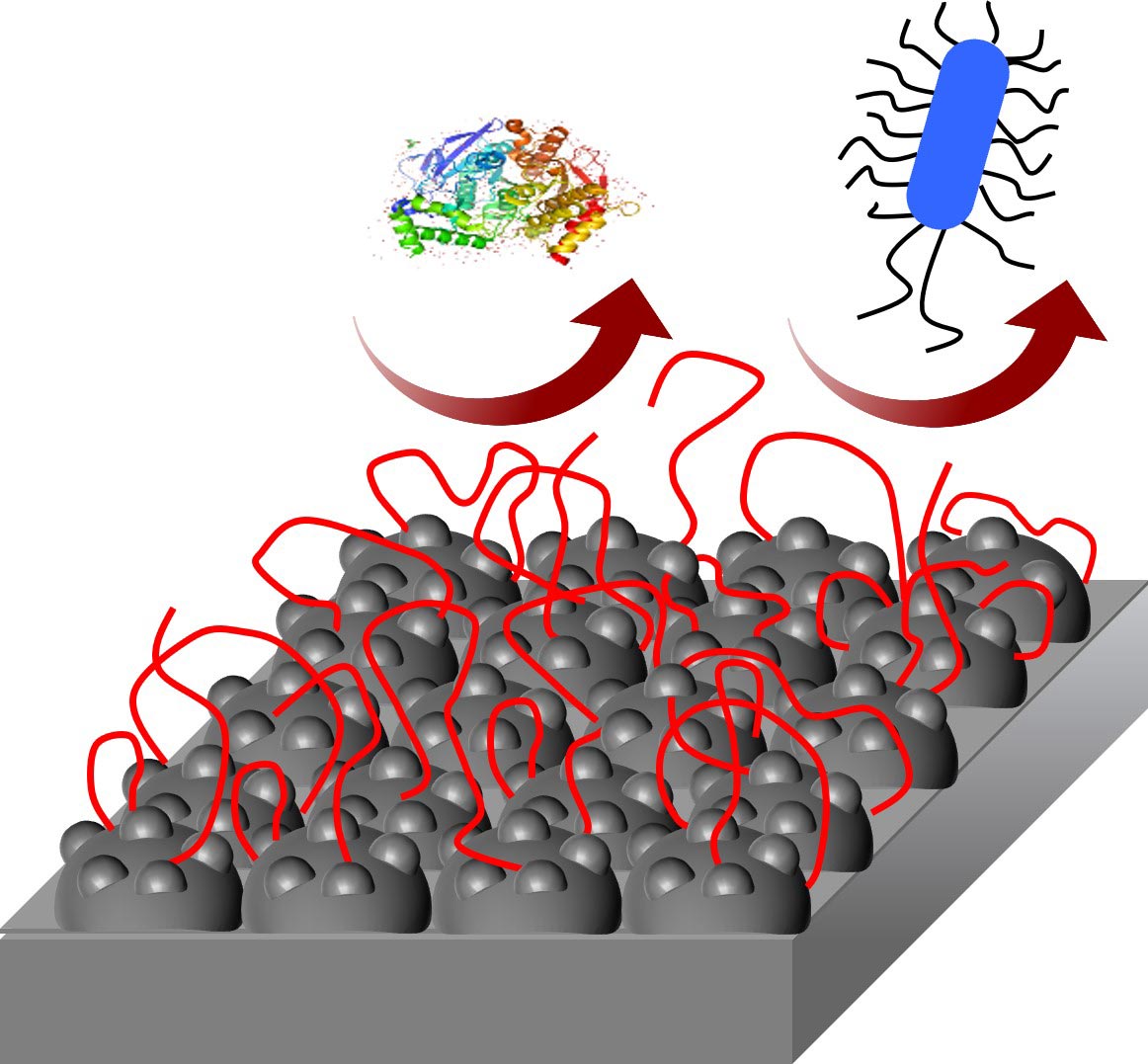
SAFE Coating’s Bacteria-Repelling and Killing Mechanism
When exposed over 28 days to eight of the most common species of bacteria that cause serious infections, this new coating recipe effectively kept the microbes at bay. It did so in a unique way: by both repelling the bacteria from the surface and then killing them with silver ions. To test SAFE’s effectiveness in a living animal, they coated a titanium implant with it, then placed the implant beneath the skin of rats. After a week, the researchers found that implants with the coating had dramatically fewer bacteria than those without it. In addition, there were no signs of toxicity to the rats’ tissues. The coating also appeared tough, showing little wear and tear after being rubbed and sterilized using harsh conditions. This combination of attributes is likely to make the coating useful in many types of medical devices and implants to prevent bacterial infection over the long term, the researchers say.
Reference: “Durable Surfaces from Film-forming Silver Assemblies for Long-term Zero Bacterial Adhesion without Toxicity” by Hossein Yazdani-Ahmadabadi, Demian F. Felix, Kai Yu, Han H. Yeh, Haiming D. Luo, Sara Khoddami, Lily E. Takeuchi, Amal Alzahrani, Srinivas Abbina, Yan Mei, Ladan Fazli, Dana Grecov, Dirk Lange and Jayachandran N. Kizhakkedathu, 27 April 2022, ACS Central Science.
DOI: 10.1021/acscentsci.1c01556
The authors acknowledge funding from the Canadian Institutes of Health Research, the Natural Sciences and Engineering Council of Canada, the Canada Foundation for Innovation, the British Columbia Knowledge Development Fund and the Michael Smith Foundation for Health Research.
Never miss a breakthrough: Join the SciTechDaily newsletter.
Follow us on Google and Google News.