
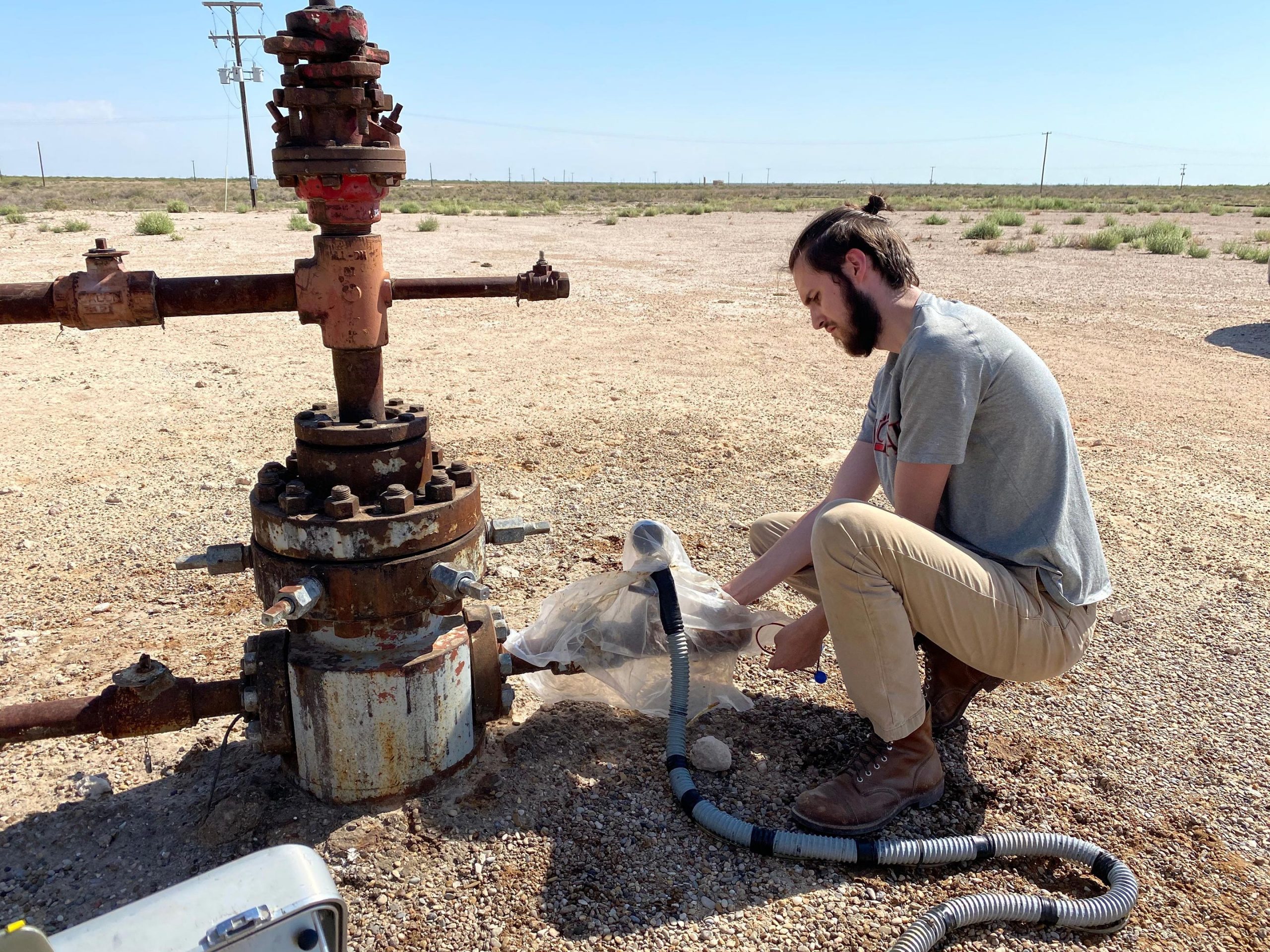
Geologist studies greenhouse gas emissions from uncapped, idle wells in Texas.
Uncapped, idle oil wells could be leaking millions of kilograms of methane each year into the atmosphere and surface water, according to a study by the University of Cincinnati.
Amy Townsend-Small, an associate professor of geology and geography in UC’s College of Arts and Sciences, studied 37 wells on private property in the Permian Basin of Texas, the largest oil production region on Earth. She found that seven had methane emissions of as much as 132 grams per hour. The average rate was 6.2 grams per hour.
“Some of them were leaking a lot. Most of them were leaking a little or not at all, which is a pattern that we have seen across the oil and gas supply chain,” Townsend-Small said. “A few sources are responsible for most of the leaks.”
The study published in the journal Environmental Research Letters is the first of its kind on methane emissions from inactive oil wells in Texas.
“Nobody has ever gotten access to these wells in Texas,” Townsend-Small said. “In my previous studies, the wells were all on public land.”
A 2016 study by Townsend-Small found a similar issue in inactive wells she tested in Colorado, Wyoming, Ohio and Utah. Spread across the estimated 3.1 million abandoned wells, the leaking methane is equivalent to burning more than 16 million barrels of oil, according to government estimates.
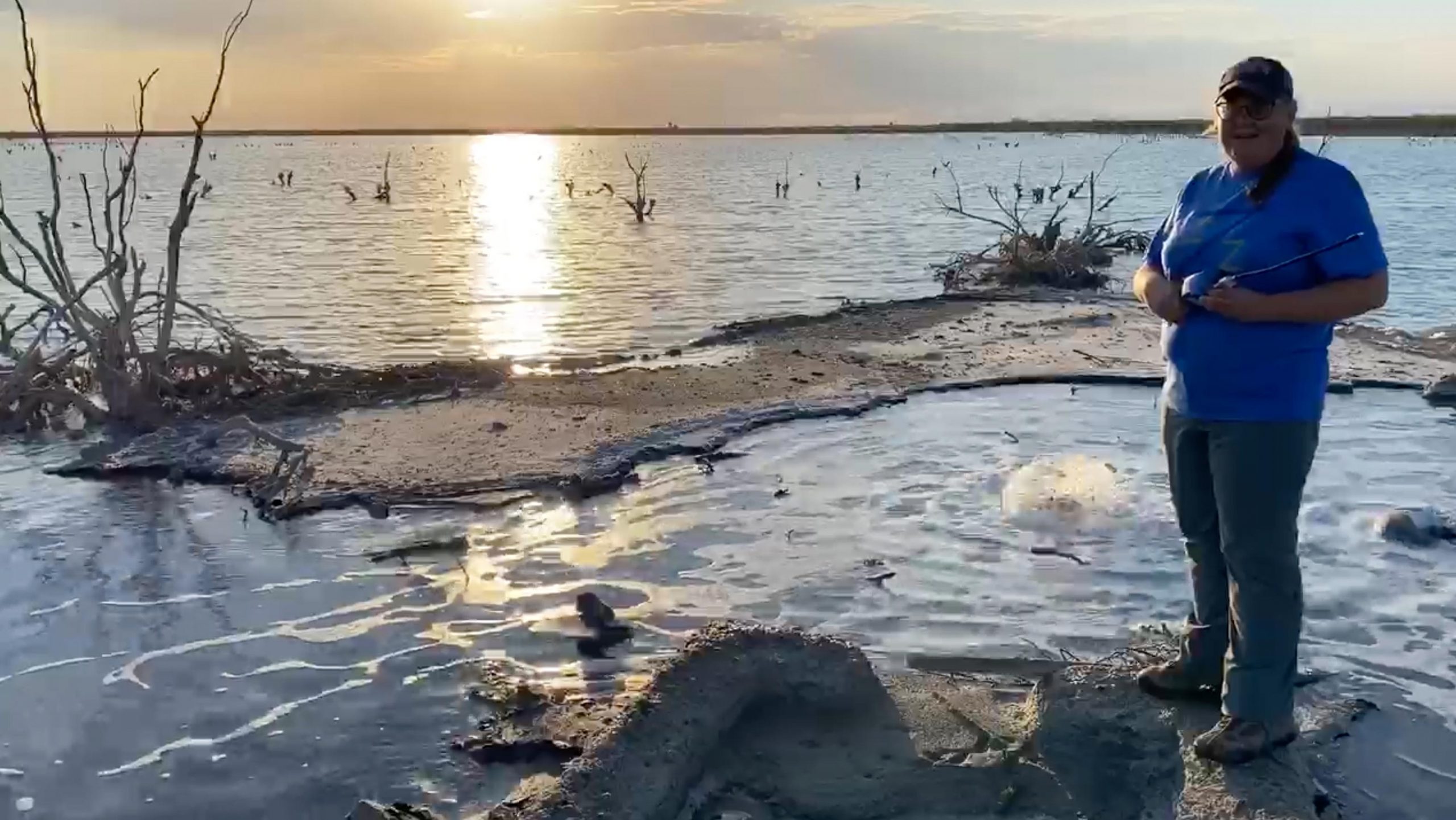
Five of the inactive wells Townsend-Small studied were leaking a brine solution onto the ground, in some cases creating large ponds.
“I was horrified by that. I’ve never seen anything like that here in Ohio,” Townsend-Small said. “One was gushing out so much water that people who lived there called it a lake, but it’s toxic. It has dead trees all around it and smells like hydrogen sulfide.”
Most of the wells had been inactive for three to five years, possibly because of fluctuations in market demand. Inactive wells could be a substantial source of methane emissions if they are not subject to leak detection and repair regulations, the UC study concluded.

The study was funded in part by a grant from the U.S. Department of the Interior.
A Major Contributor to Methane Pollution
Previous studies have found the basin generates 2.7 billion kilograms of methane per year or nearly 4% of the total gas extracted. That’s 60% higher than the average methane emissions in oil and gas production regions nationally. This was attributed to high rates of venting and flaring due to a lack of natural gas pipelines and other gas production infrastructure.
Methane is a powerful greenhouse gas that scientists have linked to climate change. If the rate of methane leaks UC observed were consistent across all 102,000 idled wells in Texas, the 5.5 million kilograms of methane released would be equivalent to burning 150 million pounds of coal each year, according to an estimate by the magazine Grist and nonprofit news organization the Texas Observer.
Townsend-Small and her UC undergraduate research assistant Jacob Hoschouer, a study co-author, came to Texas at the suggestion of the media organizations, which wanted to explore the environmental impact of oil wells, particularly those that are inactive or abandoned. An expert on methane emissions, Townsend-Small has studied releases from oil and natural gas wells across the country.
“A journalist called asking about abandoned wells. And the more we talked, the more I thought, ‘Maybe I can just drive down there?’” Townsend-Small said.
The journalists arranged with the property owners for Townsend-Small to examine the wells.
Hoschouer, who graduated from UC last year with a bachelor’s degree in environmental studies, conducted similar tests at leaking wells in southeast Ohio. In Texas, they used special tools to collect and test air samples where methane might be leaking from the well.
Policy Response and Research Impacts
President Joe Biden’s administration has pledged $16 billion in its infrastructure plan to cap abandoned oil and gas wells and mitigate abandoned mines. Hoschouer said it would be gratifying if their research could help regulators prioritize wells for capping.
“If they happened to cap one of the wells we studied, that would be really satisfying,” he said.
In the meantime, regular inspections of inactive wells using infrared cameras to identify leaks could address the problem, the UC study suggested.
Hoschouer said he feels fortunate to have gotten research experience as a UC undergraduate. He approached Townsend-Small about doing research in air pollution at a time when she was looking to fill a research assistant position.
“That’s my one piece of advice to other students: If someone wants to go into research, go ask a professor who’s working in your field of interest,” he said. “It’s incredible how many opportunities there are.”
Reference: “Direct measurements from shut-in and other abandoned wells in the Permian Basin of Texas indicate some wells are a major source of methane emissions and produced water” by Amy Townsend-Small and Jacob Hoschouer, 14 May 2021, Environmental Research Letters.
DOI: 10.1088/1748-9326/abf06f
Never miss a breakthrough: Join the SciTechDaily newsletter.
Follow us on Google and Google News.