
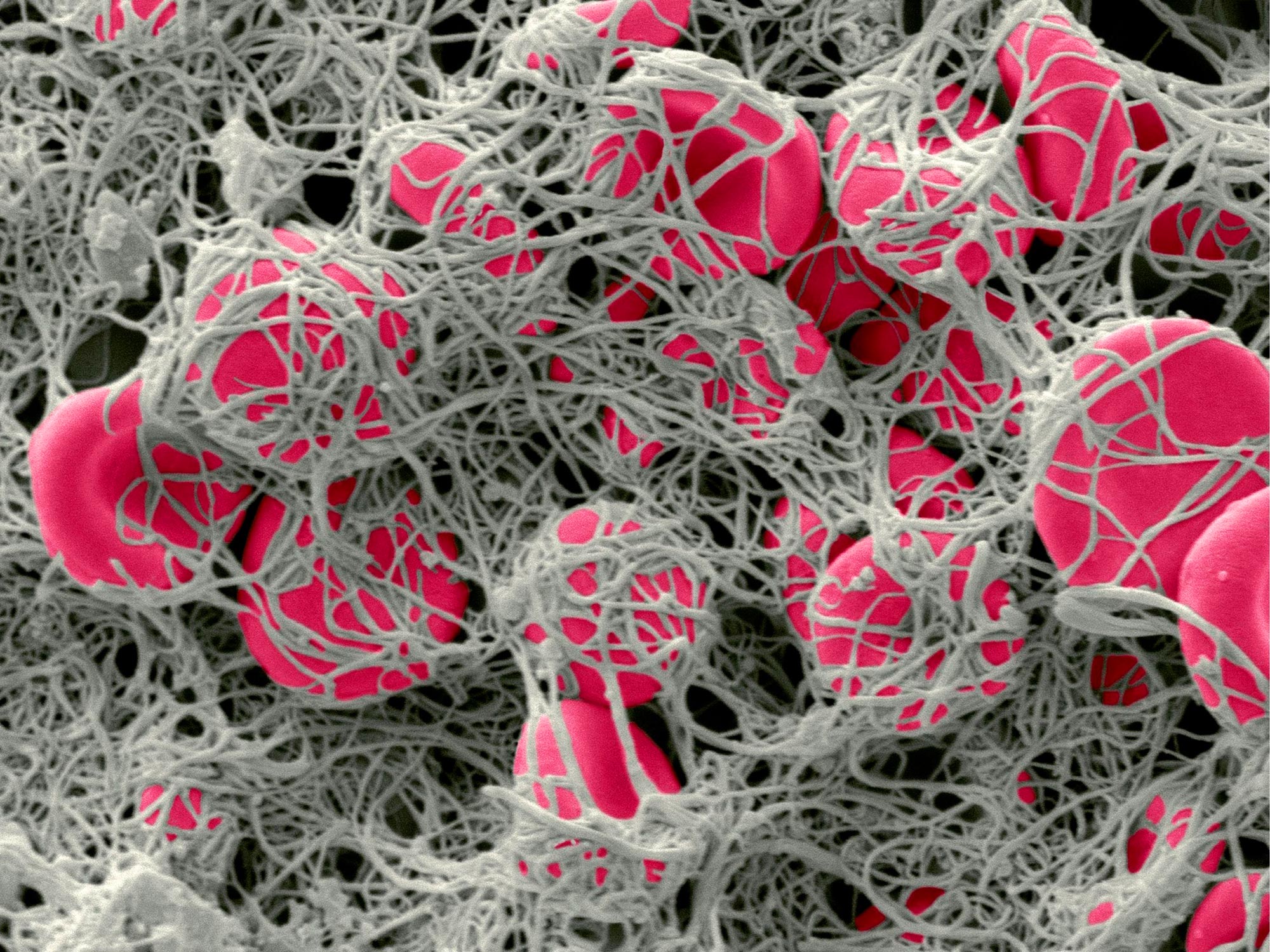
COVID-19 significantly raises the risk of thrombosis and bleeding for months, underscoring the importance of preventive care and vaccination to mitigate these risks.
Research uncovered an increased risk of pulmonary embolism (a blood clot in the lung) up to six months after COVID-19 infection, deep vein thrombosis (a blood clot in the leg) up to three months, and a bleeding event up to two months. The study from Sweden was published by The BMJ.
According to the findings, there is also a higher risk of events in patients with underlying conditions (comorbidities), patients with more severe COVID-19, and during the first pandemic wave compared with the second and third waves.
These results support measures to prevent thrombotic events (thromboprophylaxis), especially for high-risk patients, and strengthen the importance of vaccination against COVID-19, according to the researchers.
It is already well established that COVID-19 increases the risk of serious blood clots (known as venous thromboembolism or VTE), but less evidence exists on the length of time this risk is increased, if risk changed during the various pandemic waves, and whether COVID-19 also increases the risk of major bleeding.
To address these uncertainties, scientists set out to measure the risk of deep vein thrombosis, pulmonary embolism, and bleeding after COVID-19.
Using national registries in Sweden, they identified more than one million people with confirmed SARS-CoV-2 infection (the virus responsible for COVID-19) between February 1, 2020 and, May 25, 2021, matched by age, sex, and county of residence to more than four million people who had not had a positive SARS-CoV-2 test result.
They then performed two analyses: in the first, they calculated the rates of deep vein thrombosis, pulmonary embolism, and bleeding in COVID-19 individuals during a control period (before and long after COVID-19 diagnosis) and compared it to the rates in different time intervals after COVID-19 diagnosis (days 1-7, 8-14, 15-30, 31-60, 61-90, and 91-180).
In the second analysis, they calculated the rates of deep vein thrombosis, pulmonary embolism, and bleeding during the period 1-30 days after COVID-19 diagnosis in the COVID-19 group and compared them to the corresponding rates in the control group.
Prolonged Risk Periods for Thrombosis and Bleeding
The results show that compared with the control period, risks were significantly increased 90 days after COVID-19 for deep vein thrombosis, 180 days for pulmonary embolism, and 60 days for bleeding.
After taking into account a range of potentially influential factors, the researchers found a fivefold increase in the risk of deep vein thrombosis, a 33-fold increase in the risk of pulmonary embolism, and an almost twofold increase in the risk of bleeding in the 30 days after infection.
In absolute terms, this means that a first deep vein thrombosis occurred in 401 patients with COVID-19 (absolute risk 0.04%) and 267 control patients (absolute risk 0.01%). A first pulmonary embolism event occurred in 1,761 patients with COVID-19 (absolute risk 0.17%) and 171 control patients (absolute risk 0.004%), and a first bleeding event occurred in 1,002 patients with COVID-19 (absolute risk 0.10%) and 1,292 control patients (absolute risk 0.04%).
Risks were highest in patients with more severe COVID-19 and during the first pandemic wave compared with the second and third waves, which the researchers say could be explained by improvements in treatment and vaccine coverage in older patients after the first wave.
Even among mild, non-hospitalized COVID-19 patients, the researchers found increased risks of deep vein thrombosis and pulmonary embolism. No increased risk of bleeding was found in mild cases, but a noticeable increase was observed in more severe cases.
This is an observational study, so the researchers cannot establish cause, and they acknowledge several limitations which might have affected their findings. For example, VTE may have been underdiagnosed in patients with COVID-19, testing for COVID-19 was limited, especially during the first pandemic wave, and information on vaccination was not available.
However, results were largely consistent after further analyses, and are in line with similar studies on the association between COVID-19 and thromboembolic events, suggesting that they withstand scrutiny.
COVID-19 as an Independent Risk Factor
As such, the researchers say their findings suggest that COVID-19 is an independent risk factor for deep vein thrombosis, pulmonary embolism, and bleeding, and that the risk of these outcomes is increased for three, six, and two months after COVID-19, respectively.
“Our findings arguably support thromboprophylaxis to avoid thrombotic events, especially for high risk patients, and strengthen the importance of vaccination against COVID-19,” they conclude.
In a linked editorial, researchers at the University of Glasgow point out that despite the potential for new variants of concern, most governments are removing restrictions and shifting their focus to determining how best to “live with COVID.”
However, they say this study “reminds us of the need to remain vigilant to the complications associated with even mild SARS-CoV-2 infection, including thromboembolism.”
Reference: “Risks of deep vein thrombosis, pulmonary embolism, and bleeding after covid-19: nationwide self-controlled cases series and matched cohort study” by Ioannis Katsoularis, Osvaldo Fonseca-Rodríguez, Paddy Farrington, Hanna Jerndal, Erling Häggström Lundevaller, Malin Sund, Krister Lindmark and Anne-Marie Fors Connolly, 6 April 2022, The BMJ.
DOI: 10.1136/bmj-2021-069590
Funding: Region Västerbotten Agreement for Medical Education and Research funding, Umeå University, the Laboratory for Molecular Infection Medicine Sweden, Stroke Research in Northern Sweden, the Swedish Kidney Foundation, the Scandinavian Research Foundation for venous diseases, the Heart Foundation in Northern Sweden, Arnerska Research Foundation, and Kempes Foundation
Never miss a breakthrough: Join the SciTechDaily newsletter.
Follow us on Google and Google News.