

Close Menu
    Facebook X (Twitter) Instagram
    SciTechDaily
    • Biology
    • Chemistry
    • Earth
    • Health
    • Physics
    • Science
    • Space
    • Technology
    Facebook X (Twitter) Pinterest YouTube RSS
    SciTechDaily
    Home»Health»Innovative Head-Mounted Magnetic Device Shows Promise in Treating Depression
    Health

    Innovative Head-Mounted Magnetic Device Shows Promise in Treating Depression

    By Nagoya UniversityAugust 3, 20243 Comments3 Mins Read
    Facebook Twitter Pinterest Telegram LinkedIn WhatsApp Email Reddit
    Share
    Facebook Twitter LinkedIn Pinterest Telegram Email Reddit
    Depression Relief Concept
    A head-mounted device generating ultra-low frequency magnetic fields improved symptoms in four men with major depressive disorder, suggesting it could be a safe, noninvasive treatment for depression. The device’s efficacy and safety will be further explored in future trials.

    A study has shown that a head-mounted device generating a low-frequency magnetic field could potentially reduce depression symptoms, paving the way for noninvasive and convenient treatment options.

    A head-mounted device that generates an ultra-low frequency magnetic field has shown promise in alleviating symptoms in four male patients diagnosed with major depressive disorder. Future trials with this device could provide a safe and noninvasive treatment option for depression. The findings were published in the Asian Journal of Psychiatry.

    The presence of a magnetic field with frequencies typically ranging from 0 to 300 Hz is known as an Extremely Low Frequency Magnetic Environment (ELF-ELME). Although the interaction between magnetic fields and biological systems is complex and not well understood, this frequency is believed to stimulate mitochondria and induce their renewal. Since mitochondria generate energy, they offer a potential way to treat many of the symptoms associated with depression such as lethargy.

    Details of the Clinical Trial

    For this study, the research team led by Professor Toshiya Inada at Nagoya University Graduate School of Medicine and Masako Tachibana of Nagoya University Hospital in Japan enrolled four male Japanese participants diagnosed with depression and receiving treatment between the ages of 18 and 75 years in a clinical trial known as an exploratory first-in-human study.

    In exploratory studies such as this, both participants and researchers are aware of the treatment being administered. Although the sample size is small and there is no control group, researchers can focus on gathering preliminary data to explore the safety, dosage, and potential efficacy of a new intervention.
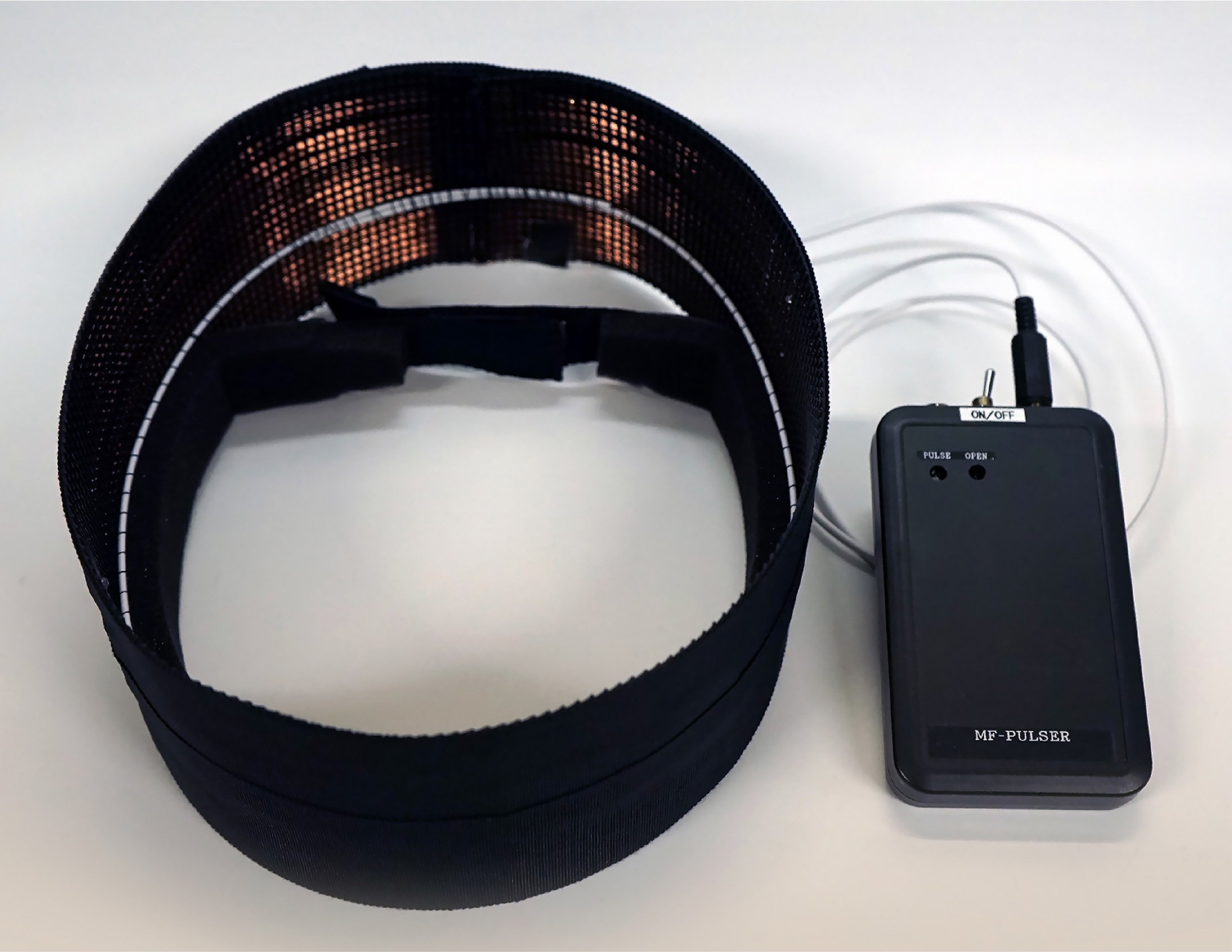
    Head Mounted Magnetic Field Device
    A head-mounted device generates an ultra-low frequency ultralow magnetic field, known as an Extremely Low Frequency Magnetic Environment (ELF-ELME). Credit: Mikako Ito, Keiko Itano

    Throughout the trial, participants wore a head-mounted magnetic field device that exposed them to ELF-ELME for two hours per day for eight weeks. As predicted, the researchers found that all patients reported a drop in their level of depression.

    Although the experiment was an exploratory trial with a limited number of participants and no control group, the findings suggest that larger-scale clinical trials are feasible. If such trials prove to be effective, their research could lead to a groundbreaking change in the current clinical practice of depression treatment.

    Inada believes that the device has great potential to treat depression more effectively in a patient-centered way. “The magnetic field generated by the device is non-invasive, being 1/4.5 of the Japanese geomagnetic field and less than 1/60 of the International Commission on Non-Ionizing Radiation Protection’s general public exposure standard,” he said, “We anticipate that patients will be able to receive daily home treatment without even being aware of being in a low magnetic field environment.”

    He continued: “Compared to current depression treatments, such as long-term antidepressant medications, electroconvulsive therapy, and repetitive transcranial magnetic stimulation, this therapy is superior in terms of convenience and lack of anticipated side effects. We could see our device being used for patients who prefer not to take medication or safely in combination with other treatments.”

    Reference: “Extremely Low Frequency, Extremely Low Magnetic Environment for depression: An open-label trial” by Masako Tachibana, Toshiya Inada, Hiroki Kimura, Mikako Ito, Yachiyo Kuwatsuka, Fumie Kinoshita, Daisuke Mori and Kinji Ohno, 26 March 2024, Asian Journal of Psychiatry.
    DOI: 10.1016/j.ajp.2024.104036

    Never miss a breakthrough: Join the SciTechDaily newsletter.
    Follow us on Google and Google News.

    Depression Magnetic Fields Nagoya University Popular
    Share. Facebook Twitter Pinterest LinkedIn Email Reddit

    Related Articles

    New Study Unveils Serotonin’s Key Role in Fertility and Depression

    Research Shows Probiotics May Help Ease Depression

    New Scientific Study Shows Fish Oil May Help Treat Depression

    Treatment Rapidly Relieves Severe Depression in 90% of Participants in Stanford Study

    Researchers Warn Antidepressant Use Creates Physical Dependence – “Notoriously Difficult to Quit”

    Brain-Wave Pattern Can Help Identify Best Treatment Options for Depression

    Shockingly Simple: Aspirin, Advil, Fish Oil Effectively and Safely Help Curb Depression

    New Drug Combo Shows Promise for Treatment of Depression and Addiction

    Study Links Diet Soda With Depression in Older Adults

    3 Comments

    1. Boba on August 4, 2024 2:19 am

      That’s just another way to try to hack the brain to not feel what it should feel.

      Depression is not an illness. Depression is a symptom of another illness. It’s possibly even a way to cope with that illness. And that illness is the modern way of life.

      Reply
    2. Ficovinazlodejina on August 5, 2024 1:47 am

      On such a small test sample and without a control group, this is insufficiently confirmed.

      Reply
    3. chris campbell on August 5, 2024 2:56 pm

      All sounds ok and worth checking out.

      Reply
    Leave A Reply Cancel Reply

    • Facebook
    • Twitter
    • Pinterest
    • YouTube

    Don't Miss a Discovery

    Subscribe for the Latest in Science & Tech!

    Trending News

    First-of-Its-Kind Discovery: Homer’s Iliad Found Embedded in a 1,600-Year-Old Egyptian Mummy

    Beyond Inflammation: Scientists Uncover New Cause of Persistent Rheumatoid Arthritis

    A Simple Molecule Could Unlock Safer, Easier Weight Loss

    Scientists Just Built a Quantum Battery That Charges Almost Instantly

    Researchers Unveil Groundbreaking Sustainable Solution to Vitamin B12 Deficiency

    Millions of People Have Osteopenia Without Realizing It – Here’s What You Need To Know

    Researchers Discover Boosting a Single Protein Helps the Brain Fight Alzheimer’s

    World-First Study Reveals Human Hearts Can Regenerate After a Heart Attack

    Follow SciTechDaily
    • Facebook
    • Twitter
    • YouTube
    • Pinterest
    • Newsletter
    • RSS
    SciTech News
    • Biology News
    • Chemistry News
    • Earth News
    • Health News
    • Physics News
    • Science News
    • Space News
    • Technology News
    Recent Posts
    • After Decades, MIT Researchers Capture the First 3D Atomic View of a Mysterious Material
    • Your Favorite Fishing Spot Is Turning Brown – and the Fish Are Changing
    • 380-Million-Year-Old Fish Fossil Reveals Secrets of Life’s First Steps Onto Land
    • Mezcal “Worm” in a Bottle Mystery: DNA Testing Reveals a Surprise
    • Scientists Turn Red Lettuce Green, Unlocking Hidden Nutrients
    Copyright © 1998 - 2026 SciTechDaily. All Rights Reserved.
    • Science News
    • About
    • Contact
    • Editorial Board
    • Privacy Policy
    • Terms of Use

    Type above and press Enter to search. Press Esc to cancel.