
The making of mendelevium-244: In this video, Berkeley Lab project scientist Jennifer Pore describes how scientists working at Berkeley Lab’s 88-Inch Cyclotron created and confirmed the discovery of a new isotope, mendelevium-244. Mendelevium, an artificial element, was first discovered by a Berkeley Lab team in 1955, and since then more than a dozen variations of this element, known as isotopes, have been discovered. Credit: Marilyn Sargent/Berkeley Lab
Berkeley Lab-led team creates a new, lighter form of the element mendelevium in experiments at the 88-Inch Cyclotron.
A team of scientists working at Lawrence Berkeley National Laboratory (Berkeley Lab) has discovered a new form of the human-made element mendelevium. The newly created isotope, mendelevium-244, is the 17th and lightest form of mendelevium, which is element 101 on the periodic table.
Mendelevium was first created by Berkeley Lab scientists in 1955 (see a related video), and is among a list of 16 elements that Berkeley Lab scientists discovered or helped to discover. An isotope is a form of an element with more or fewer neutrons (uncharged particles) in its atomic nucleus than other forms of an element.
In the latest discovery, the team used Berkeley Lab’s 88-Inch Cyclotron, which accelerates powerful beams of charged particles at targets to create atoms of heavier elements, to make mendelevium-244. A cyclotron is a type of particle accelerator that was invented by the Lab’s namesake, Ernest O. Lawrence, in 1930.
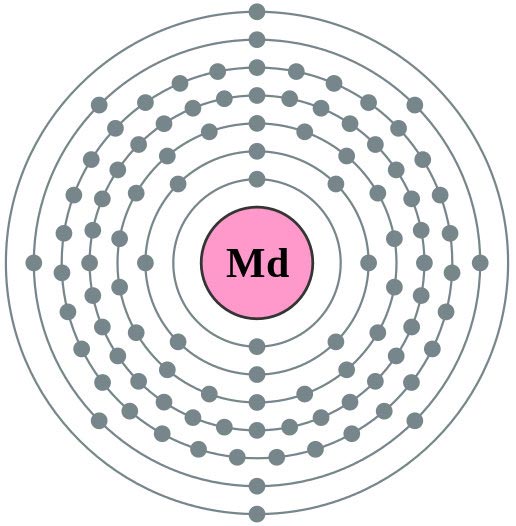
Berkeley Lab-led teams have now discovered 12 of the 17 mendelevium isotopes, and have discovered a total of 640 isotopes – about one-fifth of all known isotopes and by far the highest count for a single institution. At the close of 2019 there were 3,308 known isotopes. The new isotope discovery is the first by a Berkeley Lab-led team since 2010.
“It was challenging to discover this new isotope of mendelevium because all of the neighboring mendelevium isotopes have very similar decay properties,” said Jennifer Pore, a Berkeley Lab project scientist who led the study detailing the isotope’s discovery. Alpha decay describes the process by which a radioactive element like mendelevium breaks down into lighter elements over time.
In total, the team measured the properties of 10 atoms of mendelevium-244 for the study, which was published on June 23, 2020, in the journal Physical Review Letters.
“Each isotope represents a unique combination of protons and neutrons,” Pore said. “When a new isotope is discovered, that particular combination of protons (positively charged particles) and neutrons has never been observed. Studies of these extreme combinations are critical toward our understanding of all nuclear matter.”
In addition to discovering the new isotope, the research team’s work also provided the first direct evidence for a decay process involving an isotope of the element berkelium. The team included scientists from UC Berkeley, Lawrence Livermore National Laboratory, San Jose State University, and Sweden’s Lund University.
Researchers found evidence that mendelevium-244 has two separate chains of decay, each leading to a different half-life: 0.4 second and 6 seconds, based on different energy configurations of particles in its nucleus. A half-life is the time it takes for a radioactive element’s number of atoms to be reduced by half as their nuclei decay into other, lighter nuclei.
In a separate measurement stemming from the same study, the researchers found the first evidence for the alpha decay process of berkelium-236, an isotope of the element berkelium, as it transforms into americium-232, a slightly lighter isotope. Berkelium was discovered in 1949 by a Berkeley Lab-led team.
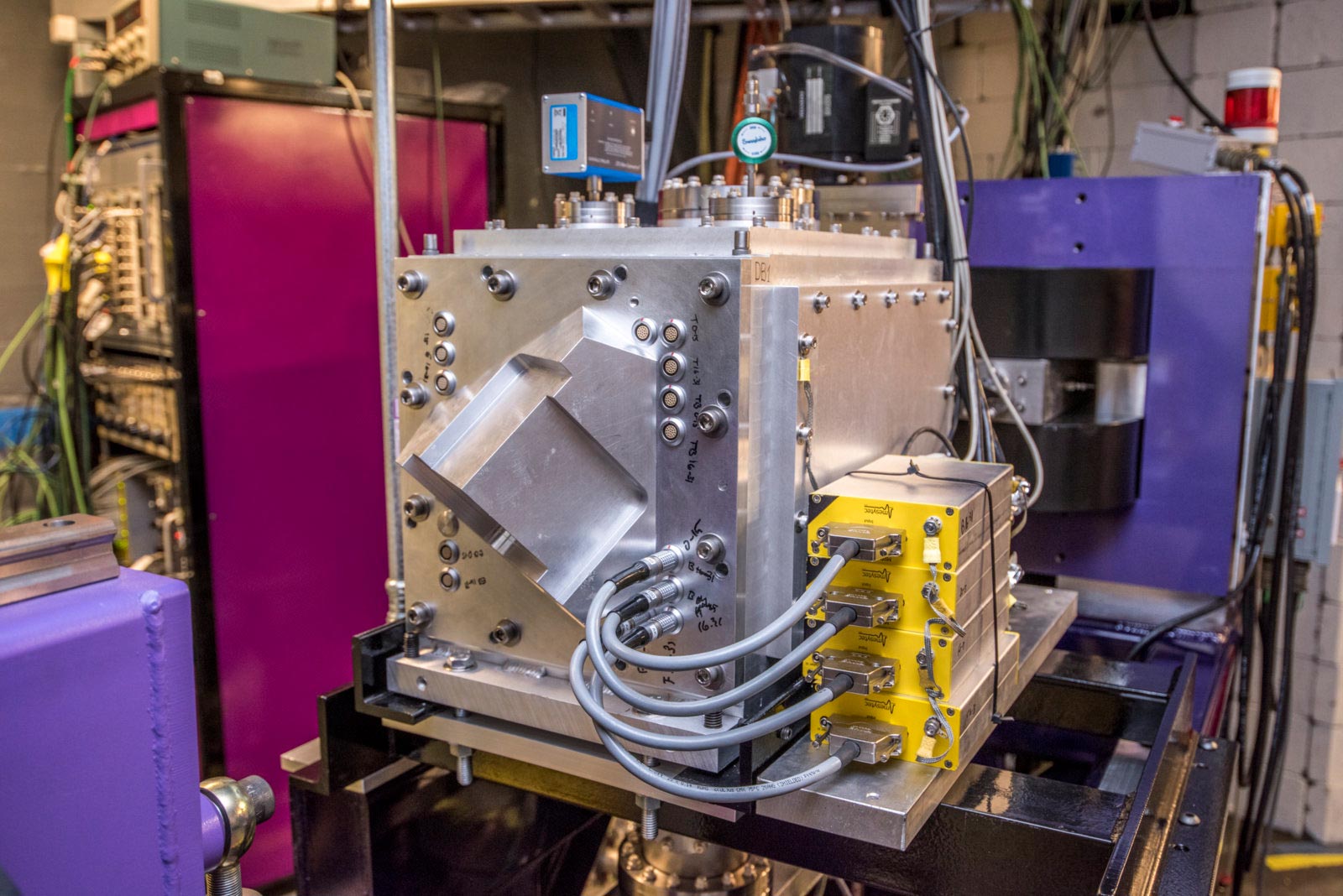
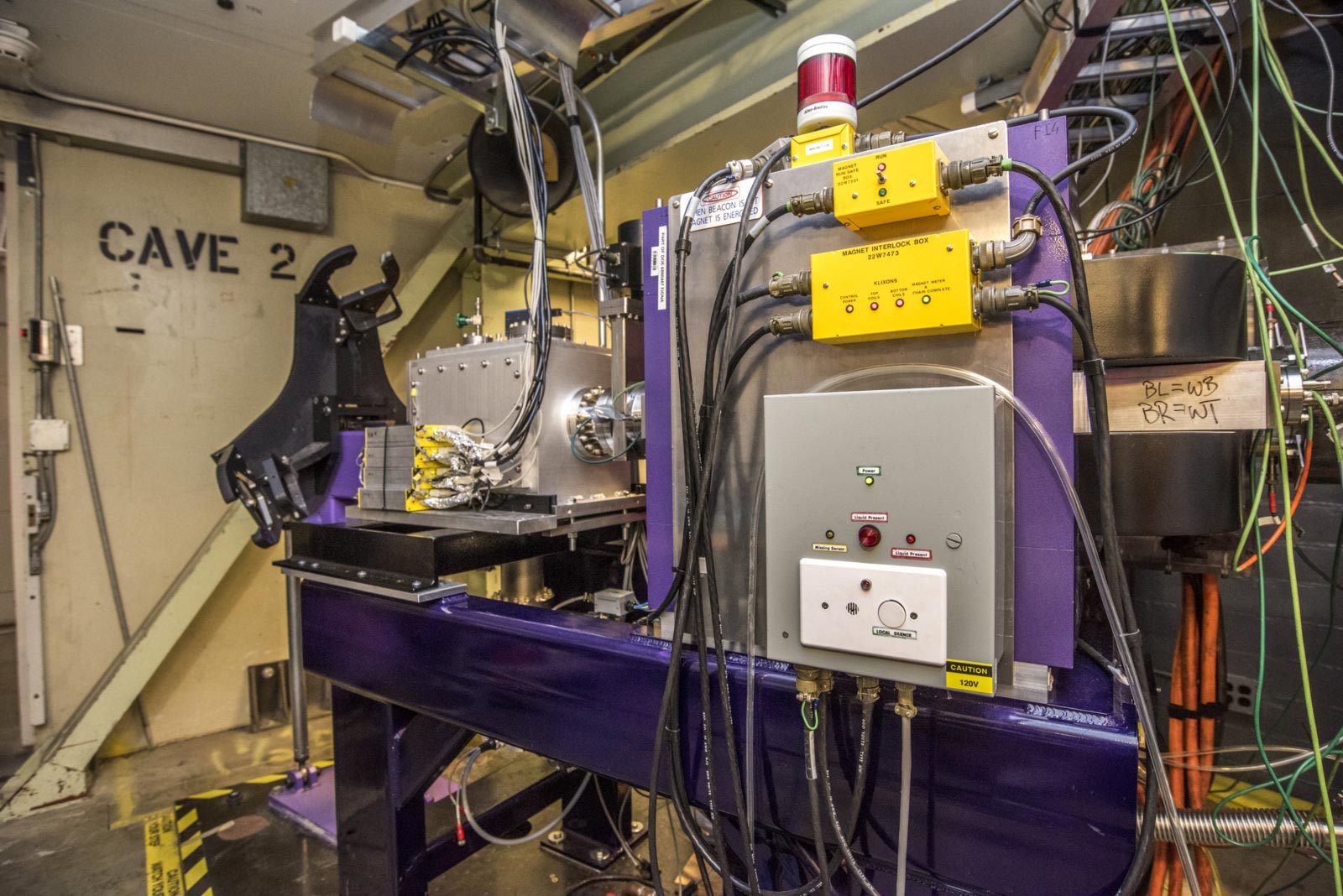
Central to the isotope’s discovery was an instrument at the 88-Inch Cyclotron called FIONA, or For the Identification Of Nuclide A. The “A” in FIONA represents an element’s mass number, which is the total number of protons (positively charged particles) and neutrons (uncharged particles) in an atom’s nucleus. The new isotope’s mass number is 244.
“The most important tool that we had in this discovery was FIONA,” said Pore, who was also part of the team that assisted in FIONA’s testing and startup. FIONA precisely measured the mass number of the new isotope.
Barbara Jacak, Nuclear Science Division director at Berkeley Lab, said, “We built FIONA to enable discoveries like this one, and it is exciting to see this instrument hitting its stride.”
Michael Thoennessen, a University Distinguished Professor at Michigan State University who is on leave to serve as editor in chief of the American Physical Society, maintains a list of isotope discoveries and notes that the list of new isotopes has been thinner than usual over the past several years.
“Isotope discoveries are cyclical and depend on new accelerators and major advances in experimental equipment development,” he said. Berkeley Lab’s FIONA and the Facility for Rare Isotope Beams (FRIB), a U.S. Department of Energy user facility in development at Michigan State University, are unique capabilities “with large discovery potential” for different types of new isotopes in the U.S., he noted.

To ensure that FIONA’s measurements were accurate, the research team first measured the decay properties and mass numbers of known mendelevium isotopes, including mendelevium-247, mendelevium-246, and mendelevium-245.
“Once we were confident that we were well-versed in the properties of these light mendelevium isotopes, we attempted the experiment to discover the previously unobserved isotope mendelevium-244,” Pore said. “Without the direct confirmation that we had produced an isotope with a mass number of 244, it would have been very difficult to disentangle the results and prove the discovery.”
To create such exotic isotopes – even the lightest known form of mendelevium is still heavier than naturally occurring uranium – scientists produced a particle beam at the 88-Inch Cyclotron containing charged particles of argon-40, an isotope of argon, and directed the beam at a thin foil target composed of bismuth-209, an isotope of bismuth.
Occasionally in these experiments, a nucleus in the high-energy particle beam directly strikes and fuses with a nucleus in the target foil, producing a single atom of a heavier element. And for an isotope with a very short half-life, it’s a race to take measurements of an atom before it decays away into something else.
Berkeley’s 88-Inch Cyclotron has another tool upstream of FIONA that is called the Berkeley Gas-Filled Separator. The separator helps pull out the relevant atoms that can be quickly and individually measured in detail with FIONA.
Researchers may pursue other studies of mendelevium-244 with other instrumentation to try to learn more about its structure, Pore said.
And now that FIONA has demonstrated its value in isotope discovery, Berkeley Lab researchers are setting their sights on other new isotopes. “We are already planning similar studies along other isotopic chains to discover new isotopes,” Pore said.
Reference: “Identification of the New Isotope 244Md” by J. L. Pore, J. M. Gates, R. Orford, C. M. Campbell, R. M. Clark, H. L. Crawford, N. E. Esker, P. Fallon, J. A. Gooding, J. T. Kwarsick, A. O. Macchiavelli, C. Morse, D. Rudolph, A. Såmark-Roth, C. Santamaria, R. S. Shah and M. A. Stoyer, 23 June 2020, Physical Review Letters.
DOI: 10.1103/PhysRevLett.124.252502
Never miss a breakthrough: Join the SciTechDaily newsletter.
Follow us on Google and Google News.