
Close Menu
    Facebook X (Twitter) Instagram
    SciTechDaily
    • Biology
    • Chemistry
    • Earth
    • Health
    • Physics
    • Science
    • Space
    • Technology
    Facebook X (Twitter) Pinterest YouTube RSS
    SciTechDaily
    Home»Space»Iodine Thruster Used to Change the Orbit of a Satellite for the First Time Ever
    Space

    Iodine Thruster Used to Change the Orbit of a Satellite for the First Time Ever

    By European Space AgencyJanuary 25, 2021No Comments2 Mins Read
    Facebook Twitter Pinterest Telegram LinkedIn WhatsApp Email Reddit
    Share
    Facebook Twitter LinkedIn Pinterest Telegram Email Reddit
    Iodine Thruster
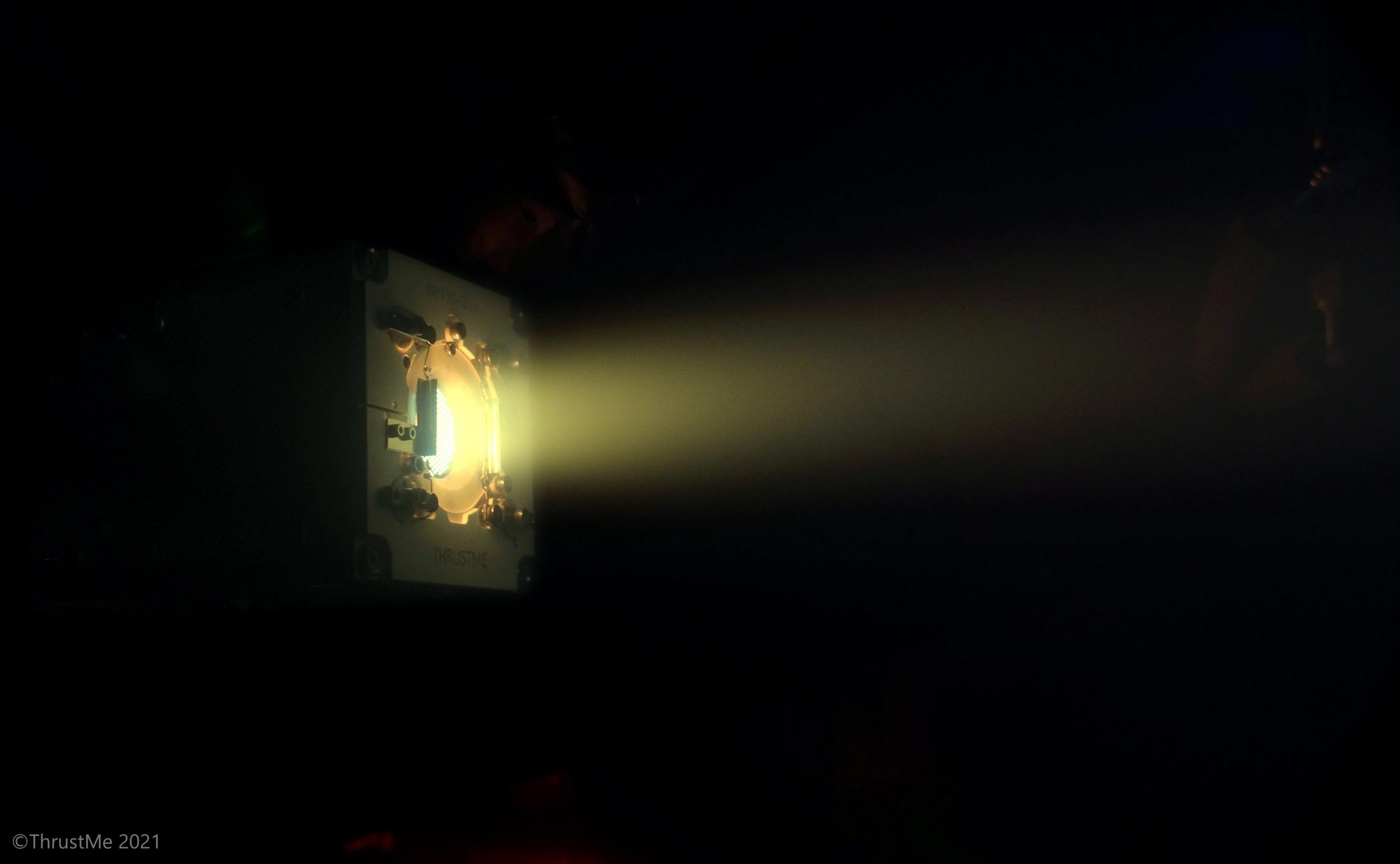
    Iodine thruster used to change the orbit of a small satellite for the first time ever. Credit: ThrustMe

    Iodine Thrusters Could Help Satellites Adjust Orbits and Self-Destruct Safely

    For the first time ever, a telecommunications satellite has used an iodine propellant to change its orbit around Earth.

    The small but potentially disruptive innovation could help to clear the skies of space junk, by enabling tiny satellites to self-destruct cheaply and easily at the end of their missions, by steering themselves into the atmosphere where they would burn up.

    The technology could also be used to boost the mission lifetime of small CubeSats that monitor agricultural crops on Earth or entire mega-constellations of nanosats that provide global internet access, by raising their orbits when they begin to drift towards the planet.

    The technology was developed by ThrustMe, a spin-off company from the École Polytechnique and the French National Centre for Scientific Research (CNRS), and supported by ESA through its program of Advanced Research in Telecommunications Systems (ARTES).

    The Advantages Over Traditional Propellants

    It uses a novel propellant – iodine – in an electric thruster that controls the satellite’s height above Earth. Iodine is less expensive and uses simpler technologies than traditional propellants.

    Unlike many traditional propellants, iodine is non-toxic and is solid at room temperature and pressure. This makes it easier and cheaper to handle on Earth.

    When heated, it turns to gas without going through a liquid phase, which makes it ideal for a simple propulsion system. It is also denser than traditional propellants, so it occupies smaller volumes onboard the satellite.

    ThrustMe launched its iodine thruster on a commercial research nanosat called SpaceTy Beihangkongshi-1 that went into space in November 2020. It was test-fired earlier this month before being used to change the orbit of the satellite.

    Never miss a breakthrough: Join the SciTechDaily newsletter.
    Follow us on Google and Google News.

    European Space Agency Popular
    Share. Facebook Twitter Pinterest LinkedIn Email Reddit

    Related Articles

    Webb Uncovers Unexpected Phenomena Above Jupiter’s Great Red Spot

    A Snaking Scar Across Mars: The Mystery of Aganippe Fossa

    Quick-Cooling Oddballs Rewrite Neutron Star Physics

    ESA’s LEGO Space Bricks: From Meteorites to Moon Bases

    Hubble Captures a Maelstrom of Matter and Energy 49 Million Light-Years Away

    Asteroid Day Revelation: Explore the Massive Meteor Crater in Arizona From Space

    Close Encounter: Two Large Asteroids Will Skim Past Earth Just 42 Hours Apart

    Advanced Telescopes Reveal Hidden Worlds Orbiting Bright Stars

    Stunning Fireball Over Spain and Portugal Tracked by Lightning Imager From Space

    Leave A Reply Cancel Reply

    • Facebook
    • Twitter
    • Pinterest
    • YouTube

    Don't Miss a Discovery

    Subscribe for the Latest in Science & Tech!

    Trending News

    First-of-Its-Kind Discovery: Homer’s Iliad Found Embedded in a 1,600-Year-Old Egyptian Mummy

    Beyond Inflammation: Scientists Uncover New Cause of Persistent Rheumatoid Arthritis

    A Simple Molecule Could Unlock Safer, Easier Weight Loss

    Scientists Just Built a Quantum Battery That Charges Almost Instantly

    Researchers Unveil Groundbreaking Sustainable Solution to Vitamin B12 Deficiency

    Millions of People Have Osteopenia Without Realizing It – Here’s What You Need To Know

    Researchers Discover Boosting a Single Protein Helps the Brain Fight Alzheimer’s

    World-First Study Reveals Human Hearts Can Regenerate After a Heart Attack

    Follow SciTechDaily
    • Facebook
    • Twitter
    • YouTube
    • Pinterest
    • Newsletter
    • RSS
    SciTech News
    • Biology News
    • Chemistry News
    • Earth News
    • Health News
    • Physics News
    • Science News
    • Space News
    • Technology News
    Recent Posts
    • New Research Challenges Long-Held Beliefs About How the Brain Makes Decisions
    • Breakthrough Technology Reveals New Treatment Targets for Cancer
    • Scientists Discover New Way To Make Drug-Resistant Cancer Treatable Again
    • This Simple Exercise Trick Builds Muscle With Less Effort, Study Finds
    • Middle Age Is Becoming a Breaking Point in America, Study Reveals
    Copyright © 1998 - 2026 SciTechDaily. All Rights Reserved.
    • Science News
    • About
    • Contact
    • Editorial Board
    • Privacy Policy
    • Terms of Use

    Type above and press Enter to search. Press Esc to cancel.