
Close Menu
    Facebook X (Twitter) Instagram
    SciTechDaily
    • Biology
    • Chemistry
    • Earth
    • Health
    • Physics
    • Science
    • Space
    • Technology
    Facebook X (Twitter) Pinterest YouTube RSS
    SciTechDaily
    Home»Technology»Japanese Scientists Unveil Game-Changing 3D Printing Breakthrough for Lightweight Cars
    Technology

    Japanese Scientists Unveil Game-Changing 3D Printing Breakthrough for Lightweight Cars

    By Tohoku UniversityDecember 26, 20243 Comments3 Mins Read
    Facebook Twitter Pinterest Telegram LinkedIn WhatsApp Email Reddit
    Share
    Facebook Twitter LinkedIn Pinterest Telegram Email Reddit
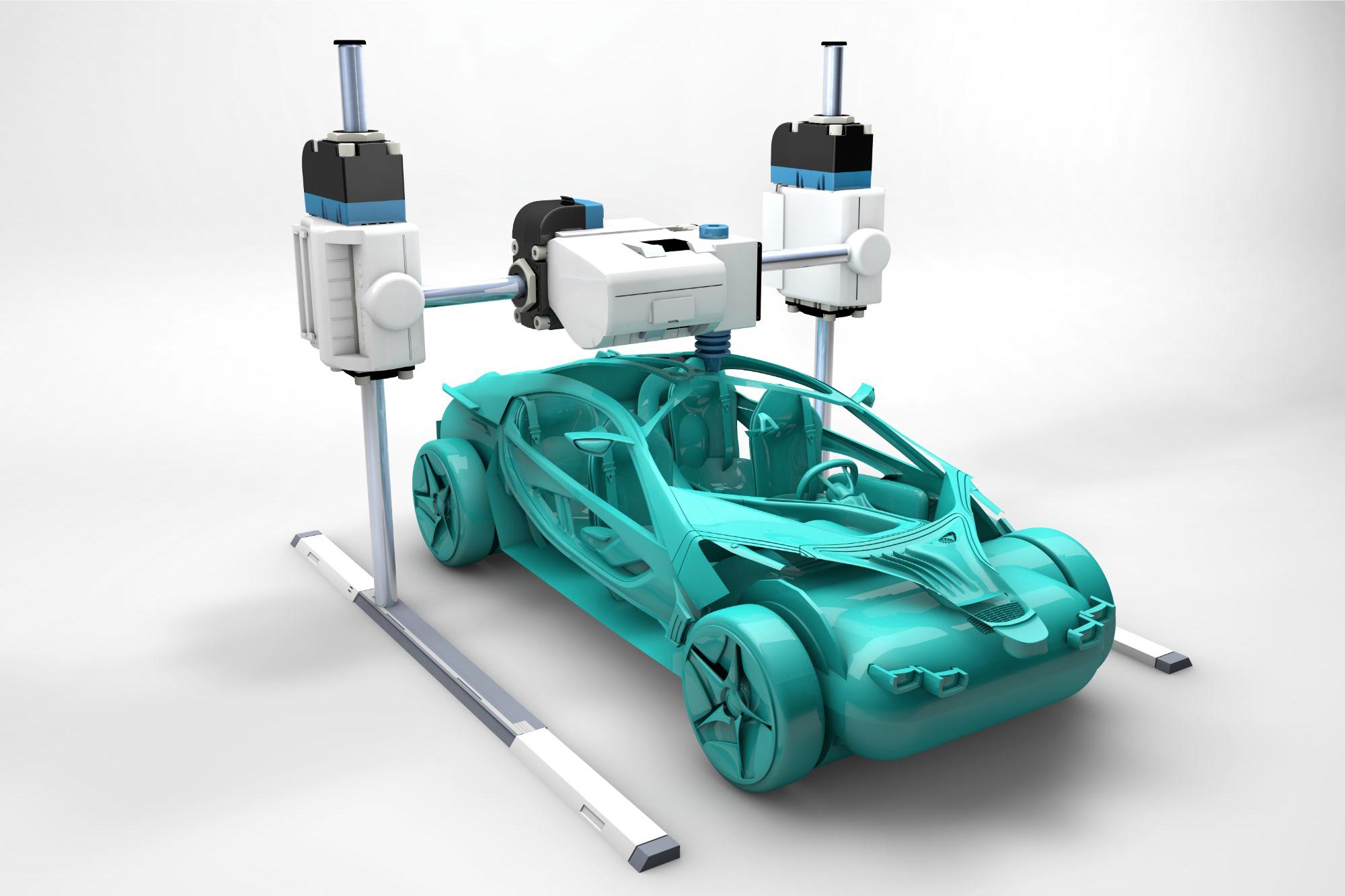
    3D Printed Car
    Researchers at Tohoku University have developed a groundbreaking multi-material 3D printing technique using Laser Powder Bed Fusion (L-PBF) to create lightweight yet durable automotive components. By increasing laser scan speed, they suppressed brittle intermetallic compounds in steel-aluminum alloys, enabling the successful production of the world’s first 3D-printed full-scale suspension tower. (Artist’s concept.)

    Tohoku University developed a durable steel-aluminum alloy via 3D printing, overcoming brittleness challenges with advanced laser techniques, paving the way for innovative, lightweight automotive components.

    Researchers at Tohoku University’s Institute for Materials Research and New Industry Creation Hatchery Center have achieved a significant breakthrough in multi-material 3D printing, showcasing its potential for manufacturing lightweight yet durable automobile components.

    Metal 3D printing involves building objects layer by layer, binding metal layers together using heat. This technique offers remarkable precision, enabling the creation of unique, highly customizable shapes while minimizing material waste compared to traditional manufacturing processes.Steel Al Alloy Interfaces

    A key advantage of 3D printing is the ability to produce “multi-material structures,” which combine different materials strategically to optimize a component’s performance. For instance, integrating aluminum with steel in automobile parts can significantly reduce weight while maintaining strength. These advantages have made advanced 3D printing techniques a focal point for researchers worldwide, as they hold great promise for innovation in manufacturing.

    Steel/Al alloy interfaces obtained using L-PBF at different scan speeds. Credit: ©Kenta Yamanaka et al.However, this technique does come with some challenges.”Multi-materials are a hot topic in the field of additive manufacturing due to its process flexibility,” explains Associate Professor Kenta Yamanaka (Tohoku University), “However, a major challenge in practical implementation is that for certain metal combinations, such as steel and aluminum, brittle intermetallic compounds can be formed at the dissimilar metal interfaces. So, while the material is now lighter, it ends up being more brittle.”

    Automotive Suspension Tower Manufactured via L PBF
    Full-scale prototype of a topologically optimized automotive suspension tower manufactured via L-PBF. Credit: ©Kenta Yamanaka et al.

    Overcoming Challenges: Laser Powder Bed Fusion (L-PBF)

    The goal of this study was to produce a steel-aluminum alloy that was lightweight but did not compromise on strength. To do so, the research team used Laser Powder Bed Fusion (L-PBF), one of the primary metal 3D printing technologies that employs a laser to selectively melt metal powders.

    They discovered that increasing the scan speed of the laser significantly suppresses the formation of brittle intermetallic compounds (such as Al5Fe2 and Al13Fe4). They proposed that this higher scanning speed leads to something called non-equilibrium solidification, which minimizes solute partitioning that result in weak points in the material. The resulting product they created consequently demonstrated strong bonding interfaces.

    Interfacial Strength for Steel/Al Alloy Multi-Materials
    Interfacial strength for steel/Al alloy multi-materials obtained using L-PBF at different scan speeds. Credit: ©Kenta Yamanaka et al.

    “In other words, you can’t just slap two metals together and expect them to stick without a plan,” says Specially Appointed Assistant Professor Seungkyun Yim (Tohoku University),”We had to fully understand the in-situ alloying mechanism first.”

    Based on this achievement, they successfully prototyped the world’s first full-scale automotive multi-material component (suspension tower) with a tailored geometry. The research group intends to apply these findings to other metal combinations where similar issues with bonding need improvement, which will allow for more broad applications.

    The results were published in Additive Manufacturing on November 19, 2024.

    Reference: “Multi-material additive manufacturing of steel/Al alloy by controlling the liquid/solid interface in laser beam powder bed fusion” by Yujie Cui, Jiaxiang Li, Seungkyun Yim, Kenta Yamanaka, Kenta Aoyagi, Hao Wang and Akihiko Chiba, 19 November 2024, Additive Manufacturing.
    DOI: 10.1016/j.addma.2024.104529

    Never miss a breakthrough: Join the SciTechDaily newsletter.
    Follow us on Google and Google News.

    3D Printing Automobiles
    Share. Facebook Twitter Pinterest LinkedIn Email Reddit

    Related Articles

    New Smartphone App Can Tell When Parts on Your Car Need Replacing

    MIT Engineers Design “Peel-and-Go” Printable Structures That Fold Themselves

    New High-strength Steel Could Help Improve Fuel Efficiency in Automobiles

    3D Printed Airway Splint Saves Baby’s Life

    3D Droplet Printer Creates Synthetic Tissues

    Bioengineers Use 3D Printer to Print Ears that Look and Act like Natural Ears

    3D Printing Using DNA Could Make Drugs

    NASA’s 3D Printing of Rocket Engine Parts Might Boost Larger Manufacturing Trend

    3-D Printer Makes Custom Human Bones

    3 Comments

    1. Rob on December 27, 2024 8:10 pm

      Fascinating. And one wonders about the thermite bombs such as HMS Sheffield during the Falklands War, not to mention the fire bombs dropped on the UK’s cities during WW2.

      Reply
    2. Boba on December 28, 2024 9:33 am

      It’s barely gonna offset the weight of the battery.

      Reply
    3. Jose Santiago on December 28, 2024 9:54 am

      Be curiosity To Know how Energy efficient this Process is in order for it To become commercially viable?

      Reply
    Leave A Reply Cancel Reply

    • Facebook
    • Twitter
    • Pinterest
    • YouTube

    Don't Miss a Discovery

    Subscribe for the Latest in Science & Tech!

    Trending News

    The Universe Is Expanding Too Fast and Scientists Can’t Explain Why

    “Like Liquid Metal”: Scientists Create Strange Shape-Shifting Material

    Early Warning Signals of Esophageal Cancer May Be Hiding in Plain Sight

    Common Blood Pressure Drug Shows Surprising Power Against Deadly Antibiotic-Resistant Superbug

    Scientists Uncover Dangerous Connection Between Serotonin and Heart Valve Disease

    Scientists Discover a “Protector” Protein That Could Help Reverse Hair Loss

    Bone-Strengthening Discovery Could Reverse Osteoporosis

    Scientists Uncover Hidden Trigger Behind Stem Cell Aging

    Follow SciTechDaily
    • Facebook
    • Twitter
    • YouTube
    • Pinterest
    • Newsletter
    • RSS
    SciTech News
    • Biology News
    • Chemistry News
    • Earth News
    • Health News
    • Physics News
    • Science News
    • Space News
    • Technology News
    Recent Posts
    • Scientists Overcome Major Quantum Bottleneck, Potentially Transforming Teleportation and Computing
    • Quantum Physics’ Strangest Problem May Hold the Key to Time Itself
    • Scientists Create “Liquid Gears” That Spin Without Touching
    • The Simple Habit That Could Help Prevent Cancer
    • Forgotten Medicinal Plant Shows Promise in Fighting Dangerous Superbugs
    Copyright © 1998 - 2026 SciTechDaily. All Rights Reserved.
    • Science News
    • About
    • Contact
    • Editorial Board
    • Privacy Policy
    • Terms of Use

    Type above and press Enter to search. Press Esc to cancel.