
Close Menu
    Facebook X (Twitter) Instagram
    SciTechDaily
    • Biology
    • Chemistry
    • Earth
    • Health
    • Physics
    • Science
    • Space
    • Technology
    Facebook X (Twitter) Pinterest YouTube RSS
    SciTechDaily
    Home»Space»“Journey through an Exploded Star” 3D Interactive Experience
    Space

    “Journey through an Exploded Star” 3D Interactive Experience

    By Darren Milligan, Smithsonian Center for Learning and Digital AccessMay 6, 2019No Comments3 Mins Read
    Facebook Twitter Pinterest Telegram LinkedIn WhatsApp Email Reddit
    Share
    Facebook Twitter LinkedIn Pinterest Telegram Email Reddit
    Journey through an Exploded Star
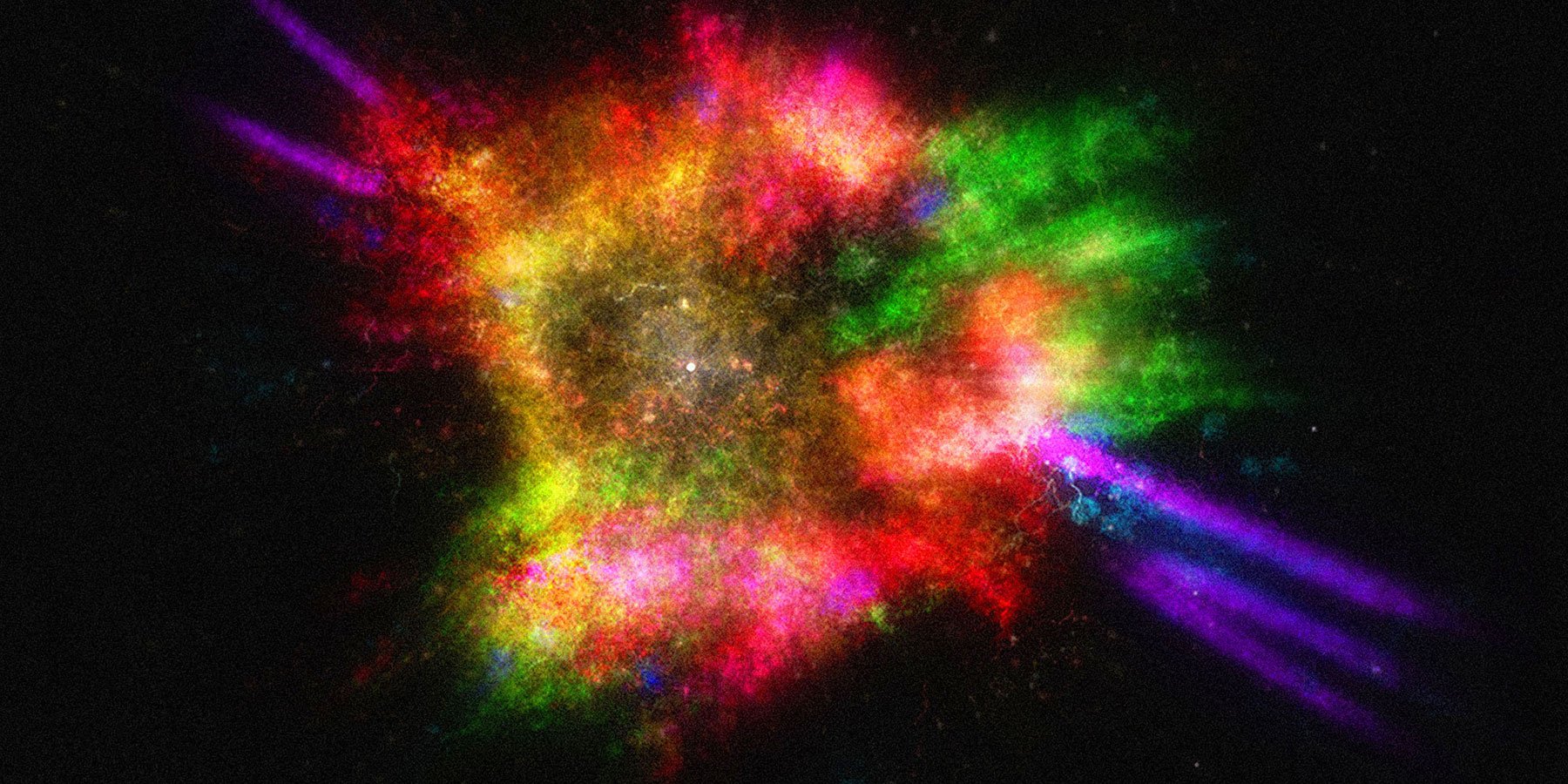
    Journey through the remnants of an exploded star in this Smithsonian 3D interactive experience. Credit: Image courtesy of the Smithsonian Center for Learning and Digital Access

    The Smithsonian today made available a new online interactive that allows users to explore a three-dimensional (3D) visualization of the remnants of a supernova, or exploded star.

    Designed for use by both general audiences and high school science classrooms, the free materials, available at s.si.edu/supernova, include an interactive simulation, a 360° video, and a multimedia instructional package.

    The project was created by the Smithsonian Center for Learning and Digital Access in conjunction with the Center for Astrophysics | Harvard & Smithsonian (CfA), a collaboration that includes the Smithsonian Astrophysical Observatory.

    To create the visualizations, the project uses data from the Chandra X-ray Observatory and Spitzer Space Telescope, the National Optical Astronomy Observatory’s Mayall Telescope, and the MIT/Michigan/Dartmouth Observatory’s Hiltner Telescope.

    “Journey” features the data visualization work of Kimberly Arcand, visualization and emerging technology lead for Chandra, which is operated and controlled on behalf of NASA by the CfA.

    “All of that data has to be translated and processed in a way that humans can see, so it’s really important to be able to study our Universe using different kinds of light,” said Arcand. “Each band of light gives you different information, so it’s like adding puzzle pieces to fit into the greater whole.”

    “Journey through an Exploded Star” offers three ways to explore content:

    — An online interactive simulation in which users navigate the fiery remains of a supernova and manipulate the real data to make their own visualization of the cosmos. (Closed Captioned, works across desktop browsers, and requires no software downloads.)

    — A 360° video tour, narrated by Arcand, explains how and why scientists study supernovas such as Cassiopeia A: to gain a comprehensive picture of the cosmos. (Works on desktop, mobile, and Google Cardboard devices.)

    — A high school classroom multimedia instructional package begins with the fundamentals of the electromagnetic spectrum and illustrates the production of elements from the explosions of stars. (Aligned to Next Generation Science Standards (HS-ESS1-3 and HS-PS4).)

    The director of the Smithsonian Center for Learning and Digital Access, Stephanie L. Norby, said, “Projects such as this one make science learning both exciting and relevant for students. Using media tools, they can make a personal connection to topics that may initially seem esoteric to discover that there are forces that connect everyone to the stars.”

    The Smithsonian Center for Learning and Digital Access makes all of this content freely available in its Smithsonian Learning Lab.

    Never miss a breakthrough: Join the SciTechDaily newsletter.
    Follow us on Google and Google News.

    Astronomy Harvard-Smithsonian Center for Astrophysics
    Share. Facebook Twitter Pinterest LinkedIn Email Reddit

    Related Articles

    Astronomers Spot Unusual, Enormous Rings Around a Black Hole

    Chandra Catches Extraordinary “Slingshot” During Titanic Space Collision

    Cold Interstellar Molecular Clouds as Cosmic Ray Detectors

    Mystery Solved: Astronomers Unravel the Puzzle of Betelgeuse’s “Great Dimming”

    Mega-Flares From Stars: 10 Million Times More Energetic Than the Most Powerful Flare Ever Observed on the Sun

    The Give and Take of Stellar Mega-Flares: By Studying Thousands of Young Stars, New Information Has Emerged

    In Quest to Map the Universe, Astrophysicists Launch Largest Sky Survey Ever

    Unprecedented New Panorama of the Center of Our Milky Way – Reveals Magnetized Threads Weaving Spectacular Galactic Tapestry

    How Habitable Are Planets That Orbit Red Dwarfs – The Most Common Type of Stars in the Galaxy?

    Leave A Reply Cancel Reply

    • Facebook
    • Twitter
    • Pinterest
    • YouTube

    Don't Miss a Discovery

    Subscribe for the Latest in Science & Tech!

    Trending News

    Scientists Warn That This Common Pet Fish Can Wreck Entire Ecosystems

    Scientists Make Breakthrough in Turning Plastic Trash Into Clean Fuel Using Sunlight

    This Popular Supplement May Interfere With Cancer Treatment, Scientists Warn

    Scientists Finally Solved One of Water’s Biggest Mysteries

    Could This New Weight-Loss Pill Disrupt the Entire Market? Here’s What You Should Know About Orforglipron

    Earth’s Crust Is Tearing Open in Africa, and It Could Form a New Ocean

    Breakthrough Bowel Cancer Trial Leaves Patients Cancer-Free for Nearly 3 Years

    Natural Compound Shows Powerful Potential Against Rheumatoid Arthritis

    Follow SciTechDaily
    • Facebook
    • Twitter
    • YouTube
    • Pinterest
    • Newsletter
    • RSS
    SciTech News
    • Biology News
    • Chemistry News
    • Earth News
    • Health News
    • Physics News
    • Science News
    • Space News
    • Technology News
    Recent Posts
    • Millions of People Have Osteopenia Without Realizing It – Here’s What You Need To Know
    • Researchers Discover Boosting a Single Protein Helps the Brain Fight Alzheimer’s
    • AI Detects “Invisible” Signs of Pancreatic Cancer Years Before Diagnosis
    • Kratom Use Explodes in the US, With Life-Changing Consequences
    • Scientists Uncover Fatal Weakness in “Zombie Cells” Linked to Cancer
    Copyright © 1998 - 2026 SciTechDaily. All Rights Reserved.
    • Science News
    • About
    • Contact
    • Editorial Board
    • Privacy Policy
    • Terms of Use

    Type above and press Enter to search. Press Esc to cancel.