
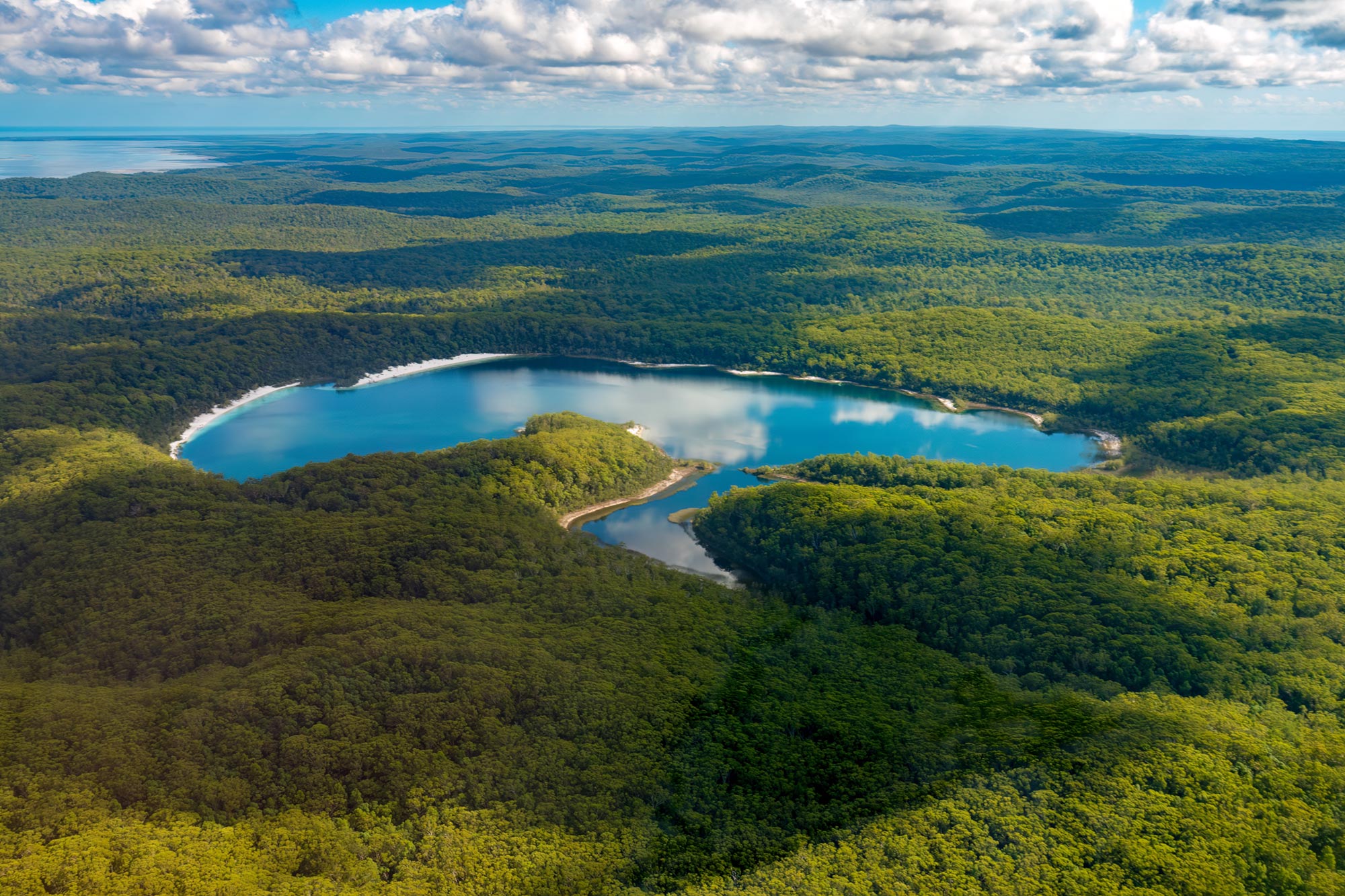
New research reveals that K’gari’s largest and longest-lived lakes may be more vulnerable to drying than previously believed.
K’gari, recognized as the world’s largest sand island and celebrated for its remarkable freshwater lakes, may have lakes that are more at risk of drying than previously understood, according to new findings from the University of Adelaide.
By examining ancient layers of lake sediment on K’gari, located off the south-eastern coast of Queensland, researchers uncovered signs of a major drying episode that occurred about 7500 years ago during the middle Holocene.
“Our research shows that about 7500 years ago, at a time of higher rainfall and long after the end of the last Ice Age, some of K’gari’s deepest lakes dried out,” says lead researcher Associate Professor John Tibby, from the University of Adelaide.
Associate Professor Tibby notes that drying events are not unusual across Australia, but this particular episode was surprising because it happened during a period that should have supported sustained lake levels.
“There are many Australian lakes that dried during the Millenium Drought when there was not enough rainfall to sustain them,” says Associate Professor Tibby, whose study was published in Quaternary Science.
“The K’gari lakes we studied have been in existence for between 35,000 and 55,000 years, but the drying event we’ve identified happened unexpectedly during a time of heavy rainfall.”
Wind Patterns and Uneven Rainfall
Dr Harald Hofmann, a co-author from the Commonwealth Scientific and Industrial Research Organization (CSIRO), says wind patterns may have influenced how the rainfall influenced K’gari and its neighboring island, Minjerribah.
“Prior research shows Minjerribah also experienced heavy rainfall events at this time, but, because of south-east trade winds that were occurring at the time, rainfall from the south only fed into lakes on Minjerribah, not those on K’gari,” he says.
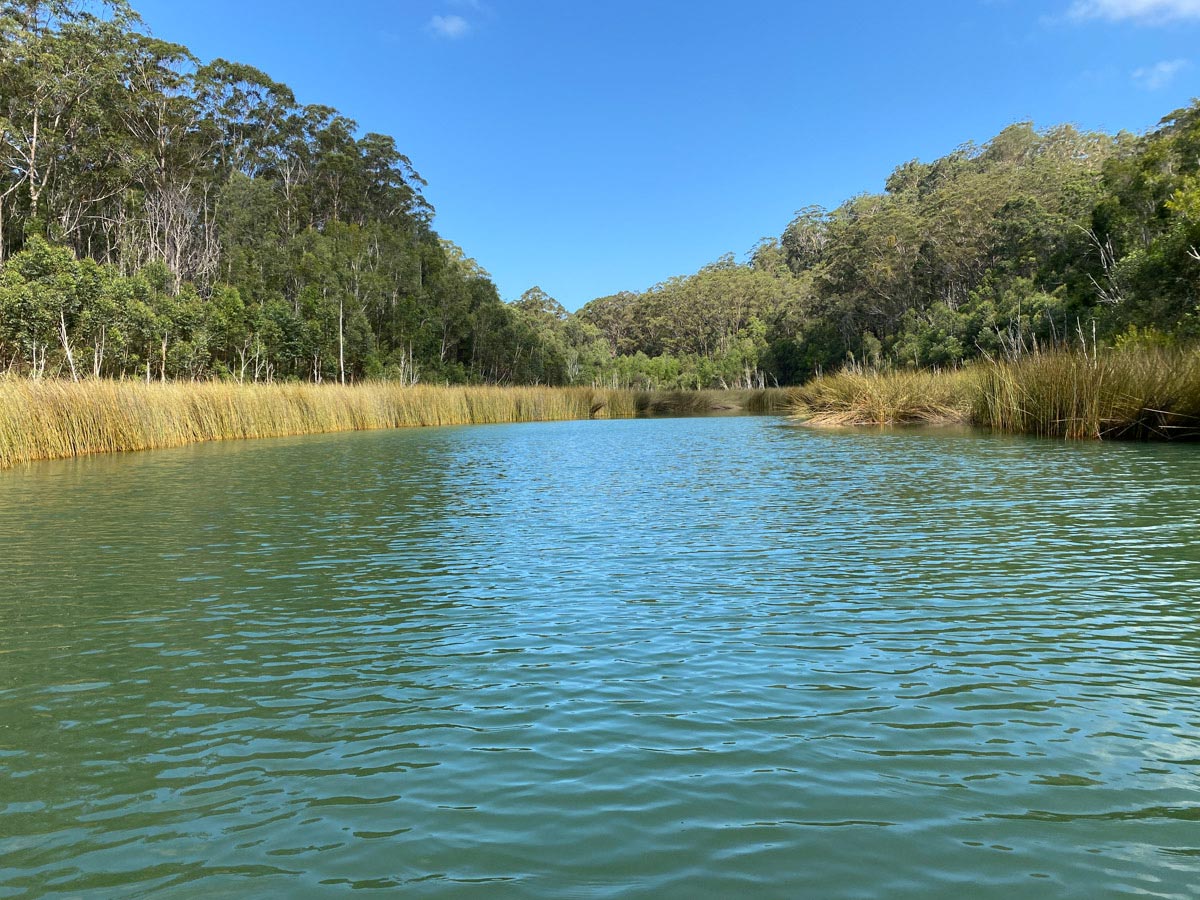
“This finding highlights a pressing need to know more about K’gari’s beautiful lakes. With a climate that is expected to get drier, but with more intense rainfall, we simply don’t know if these lakes are at risk of drying out.”
The research team made this discovery by recognising a significant gap in the sediment of some of K’gari’s oldest lakes.
“A lake’s sediment is like a journal where what happens in and around the lake gets recorded,” says Associate Professor Tibby.
“Pollen from plants in and around lakes can tell us about local vegetation types, and a higher amount of sand might tell us there was more erosion into the lake.
“Our study found sediment was missing from some of K’gari’s oldest lakes between 7,500 and 5,500 years ago, which tells us that the area of the lakes was not covered by water, meaning the lakes were not there.”
Cultural Significance and a Call to Protect
The lakes are known as The Eyes of K’gari to the Traditional Owners, the Butchulla people. Study co-author and Butchulla man Conway Burns says it is important to ensure their persistence into the future.
“K’gari is the name of the dreaming spirit who formed the island, and her eyes are not just water – they are windows to eternity,” Burns says.
“When you stand before the lakes of K’gari, you do not merely see reflections of sky and forest; you see the soul of Country gazing back at you. Her eyes hold ceremony, memory, and the whispers of the Creator. They carry the voices of ancestors and loved ones who have passed, guiding us with permission, wisdom, and reflection.
“These waters are sacred and secret. They are not ours to own, but ours to protect. As we are her children, we are entrusted with a responsibility that is both heartfelt and eternal: to preserve her beauty, her spirit, her voice that whispers through the creeks and her eyes so that future generations may feel the same connection and respect.”
Reference: “Mid-Holocene drying of K’gari lakes (subtropical eastern Australia) necessitates re-evaluation of the El Niño–Southern Oscillation climate links and future drying risk” by John Tibby, Haidee Cadd, Matthew Harris, Jonathan C. Marshall, Jonathan Tyler, Cameron Barr, Francesca McInerney, Patrick Moss, Claire Murphy, Patricia S. Gadd, Geraldine E. Jacobsen, Mathew Raven, Glenn McGregor, Cameron Schulz and Harald Hofmann, 2 October 2025, Journal of Quaternary Science.
DOI: 10.1002/jqs.70016
Never miss a breakthrough: Join the SciTechDaily newsletter.
Follow us on Google and Google News.