
Close Menu
    Facebook X (Twitter) Instagram
    SciTechDaily
    • Biology
    • Chemistry
    • Earth
    • Health
    • Physics
    • Science
    • Space
    • Technology
    Facebook X (Twitter) Pinterest YouTube RSS
    SciTechDaily
    Home»Earth»Kīlauea’s Lava Lake Persists on Hawaiī After Volcano’s Biggest Eruption in at Least 200 Years
    Earth

    Kīlauea’s Lava Lake Persists on Hawaiī After Volcano’s Biggest Eruption in at Least 200 Years

    By Sara E. Pratt, NASA Earth ObservatoryMay 13, 2022No Comments3 Mins Read
    Facebook Twitter Pinterest Telegram LinkedIn WhatsApp Email Reddit
    Share
    Facebook Twitter LinkedIn Pinterest Telegram Email Reddit
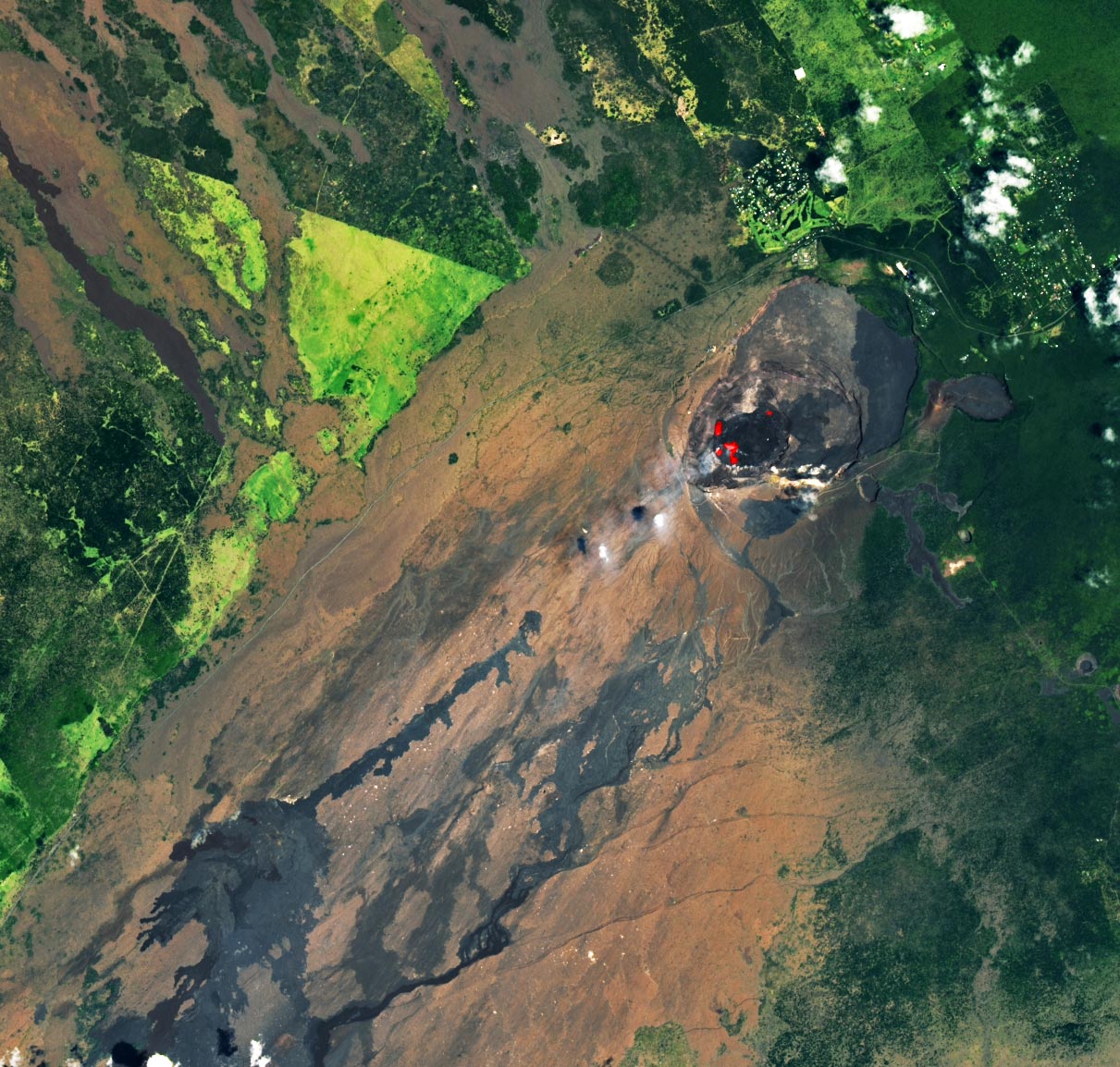
    Kīlauea’s Lava Lake April 2022 Annotated
    Kīlauea’s Lava Lake, April 15, 2022

    Since May 2018, when Kīlauea’s lava lake last drained, the summit crater has filled with water, erupted again, boiled off the water, and refilled with lava.

    Four years ago this month, Hawaiī’s youngest and most active volcano unleashed its biggest eruption in at least 200 years. The Lower East Rift Zone (LERZ) eruption at Kīlauea, which began on May 3, 2018, destroyed 700 buildings and forced thousands of residents to evacuate. Scientists are still studying the eruption and its effects.

    The 2018 eruption was significant on a global scale, not just for Hawaiī. Kīlauea emitted up to 1.4 cubic kilometers (about 0.34 cubic miles) of lava in just four months. By comparison, the eruption from the Puʻuʻōʻō vent on the Middle East Rift Zone—which started in 1983 and continued for 35 years—emitted a total of 4.4 cubic kilometers (1.1 cubic miles) of lava and destroyed 215 structures.

    The 2018 LERZ eruption also drastically changed the volcano’s magma plumbing system. It ended the eruption from the Puʻuʻōʻō vent, the longest-running eruption in the world. And it collapsed the floor of the Halema‘uma‘u summit crater, lowering it by more than 500 meters (1,600 feet) and draining the lava lake that had pooled in the summit crater since 2008.

    The lava lake was replaced by a water lake in July 2019, an event unprecedented in the historic record. Over the next year and a half, water slowly filled the crater to a depth of about 50 meters (160 feet).

    The water lake was of special interest to scientists because Kīlauea has an unusual history of both effusive and explosive eruptions. The latter are usually more violent and destructive, and they are often driven by the interaction of magma with water—a fact that kept volcano observers extra attentive to activity. However, in December 2020, a new phase of eruptive activity began with an influx of lava into the crater that boiled off the water lake in a few hours. That eruption started a new lava lake and continued until May 2021. The latest eruption started in September 2021 and continues today.

    The image above was acquired on April 15, 2022, by the Operational Land Imager-2 (OLI-2) on Landsat 9. The image includes a combination of visible and infrared light (bands 6-5-3), which helps distinguish the heat signature of the lava.

    NASA Earth Observatory image by Lauren Dauphin, using Landsat data from the U.S. Geological Survey.

    Never miss a breakthrough: Join the SciTechDaily newsletter.
    Follow us on Google and Google News.

    NASA NASA Earth Observatory Volcano
    Share. Facebook Twitter Pinterest LinkedIn Email Reddit

    Related Articles

    NASA Satellite Captures a Nighttime Volcanic Eruption on Iceland’s Reykjanes Peninsula

    Volcanic Eruption Lights Up Iceland Following Swarms of Small Earthquakes

    A Nighttime Glow Over Mount Etna – Highly Active Italian Volcano

    Socked in Stratovolcano: Astronaut on ISS Captures Incredible View of Uninhabited Atlasov Island

    Kilauea’s Lava Lake Returns – Hawaii’s Most Active Volcano Is Erupting Again

    “Smoking Mountain” – An Outburst From Popocatépetl Volcano in Mexico

    Newberry Volcano Photographed by Astronaut Onboard the International Space Station

    Young Volcanic Island Nishinoshima Belches Ash and Lava As It Grows in the Pacific

    Unusual “Volcano Track” Clouds Investigated

    Leave A Reply Cancel Reply

    • Facebook
    • Twitter
    • Pinterest
    • YouTube

    Don't Miss a Discovery

    Subscribe for the Latest in Science & Tech!

    Trending News

    Scientists Uncover Potential Brain Risks of Popular Fish Oil Supplements

    Scientists Discover a Surprising Way To Make Bread Healthier and More Nutritious

    After 60 Years, Scientists Uncover Unexpected Brain Effects of Popular Diabetes Drug Metformin

    New Research Uncovers Hidden Side Effects of Popular Weight-Loss Drugs

    Scientists Rethink Extreme Warming After Surprising Ocean Discovery

    Landmark Study Links Never Marrying to Significantly Higher Cancer Risk

    Researchers Discover Unknown Beetle Species Just Steps From Their Lab

    Largest-Ever Study Finds Medicinal Cannabis Ineffective for Anxiety, Depression, PTSD

    Follow SciTechDaily
    • Facebook
    • Twitter
    • YouTube
    • Pinterest
    • Newsletter
    • RSS
    SciTech News
    • Biology News
    • Chemistry News
    • Earth News
    • Health News
    • Physics News
    • Science News
    • Space News
    • Technology News
    Recent Posts
    • Strange 65-Foot Dinosaur Discovered in Argentina
    • Researchers Uncover Source of Strange Deformation in Earth’s Largest Continental Rift
    • Scientists Solve Mystery of Where the Colorado River Vanished Millions of Years Ago
    • Not Just Alzheimer’s: Scientists Uncover Clues to a Second, Overlooked Disorder
    • Scientists Uncover Dangerous Connection Between Serotonin and Heart Valve Disease
    Copyright © 1998 - 2026 SciTechDaily. All Rights Reserved.
    • Science News
    • About
    • Contact
    • Editorial Board
    • Privacy Policy
    • Terms of Use

    Type above and press Enter to search. Press Esc to cancel.