
Close Menu
    Facebook X (Twitter) Instagram
    SciTechDaily
    • Biology
    • Chemistry
    • Earth
    • Health
    • Physics
    • Science
    • Space
    • Technology
    Facebook X (Twitter) Pinterest YouTube RSS
    SciTechDaily
    Home»Earth»Landsat 8 Views Striking Patterns of Blue and Green in the Chukchi Sea
    Earth

    Landsat 8 Views Striking Patterns of Blue and Green in the Chukchi Sea

    By Yvette Smith, NASAJuly 18, 2018No Comments2 Mins Read
    Facebook Twitter Pinterest Telegram LinkedIn WhatsApp Email Reddit
    Share
    Facebook Twitter LinkedIn Pinterest Telegram Email Reddit
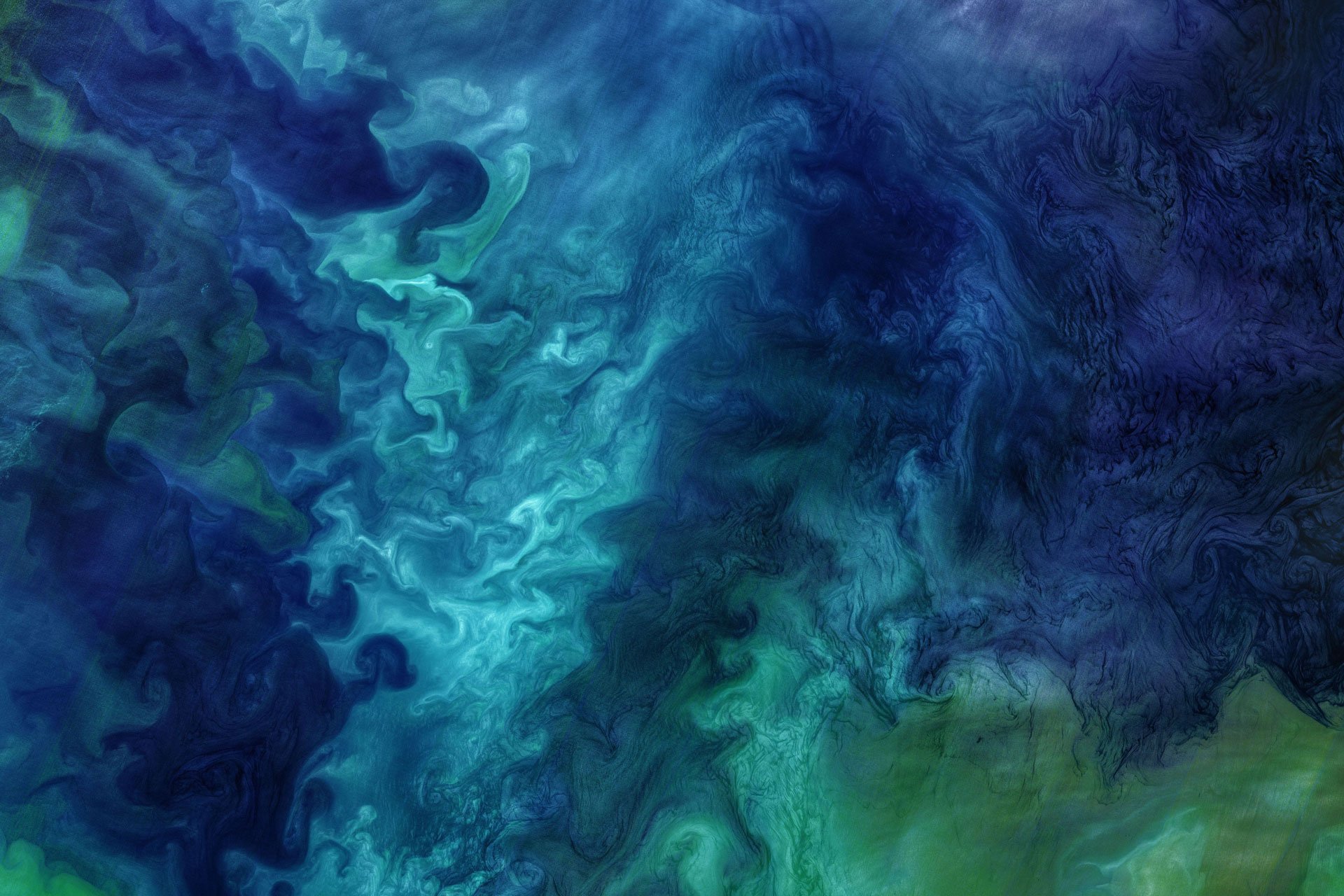
    Striking Patterns of Blue and Green in the Chukchi Sea
    The waters off of the Alaskan coast usually come alive each spring with blooms of phytoplankton. Two main water masses flow from the Bering Strait and enter the southern Chukchi. The Bering Sea Water is cool, salty, and rich in nutrients. This water fuels most of the phytoplankton growth, primarily diatoms, which are likely the main reason for the colorful green waters pictured here. The Alaskan Coastal Water is warmer, less salty, and nutrient-poor. Coccolithophores can do well here. Some areas pictured here could contain this type of plankton, known to give a milky turquoise hue to the water with their plates of calcium carbonate armor. Credit: NASA/U. S. Geological Survey/Norman Kuring/Kathryn Hansen

    Regardless of the amount of winter ice cover, the waters off of the Alaskan coast usually come alive each spring with blooms of phytoplankton. These blooms can form striking patterns of blue and green seawater, such as those visible in this image of the Chukchi Sea acquired on June 18, 2018, by the Operational Land Imager (OLI) on Landsat 8.

    Blooms are a common occurrence this time of year. But the regularity of the blooms and their simple beauty belie the complexity of this ecosystem.

    Two main water masses flow from the Bering Strait and enter the southern Chukchi. One type, known as “Bering Sea Water,” is cool, salty, and rich in nutrients. This water fuels most of the phytoplankton growth, primarily diatoms, which are likely the main reason for the colorful green waters pictured here. (Sediments could also be contributing to the bright green areas.)

    The second mass of seawater is known as “Alaskan Coastal Water,” which is warmer, less salty, and nutrient-poor. Diatom growth is usually lower in these waters, but coccolithophores can do well here. Some areas pictured here could contain this type of plankton, known to impart a milky turquoise hue to the water with their plates of calcium carbonate armor.

    While experts expect blooms to consistently show up in these waters from year to year, the size is less consistent, and the reason is not clear.

    Never miss a breakthrough: Join the SciTechDaily newsletter.
    Follow us on Google and Google News.

    Earth Science Landsat Oceanography Plankton
    Share. Facebook Twitter Pinterest LinkedIn Email Reddit

    Related Articles

    Climate Change Could Cause Devastating Mass Exodus of Tropical Plankton

    25 Years of Satellite Data Confirms That Sea Levels Are Rising

    Tidal Cycles Could Provide Advanced Warning of Volcanic Eruptions

    Temperature of Ancient Seas May Shape Global Climate

    2015 El Niño Appears Likely to Equal the Event of 1997-98

    Phytoplankton Are Extremely Sensitive to Changing Levels of Desert Dust

    How Tiny Imbalances Result in Massive Phytoplankton Blooms

    Tropical Oceans Role in Climate Change

    Plankton-Fueled Agulhas Current Ocean Eddy Is 93 Miles Wide

    Leave A Reply Cancel Reply

    • Facebook
    • Twitter
    • Pinterest
    • YouTube

    Don't Miss a Discovery

    Subscribe for the Latest in Science & Tech!

    Trending News

    Popular Supplement Ingredient Linked to Shorter Lifespan in Men

    Scientists May Have Found a Way To Repair Nerve Damage in Multiple Sclerosis

    “Totally Unexpected” – Scientists Discover Pancreatic Cancer’s Fatal Addiction

    A Strange Quantum Effect May Explain One of Biology’s Greatest Mysteries

    James Webb Telescope Reveals the Universe’s Hidden Cosmic Web in Stunning Detail

    Scientists Identify Simple Supplement That Greatly Reduces Alzheimer’s Damage

    You May Have a Dangerous Type of Cholesterol Even if Your Tests Look Normal

    Your Blood Pressure Reading Could Be Wrong Because of One Simple Mistake

    Follow SciTechDaily
    • Facebook
    • Twitter
    • YouTube
    • Pinterest
    • Newsletter
    • RSS
    SciTech News
    • Biology News
    • Chemistry News
    • Earth News
    • Health News
    • Physics News
    • Science News
    • Space News
    • Technology News
    Recent Posts
    • Scientists Discover “Good” Gut Microbes That Could Protect Against Autism and ADHD
    • Scientists Discover Testosterone Could Actually Protect Against Deadly Brain Cancer
    • Mediterranean Diet May Activate Secret Anti-Aging Proteins Inside Your Cells
    • Scientists Reveal That Eating Almonds Every Day Could Transform Your Gut, Metabolism, and Appetite
    • Researchers Found a Surprisingly Realistic Way To Mine Asteroids for Mars
    Copyright © 1998 - 2026 SciTechDaily. All Rights Reserved.
    • Science News
    • About
    • Contact
    • Editorial Board
    • Privacy Policy
    • Terms of Use

    Type above and press Enter to search. Press Esc to cancel.