
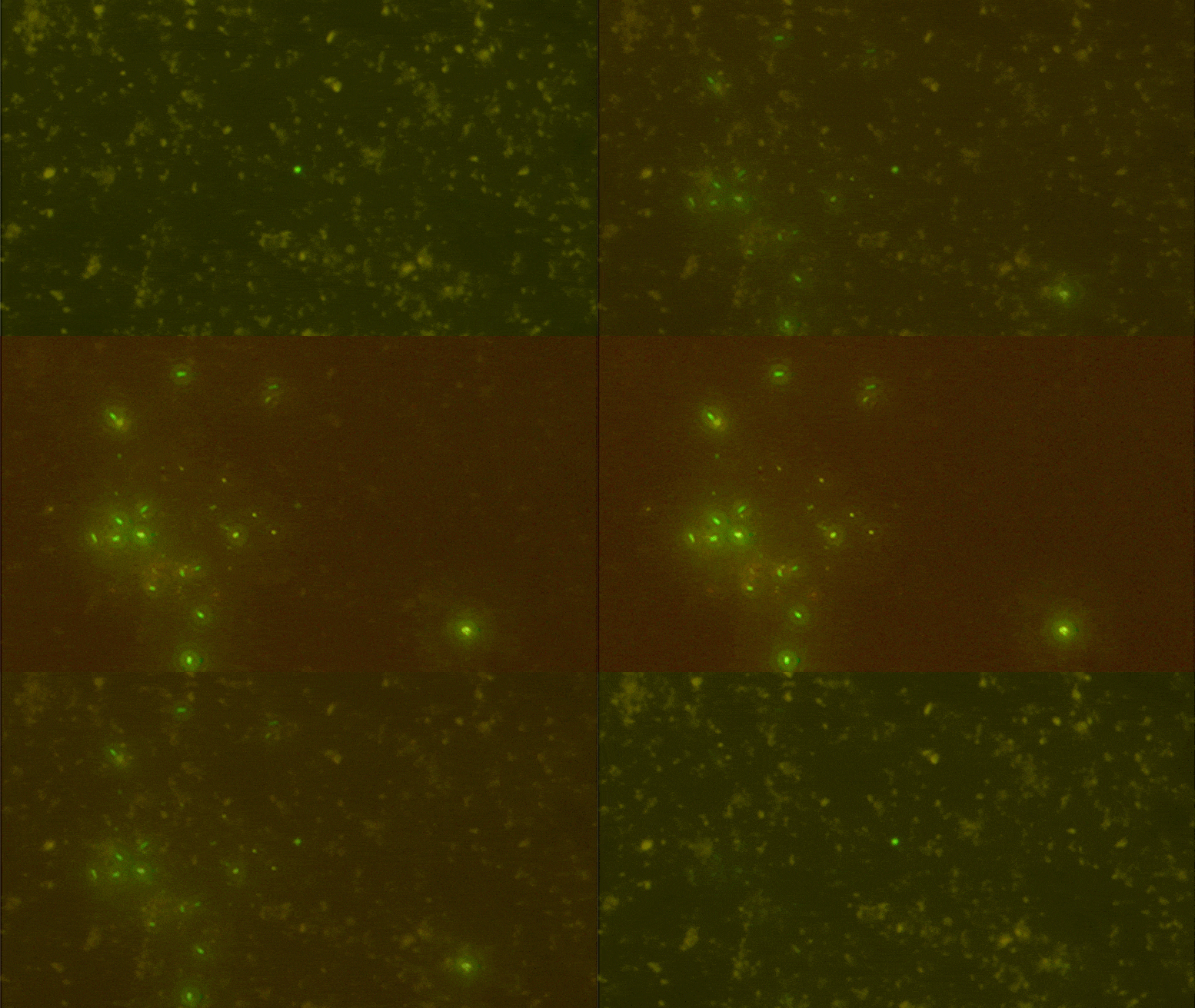
Microbes were found thriving at record-high temperatures in deep-sea sediments, challenging our understanding of life’s limits.
An international research team that included three scientists from the University of Rhode Island’s Graduate School of Oceanography has discovered single-celled microorganisms in a location where they didn’t expect to find them.
“Water boils on the (Earth’s) surface at 100 degrees Celsius (212 degrees Fahrenheit), and we found organisms living in sediments at 120 degrees Celsius (248 degrees Fahrenheit),” said URI Professor of Oceanography Arthur Spivack, who led the geochemistry efforts of the 2016 expedition organized by the Japan Agency for Marine-Earth Science and Technology and Germany’s MARUM–Center for Marine and Environmental Sciences at the University of Bremen. The study was carried out as part of the work of Expedition 370 of the International Ocean Discovery Program.
The research results from a two-month-long expedition in 2016 were published in December 2020 in the journal Science.
The news follows an announcement in October that microbial diversity below the seafloor is as rich as on Earth’s surface. Researchers on that project from the Japan marine-earth science group, Bremen University, the University of Hyogo, University of Kochi and University of Rhode Island, discovered 40,000 different types of microorganisms from core samples from 40 sites around the globe.
The research published in Science today focused on the Nankai Trough off the coast of Japan, where the deep-sea scientific vessel, Chinkyu, drilled a hole 1,180 meters (3,870 feet) deep to reach sediment at 120 degrees Celsius (248 degrees Fahrenheit). The leader of the study is Professor Kai-Uwe Hinrichs of MARUM.

How These Microbes Survive in Harsh Environments
Spivack, who was joined by recent Ph.D. graduates, Kira Homola and Justine Sauvage, on the URI team, said one way to identify life is to look for evidence of metabolism.
“We found chemical evidence of the organisms’ use of organic material in the sediment that allows them to survive,” Spivack said. The URI team also developed a model for the temperature regime of the site.
“This research tells us that deep sediment is habitable in places that we did not think possible,” he added.
While this is exciting news on its own, Spivack said the research could point to the possibility of life in harsh environments on other planets.
Unraveling the Mysteries of the Deep Biosphere
According to the study, sediments that lie deep below the ocean floor are harsh habitats. Temperature and pressure steadily increase with depth, while the energy supply becomes increasingly scarce. It has only been known for about 30 years that, in spite of these conditions, microorganisms do inhabit the seabed at depths of several kilometers. The deep biosphere is still not well understood, and this brings up fundamental questions: Where are the limits of life, and what factors determine them? To study how high temperatures affect life in the low-energy deep biosphere over the long term, extensive deep-sea drilling is necessary.
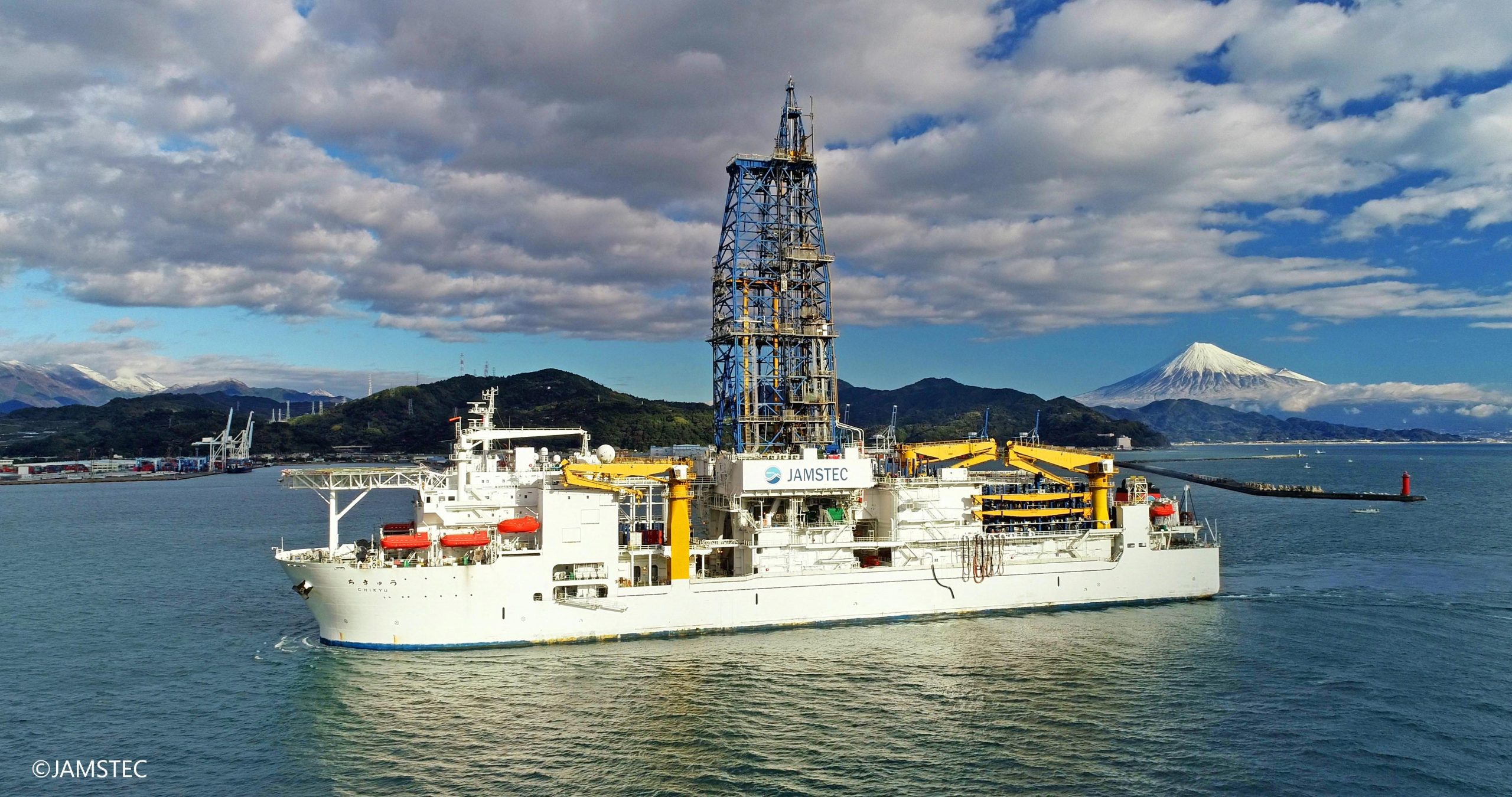
“Only a few scientific drilling sites have yet reached depths where temperatures in the sediments are greater than 30 degrees Celsius (86 degrees Fahrenheit),” explains study leader Hinrichs of MARUM. “The goal of the T-Limit Expedition, therefore, was to drill a thousand-meter deep hole into sediments with a temperature of up to 120 degrees Celsius – and we succeeded.”
Like the search for life in outer space, determining the limits of life on the Earth is fraught with great technological challenges, the research study says.
Unexpected Microbial Survival Patterns
“Surprisingly, the microbial population density collapsed at a temperature of only about 45 degrees,” says co-chief scientist Fumio Inagaki of JAMSTEC. “It is fascinating – in the high-temperature ocean floor, there are broad depth intervals that are almost lifeless. But then we were able to detect cells and microbial activity again in deeper, even hotter zones – up to a temperature of 120 degrees (248 degrees Fahrenheit).”
Spivack said the project was like going back to his roots, as he and David Smith, professor of oceanography and associate dean of URI’s oceanography school, where they were involved in a drilling expedition at the same site about 20 years ago, an expedition that helped initiate the study of the deeply buried marine biosphere.
As for the current project, Spivack said studies will continue on the samples the team collected. “The technology to examine samples collected from the moon took several years to be developed, and the same will be true for these samples from deep in the ocean sediments. We are developing the technology now to continue our research.”
Reference: “Temperature limits to deep subseafloor life in the Nankai Trough subduction zone” by Verena B. Heuer, Fumio Inagaki, Yuki Morono, Yusuke Kubo, Arthur J. Spivack, Bernhard Viehweger, Tina Treude, Felix Beulig, Florence Schubotz, Satoshi Tonai, Stephen A. Bowden, Margaret Cramm, Susann Henkel, Takehiro Hirose, Kira Homola, Tatsuhiko Hoshino, Akira Ijiri, Hiroyuki Imachi, Nana Kamiya, Masanori Kaneko, Lorenzo Lagostina, Hayley Manners, Harry‐Luke McClelland, Kyle Metcalfe, Natsumi Okutsu, Donald Pan, Maija J. Raudsepp, Justine Sauvage, Man‐Yin Tsang, David T. Wang, Emily Whitaker, Yuzuru Yamamoto, Kiho Yang, Lena Maeda, Rishi R. Adhikari, Clemens Glombitza, Yohei Hamada, Jens Kallmeyer, Jenny Wendt, Lars Wörmer, Yasuhiro Yamada, Masataka Kinoshita and Kai‐Uwe Hinrichs, 4 December 2020, Science.
DOI: 10.1126/science.abd7934
Never miss a breakthrough: Join the SciTechDaily newsletter.
Follow us on Google and Google News.
8 Comments
Are any private entities funding the research by MBL? I’m curious to know if there advancements or benefits to possible biofuel output as a method to cleaner renewable energy.
Still waiting for ET
It especially interesting that not all temperatures of sediment have signs of life; some areas without it, while others that are seemingly much less suitable for life that do have life. It definitely makes me curious what causes it and what factors are in play.
Remember, if we succeed in wiping out ourselves as a species, it is this deep-sea DNA, which will regenerate the other lifeforms. Treat is with respect. 🙂
A study about nothing.
I can’t help but wonder what potential implications this could have regarding current speculations about life on Venus…
It seems incomplete that the article doesn’t mention that “In the deep oceans, under immense pressure, water remains liquid at temperatures of 750°F (400°C)”. The organisms are not living above the boiling point of water, where they are living.
Welcome to the new world