
Western cosmochemist finds early lunar crust had more water than previously estimated.
New research from a Western University postdoctoral fellow shows the early lunar crust, which makes up the surface of the Moon, was considerably enriched in water more than 4 billion years ago, counter to previously held understanding. The discovery is outlined in a study published on January 15 in the high impact journal Nature Astronomy.
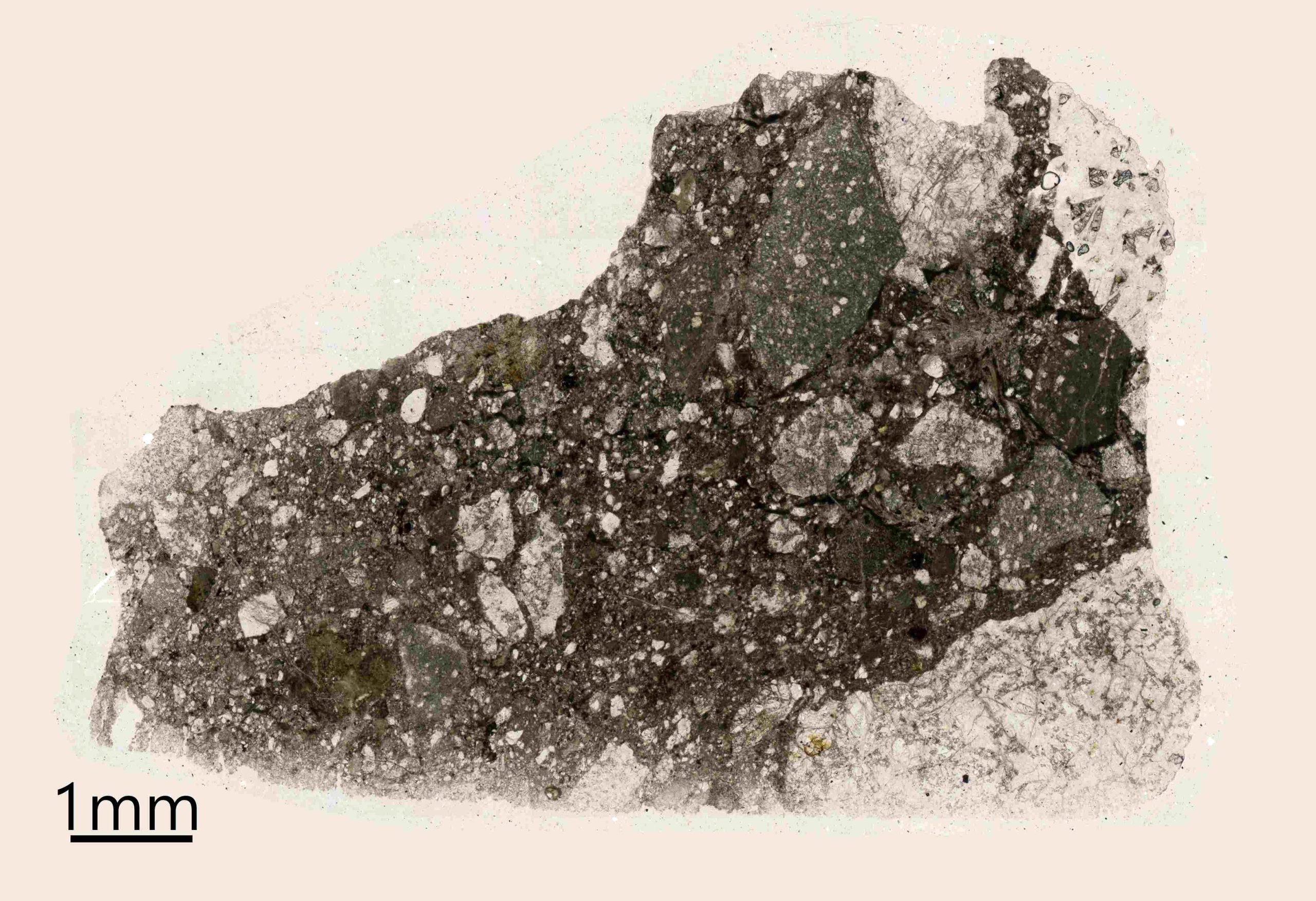
Working with a meteorite she classified as one that came from the Moon while a graduate student at The Open University (U.K.), Tara Hayden identified, for the first time, the mineral apatite (the most common phosphate) in a sample of early lunar crust.
The research offers exciting new evidence that the Moon’s early crust contained more water than was originally thought, opening new doors into the study of lunar history.
Revolutionary Findings
“The discovery of apatite in the Moon’s early crust for the first time is incredibly exciting – as we can finally start to piece together this unknown stage of lunar history. We find the Moon’s early crust was richer in water than we expected, and its volatile stable isotopes reveal an even more complex history than we knew before,” said Hayden, currently working as a cosmochemist with renowned planetary geologist Gordon “Oz” Osinski in Western’s department of Earth sciences.
“Lunar meteorites are revealing new, exciting parts of the Moon’s evolution and expanding our knowledge beyond the samples collected during the Apollo missions. As the new stage of lunar exploration begins, I am eager to see what we will learn from the lunar far side,” said Hayden.
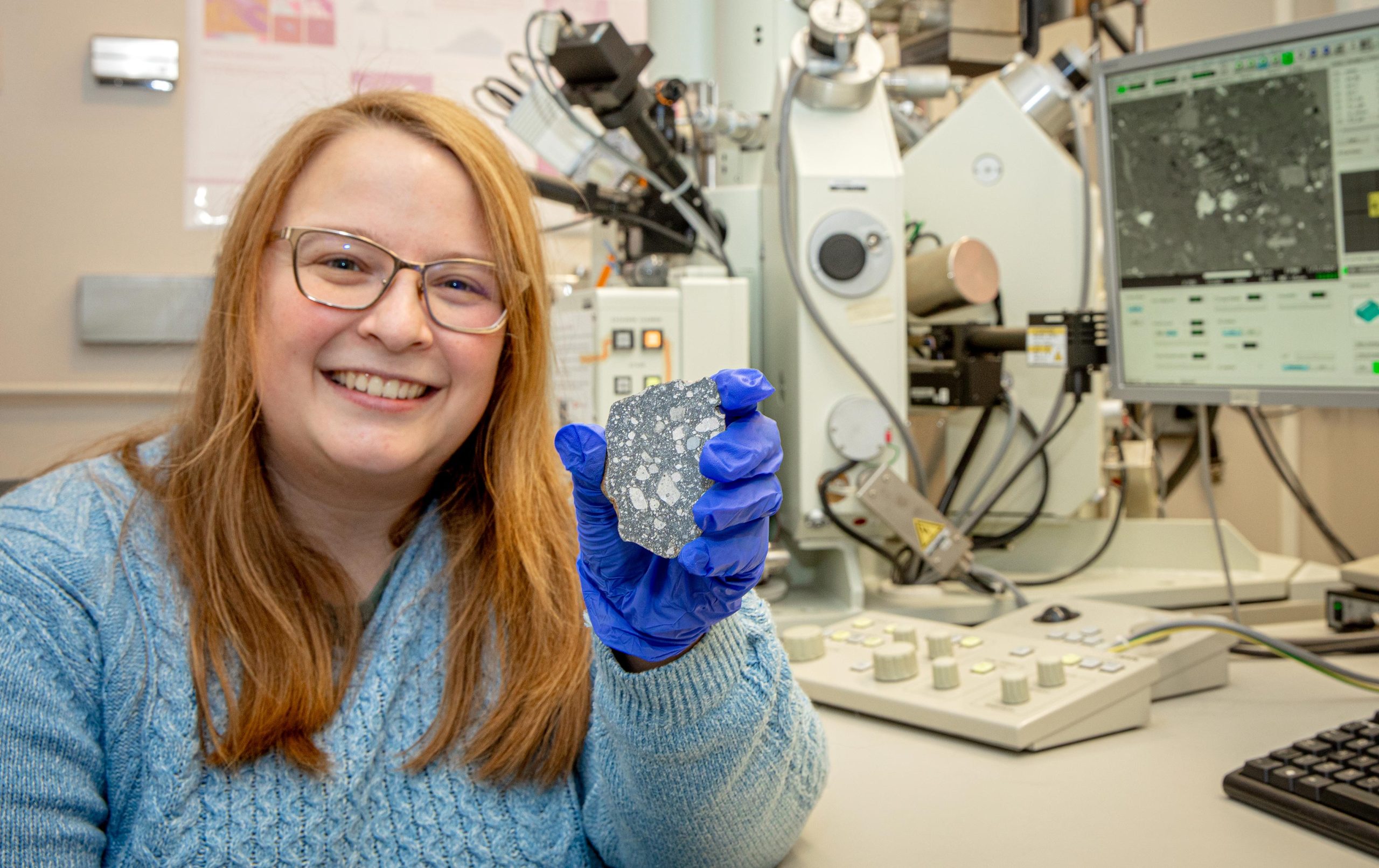
The Apollo samples were first assumed to be ‘volatile-poor’ upon their return from the Moon, leading to the well-known description of the Moon as ‘bone dry.’
In 2008, Alberto Saal and other researchers discovered the presence of significant amounts of water and other volatiles in glass beads from the Apollo sample collection. This set forth fifteen years of re-analysis of the Apollo samples while newly found lunar meteorites have revealed the Moon had much more water across its surface.
“We know most about the history of water on the Moon from the Apollo samples, but those samples are thought to only represent about five percent of the entire Moon surface,” said Hayden. “Until we get more samples back in the upcoming Artemis missions, the only other samples from the surface we have are meteorites.”
Expanding Lunar Knowledge
Hayden made the discovery at The Open University during her PhD studies while verifying a rock sample for a collector as a lunar meteorite. Beyond its identification, the sample proved to be holding a key piece of data about water on the Moon.
“I was so lucky the meteorite not only came from the Moon but remarkably, featured chemistry so vital to our understanding about lunar water-bearing minerals,” said Hayden.
This work was focused primarily on the mineral apatite, which contains volatile elements in its mineral structure. Apatite was found in all lunar rock types except glass beads and ferroan anorthosites, the latter representing the Moon’s early crust. The Ferroan Anorthosite group is known to be incredibly old (4.5-4.3 billion years old) and is the only rock type known to have formed directly from the Lunar Magma Ocean – when the Moon was almost entirely molten.
The discovery of apatite in this rock type has allowed for the direct examination of this unknown stage in lunar evolution for the first time.
“Unravelling the history of water in the earliest-formed lunar crust approximately 4.5 billion years ago is important for improving our understanding of the origin of water in the Solar System. Ancient rock samples from the Moon in the form of lunar meteorites provide an excellent opportunity for undertaking such investigations,” said Mahesh Anand, professor of planetary science and exploration at The Open University and Hayden’s formal lead supervisor.
Future Artemis Missions
Hayden says the timing of the discovery is perfect as the NASA Artemis missions are preparing for launch and researchers, including her current supervisor, are developing programming and targets for the astronauts.
“It has been long believed the lunar surface has been dried out for thousands and even millions of years, but maybe there might be more water available than we thought on the surface of the Moon and we just need to find a way to extract it,” said Hayden.
Osinski is equally excited for the potential opportunities of this new discovery.
Last year, Osinski was selected for the NASA geology team that is developing the surface science plan for the first crewed lunar landing mission in more than 50 years. He will join his colleagues in mission control’s science backroom at NASA’s Johnson Space Center in Houston providing support throughout the Artemis III mission.
“Tara’s discoveries are super exciting and will feed into our sampling strategy for the Artemis III mission where we hope to identify and sample some of the earliest crust on the Moon,” said Osinski.
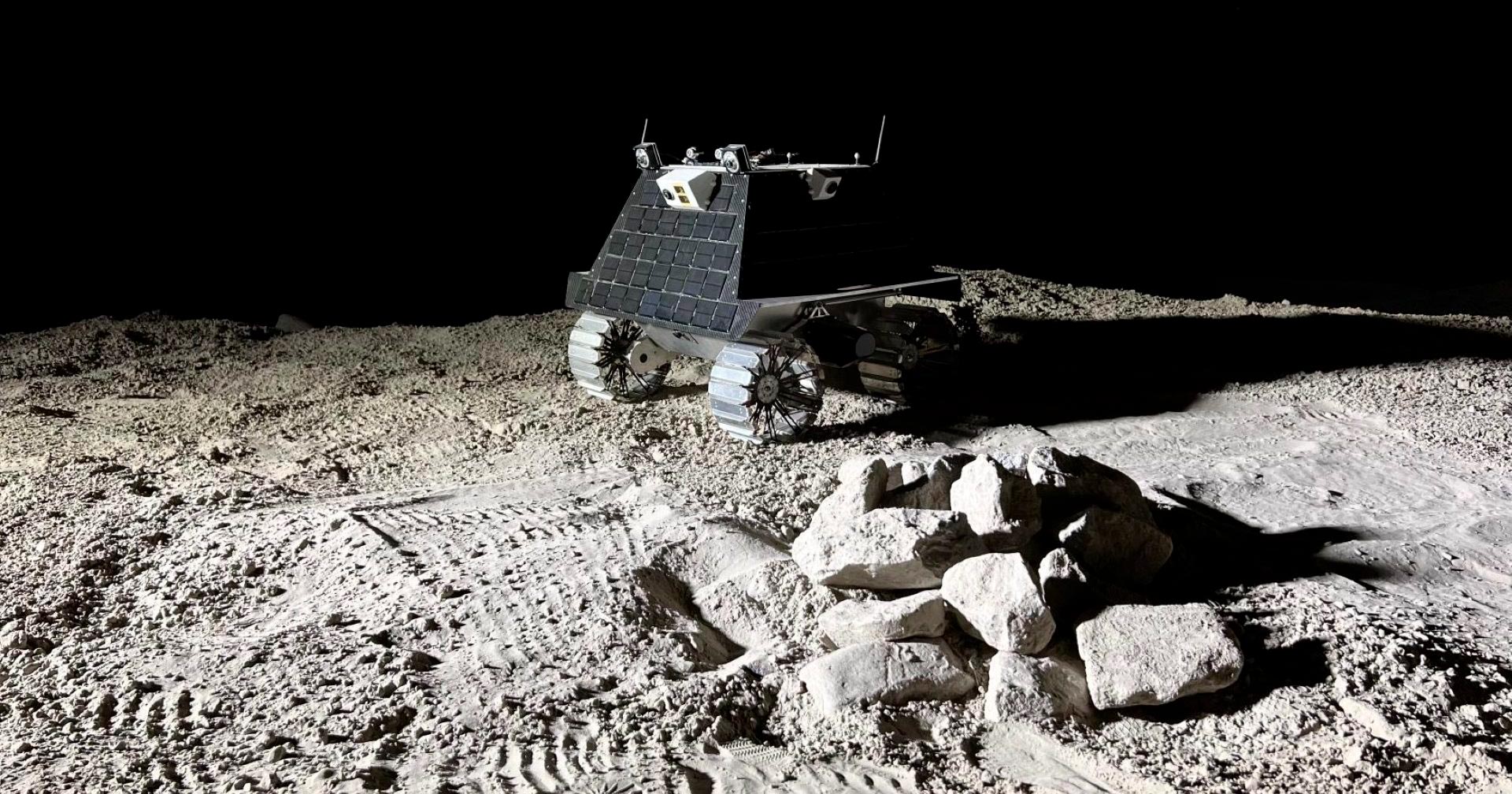
Osinski also serves as principal investigator and scientific lead on Canada’s first lunar rover, which is being designed and built by Canadensys Aerospace.
Reference: “Detection of apatite in ferroan anorthosite indicative of a volatile-rich early lunar crust” by Tara S. Hayden, Thomas J. Barrett, Mahesh Anand, Martin J. Whitehouse, Heejin Jeon, Xuchao Zhao and Ian A. Franchi, 15 January 2024, Nature Astronomy.
DOI: 10.1038/s41550-023-02185-5
Never miss a breakthrough: Join the SciTechDaily newsletter.
Follow us on Google and Google News.
1 Comment
Water and electricity helped the dust and other surface material on the station clump into pieces as it traveled through space, creating the moon we see now