
Close Menu
    Facebook X (Twitter) Instagram
    SciTechDaily
    • Biology
    • Chemistry
    • Earth
    • Health
    • Physics
    • Science
    • Space
    • Technology
    Facebook X (Twitter) Pinterest YouTube RSS
    SciTechDaily
    Home»Health»Lung Ultrasounds Could Help Physicians Predict if a Patient With COVID-19 Will Worsen
    Health

    Lung Ultrasounds Could Help Physicians Predict if a Patient With COVID-19 Will Worsen

    By Acoustical Society of AmericaDecember 29, 2020No Comments2 Mins Read
    Facebook Twitter Pinterest Telegram LinkedIn WhatsApp Email Reddit
    Share
    Facebook Twitter LinkedIn Pinterest Telegram Email Reddit
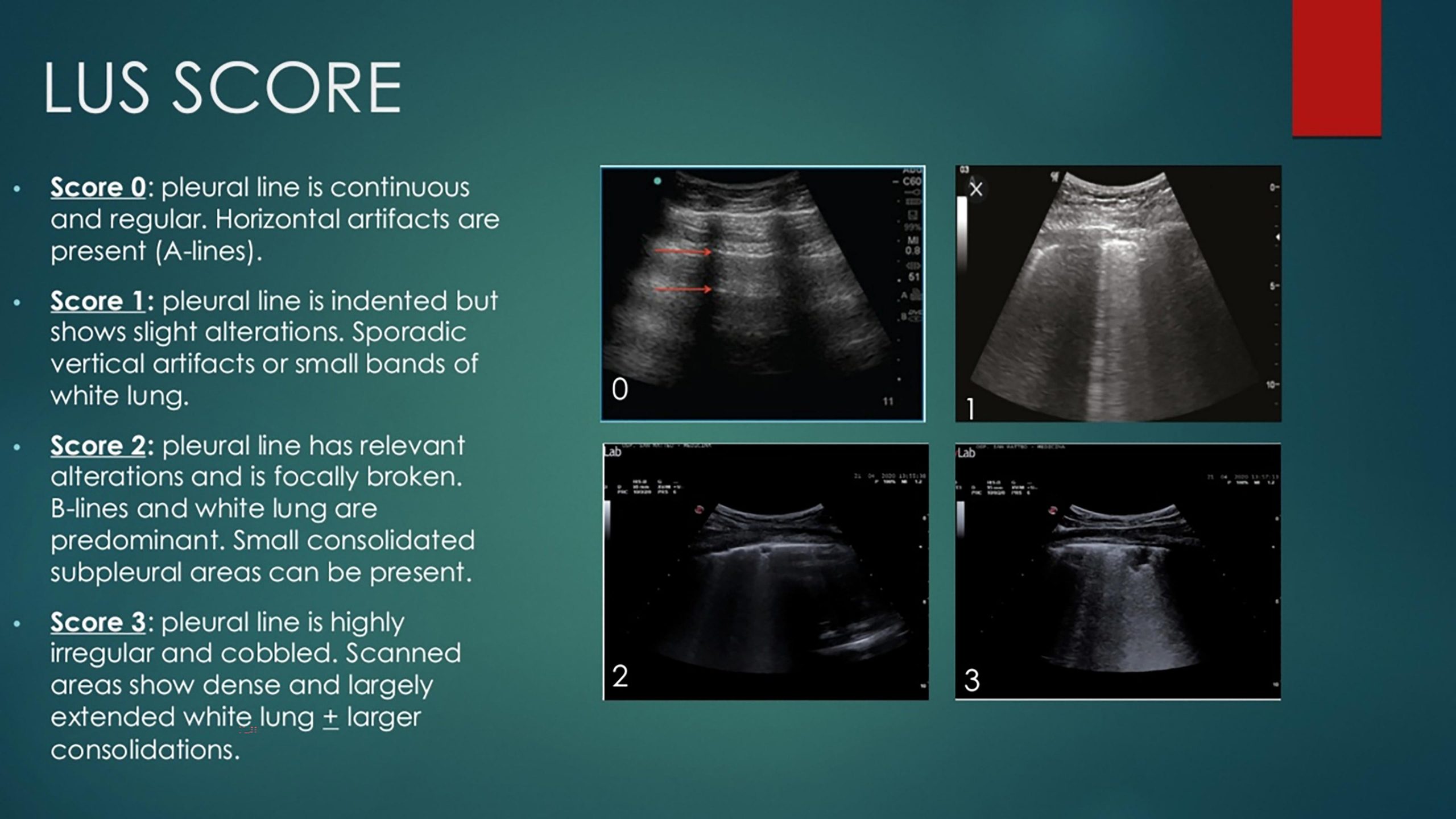
    LUS Score
    Using 14 points in the lungs, researchers looked for abnormalities and assigned each spot a score out of 3 based on its severity. Adding up all the points, they found the total lung ultrasound score was higher for those who had a worsening outcome of COVID-19. Credit: Umberto Sabatini

    For some, COVID-19 can result in severe pneumonia or even death, while others remain purely asymptomatic. A diagnostic tool could help physicians predict if a patient with COVID-19 will worsen.

    Researchers at the Policlinico San Matteo, in Pavia, Italy, have developed a method using ultrasound imaging to score a patient’s lung health, which is indicative of their outcome. The ability to predict when a patient might worsen can help physicians be better prepared for caring for patients.

    Umberto Sabatini’s presentation, “Is lung ultrasound a predictor of worsening in Covid-19 patients?” was part of the 179th Meeting of the Acoustical Society of America.

    The researchers tested the tool on 52 patients who had been admitted to San Matteo Hospital between March 15 and April 29. They administered lung ultrasounds to the patients on arrival and before discharge to get a peek into the state of their lungs. Using 14 points in the lungs, the researchers looked for abnormalities, such as pleural irregularities, and assigned each spot a score out of 3 based on its severity.

    Adding up all the points, the researchers found the total lung ultrasound score was higher for those who had a worsening outcome of COVID-19, such as needing supplementary oxygen, admission to intensive care, or death. Patients with at least three spots scoring 3 or with high overall scores were more than six times more likely to have a worsening outcome than other patients.

    From their results, the researchers proposed a graph called a nomogram that can help physicians compute the probability a patient will worsen based on their lung ultrasound score.

    The diagnostic will help physicians rapidly evaluate and predict how a patient will worsen due to COVID-19. The test is also quick to perform. A scan of each spot takes 10 seconds, making the whole exam last only 15 to 20 minutes.

    Meeting: 179th Meeting of the Acoustical Society of America

    Never miss a breakthrough: Join the SciTechDaily newsletter.
    Follow us on Google and Google News.

    Acoustical Society of America Acoustics Biomechanics COVID-19 Infectious Diseases Popular
    Share. Facebook Twitter Pinterest LinkedIn Email Reddit

    Related Articles

    Tree Pollen Facilitates COVID-19 Virus Spread – Carries SARS-CoV-2 Particles Farther

    Collapsing COVID: MIT Says Ultrasound Can Damage Coronaviruses

    Deactivating COVID-19 Virus Cough Droplets With UV-C Lamps

    Vitamin D Determines Severity in COVID-19: Researchers Urge Government to Change Advice

    How COVID-19 Kills: New Study Explains the Mechanisms of the New Coronavirus

    Vitamin D Linked to Low Coronavirus Death Rate

    Infection Researchers Identify How Coronaviruses From Animals Need to Change to Spread to Humans

    How Effective Are Cloth Masks Against Coronavirus? [Video]

    Key Insights on How Coronavirus Spreads From Chinese Megacity of Shenzhen

    Leave A Reply Cancel Reply

    • Facebook
    • Twitter
    • Pinterest
    • YouTube

    Don't Miss a Discovery

    Subscribe for the Latest in Science & Tech!

    Trending News

    1.4-Million-Year-Old Footprints Reveal a Giant Human Relative

    Astronomers May Have Found the First Moon Beyond Our Solar System

    Underwater Cameras Expose the Secret Lives of Whale Sharks

    Why Dreaming Leaves the Brain Running Low on Energy

    CERN Experiments Detect Signs of the Universe’s Primordial Matter

    Study Finds a Surprising Link Between Gut Microbes and Aging

    Frequent Cannabis Users Wake Up With More “Stress Hormone”

    Scientists Reveal Hidden DNA Traces in the Shroud of Turin

    Follow SciTechDaily
    • Facebook
    • Twitter
    • YouTube
    • Pinterest
    • Newsletter
    • RSS
    SciTech News
    • Biology News
    • Chemistry News
    • Earth News
    • Health News
    • Physics News
    • Science News
    • Space News
    • Technology News
    Recent Posts
    • Spain’s Largest Wildfire on Record Burned an Area the Size of New York City
    • Meet the 30-Million-Year-Old Dog That Climbed Trees Instead of Chasing Sticks
    • Two Mysterious ‘Ghost’ Ancestors Are Hiding in Our DNA
    • Gut Bacteria May Leave a Lasting “Protective Memory” in the Intestine
    • New Antivenom Strategy Is 10 Times More Potent Than a Current Treatment
    Copyright © 1998 - 2026 SciTechDaily. All Rights Reserved.
    • Science News
    • About
    • Contact
    • Editorial Board
    • Privacy Policy
    • Terms of Use

    Type above and press Enter to search. Press Esc to cancel.