
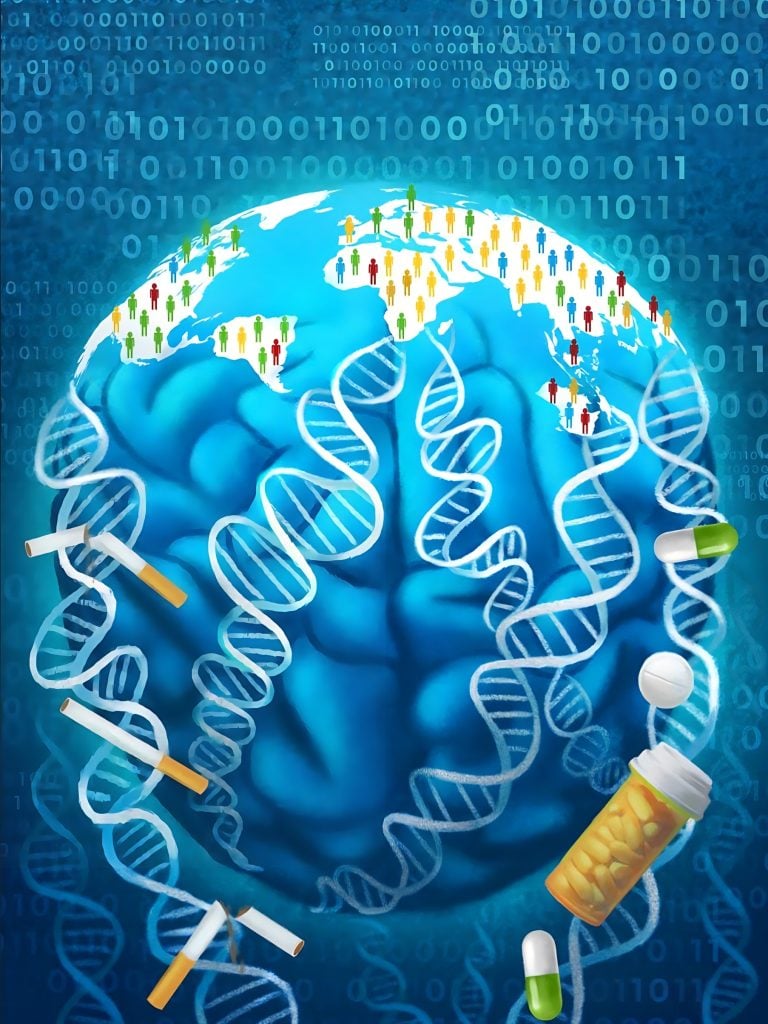
A study using machine learning identified 400 genes tied to smoking behaviors and drugs like dextromethorphan as potential aids for smoking cessation.
According to a study conducted by researchers at Penn State College of Medicine and the University of Minnesota, certain medications, such as dextromethorphan, which is commonly used to treat coughs caused by colds and the flu, may be repurposed to aid individuals in quitting smoking. The researchers employed a cutting-edge machine learning approach, where computer algorithms scrutinize data sets to uncover patterns and trends, to identify the drugs that hold potential. Some of these drugs are already undergoing clinical trials.
Cigarette smoking is a major contributor to cardiovascular disease, cancer, and respiratory illnesses and is responsible for nearly half a million deaths annually in the United States. Although smoking habits can be developed and changed, genetics also play a part in a person’s likelihood of engaging in such behaviors. In a previous study, the researchers discovered that individuals with specific genetic traits are more susceptible to becoming addicted to tobacco.
Identifying Genes Linked to Smoking
Using genetic data from more than 1.3 million people, Dajiang Liu, Ph.D., professor of public health sciences, and of biochemistry and molecular biology and Bibo Jiang, Ph.D., assistant professor of public health sciences, co-led a large multi-institution study that used machine learning to study these large data sets — which include specific data about a person’s genetics and their self-reported smoking behaviors.
The researchers identified more than 400 genes that were related to smoking behaviors. Since a person can have thousands of genes, they had to determine why some of those genes were connected to smoking behaviors. Genes that carry instructions for the production of nicotine receptors or are involved in signaling for the hormone dopamine, which makes people feel relaxed and happy, had easy-to-understand connections. For the remaining genes, the research team had to determine the role each plays in biological pathways and using that information, figured out what medications are already approved for modifying those existing pathways.
Most of the genetic data in the study is from people with European ancestry, so the machine learning model had to be tailored to not only study that data, but also a smaller data set of around 150,000 people with Asian, African, or American ancestry.
Promising Drug Candidates for Smoking Cessation
Liu and Jiang worked with more than 70 scientists on the project. They identified at least eight medications that could potentially be repurposed for smoking cessation, such as dextromethorphan, which is commonly used to treat coughs caused by cold and flu, and galantamine, which is used to treat Alzheimer’s disease. The study was published in Nature Genetics.
“Re-purposing drugs using big biomedical data and machine learning methods can save money, time, and resources,” said Liu, a Penn State Cancer Institute and Penn State Huck Institutes of the Life Sciences researcher. “Some of the drugs we identified are already being tested in clinical trials for their ability to help smokers quit, but there are still other possible candidates that could be explored in future research.”
While the machine learning method was able to incorporate a small set of data from diverse ancestries, Jiang said it’s still important for researchers to build out genetic databases from individuals with diverse ancestries.
“This will only improve the accuracy with which machine learning models can identify individuals at risk for drug misuse and determine potential biological pathways that can be targeted for helpful treatments.”
Reference: “Multi-ancestry transcriptome-wide association analyses yield insights into tobacco use biology and drug repurposing” by Fang Chen, Xingyan Wang, Seon-Kyeong Jang, Bryan C. Quach, J. Dylan Weissenkampen, Chachrit Khunsriraksakul, Lina Yang, Renan Sauteraud, Christine M. Albert, Nicholette D. D. Allred, Donna K. Arnett, Allison E. Ashley-Koch, Kathleen C. Barnes, R. Graham Barr, Diane M. Becker, Lawrence F. Bielak, Joshua C. Bis, John Blangero, Meher Preethi Boorgula, Daniel I. Chasman, Sameer Chavan, Yii-Der I. Chen, Lee-Ming Chuang, Adolfo Correa, Joanne E. Curran, Sean P. David, Lisa de las Fuentes, Ranjan Deka, Ravindranath Duggirala, Jessica D. Faul, Melanie E. Garrett, Sina A. Gharib, Xiuqing Guo, Michael E. Hall, Nicola L. Hawley, Jiang He, Brian D. Hobbs, John E. Hokanson, Chao A. Hsiung, Shih-Jen Hwang, Thomas M. Hyde, Marguerite R. Irvin, Andrew E. Jaffe, Eric O. Johnson, Robert Kaplan, Sharon L. R. Kardia, Joel D. Kaufman, Tanika N. Kelly, Joel E. Kleinman, Charles Kooperberg, I-Te Lee, Daniel Levy, Sharon M. Lutz, Ani W. Manichaikul, Lisa W. Martin, Olivia Marx, Stephen T. McGarvey, Ryan L. Minster, Matthew Moll, Karine A. Moussa, Take Naseri, Kari E. North, Elizabeth C. Oelsner, Juan M. Peralta, Patricia A. Peyser, Bruce M. Psaty, Nicholas Rafaels, Laura M. Raffield, Muagututi’a Sefuiva Reupena, Stephen S. Rich, Jerome I. Rotter, David A. Schwartz, Aladdin H. Shadyab, Wayne H-H. Sheu, Mario Sims, Jennifer A. Smith, Xiao Sun, Kent D. Taylor, Marilyn J. Telen, Harold Watson, Daniel E. Weeks, David R. Weir, Lisa R. Yanek, Kendra A. Young, Kristin L. Young, Wei Zhao, Dana B. Hancock, Bibo Jiang, Scott Vrieze and Dajiang J. Liu, 26 January 2023, Nature Genetics.
DOI: 10.1038/s41588-022-01282-x
The study was funded by The National Institutes of Health and Penn State College of Medicine’s Biomedical Informatics and Artificial Intelligence Program in the Strategic Plan. The views of the authors do not necessarily represent the views of the funders.
Never miss a breakthrough: Join the SciTechDaily newsletter.
Follow us on Google and Google News.