
A New Era of Mars Exploration
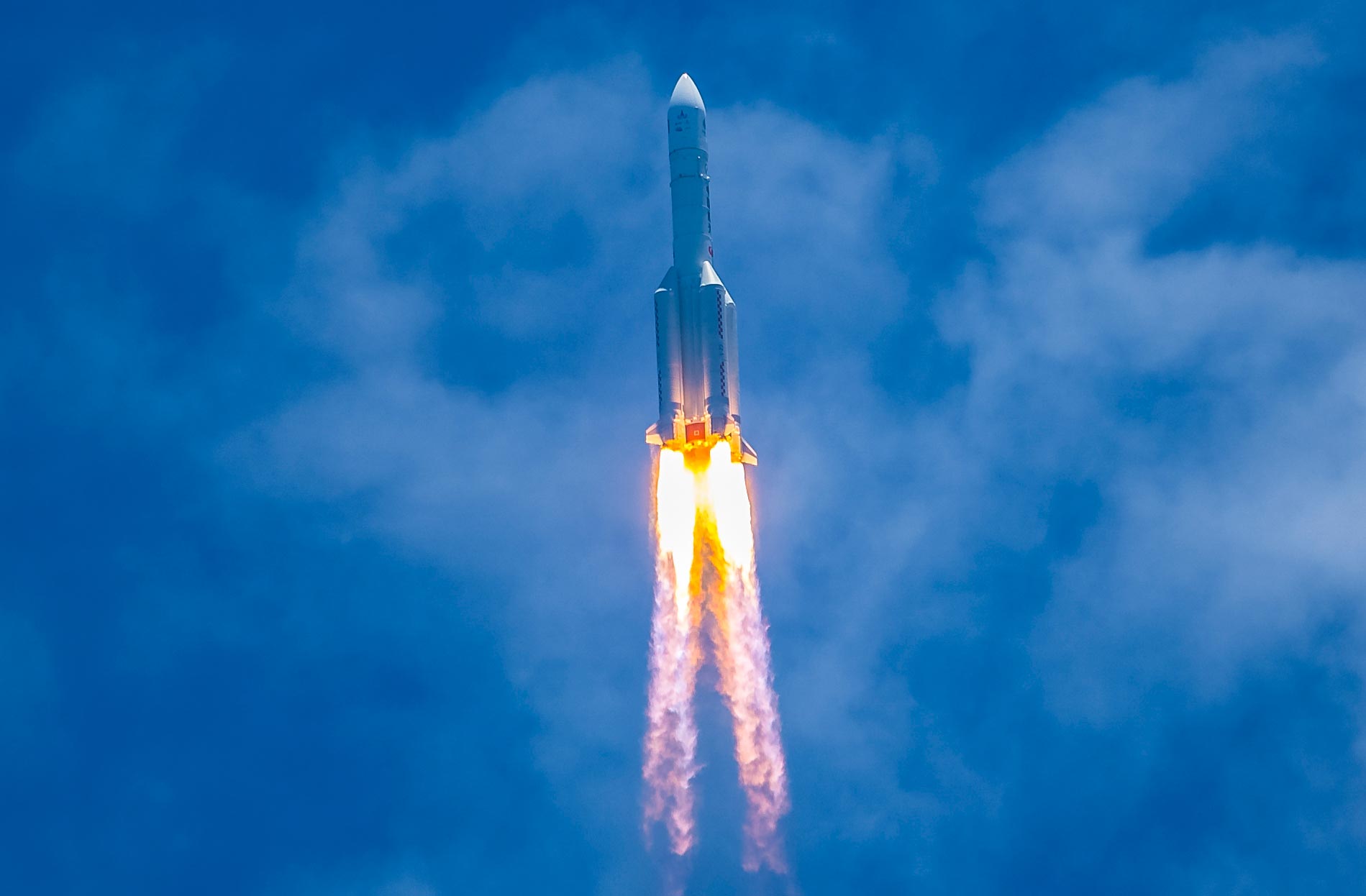
How times have changed since the Apollo era. Within the space of a few days, two space missions from China and the United Arab Emirates (UAE), respectively, are set to reach Mars. The UAE’s Hope mission will go into orbit around Mars on February 9. The next day, the Chinese Tianwen-1 mission – an orbiter and lander — will swing into orbit, with a predicted landing date sometime in May.
It is a very big moment for both countries. Hope is the first interplanetary mission by an Arab nation ever. And if China succeeds, it will be the first country ever to visit and land on Mars on its first try. The odds are stacked against them with nearly 50% of all Mars missions failing. China already lost a Mars orbiter mission (Yinghuo-1) back in 2011.
But before the missions can start doing science, tense moments await. As they arrive at the planet, they need to trigger a burn of their engines just at the right time to slow the probes down so they can be captured by Mars’ gravitational field. Given the large distance from Earth, this needs to be carried out automatically by the probe.
Tianwen-1
If all goes well, the orbiter Tianwen, which means “Questions to Heaven” and the yet unnamed rover will attempt to measure Mars’s climate and “ionosphere,” a layer of electrically charged particles surrounding the planet. This work might help to understand how Mars is losing its atmosphere. But it will also support future crewed missions to Mars by exploring its surface and mapping its shape, geology, and internal structure.
The orbiter is packed with cameras, a magnetometer (used to measure magnetic fields) and various particle analyzers. It will also act as a relay station to stay in communication with the rover. The rover, the size of a small car, is just a little bit smaller than the NASA Perseverance rover, which is also approaching Mars. It flouts a similar look, with a six-wheel drive, large solar panels, and a pole with cameras attached. The latter will be able to identify surface compositions at a distance of between two meters and five meters.
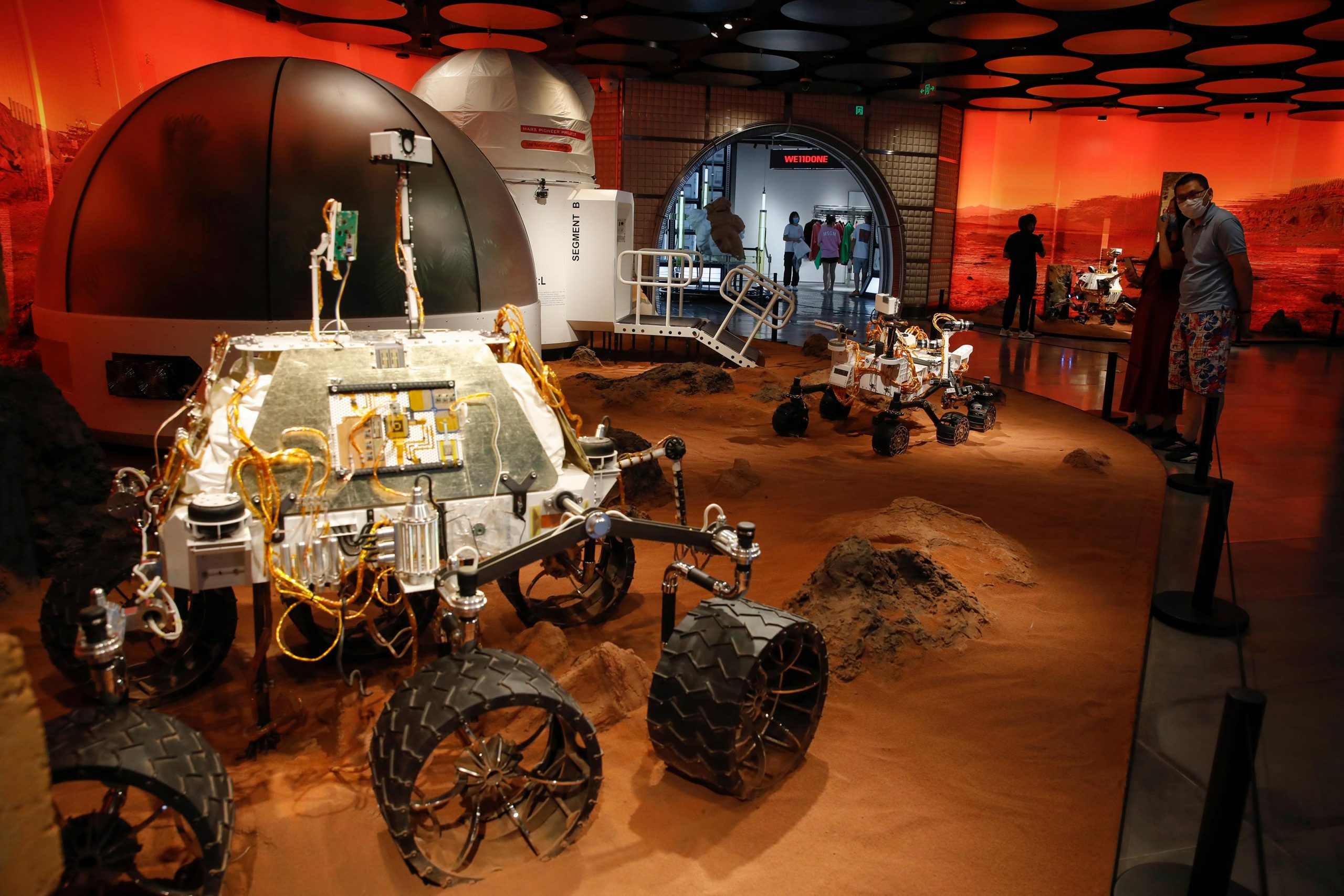
What makes this mission even more fascinating is that the rover contains a ground-penetrating radar. During the rover’s estimated lifespan of 90 Martian days — a Martian day being nearly 38 minutes longer than ours — it can explore the sub-surface structure and search for water deposits below the ground. Evidence of underground saltwater lakes was found using radar in 2018 by the European Mars Express Orbiter, but never followed up with measurements from the surface.
The rover will not visit these specific sites but could find similar conditions at the proposed landing site, which we know used to be covered by mudflats. There’s huge interest in such deposits as they represent a resource for future astronauts on the planet. We also can’t rule out the possibility that the lakes could host some form of life.
China has already used the radar technology with great success on its recent Yutu-2 rover to identify separate unique layers of water ice up to 40m below the surface on the Moon.
The Chinese National Space Administration stated that the rover will land in the region known as Utopia Planitia, the largest known impact basin in the solar system. In the first three months, the orbiter will survey and identify the precise location.
Curiously, a press release from after the successful launch of the mission initially indicated the intended coordinates within Utopia Planitia (110.318 degrees east longitude and 24.748 degrees north latitude), but these were swiftly removed, possibly to ensure this does not contradict a later slight alteration – or with political motivatation. Speaking to Space.com, Alfred McEwen, director of the Planetary Image Research Laboratory at the University of Arizona, said the intended landing area is safe and scientifically very interesting.
China’s first Mars rover will need to go through the so-called seven minutes of terror: the automated descent of any lander through the Martian atmosphere to successfully decelerate and land in one piece, all without any active communication with an orbiter or ground control. To achieve this, it will do an initial deceleration using a “conical aeroshell,” which is a protective shield that causes aerodynamic drag (resistance) but will heat up immensely, followed by a parachute and then the firing of retrorockets to allow a soft touch down.
Hopeful UAE
The Hope mission is the UAE’s first ever interplanetary mission arriving at Mars at the same time as the UAE is celebrating its 50th anniversary of formation. This mission blasted off from Japan in July 2020 using the same “launch window” (the time when there’s a smaller distance between the Earth and Mars) to reach Mars as the Chinese and Nasa missions.
Hope is set to orbit Mars for one Martian year – nearly two Earth years. From distances between 22,000km (13,500 mi) up to 44,000km (27,000 mi), it will explore in more detail the martian atmosphere. The mission will investigate the global weather, its links to the upper atmosphere and how this can explain the changing abundance of hydrogen and oxygen there. This will help us understand how Mars is gradually losing its atmosphere and the role that dust plays in the Martian weather – also important information for those who want to settle on Mars one day.
These busy times for all interested in Mars exploration have been kicked off by two relative newcomers in the treacherous business of Martian exploration, bringing a welcome, fresh perspective. It’s brilliant to see the group of nations exploring Mars expanding. And if you haven’t had enough seeing these missions arriving, then sit back for a few days until February 18, when NASA’s Perseverance rover will join them.
Written by Daniel Brown, Lecturer in Astronomy, Nottingham Trent University.
Adapted from an article originally published on The Conversation.
Never miss a breakthrough: Join the SciTechDaily newsletter.
Follow us on Google and Google News.
1 Comment
If they come across inhabitants, make sure to get them to sign over the mineral rights to the planet, and give them a Bible. 🙂