

Maya Rulers Transformed Cities, Forging New Memories of the Landscape
Early Maya cities featured monumental complexes, which centered on a shared form of religion but these complexes transformed radically once kingship emerged in 400 B.C. To solidify their power, rulers throughout the Maya lowlands would change these complexes, installing their mark on the landscape and reshaping how people remember it, according to a Dartmouth study published in Ancient Mesoamerica.
“Just as political leaders today often seek to brand themselves, so too did early Maya rulers,” says Ryan H. Collins, a postdoctoral fellow in anthropology at the Neukom Institute for Computational Science at Dartmouth. “Maya rulers seemed to have real angst about the past world and think that it could interfere with their authority, so they would try to tweak it, or even erase it altogether. These rulers saw themselves as the embodiment of the Maya sun god and wanted to put their personal stamp on the city, so monuments and the ways people experienced the city were modified to reflect a ruler’s desires over his or her lifetime.”
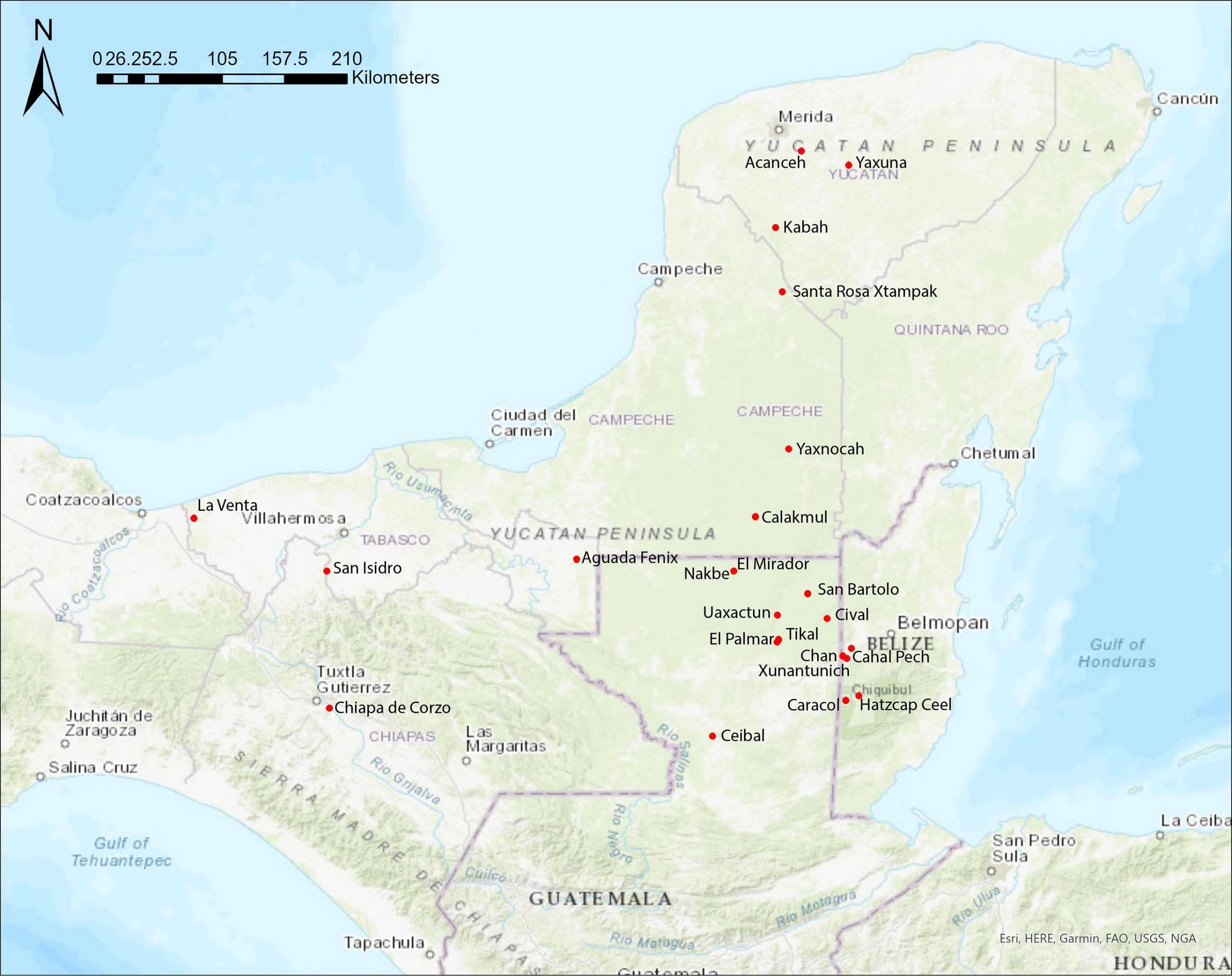
Collins examined data from the Maya site, Yaxuná, located in central Yucatán, Mexico, and other pyramid plaza complexes or temples known as E groups in the Maya lowlands, including San Bartolo, Tikal, Ceibal in Guatemala, and Cahal Pech in Belize, which reflected observed astronomical alignments with the equinoxes and solstices.
In the E group, each monumental complex was built along an east-west axis and was characterized by a pyramid to the west and a long-raised platform to the east. Prior research has found that the astronomical alignments of Maya complexes were likely a reference to the sun god and maize (corn) god and the annual changes of the agricultural season.
Overwriting the Past: Temples Built Over Temples
According to archaeological data from Yaxuná and the other sites, Collins found that by 400 B.C., many Maya complexes in the E Group were either built on top of existing temples, dismantled, or abandoned altogether. In many cases, new architecture would be constructed right on top of everything that was there before, where there could be five, six, or even seven pyramids preserved under the latest phase of construction.
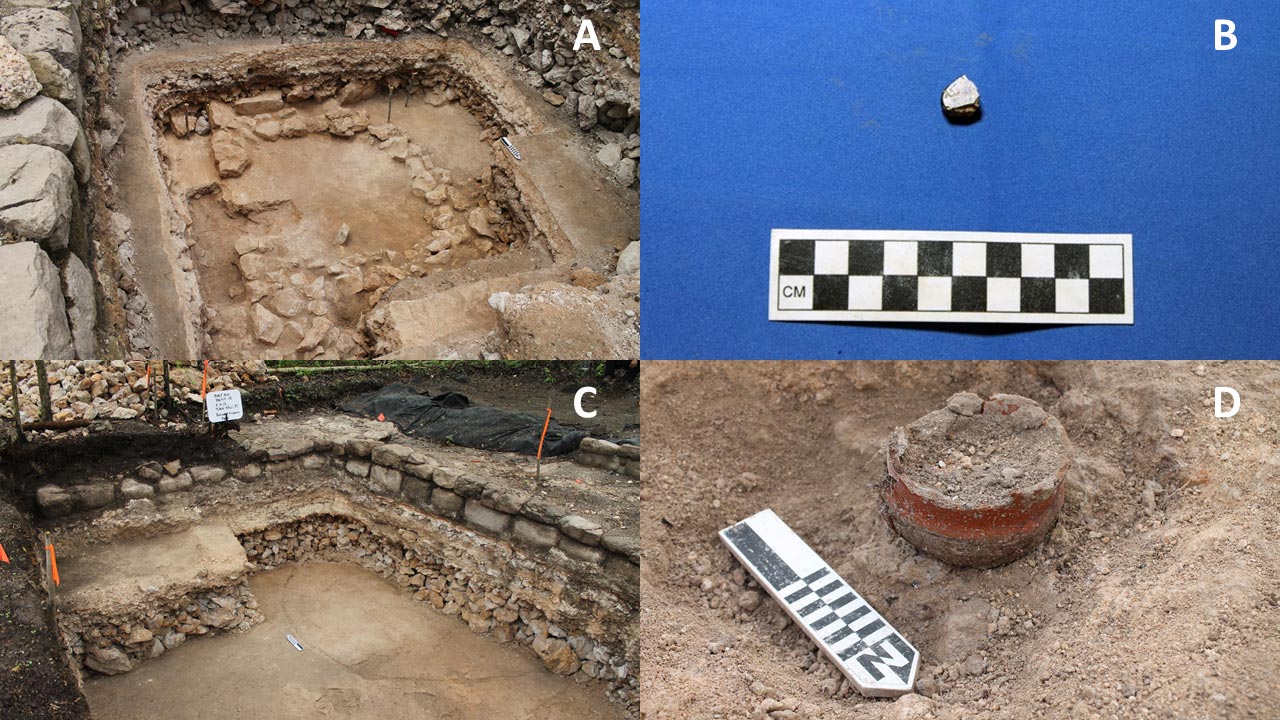
“Over time, these temples became more about the rulers and less about the ritual and religion that once brought the communities together in the first place,” says Collins. At Yaxuná, in the original city center alone, there were 11 phases of construction between 900 B.C. and 100 B.C.
While new monuments within the E Group were created over old ones, some aspects were maintained through time. For example, the original eastern structure (Str. 5E-6) at Yaxuná contained a circular stone foundation on level eight, which was preserved and emphasized by later generations through a circular incised line on the floor of level six. Precious items were also found cached on levels seven and four, including a polished magnetite fragment and a ceramic vessel with greenware beads that were likely obtained through long-distance trade. “The Maya would go back and mark spaces of social significance generations later, not centuries later, illustrating how people were really emphasizing memory and continuity with things that they thought were important,” says Collins.
Other areas of the Yaxuná site and other E Group sites, however, contained evidence of termination rituals. These rituals were used to destroy the energy or soul associated with a building, especially if it was sacred, such as by spreading the ash of burned incense over an area. In the eastern structure at Yaxuná, ash was found near a grinding stone, providing evidence that a former space for rituals was used to prepare food in later years.
Civic Growth and Social Stratification
“In archaeology, there has been the assumption that Maya kingship represented a continuity with the past but as Maya rulers altered peoples’ experience of where they lived, these rulers were actually breaking away from Mesoamerican building traditions and redefining the Maya city,” says Collins. “The first millennium of Maya culture for the E Group marks a period for not only new monuments but for the development of massive civic architecture, as large-scale roadways were built and districts began to emerge. These changes also may have driven Maya civilization’s shift from an egalitarian society to a more hierarchical structure.”
Reference: “Selective Memory: Monumental Politics of the Yaxuná E Group in the First Millennium B.C.” by Ryan H. Collins, 23 August 2021, Ancient Mesoamerica.
DOI: 10.1017/S0956536121000304
Never miss a breakthrough: Join the SciTechDaily newsletter.
Follow us on Google and Google News.
1 Comment
Hi,my name is miss goh Bee geok,my telephone number is:+65 83463415.
Would like to know deeper understanding on Maya’s ruins,tika in guatemala,Mesoamerica.
May all souls rest in ultimate peace and eternally BLESS.