

Research on songbirds demonstrates the critical need for daily singing to maintain vocal muscle strength and attractiveness, with implications for human vocal training and speech therapy.
Every year in the Christmas season it becomes clear again that some people are amazingly skilled singers, like Mariah Carey and George Michael. Their singing can stir strong emotions.
Singing involves probably the most complex, and mostly hidden, movements humans and animals can make. To become a good singer, you need to learn how to coordinate the movements of hundreds of muscles in your body with extreme precision. Therefore, you need a lot of talent and practice.
Voice Box Training: An Underexplored Area
We all know that athletes invest a lot of time exercising their limb and body muscles, but how about training the muscles in your voice box?
“Surprisingly we know very little about the effects of exercise on these muscles and if they even react to training in humans,” says Professor Coen Elemans from the University of Southern Denmark, an expert on sound production, “No singer will let you come even near their precious voice box.”
Insights from Songbirds
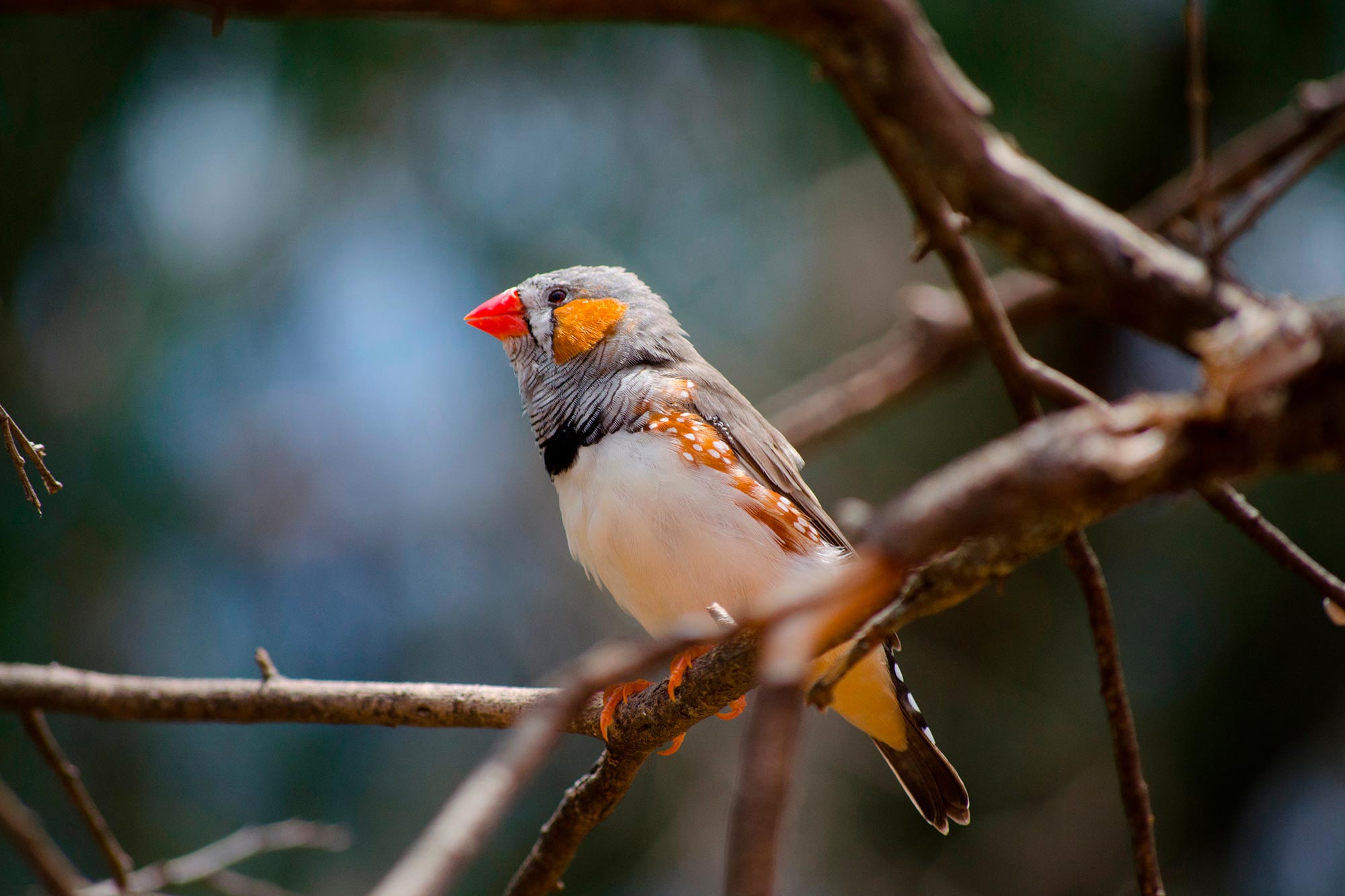
Now a new study published today (December 12) in the prestigious journal Nature Communications reports that male songbirds need to sing daily to exercise their vocal muscles and produce pretty songs. And the females notice if they didn’t.
“Singing is crucial for songbirds. They sing to impress future partners, to defend their territories, and to maintain social bonds,” says Dr. Iris Adam, lead author of the study.
The researchers show that training is necessary to keep songbird vocal muscles at top performance. And it is not just any training, it specifically is singing exercise that matters.
The study was conducted by an international team of researchers from the University of Southern Denmark, Leiden University, University of Umea, and the University of Vermont and was led by Assistant Professor Iris Adam and Professor Coen Elemans at the Department of Biology University of Southern Denmark.
Vocal Muscles Need Exercise, Too
“It has long been known that songbird singing is controlled by fast vocal muscles, but until now we only had very little knowledge if and how these muscles might respond to exercise, like our leg muscles do,” says Iris Adam.
In their study, the researchers show that if songbirds don’t use their vocal muscles at all, they get much slower and weaker already within days. But even when the birds only skip singing, after 7 days the vocal muscles already lost 50% of their strength.
“This was very surprising,” says Dr. Adam, “First that these muscles reacted so strongly, but also how incredibly fast they lost performance. Indeed, it’s use it or lose it!”

Partners Can Hear the Difference
When analyzing the songs sung, the team found that the birds sang differently before and after exercise.
“You and I could barely hear a difference between the songs, but we saw clear effects when we analyzed our song recordings,” says Dr. Adam.
As the ultimate test if this difference was important to the birds, the team next played songs to female zebra finches to ask them if they could hear a difference between before or after exercise, and which song they liked more.
“The female zebra finches in the playback experiment could directly hear the difference and 75 percent preferred the songs from the well-exercised male,” says Katharina Riebel, author on the study and expert in animal behavior.
The Daily Dawn Chorus: A New Perspective
“Interestingly, these results provide an alternative reason why birds sing so much and every day,” says Elemans.
Around the world, in spring and summertime, birds sing every morning in the daily dawn chorus. Why they do this is still puzzling to scientists.
“A lot of that singing seems out of context. They sing when they don’t need to,” says Adam.
“Our results now show that if they don’t exercise every day, their muscle performance decreases,” says Elemans, “On top of that, the lack of exercise is audible in their song and the females prefer song from exercised males.”
Thus, songbirds may need to invest lots of time and energy in singing every day to remain attractive.
And this may be true for all animals.
Unique Characteristics of Vocal Muscles
When studying the zebra finch’s vocal muscles, the team made another very important discovery.
“When we humans go to the gym to exercise leg and arm muscles, they typically get slower with exercise,” says Per Stål, author on the study and expert in muscle exercise physiology in humans.
However, in songbirds vocal muscles don’t get stronger and slower with exercise, like limb muscles, but weaker and faster. This is opposite from normal limb and body muscles.
“This reversed training may be a unique feature for vocal muscles, that we think might be true for all vertebrates, including humans, because all vocal muscles are developmentally related,” says Iris Adam.
“Therefore, these findings can have major consequences for speech therapy and vocal training in humans,” says Coen Elemans.
Because it’s so challenging to study the physiology of human larynx muscles, therapeutic intervention is based on what we know from exercise physiology of leg muscles.
“However, training vocal muscle may thus work very differently,” says Elemans, adding that “Songbirds may be our best allies to study the physiology of vocal muscle to further improve voice training and rehabilitation in humans.”
Reference: “Daily vocal exercise is necessary for peak performance singing in a songbird” by Iris Adam, Katharina Riebel, Per Stål, Neil Wood, Michael J. Previs and Coen P. H. Elemans, 12 December 2023, Nature Communications.
DOI: 10.1038/s41467-023-43592-6
Never miss a breakthrough: Join the SciTechDaily newsletter.
Follow us on Google and Google News.