
Minimizing male hand-rearing and adjusting sex ratios are key to improving kakapo fertility and population recovery.
A new study published in PeerJ Life & Environment has provided crucial insights into the factors that affect the fertility of the critically endangered kakapo, a flightless parrot species native to New Zealand. The results of the study have important implications for conservation management efforts aimed at improving the slow population growth of this species, and highlights the need for a balanced approach to conservation management, taking into account both the short-term benefits and potential long-term negative impacts of hand-rearing and other management strategies.
The findings have immediate applications in kakapo conservation management:
- Hand-rearing should be limited as much as possible for males; a reversal from previous strategies in which retaining female chicks in nests was prioritized.
- Population densities should be maximized so that there are sufficient males at leks to ensure adequate mate choice for females, but such that the female:male sex ratio is kept as high as the habitat can support.
- Artificial insemination should also be continued, to ensure sufficient sperm competition and increase founder representation.
Low productivity limits population recovery of the kakapo (Strigops habroptilus), with infrequent breeding, high infertility and low hatching success hampering conservation efforts. Kakapo breeding occurs irregularly, synchronized with the mass-fruiting (masting) of certain tree species, particularly the rimu tree (Dacrydium cupressinum), which only occurs every 2-4 years.
Conservation strategies for wild-living threatened species such as the kakapo rely on improving survival and productivity to increase population growth. Methods such as habitat restoration and predator control are used to enhance survival, but it is often problems with reproductive output that most limit recovery. Hand-rearing, in which animals are raised in captivity by humans, is often used in threatened species conservation programs, primarily to increase productivity by improving survival during development to maturity.
The study used Bayesian mixed models to examine the relationship between hand-rearing, other environmental factors, and clutch fertility in the kakapo.
Minimizing male hand-rearing and adjusting sex ratios are key to improving kakapo fertility and population recovery.
Male and Female Copulation Differences
The results study suggests that some aspects of conservation management have inadvertently affected kakapo productivity by reducing clutch fertility. The management intervention of hand-rearing, while undoubtedly increasing chick survival, has decreased clutch fertility. The sex difference in this effect indicates that hand-rearing affects copulation behavior in males more than females, in accordance with imprinting behaviors found in hand-reared male but not female kakapo.
The research also found that female copulation behavior – including polyandry and repeated copulations – is likely driven by high levels of sperm competition in kakapo to improve the likelihood of fertilization.
The findings of this study indicate the critical importance of collecting detailed longitudinal data, and investigating similar impacts of hand-rearing and sex ratios in other threatened bird species.
About the kakapo
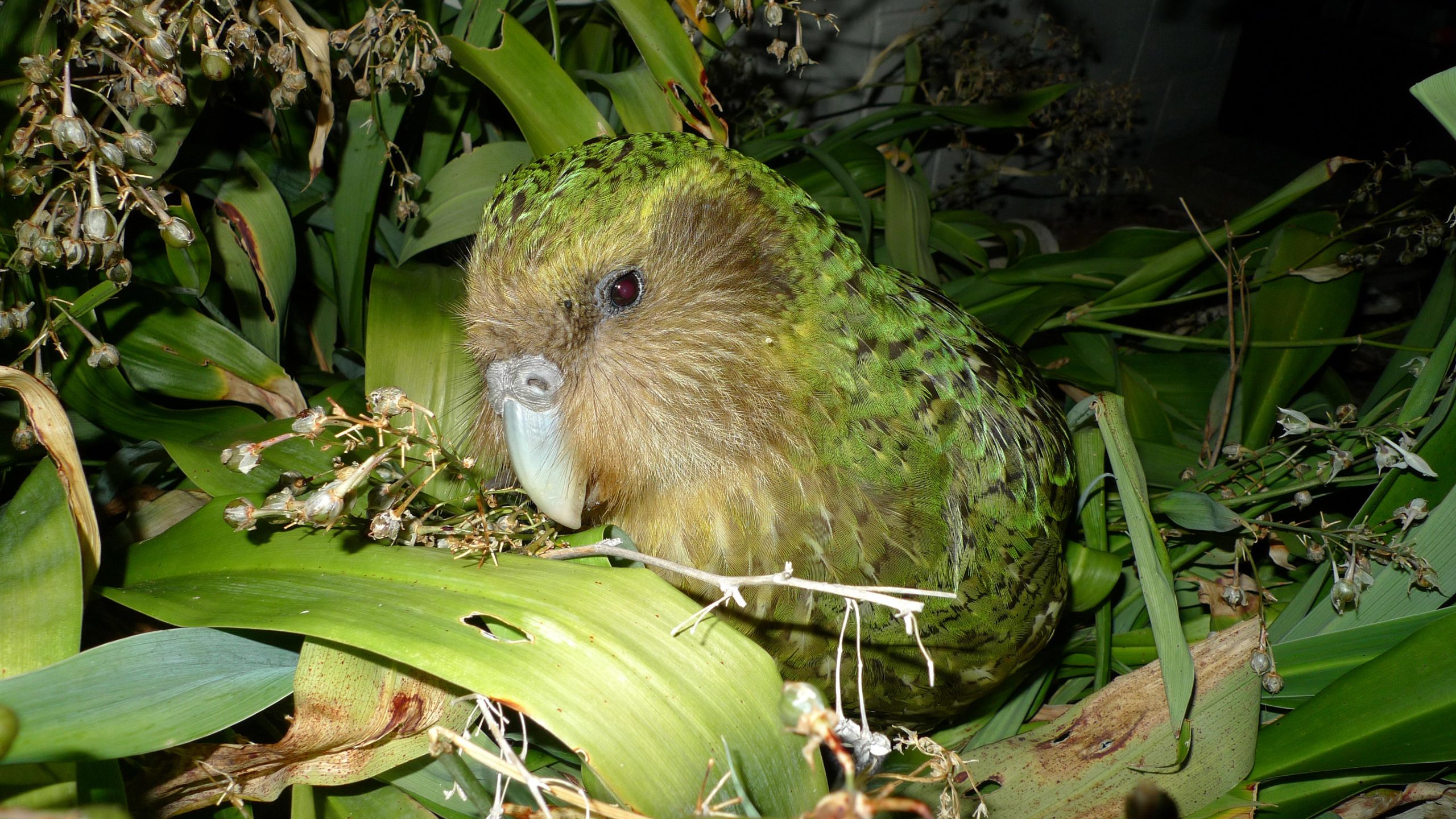
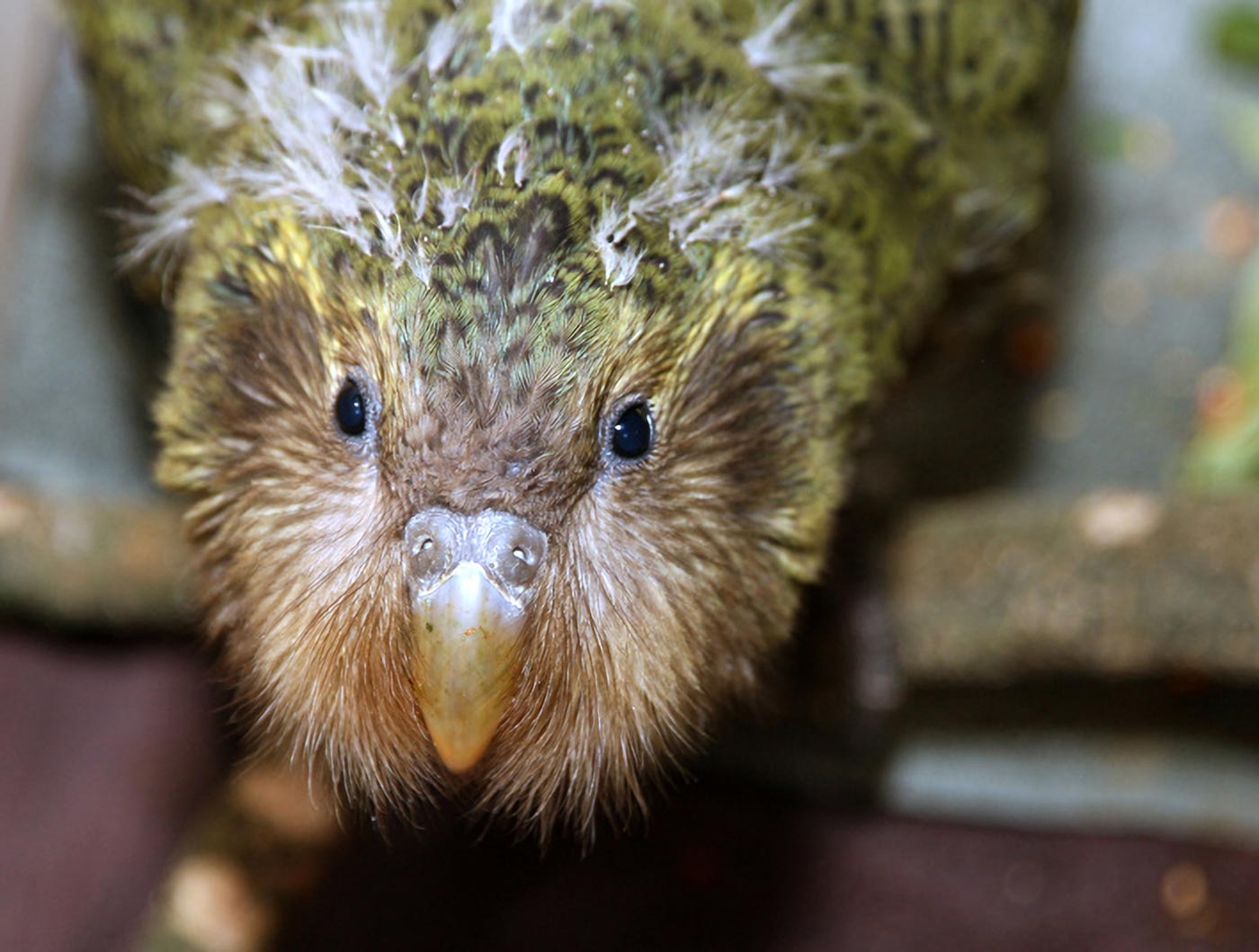
Up to 64 cm (25 in) in length, these flightless birds have finely blotched yellow-green plumage, a distinct facial disc, owl-style forward-facing eyes with surrounding discs of specially-textured feathers, a large grey beak, short legs, large blue feet, and relatively short wings and tail: a combination of traits making it unique among parrots. It is the world’s only flightless parrot, the world’s heaviest parrot, and also is nocturnal, herbivorous, visibly sexually dimorphic in body size, has a low basal metabolic rate, and does not have male parental care. It is the only parrot to have a polygynous lek breeding system. It is also possibly one of the world’s longest-living birds, with a reported lifespan of up to 100 years.
The kakapo is critically-endangered; the total known adult population is 249 living individuals, all of which are named and tagged, confined to four small islands off the coast of New Zealand that have been cleared of predators.
The name kakapo is Maori, and translates as ‘night parrot’.
Reference: “Hidden impacts of conservation management on fertility of the critically endangered kakapo” by Digby A, Eason D, Catalina A, Lierz M, Galla S, Urban L, Le Lec MF, Guhlin J, Steeves TE, Dearden PK, Joustra T, Lees C, Davis T, Vercoe D and Kakapo Recovery Team, 3 February 2023, PeerJ.
DOI: 10.7717/peerj.14675
Never miss a breakthrough: Join the SciTechDaily newsletter.
Follow us on Google and Google News.