
Close Menu
    Facebook X (Twitter) Instagram
    SciTechDaily
    • Biology
    • Chemistry
    • Earth
    • Health
    • Physics
    • Science
    • Space
    • Technology
    Facebook X (Twitter) Pinterest YouTube RSS
    SciTechDaily
    Home»Earth»Meltdown of Alaska’s Columbia Glacier Captured From Orbit
    Earth

    Meltdown of Alaska’s Columbia Glacier Captured From Orbit

    By European Space Agency (ESA)February 6, 2024No Comments3 Mins Read
    Facebook Twitter Pinterest Telegram LinkedIn WhatsApp Email Reddit
    Share
    Facebook Twitter LinkedIn Pinterest Telegram Email Reddit
    Earth From Space Columbia Glacier Alaska
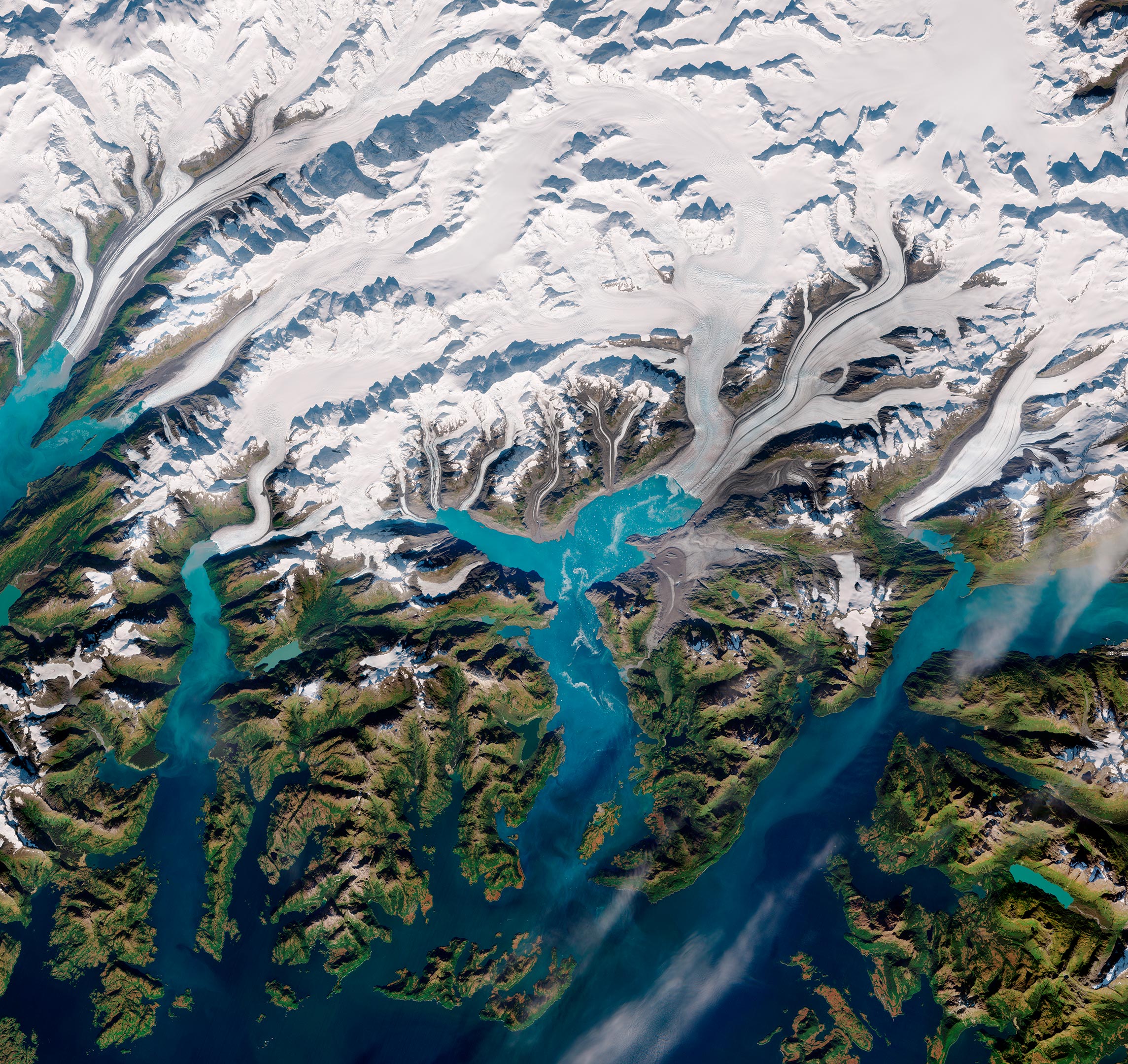
    This satellite image from the Copernicus Sentinel-2 mission reveals the rapid retreat of Alaska’s Columbia Glacier. Since the 1980s, it has retreated over 20 km and lost about half of its volume. Credit: Contains modified Copernicus Sentinel data (2023), processed by ESA, CC BY-SA 3.0 IGO

    Alaska’s Columbia Glacier has significantly retreated over 20 km since the 1980s, with climate change being a major factor. Satellite imagery from 2023 highlights the glacier’s dramatic transformation and the advanced technology used for monitoring these changes.

    The Copernicus Sentinel-2 mission takes us over Alaska’s Columbia Glacier, one of the fastest-changing glaciers in the world.

    The Columbia Glacier, visible just above the middle of the image, is a tidewater glacier that flows down the snow-covered slopes of the Chugach Mountains, which dominate the upper part of the image. The mountains hold Alaska’s largest concentration of glacial ice.

    Dramatic Changes Since the 1980s

    Since the early 1980s, the Columbia Glacier has retreated more than 20 km and lost about half of its total volume. This one glacier accounts for nearly half of the ice lost in the Chugach Mountains.

    The changing climate is thought to have caused its retreat. Until 1980, when its rapid and constant retreat began, the glacier’s terminus was observed at the northern edge of Heather Island, which lies near the end of Columbia Bay, the inlet into which the glacier currently flows before draining into Prince William Sound. This satellite image, acquired in September 2023, shows instead the deep mostly ice-free Columbia Bay dotted with numerous icebergs and fragmented sea ice.

    Colorful Waters and Climate Change Effects

    Depending on the amount of sediment coming from the Chugach Mountains, water bodies throughout the image can be seen in an array of colors: clear waters of the Pacific Ocean appear dark blue, while turbid waters in inlets and glacial lakes appear in light blue or cyan.

    Columbia is just one of the many glaciers suffering from the effects of climate change. Most of the glaciers around the world are losing mass. However, before the advent of satellites, measuring their retreat and studying their vulnerability to climate change was difficult considering their size, remoteness, and rugged terrain they occupy.

    Satellite Monitoring and Climate Research

    Different satellite instruments now can gather information systematically and over large areas, providing an effective means to monitor change, keep track of all calving stages, and quantify the melting rate and their contribution to sea-level rise.

    Never miss a breakthrough: Join the SciTechDaily newsletter.
    Follow us on Google and Google News.

    European Space Agency Geography Glacier
    Share. Facebook Twitter Pinterest LinkedIn Email Reddit

    Related Articles

    Greenland’s Ice Giants Captured in Breathtaking Satellite Images

    Exploring Earth From Space: Batura Glacier and the “Karakoram Anomaly”

    Exploring Earth From Space: The Stunningly Beautiful Kangerlussuaq Glacier

    CryoSat Discovers Antarctica’s Biggest Glacier’s Ice Loss Pattern Is Evolving

    Earth From Space: Lake George, Uganda – A Center for Biological Diversity [Video]

    Deforestation in Bolivia Spied From Space Satellite

    Earth From Space: Japanese Archipelago [Video]

    Earth From Space: Faroe Islands [Video]

    Earth From Space: Tromsø, Norway [Video]

    Leave A Reply Cancel Reply

    • Facebook
    • Twitter
    • Pinterest
    • YouTube

    Don't Miss a Discovery

    Subscribe for the Latest in Science & Tech!

    Trending News

    Largest-Ever Study Finds Medicinal Cannabis Ineffective for Anxiety, Depression, PTSD

    250-Million-Year-Old Egg Solves One of Evolution’s Biggest Mysteries

    Living With Roommates Might Be Changing Your Gut Microbiome Without You Knowing

    Century-Old Cleaning Chemical Linked to 500% Increased Risk of Parkinson’s Disease

    What if Your Memories Never Happened? Physicists Take a New Look at the Boltzmann Brain Paradox

    One of the Universe’s Largest Stars May Be Getting Ready To Explode

    Scientists Discover Enzyme That Could Supercharge Ozempic-Like Weight Loss Drugs

    Popular Sweetener Linked to DNA Damage – “It’s Something You Should Not Be Eating”

    Follow SciTechDaily
    • Facebook
    • Twitter
    • YouTube
    • Pinterest
    • Newsletter
    • RSS
    SciTech News
    • Biology News
    • Chemistry News
    • Earth News
    • Health News
    • Physics News
    • Science News
    • Space News
    • Technology News
    Recent Posts
    • AI Reveals Explosive Growth of Floating Algae Across the World’s Oceans
    • 5.5 Million Bees Discovered Living Beneath a New York Cemetery
    • Scientists Reverse Brain Aging With Simple Nasal Spray
    • The Surprising Diet Rule That Makes “Good” Parasites Work
    • This Simple Blood Test Could Outperform “Bad Cholesterol” in Preventing Heart Disease
    Copyright © 1998 - 2026 SciTechDaily. All Rights Reserved.
    • Science News
    • About
    • Contact
    • Editorial Board
    • Privacy Policy
    • Terms of Use

    Type above and press Enter to search. Press Esc to cancel.