

Researchers examined a girl with exceptional memory recall. Her case could transform understanding of how we relive the past and imagine the future.
Autobiographical memory is the ability to recall personal experiences that have shaped us since childhood. It includes both emotional and sensory recollections of people, places, and events, along with factual details such as names and dates that help situate us when we try to retrieve a moment from the past.
For most individuals, the clarity of these memories varies with time or personal significance. Because memory is dynamic, recollections often lose detail, disappear entirely, or are reconstructed in part. Yet in very rare cases—only a few documented in the scientific literature—some people can access such an abundance of autobiographical detail that they can connect specific events to precise calendar dates.
“In these individuals, known as hyperthymesics, memories are carefully indexed by date. Some will be able to describe in detail what they did on July 6, 2002, and experience again the emotions and sensations of that day,” explains Valentina La Corte, a research professor at the Memory, Brain, and Cognition Laboratory at Paris Cité University.
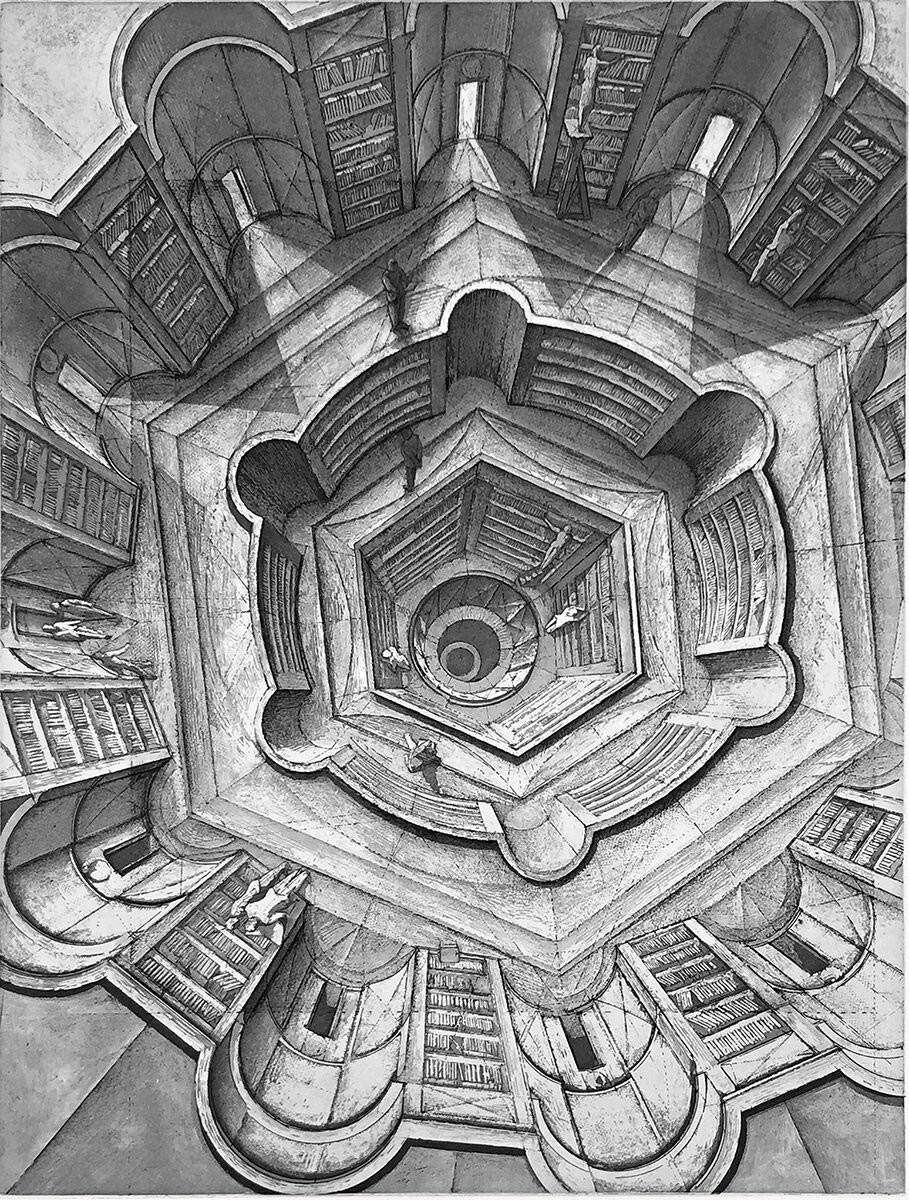
The ability to recall personal experiences contributes to the construction of our life narrative and strengthens our sense of identity. Autobiographical memory is closely tied to a form of consciousness called “autonoetic,” which enables us to mentally revisit the past, imagine the future, or picture hypothetical scenarios.
Individuals with hyperthymesia (also called autobiographical hypermnesia) can perform this mental time travel with striking vividness and ease. “Studying this atypical cognitive functioning could help us better understand how autobiographical memory works, as well as the neurological disorders that affect it,” says Laurent Cohen, neurologist and co-head of the PICNIC Lab at Paris Brain Institute.
A Memory Palace for Organizing Memories
Reports in scientific literature and media accounts often portray hyperthymesia as a burdensome trait, where distressing or even traumatic memories accumulate without control. Some people with this ability also describe being flooded by trivial or unnecessary details.
In contrast, Valentina La Corte and Laurent Cohen studied the case of TL, a 17-year-old girl who seems to manage her memory access with a remarkable degree of control.
TL makes a clear distinction between two categories of memory. Her “black memory” consists of encyclopedic information, primarily learned in school, that carries little or no emotional significance. In contrast, her personal memories are arranged in an elaborate mental framework—a kind of memory palace—that she can call up at will.
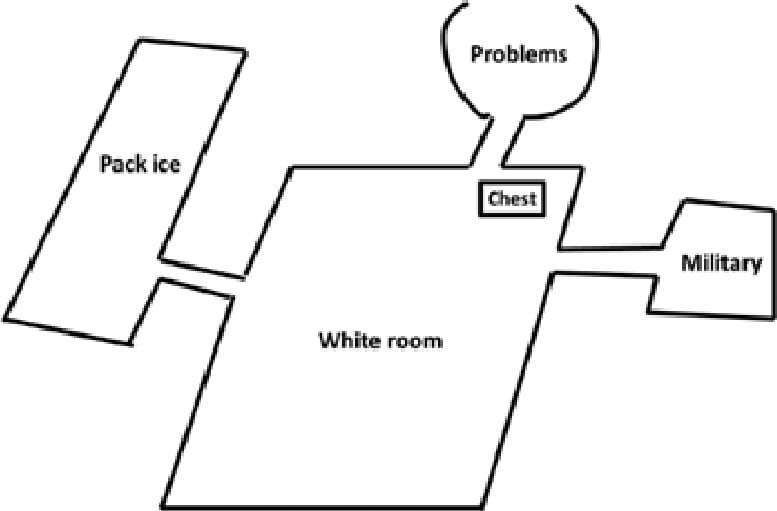
These are filed by theme and chronological order in binders, which are kept in a room with a very low ceiling that she calls “the white room.” TL mentally scans through them to retrieve episodes related to her family life, vacations, friends, or childhood objects. Some memories are even stored in the form of text messages or photographs.
The girl uses mental representation tools to isolate memories linked to negative emotions such as sadness, grief, or distress. For instance, her grandfather’s death is kept in a chest inside the white room. She also uses two adjoining rooms: a “pack ice” room she uses to soothe her anger, a “problems” room to reflect on difficulties, and a “military room” populated by soldiers, which appeared in her mind when her father left home to join the army.
Assessing Autobiographical Memory
Researchers lack robust tools to verify whether hyperthymestic memories are reliable, especially when they concern distant periods. Like the rest of the population, hyperthymestics are prone to false memories and memory distortions.
However, Valentina La Corte and Laurent Cohen used the Episodic Test of Autobiographical Memory (TEMPau) and the Temporal Extended Autobiographical Memory Task (TEEAM), which assess how easily people can mentally travel through time, the richness of the memories they report, and how they relate to their own narrative.
Their findings indicate that TL relives moments of her life with exceptional intensity and vividness. Sometimes as an external observer, sometimes as a protagonist, she can re-examine details from different points of view. When researchers asked her to imagine future events, she provided an unusually rich amount of temporal, spatial, and perceptual information, far beyond what an ordinary person can produce.
These observations reinforce the idea that mental travel into the future relies on mechanisms similar to those used in conscious exploration of the past. In both cases, sensory information seems to play a crucial role.
New Avenues for Research
“Autobiographical hypermnesia also seems closely linked to synesthesia, a neurological condition in which processing one sensory modality involves at least two senses. For example, synesthetes may hear colors, see sounds, or taste music. Even though TL is not a synesthete, several members of her family are. It would be interesting to explore this association,” adds Laurent Cohen.
Some studies suggest that hyperthymesia is associated with overactivation of brain networks involved in autobiographical memory and certain visual areas. However, no neuroanatomical differences have yet been found between hyperthymesics and individuals with typical memory.
“It is difficult to generalize findings about hyperthymesia, since they rely on only a few cases. Does aging affect the memories of these individuals? Do their mental time-travel abilities depend on age? Can they learn to control the accumulation of memories? We have many questions, and everything remains to be discovered. An exciting avenue of research lies ahead,” concludes Valentina La Corte.
Reference: “Autobiographical hypermnesia as a particular form of mental time travel” by Valentina La Corte, Pascale Piolino and Laurent Cohen, 1 August 2025, Neurocase.
DOI: 10.1080/13554794.2025.2537950
Never miss a breakthrough: Join the SciTechDaily newsletter.
Follow us on Google and Google News.
4 Comments
In the White Room, with Black Curtains, is the Station…
I remember listening to one such person. They were driven to catalogue, mentally, everything they did, every day. they enjoyed the attention they received, being able to recount it. Kind of OCD.
There might be other things to think about.
Aged 73, I can recall lots of experiences & events from early childhood onwards, which I share with family and old school friends still living. At best, ppl are impressed. At worst, incredulity casts doubt or encouragement to leave all that old stuff behind. Memories of those experiences have informed my choices & actions, to date.
I have significant recall of much of my 70+ years. As a professional trauma therapist I began to understand how the protective hypervigilence that resulted from my own early trauma and abuse may have contributed to both hypermnesia and amnesia periods.
I always thought everyone was like me, and I did not understanding those who didn’t recall things from their past. I didn’t know that this was a thing nor that it’s called hypermnesia 🙂 Still learning at 55! Everything from my past is shown in short movie scenes. I can access them whenever I need to. Every trauma is not felt, unless I want to feel it, which isn’t usually useful. And not everything is recorded, but when it is, it’s in colour, really vivid and there are a lot of details. All recordings aren’t date stamped, but are gathered by my own standards. From what I understand, it’s like everybody has a reset switch when things get to much, but for me, there isn’t one. I just have to face things head on. My husband says that I have a lot of insight: there are a lot of times that « I knew » that this will or won’t turn out to be good. I can’t really explain it: it’s like a short movie trailer showing me the final ending of a situation. Like my brain when through all possible scenarios really fast, then it gives me an assessment.