
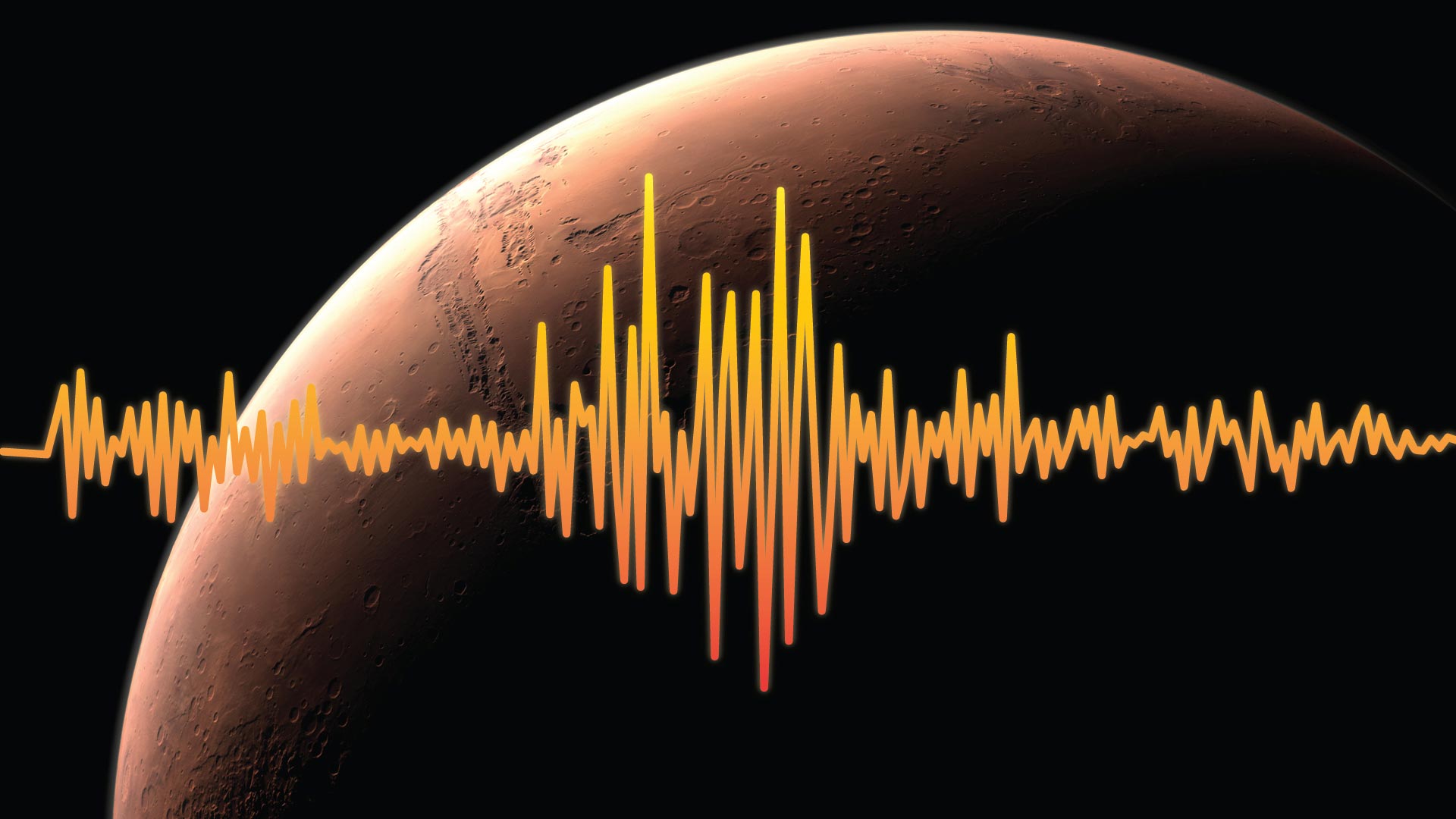
Seismic signals indicate Mars gets hit by around 300 basketball-sized meteorites every year, providing a new tool for dating planetary surfaces.
Scientists involved in NASA’s InSight mission have uncovered that Mars is subjected to far more meteorite impacts than previously thought, with annual rates ranging from 280 to 360 significant impacts. This new understanding stems from seismic data captured by InSight’s seismometer, which suggests a more effective method for dating planetary surfaces across the Solar System.
The new research, led by scientists at Imperial College London and ETH Zurich working as part of NASA’s InSight mission, has shed light on how often ‘marsquakes’ caused by meteorite impacts occur on Mars.
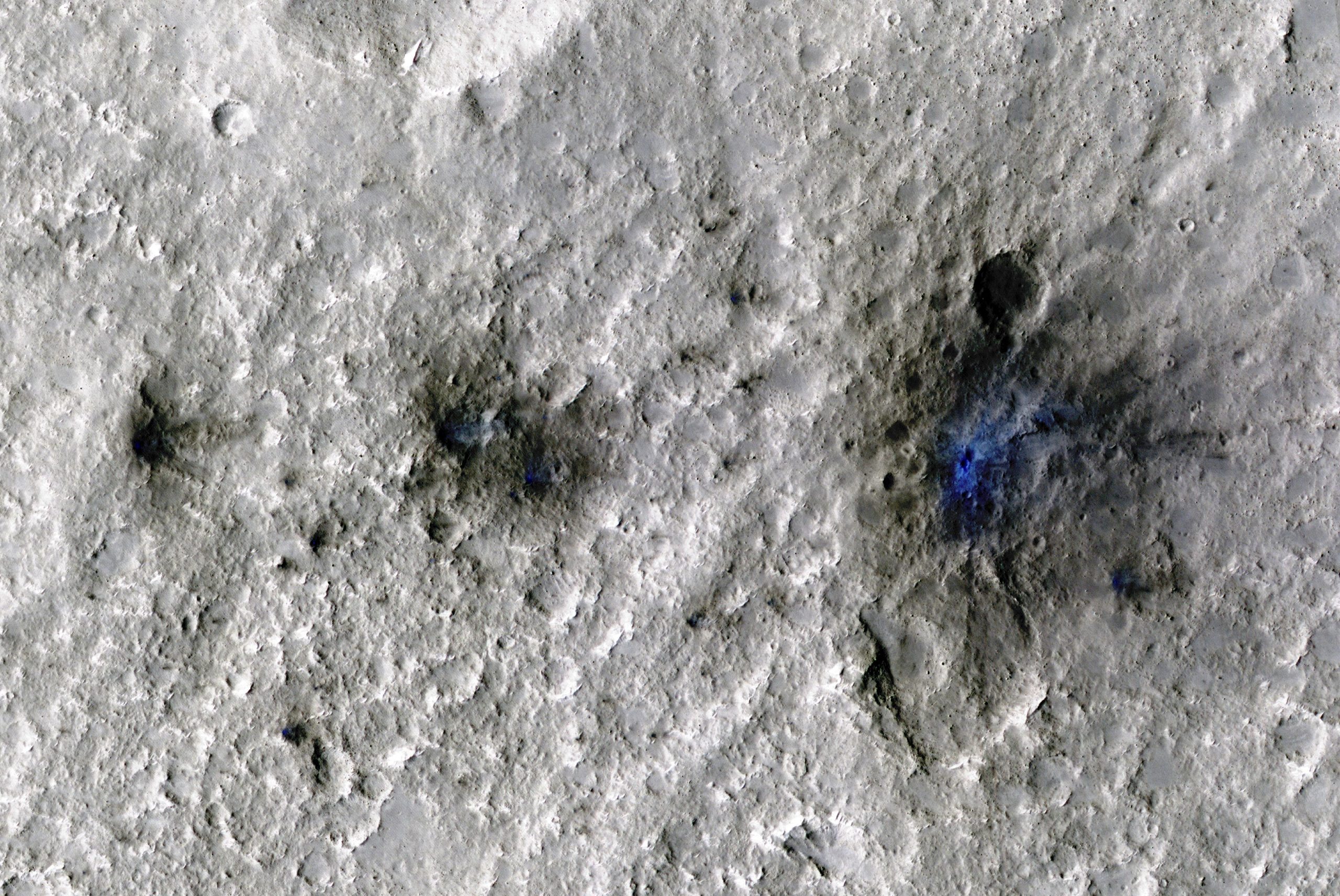
The researchers found that Mars experiences around 280 to 360 meteorite impacts every year that produce craters larger than eight meters in diameter and shake the red planet’s surface.
The rate of these marsquakes, which were detected by InSight’s ‘seismometer’ – an instrument capable of measuring the slightest ground movements – exceeds previous estimates based on satellite images of Mars’ surface.
Seismic Data and Planetary Dating
The researchers say these seismic data could be a better, more direct way of measuring meteorite impact rates, and could help scientists date planetary surfaces across the Solar System more accurately.
Study co-first author Dr. Natalia Wojcicka, Research Associate at Imperial College London’s Department of Earth Science and Engineering, said: “By using seismic data to better understand how often meteorites hit Mars and how these impacts change its surface, we can start piecing together a timeline of the red planet’s geological history and evolution.
“You could think of it as a sort of ‘cosmic clock’ to help us date Martian surfaces, and maybe, further down the line, other planets in the Solar System.”
The study is published today (June 28) in the journal Nature Astronomy.

Impact Craters As Cosmic Clocks
For years, scientists have used the number of craters on Mars and other planets’ surfaces as ‘cosmic clocks’ to estimate planetary age – with older surfaces on planets pitted with more craters than younger ones.
To calculate planetary age in this way, scientists have traditionally used models based on craters on the Moon to predict the rate of meteorite impacts of different sizes over time. To apply these models to Mars, they need to be adjusted for how the atmosphere might stop smallest impactors from hitting the surface and Mars’s different size and position in the Solar System.
For small craters less than 60 meters wide, Mars scientists have also been able to observe how often new craters form using satellite images – but the number of craters found in this way is much lower than expected.
Insights From InSight’s Seismometer
This new research, which is part of the InSight mission to understand the seismic activity and internal structure of Mars, researchers identified a previously unrecognized pattern of seismic signals, as produced by meteorite impacts. These signals stood out for their unusually greater proportion of high-frequency waves compared to typical seismic signals, as well as other characteristics, and are known as ‘very high-frequency’ marsquakes.
The researchers found the rate of meteoroid impacts to be higher than previously estimated by looking at freshly formed craters captured by satellite images and in agreement with extrapolating data from craters on the Moon’s surface.
This highlighted the limitations of previous models and estimates, as well as the need for better models to understand crater formation and meteorite impacts on Mars.
The Power of Seismic Data in Planetary Science
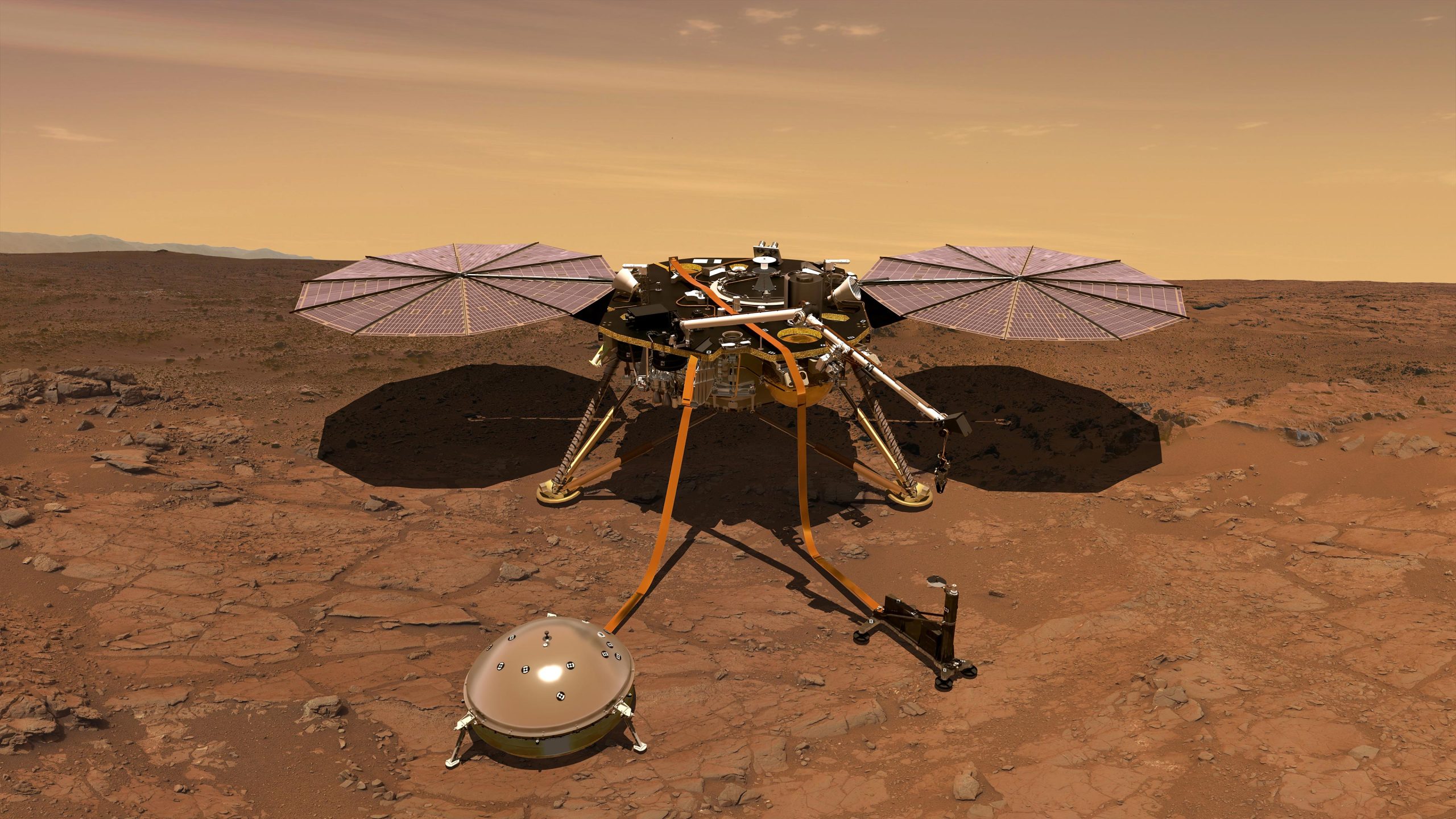
To address this, the team of scientists used NASA’s InSight lander and its extremely sensitive seismometer, SEIS, to record seismic events possibly caused by meteorite impacts.
SEIS detected seismic signatures characteristic of these very high-frequency marsquakes, which researchers found to be indicative of meteoroid impacts and different from other seismic activity.
Using this new method for detecting impacts, the researchers found many more impact events than predicted by satellite imaging, particularly for small impacts that produce craters only a few meters across.
Study co-author Professor Gareth Collins at Imperial College London’s Department of Earth Science and Engineering said: “The SEIS instrument has proven to be incredibly successful at detecting impacts – listening for impacts seems to be more effective than looking for them if we want to understand how often they occur.”
Improving Our Understanding of the Solar System
Researchers believe that deploying smaller, more affordable seismometers on future landers could further enhance our understanding of Mars’ impact rates and inner structure. These instruments would help researchers detect more seismic signals, providing a more comprehensive dataset for understanding meteorite impacts on Mars and other planets, as well as their inner structures.
Dr. Wojcicka said: “To understand the inner structure of planets, we use seismology. This is because as seismic waves travel through or reflect off material in planets’ crust, mantle, and core, they change. By studying these changes, seismologists can determine what these layers are made of and how deep they are.
“On Earth, you can more easily understand the inner structure of our planet by looking at data from seismometers placed all around the globe. However, on Mars there has been only one – SEIS. To better understand Mars’ inner structure, we need more seismometers distributed across the planet.”
As well as the new research published in Nature Astronomy, the team is also involved in another study publishing in Science Advances today, which used images and atmospheric signals recorded by InSight to estimate how often impacts occur on Mars. Despite using different methods, both studies reached similar conclusions, strengthening the overall findings.
Reference: “An estimate of the impact rate on Mars from statistics of very-high-frequency marsquakes” by Géraldine Zenhäusern, Natalia Wójcicka, Simon C. Stähler, Gareth S. Collins, Ingrid J. Daubar, Martin Knapmeyer, Savas Ceylan, John F. Clinton and Domenico Giardini, 28 June 2024, Nature Astronomy.
DOI: 10.1038/s41550-024-02301-z
NASA’s InSight mission, short for Interior Exploration using Seismic Investigations, Geodesy and Heat Transport, was a robotic lander designed to study the deep interior of the planet Mars. Launched on May 5, 2018, InSight aimed to provide valuable data on the processes that shaped the rocky planets of the solar system, including Earth. Its suite of geophysical instruments included a seismometer to detect marsquakes, a heat flow probe to measure the planet’s internal heat, and a set of precision radio instruments for planetary geodesy. By analyzing the size, thickness, density, and overall structure of Mars’ core, mantle, and crust, InSight has offered unprecedented insights into the evolutionary history of Mars, helping scientists understand not just the Red Planet, but also the formation of Earth and other terrestrial planets.
Never miss a breakthrough: Join the SciTechDaily newsletter.
Follow us on Google and Google News.
1 Comment
Ground shake truth.
Accompanying article:
Seismically detected cratering on Mars: Enhanced recent impact flux?
INGRID J. DAUBAR et al.
SCIENCE ADVANCES
28 Jun 2024
Vol 10, Issue 26
DOI: 10.1126/sciadv.adk7615