
Close Menu
    Facebook X (Twitter) Instagram
    SciTechDaily
    • Biology
    • Chemistry
    • Earth
    • Health
    • Physics
    • Science
    • Space
    • Technology
    Facebook X (Twitter) Pinterest YouTube RSS
    SciTechDaily
    Home»Technology»Missing Link Discovered: New Research Paves the Way for Charging Phones in Under a Minute
    Technology

    Missing Link Discovered: New Research Paves the Way for Charging Phones in Under a Minute

    By University of Colorado at BoulderAugust 7, 2024No Comments3 Mins Read
    Facebook Twitter Pinterest Telegram LinkedIn WhatsApp Email Reddit
    Share
    Facebook Twitter LinkedIn Pinterest Telegram Email Reddit
    Supercapacitor Art Illustration
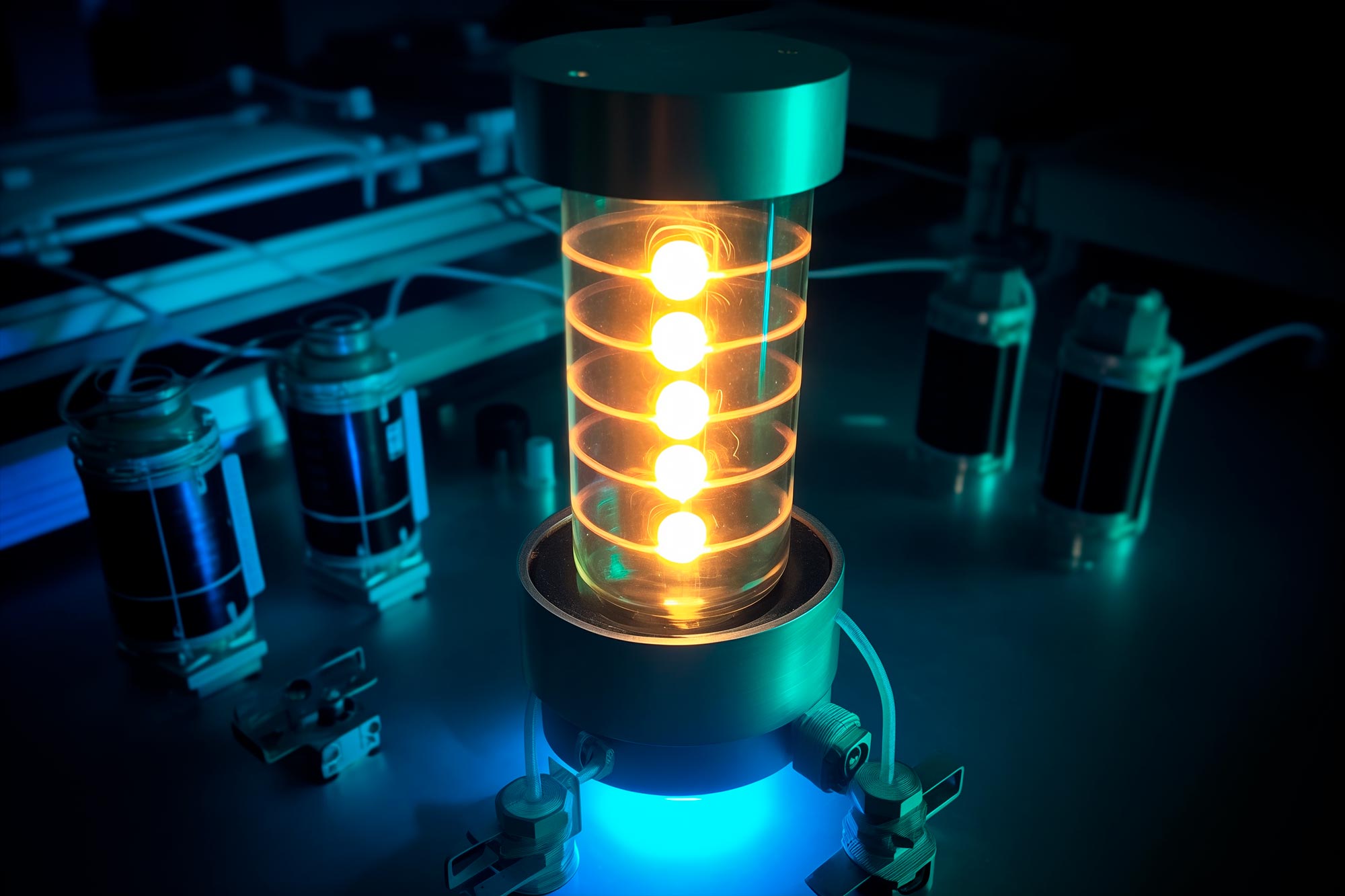
    CU Boulder researchers have made a breakthrough in understanding ion movement in porous materials, potentially enabling faster charging supercapacitors and transforming energy storage for electronics and power grids. Credit: SciTechDaily.com

    CU Boulder scientists have found how ions move in tiny pores, potentially improving energy storage in devices like supercapacitors. Their research updates Kirchhoff’s law, with significant implications for energy storage in vehicles and power grids.

    Imagine if your dead laptop or phone could be charged in a minute, or if an electric car could be fully powered in just 10 minutes. While this isn’t possible yet, new research by a team of scientists at CU Boulder could potentially make these advances a reality.

    Published in the Proceedings of the National Academy of Sciences, researchers in Ankur Gupta’s lab discovered how tiny charged particles, called ions, move within a complex network of minuscule pores. The breakthrough could lead to the development of more efficient energy storage devices, such as supercapacitors, said Gupta, an assistant professor of chemical and biological engineering.

    Application of Chemical Engineering Techniques

    “Given the critical role of energy in the future of the planet, I felt inspired to apply my chemical engineering knowledge to advancing energy storage devices,” Gupta said. “It felt like the topic was somewhat underexplored and as such, the perfect opportunity.”

    Gupta explained that several chemical engineering techniques are used to study flow in porous materials such as oil reservoirs and water filtration, but they have not been fully utilized in some energy storage systems.

    The discovery is significant not only for storing energy in vehicles and electronic devices but also for power grids, where fluctuating energy demand requires efficient storage to avoid waste during periods of low demand and to ensure rapid supply during high demand.

    Advantages of Supercapacitors

    Supercapacitors, energy storage devices that rely on ion accumulation in their pores, have rapid charging times and longer life spans compared to batteries.

    “The primary appeal of supercapacitors lies in their speed,” Gupta said. “So how can we make their charging and release of energy faster? By the more efficient movement of ions.”

    Their findings modify Kirchhoff’s law, which has governed current flow in electrical circuits since 1845 and is a staple in high school students’ science classes. Unlike electrons, ions move due to both electric fields and diffusion, and the researchers determined that their movements at pore intersections are different from what was described in Kirchhoff’s law.

    Prior to the study, ion movements were only described in the literature in one straight pore. Through this research, ion movement in a complex network of thousands of interconnected pores can be simulated and predicted in a few minutes.

    “That’s the leap of the work,” Gupta said. “We found the missing link.”

    Reference: “A network model to predict ionic transport in porous materials” by Filipe Henrique, Paweł J. Żuk and Ankur Gupta, 24 May 2024, Proceedings of the National Academy of Sciences.
    DOI: 10.1073/pnas.2401656121

    Never miss a breakthrough: Join the SciTechDaily newsletter.
    Follow us on Google and Google News.

    Energy Supercapacitors University of Colorado at Boulder
    Share. Facebook Twitter Pinterest LinkedIn Email Reddit

    Related Articles

    Scientists Uncover Surprising Efficiency of “Messy” Supercapacitors

    Next-Gen Solar Power: Perovskite Cells Achieve Near 25% Efficiency

    Revolutionary One-Atom-Thick Ribbons Set To Transform Batteries and Solar Cells

    Ultramicro Supercapacitor: A Game-Changing Energy Storage Marvel

    MXene Nanomaterial Offers Flexible and Stretchable High-Capacity Energy Storage

    New Tool Created to Aid in Development, Efficiency of Hydrogen-Powered Cars

    A Ghostly Solution: Strange Property of the Quantum Realm Enables Efficient Energy Harvesting in Tiny Device

    Ultralow-Temperature Supercapacitors Using Porous Carbon Aerogel – Could Power Mars & Polar Missions

    New Wearable Device Turns Your Body Into a Biological Battery

    Leave A Reply Cancel Reply

    • Facebook
    • Twitter
    • Pinterest
    • YouTube

    Don't Miss a Discovery

    Subscribe for the Latest in Science & Tech!

    Trending News

    These Toads Are Surviving a Deadly Fungus – Scientists May Finally Know Why

    These Brain Cells May Explain Why We Eventually Have To Sleep

    Tomatoes Contain an Invisible Ingredient With Surprising Effects on Liver Health

    World’s First Heat-Powered Cooling System Turns Waste Heat Into Cold

    Antarctica Gained a Record 695 Billion Tons of Ice in Just Two Years

    Don’t Miss: A Brilliant Venus and Glowing Harvest Moon Light Up the Sky

    New Twist on the Einstein Problem Reveals Unexpected Physics

    JWST Captures Stunning Evidence of How Supermassive Black Holes Feed

    Follow SciTechDaily
    • Facebook
    • Twitter
    • YouTube
    • Pinterest
    • Newsletter
    • RSS
    SciTech News
    • Biology News
    • Chemistry News
    • Earth News
    • Health News
    • Physics News
    • Science News
    • Space News
    • Technology News
    Recent Posts
    • Captive Crocodiles Released Into the Wild Did Something Researchers Didn’t Expect
    • A Massive 29-Square-Mile Iceberg Hit an Island and Kept Going
    • Nearly Destroyed DNA Reveals Two Extinct Giant Tortoise Lineages
    • New Mexico’s Largest Reservoir Was Nearly Full. Now It’s at 1.4%
    • Vitamin B2 and Tumor Bacteria May Unlock a New Way To Fight Lung Cancer
    Copyright © 1998 - 2026 SciTechDaily. All Rights Reserved.
    • Science News
    • About
    • Contact
    • Editorial Board
    • Privacy Policy
    • Terms of Use

    Type above and press Enter to search. Press Esc to cancel.