
Close Menu
    Facebook X (Twitter) Instagram
    SciTechDaily
    • Biology
    • Chemistry
    • Earth
    • Health
    • Physics
    • Science
    • Space
    • Technology
    Facebook X (Twitter) Pinterest YouTube RSS
    SciTechDaily
    Home»Health»MIT Begins Testing Wastewater to Help Detect COVID-19 and Learn About the Spread of the Virus
    Health

    MIT Begins Testing Wastewater to Help Detect COVID-19 and Learn About the Spread of the Virus

    By Zach Winn, Massachusetts Institute of TechnologyOctober 10, 20201 Comment3 Mins Read
    Facebook Twitter Pinterest Telegram LinkedIn WhatsApp Email Reddit
    Share
    Facebook Twitter LinkedIn Pinterest Telegram Email Reddit
    MIT COVID-19 Wastewater Testing
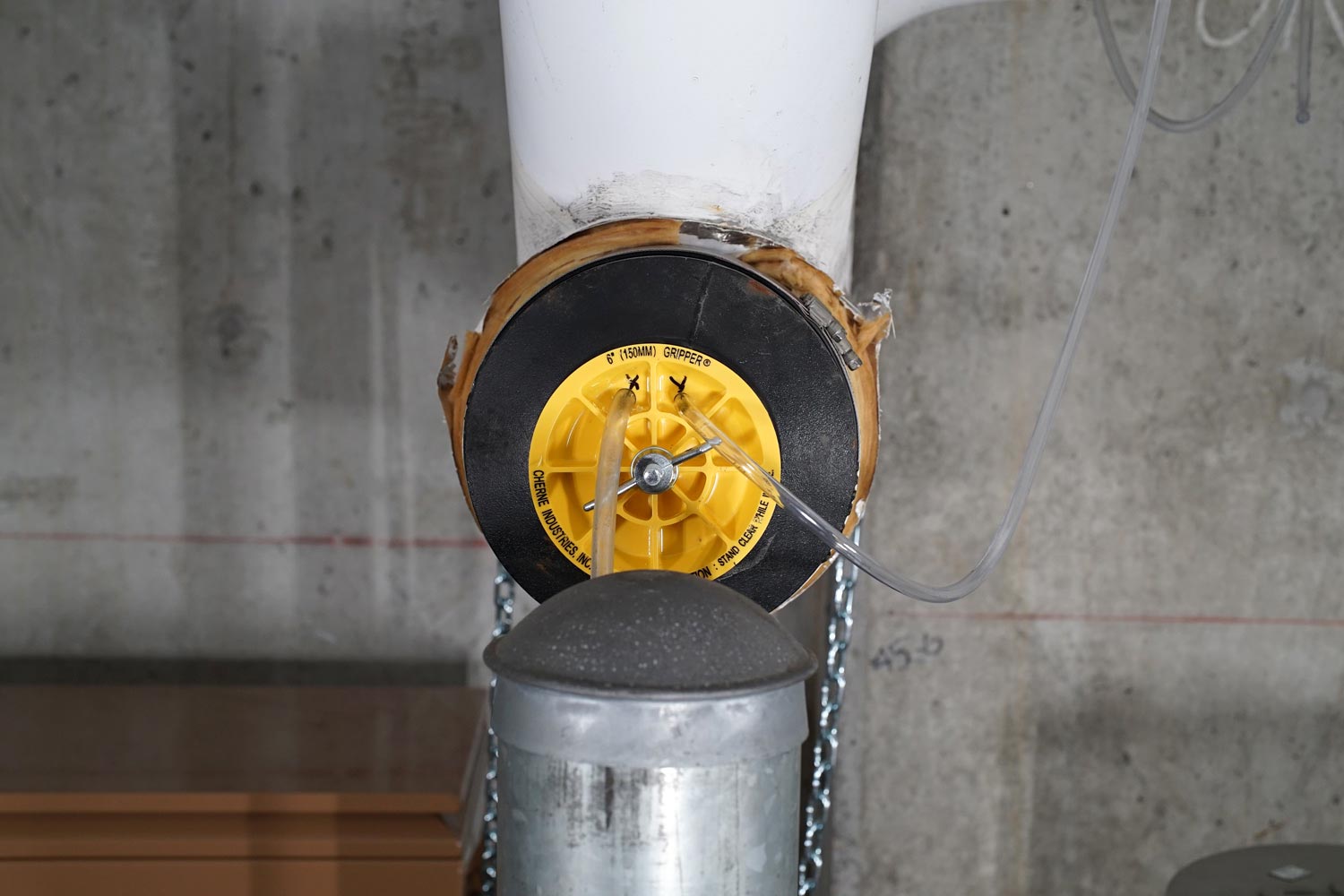
    MIT is set to begin a pilot project that will seek to use wastewater testing as means of detecting the spread of COVID-19 on campus. Sampling ports installed on the sewage exit lines of selected buildings will extract a small amount of wastewater from the pipes every two minutes. A subsample of that wastewater will be tested each day by the Alm Lab. Credit: Melanie Gonick, MIT

    The pilot project is designed to determine if wastewater testing can provide early signals about the spread of the virus.

    Last week, MIT began piloting a wastewater testing program as a new tool to help keep the campus community safe this semester. In a project that will run through the fall semester, wastewater from seven buildings on campus will be tested each day for SARS-CoV-2, the virus that causes COVID-19.

    The project is designed to determine if wastewater testing can be an effective early warning system for COVID-19 outbreaks on campus, and is being evaluated as a complementary tool in the Institute’s response to the pandemic, along with clinical testing, contact tracing, and other measures.

    Results of the wastewater testing will be communicated to MIT’s Covid Monitoring Team, a cross-Institute collaboration that looks at health trends on campus and makes recommendations to the Covid Decision Team, which is made up of MIT’s senior leadership, to determine the next steps. Buildings will not be quarantined on the basis of the test results, but people in the buildings where the virus is detected may be asked to get tested at MIT Medical sooner than otherwise scheduled. The project team members stress that the sampling data is aggregated and cannot be used to identify individuals.

    “We view the wastewater treatment data as a part of [the larger portfolio of data] that goes to the Covid Decision Team that helps make strategic choices about campus operations,” MIT Medical Chief of Staff Brian Schuetz says. “It gives us interesting insight into populations, which is really what we’re focused on. [Responding to COVID-19] is a population health initiative, and this fits into that.”

    Wastewater testing offers complementary advantages to clinical testing because it reflects health at the community level, is not limited by clinical testing availability, and sheds light on both symptomatic and asymptomatic infections. The lab of biological engineering Professor Eric Alm, which has been testing municipal wastewater for COVID-19 around the country since March, has shown that at the population level, wastewater data precede clinical observations of COVID-19 by four or more days.

    “It makes a lot of sense when you think about the fact that there’s a lag between the time somebody gets sick and starts shedding the virus, and the time when they’re symptomatic enough to seek care and get a clinical test,” says Katya Moniz, a research scientist in the Alm Lab.

    MIT COVID-19 Wastewater Testing Map

    At MIT, the following buildings have been selected for sewage testing: Sloan School (E62), Random House (NW61), Sidney-Pacific (NW86), McCormick Hall (W4), Simmons Hall (W79), Tang Hall (W84), and Westgate (W85). Credit: Courtesy of the researchers

    Wastewater testing is already being used at a number of colleges across the country. In one case, at the University of Arizona, wastewater testing helped detect an outbreak among asymptomatic individuals and officials were able to take precautionary measures before the virus spread.

    At MIT, the following buildings have been selected for sewage testing during the pilot:

    • MIT Sloan School of Management (E62)
    • Random Hall (NW61)
    • Sidney-Pacific (NW86)
    • McCormick Hall (W4)
    • Simmons Hall (W79)
    • Tang Hall (W84)
    • Westgate (W85)

    Never miss a breakthrough: Join the SciTechDaily newsletter.
    Follow us on Google and Google News.

    COVID-19 MIT Public Health
    Share. Facebook Twitter Pinterest LinkedIn Email Reddit

    Related Articles

    COVID-19 Scientific Leaders Share Expertise in New MIT Class – Available to the Public Online

    How MIT Built Its Own COVID-19 Testing Trailer That Can Test Up to 1,500 People a Day

    New Research Finds That Mask Mandates Have Major Impact – Tens of Thousands of Lives at Stake

    MIT Scientists Work With 3M to Develop Rapid COVID-19 Test – Highly Accurate Results Within 10 Minutes

    Engineers Design a Reusable, Silicone Rubber Face Mask With an N95 Filter

    MIT App Helps Patients, EMTs, and Physicians Balance Hospitals’ COVID-19 Load

    MIT Team Races to Fill COVID-19 Ventilator Shortage With Low-Cost, Open-Source Alternative

    Companies Affiliated With MIT Take On COVID-19 Pandemic Using Technology

    MIT COVID-19 Diagnostic Could Aid Efforts to Detect and Prevent the Spread of Coronavirus

    1 Comment

    1. Joe Schmoe on October 11, 2020 10:58 am

      That stinks.

      Reply
    Leave A Reply Cancel Reply

    • Facebook
    • Twitter
    • Pinterest
    • YouTube

    Don't Miss a Discovery

    Subscribe for the Latest in Science & Tech!

    Trending News

    Scientists Discover Cheap, Natural Remedy for High Blood Pressure

    Earth’s Upper Atmosphere Is Cooling Fast and Scientists Finally Know Why

    32,000 Olympic Pools of Magma Nearly Erupted Beneath Atlantic Island

    Exercise Changes the Heart in a Way Researchers Never Expected

    Too Much Sleep May Age Your Body Faster, New Study Warns

    Scientists Uncover Promising New Strategy To Stop Parkinson’s in Its Tracks

    Experts Reveal the Surprising Cancer Link Behind a Common Vitamin

    This Strange “Golden Orb” Found 2 Miles Deep Stumped Scientists for Years

    Follow SciTechDaily
    • Facebook
    • Twitter
    • YouTube
    • Pinterest
    • Newsletter
    • RSS
    SciTech News
    • Biology News
    • Chemistry News
    • Earth News
    • Health News
    • Physics News
    • Science News
    • Space News
    • Technology News
    Recent Posts
    • Massive Genetic Study Reveals Hidden Causes of Pregnancy Sickness
    • Scientists Discover Surprising Way Cranberry Juice Could Fight Antibiotic Resistance
    • Researchers Discover the Body’s Hidden “Off Switch” for Inflammation
    • Scientists Discover Metformin Doesn’t Work the Way We Thought
    • Tea or Coffee? Your Daily Choice Could Affect Osteoporosis Risk
    Copyright © 1998 - 2026 SciTechDaily. All Rights Reserved.
    • Science News
    • About
    • Contact
    • Editorial Board
    • Privacy Policy
    • Terms of Use

    Type above and press Enter to search. Press Esc to cancel.