
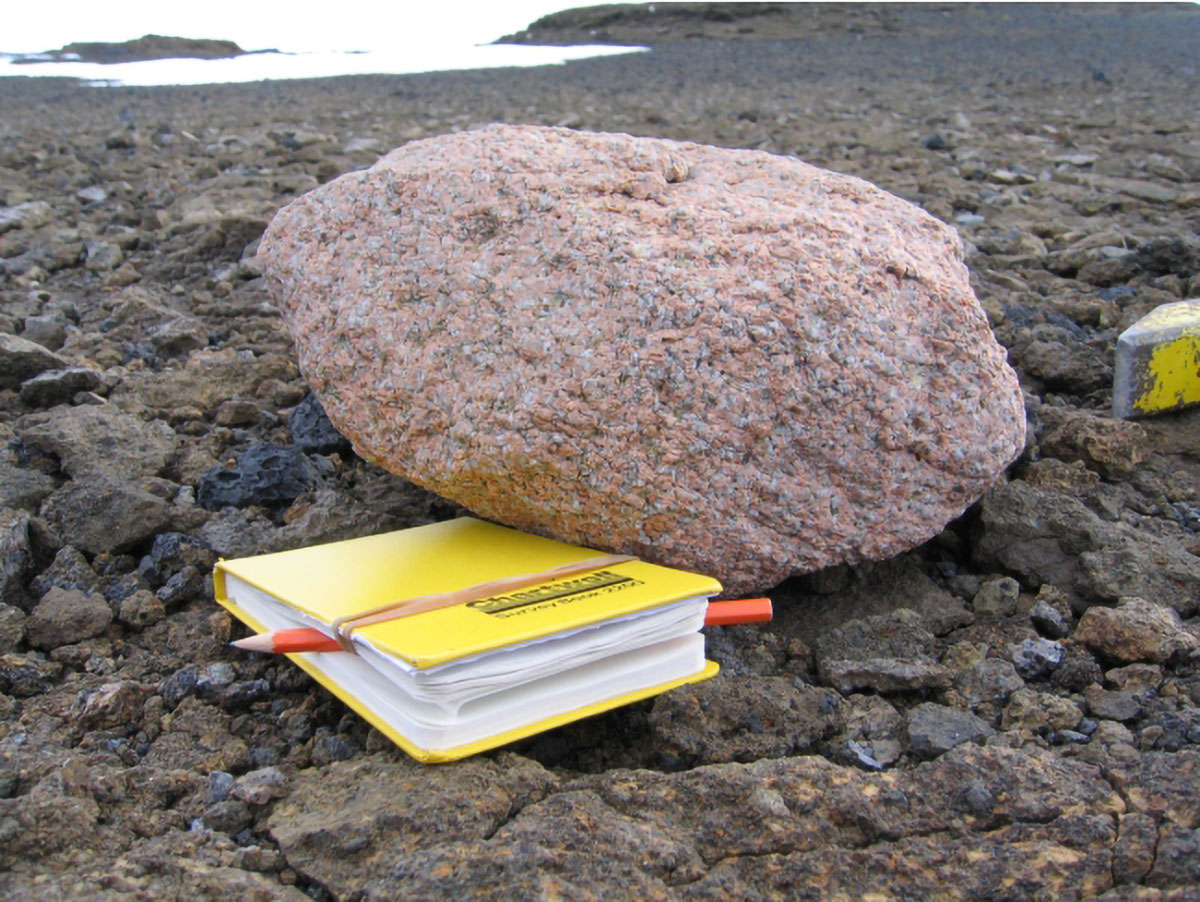
Ancient granite boulders reveal a vast hidden structure beneath Pine Island Glacier, reshaping understanding of Antarctic ice flow.
Pink granite boulders scattered across the dark volcanic peaks of the Hudson Mountains in West Antarctica have pointed scientists to a massive granite formation hidden beneath Pine Island Glacier. This buried body spans nearly 100 kilometers (about 62 miles) in width and reaches approximately 7 kilometers (around 4.3 miles) in thickness, making it roughly half the size of Wales in the UK.
For decades, the presence of these distinctive boulders high in the mountains has raised questions. Researchers have long wondered how the rocks arrived there and what they might reveal about the history and future behavior of the Antarctic ice sheet.
Dating the rocks, tracing the mystery
A research team led by the British Antarctic Survey (BAS) analyzed the granites by measuring the radioactive decay of elements trapped within microscopic crystals. Their results showed that the rocks formed around 175 million years ago during the Jurassic period. Even so, the process that carried these boulders to their current locations remained unclear until scientists gathered new data from the air.
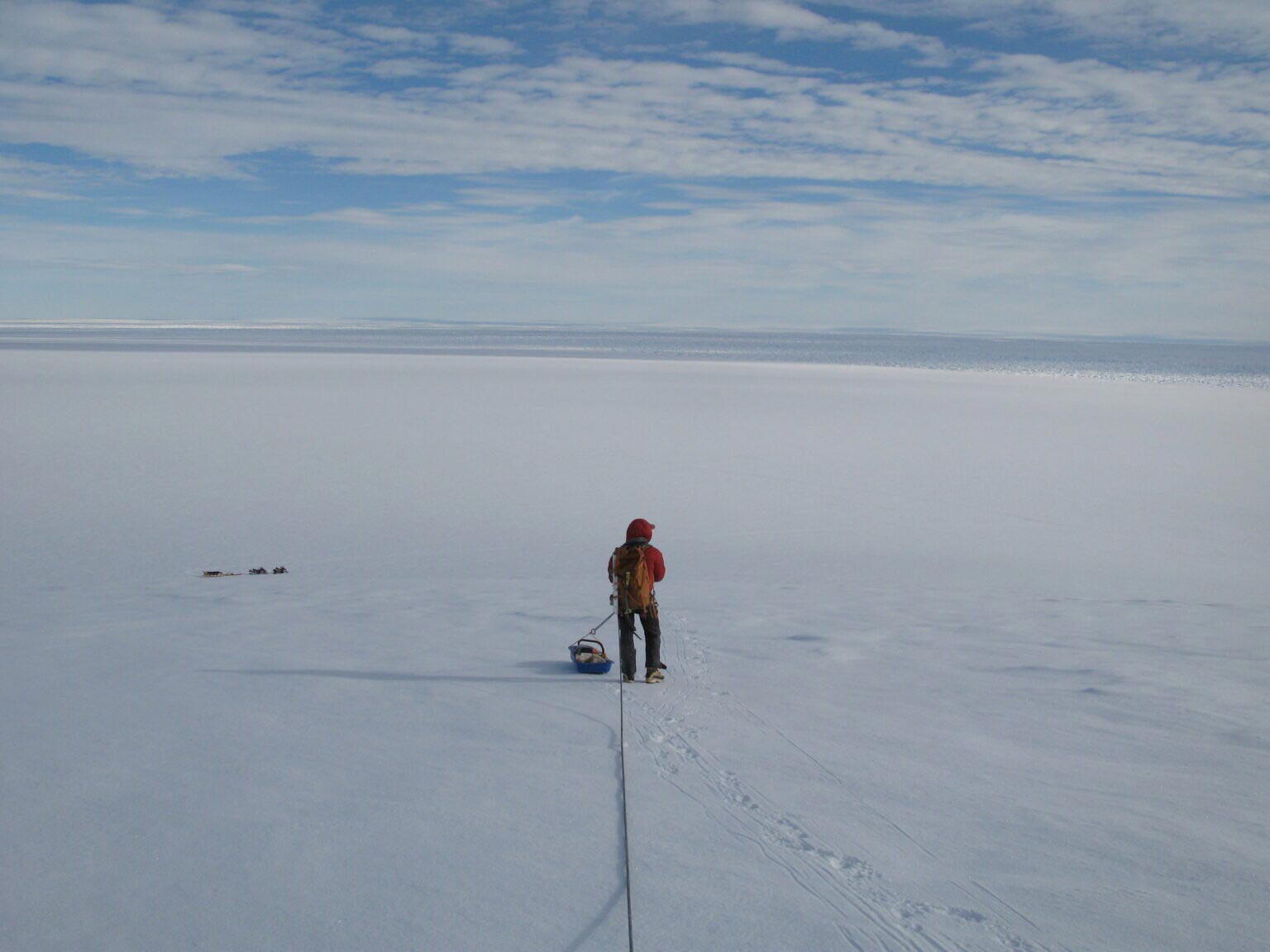
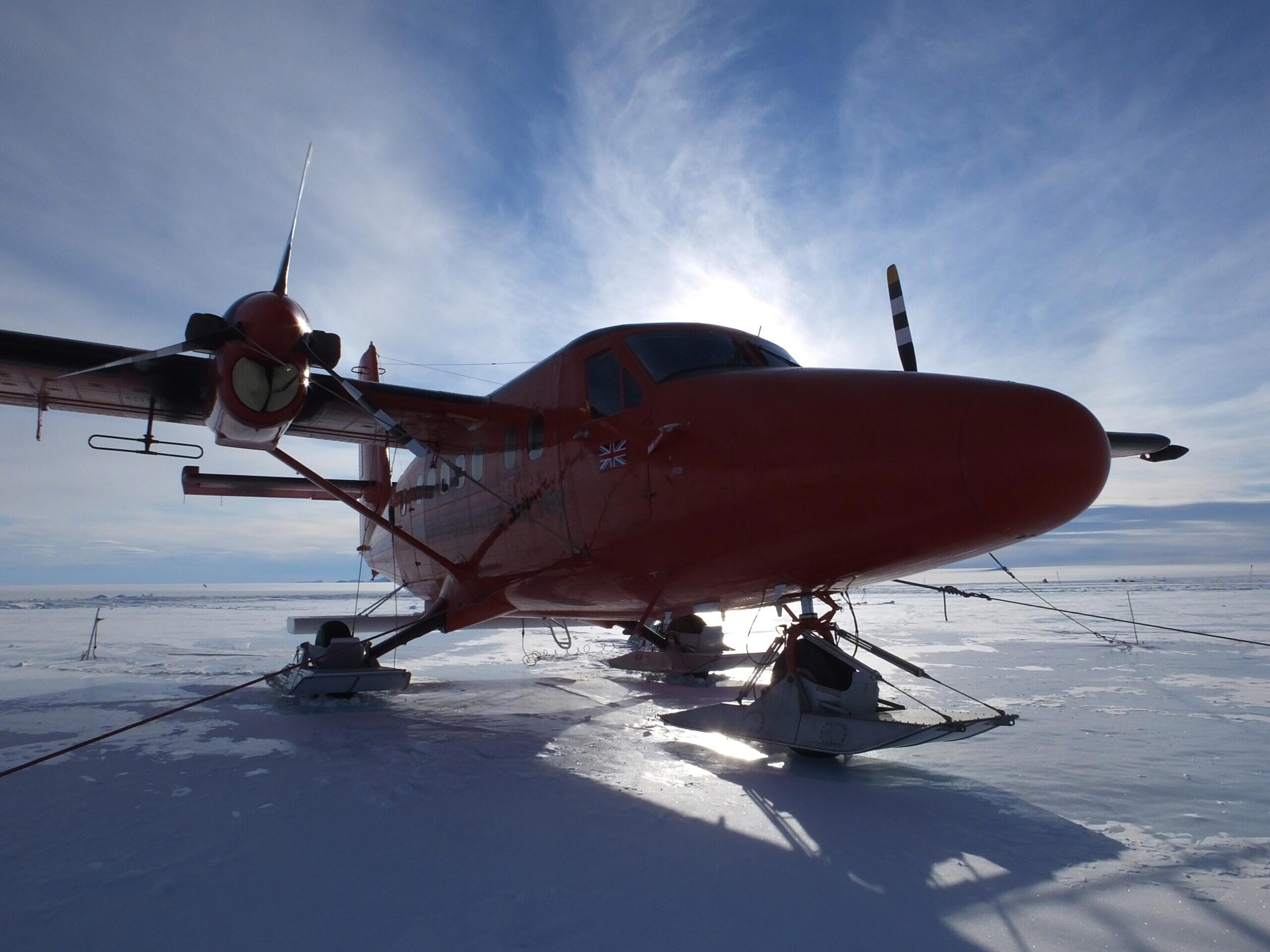
High resolution gravity measurements collected by the BAS’s Twin Otter and other aircraft flying over the region detected an unusual signal beneath the glacier. This signal closely matched what scientists would expect from a large granite body buried deep below the ice.
A hidden granite reshapes ice history
Connecting the surface boulders to this concealed granite mass has provided a major advance. It resolves a long-standing geological puzzle and offers important insight into how Pine Island Glacier behaved in the past, when a much thicker ice sheet was capable of tearing rocks from the bed and depositing them high in the surrounding mountains.
Reconstructing ice thickness and flow patterns during the last ice age (around 20 thousand years ago) allows researchers to improve ice sheet computer models, which are essential for forecasting how Antarctica may respond to ongoing climate change.
Dr. Tom Jordan, lead author and geophysicist at BAS, analyzed the airborne survey data. He said:
“It’s remarkable that pink granite boulders spotted on the surface have led us to a hidden giant beneath the ice. By combining geological dating with gravity surveys, we’ve not only solved a mystery about where these rocks came from, but also uncovered new information about how the ice sheet flowed in the past and how it might change in the future.”
Geology’s role in modern ice loss
The discovery also sheds light on present-day processes. Beneath Pine Island Glacier, a region that has seen some of the fastest ice loss in Antarctica in the last few decades, the geology strongly influences how ice slides over the bed and how meltwater drains beneath it. The new findings will help improve computer models of ice flow that are used to project sea level rise.
Dr. Joanne Johnson, a co-author on the study and a geologist at BAS, collected the rocks during fieldwork around the Hudson Mountains as part of the International Thwaites Glacier Collaboration. She says:
“Rocks provide an amazing record of how our planet has changed over time, especially how ice has eroded and altered the landscape of Antarctica. Boulders like these are a treasure trove of information about what lies deep beneath the ice sheet, far out of reach.
By identifying their source, we have been able to piece together how they got to where they are today, giving us clues about how the West Antarctic Ice Sheet may change in future – information that is vital for determining the impact of sea level rise on coastal populations around the world.”
This study highlights how combining different strands of science, in this case, geology and geophysics, can provide new insights into the hidden processes shaping our planet.
Reference: “Subglacial geology and palaeo flow of Pine Island Glacier from combining glacial erratics with geophysics” by Tom A. Jordan, Joanne S. Johnson, Teal R. Riley, Ethan Conrad and Andrew Carter, 22 October 2025, Communications Earth & Environment.
DOI: 10.1038/s43247-025-02783-3
Support from Natural Environment Research Council (NERC: Grant NE/S006710/1) and the NERC National Capability Single Science (NC): UK Polar Research Expertise for Science and Society: PRESCIENT program.
Never miss a breakthrough: Join the SciTechDaily newsletter.
Follow us on Google and Google News.
9 Comments
Pink granite is also a common component of Mount Desert Island slightly off coast of Maine I brought home a piece found on Cadillac mountain highest peak on Island and within the National Park thetr
Not very bright to admit stealing a natural object from a National Park. That’s a crime.
Pink granite is very common in very many places. The 175 million-year ages from this granite coincides with several of geochronologically dated sills of Ferrar Dolerite in the Trans-Antarctic Mtns, although peak Ferrar Dolerite activity in Tasmania spans 1.6Ma between 184Ma and 182Ma. A granite body half the size of Wales is likely to be a composite intrusion and as such could have a long age-range.
Geophysical surveying has defined a probable granitic body below the Thwaites Glacier; that does not prove that that is where the pink granite cobbles came from. I regret that his article is fuzzy; no doubt the Thwaites Glacier has had the capacity to promote erosion deep into the bedrock, but so what? That is what glaciers do.
P.S. Typographic error: Pine Island, not Thwaites, Glacier.
Just had a quick read of the original paper. Perhaps a key section in the argument is the recognition of clasts of pink granite in some of the young basalts of the broad area and an outcrop of pink granite about 20km SW. of where the Pine Island glacier meets the sea. There is also a review of the geochronological dating of granites in various parts of West Antarctic.
SciTech Daily’s article is indeed fuzzy if not out of focus completely.
Look at all these scientific people talking. Like, they know everything, but the truth is, you guys don’t know you guys don’t know much of anything really. I’m surprised you guys can find your homes when you leave for the day seriously. Because stuff that is right in front of your face and is obvious, as hell gets dismissed, because that couldn’t be, but yet constantly, the scientific community reveals that there’s a new finding that has set back everything. We knew about the timeline, and the history and etc et cetera, I have so many fossils of things that shouldn’t be it’s just really interesting to watch the scientific community, push it back and dismiss it single-handedly. Erasing. Hundreds of millions of years.
This guy invented a perpetual motion machine too…
I’m surprised you guys can find your homes when you leave for the day seriously. Because stuff that is right in front of your face and is obvious, as hell gets dismissed, because that couldn’t be, but yet constantly, the scientific community reveals that there’s a new finding that has set back everything. We knew about the timeline, and the history and etc et cetera, I have so many fossils of things that shouldn’t be it’s just really interesting to watch the scientific community, push it back and dismiss it single-handedly. Erasing. Hundreds of millions of years.
Looks exactly like Pikes Peak granite. Pink and very crumbly