
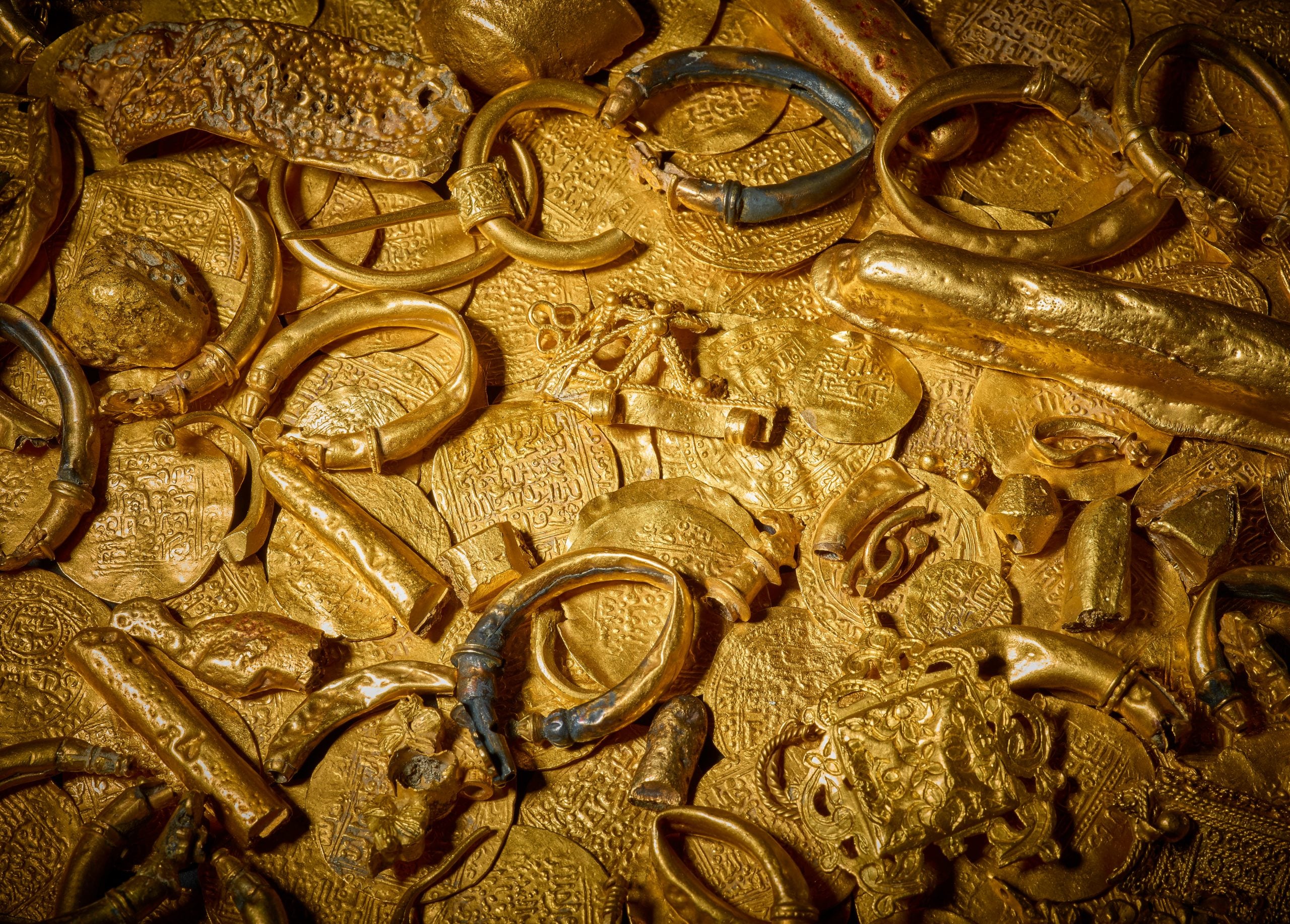
A cache of centuries-old gold coins has helped uncover the story of a lost Dutch trading ship.
For nearly 400 years, a merchant ship carrying one of the world’s most valuable commodities vanished beneath the English Channel, leaving behind little more than scattered artifacts and unanswered questions. Now, after almost three decades of archaeological and historical detective work, researchers have finally uncovered its identity, revealing a forgotten chapter of the global trade routes that connected North Africa and Europe during the Dutch Golden Age.
The wreck, discovered off England’s south coast alongside more than 400 gold coins, has been identified as the Dom van Keulen, a Dutch trading ship that departed Morocco for the Netherlands in the autumn of 1633. Far more than solving the identity of a single lost vessel, the discovery provides rare physical evidence of the lucrative gold trade that linked Morocco, West Africa, and the rapidly expanding Dutch commercial empire.
The identification is detailed in the new book From Morocco to the Coast of England: The Story of the Dom van Keulen and its Remarkable Cargo, the result of nearly 30 years of research by specialists from the British Museum, Bournemouth University (BU), and the South West Maritime Archaeology Group.
A key breakthrough came when independent historian Ian Friel uncovered records in the UK National Archives describing the ship’s final voyage. According to the documents, the vessel encountered “much tempestuous weather” while crossing toward the Netherlands, sprang a leak, and ultimately sank near Salcombe, Devon. Remarkably, although the ship and much of its valuable cargo were lost, every member of the crew survived the disaster.
Cargo reveals a wider world
Dave Parham, Professor of Maritime Archaeology at BU, edited the book with Venetia Porter, former Senior Curator for Islamic and Contemporary Middle Eastern Art at the British Museum. Porter worked with the South West Maritime Archaeology Group to learn more about the cargo and the ship after the wreck was discovered in 1995.
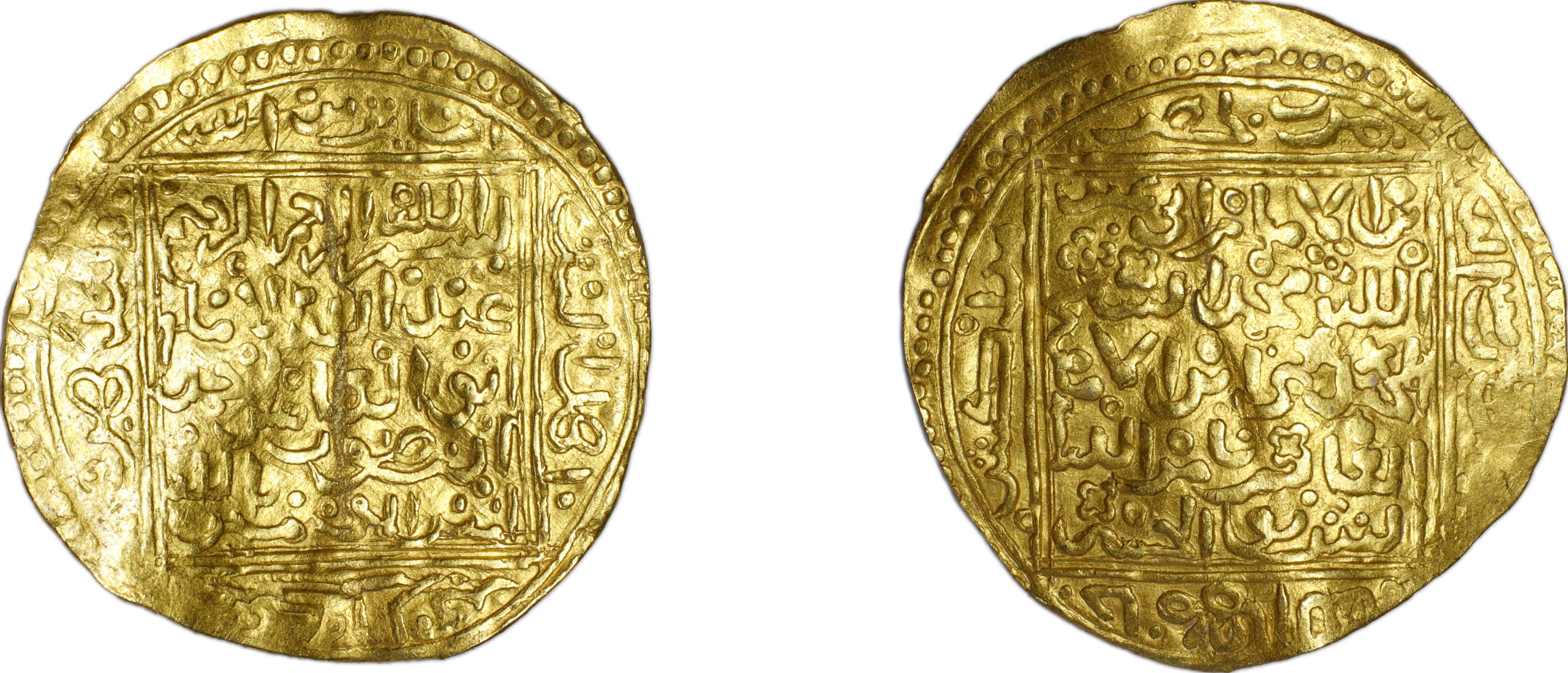
Dave Parham said: “Among its cargo were 150 bags of gum arabic, 64 bags of saltpeter, 320 goat skins, and 9,000 Barbary ducats, gold Moroccan coins. It is thought that most of the cargo was salvaged at the time, but more than 400 coins remained on the seabed until they were discovered by the South West Maritime Archaeology Group in 1995.”
Dave continued: “This provides important context for the wealth and architecture of the Sa‘dian Sharifs, the trade in African gold, and tangible evidence of the flourishing 17th-century maritime trade linking Morocco, the Low Countries, and Britain.”
The 400 coins, now displayed at the British Museum with other objects from the wreck, came from the Barbary Coast, now recognized as Morocco. During the 16th and 17th centuries, Dutch merchants traded manufactured goods for prized, pure West African gold. The Dutch maritime industry was large at the time, and the Netherlands had built a global trading network. Many imported foreign ducats were melted down and remade into Dutch gold coins, which became one of the world’s most widely accepted trade currencies.
Artifacts deepen the wreck’s story
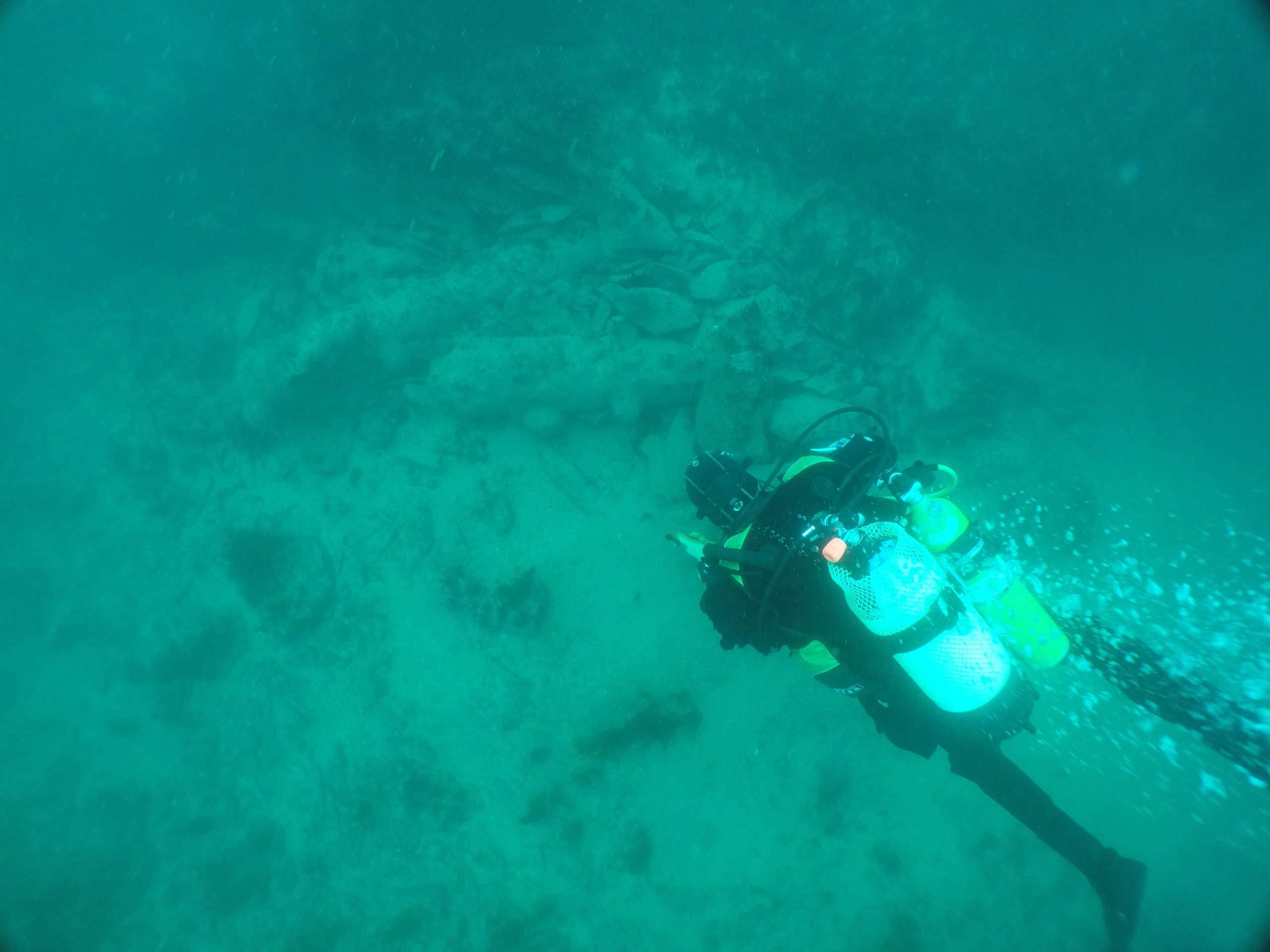
Little is known about what the Dom van Keulen looked like or how large it was, and no known paintings of the ship survive. Professor Parham says the wreck site measures about 30 meters in length. It lies around 18 meters below the surface and contains cannons, anchors, and smaller cargo items.
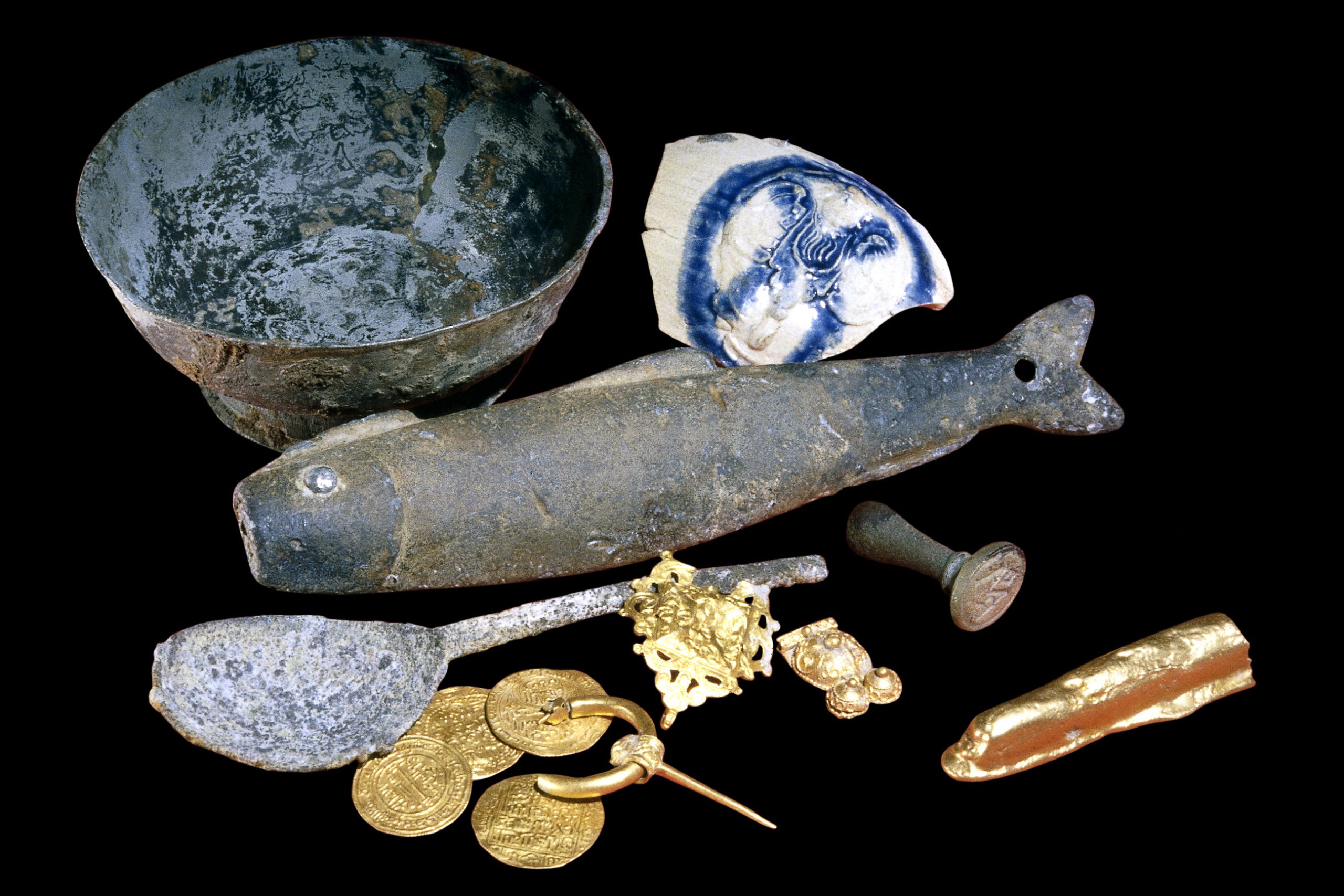
Other objects recovered from the wreck and now owned by the British Museum include a pewter bowl and spoon, gold jewelry, a fish-shaped sounding weight, a stamp seal, pottery, and a gold finger nugget. Head of Research at the British Museum Jeremy D Hill said:
“The discovery of African gold from under the sea off the coast of Devon was an amazing discovery that raised so many questions about how it came to be there. Answering those questions has taken a team of experts, working collaboratively. The story can now be told of how a Dutch ship carrying North African gold was wrecked off the English coast, making this a discovery of international importance. It reminds us how much there is still to be found under our seas.”
The book gives a detailed account of the discovery and recovery of the wreck. It also explores the cultural history of the Sa’dian Sharifs, an Arab Sharifian dynasty that ruled Morocco when the ship’s crew would have been trading there.
Site protection limits access
The wreck is protected under the Protection of Wrecks Act 1973 and is carefully managed by Historic England. Diving at the site is limited to people who hold a license granted by the Secretary of State at DCMS. The wreck is monitored by the National Coastwatch Institution (NCI) Prawle Point station, which overlooks the area. Devon & Cornwall Police’s marine unit also carries out regular patrols nearby as part of Operation Birdie, a national effort to prevent illegal interference with historic wreck sites.
Reference: “From Morocco to the Coast of England: The Story of the Dom van Keulen and its Remarkable Cargo” by Venetia Porter and David Parham, 2026.
DOI: 10.48582/eh04-q803
Never miss a breakthrough: Join the SciTechDaily newsletter.
Follow us on Google and Google News.