
Close Menu
    Facebook X (Twitter) Instagram
    SciTechDaily
    • Biology
    • Chemistry
    • Earth
    • Health
    • Physics
    • Science
    • Space
    • Technology
    Facebook X (Twitter) Pinterest YouTube RSS
    SciTechDaily
    Home»Space»NASA Artemis I – Flight Day 10: Orion Spacecraft Enters Distant Retrograde Orbit
    Space

    NASA Artemis I – Flight Day 10: Orion Spacecraft Enters Distant Retrograde Orbit

    By NASANovember 26, 2022No Comments4 Mins Read
    Facebook Twitter Pinterest Telegram LinkedIn WhatsApp Email Reddit
    Share
    Facebook Twitter LinkedIn Pinterest Telegram Email Reddit
    Orion Artemis I Moon
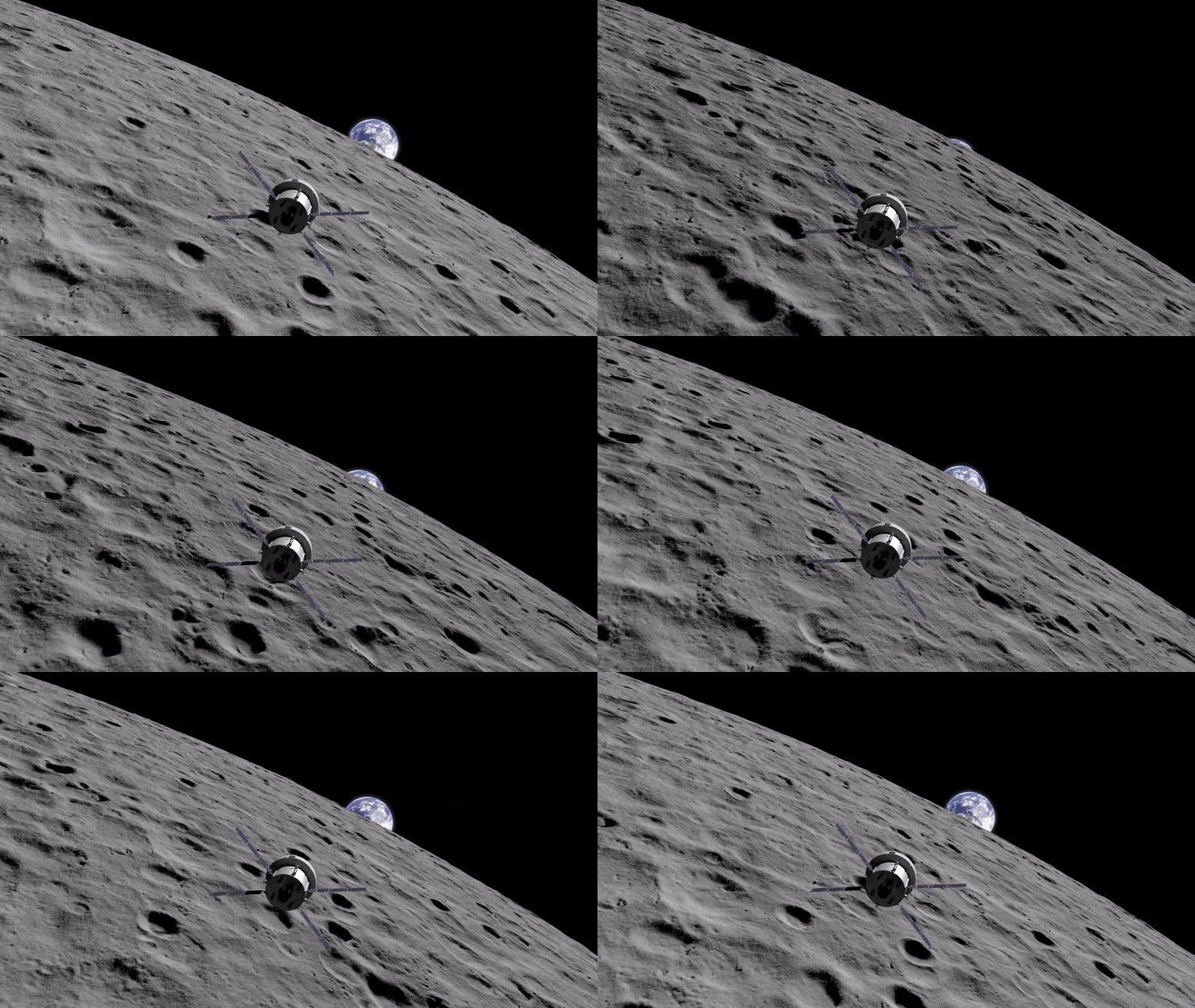
    Illustration of the Orion spacecraft flying around the Moon. Credit: NASA

    At NASA’s Johnson Space Center in Houston, Flight Controllers in the White Flight Control Room successfully performed a burn to insert Orion into a distant retrograde orbit. They fired the orbital maneuvering system engine at 4:52 p.m. CST for 1 minute and 28 seconds, propelling the spacecraft at 363 feet per second.

    Shortly before conducting the burn, Orion was traveling more than 57,00 miles (92,000 km) above the lunar surface, marking the farthest distance it will reach from the Moon during the mission. While in lunar orbit, flight controllers will monitor key systems and perform checkouts while in the environment of deep space.
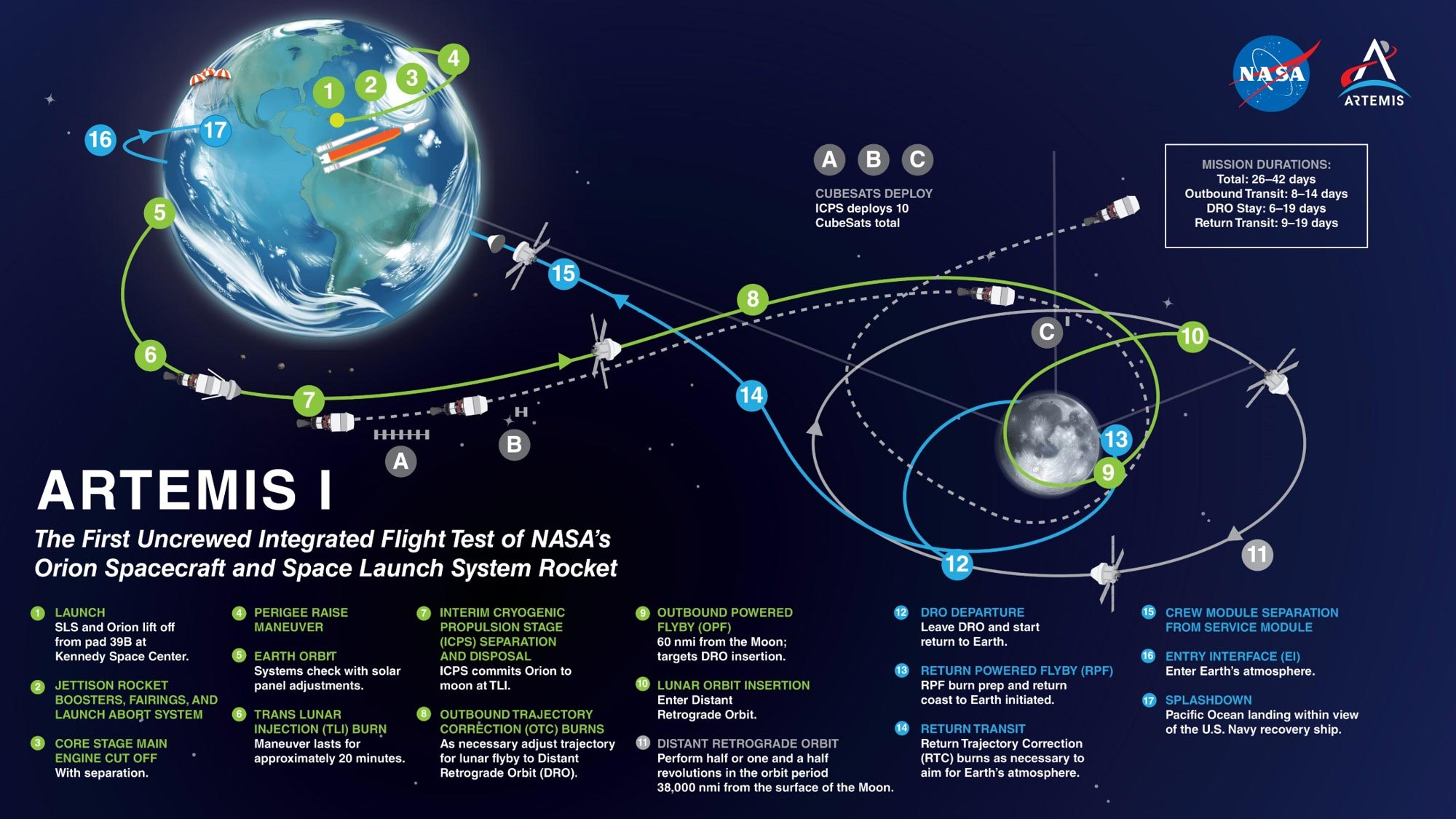
    Artemis I Map
    Artemis I is the first integrated flight test of NASA’s deep space exploration system: the Orion spacecraft, Space Launch System (SLS) rocket, and the ground systems at Kennedy Space Center in Cape Canaveral, Florida. The first in a series of increasingly complex missions, Artemis I will be an uncrewed flight that will provide a foundation for human deep space exploration, and demonstrate our commitment and capability to extend human existence to the Moon and beyond. During this flight, the uncrewed Orion spacecraft will launch on the most powerful rocket in the world and travel thousands of miles beyond the Moon, farther than any spacecraft built for humans has ever flown, over the course of about a three-week mission. Credit: NASA

    The orbit is distant in that Orion will fly about 40,000 miles (64,000 km) above the Moon. Due to the distance of the orbit, it will take Orion nearly a week to complete half an orbit around the Moon, where it will exit the orbit for the return journey home. About four days later, the spacecraft will harness the Moon’s gravitational force once again, combined with a precisely timed lunar flyby burn to slingshot Orion onto its return course to Earth. It is targeted for splashdown in the Pacific Ocean on Sunday, December 11.

    On Saturday, November 26, Orion spacecraft will break the record for the farthest distance traveled by a spacecraft designed to carry humans to space and safely return them to Earth. This distance is currently held by the Apollo 13 spacecraft at 248,655 miles (400,171 km) from Earth. Orion was specifically designed for missions to carry humans farther into space than ever before.
    Top Five Technologies Needed to Survive Deep Space
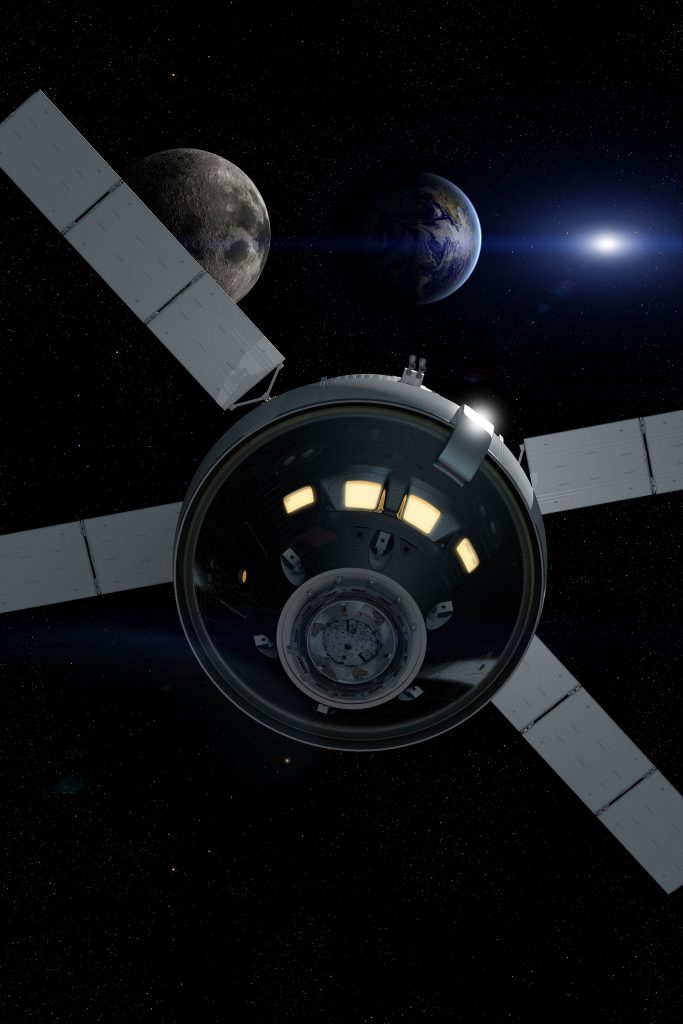
    Artist rendering of NASA’s Orion spacecraft as it travels 40,000 miles past the Moon during Exploration Mission-1, its first integrated flight with the Space Launch System rocket.

    On Artemis I, engineers are testing several aspects of the Orion spacecraft needed for deep space missions with crew, including its highly capable propulsion system to maintain its course with precision and ensure its crew can get home, communication and navigation systems to maintain contact with the ground and orient the spacecraft, systems and features to handle radiation events, as well as a heat shield that can handle a high-speed reentry from the Moon.

    Both distance and duration demand that spacecraft must have systems that can reliably operate far from home, be capable of keeping astronauts alive in case of emergencies, and still be light enough that a rocket can launch it.

    Artemis II will test the systems required for astronauts to live and breathe in deep space. Long-duration missions far from Earth drive engineers to design compact systems not only to maximize available space for crew comfort, but also to accommodate the volume needed to carry consumables like enough food and water for the entirety of a mission lasting days or weeks.

    Learn more about Orion’s capabilities for deep space missions with crew.

    Never miss a breakthrough: Join the SciTechDaily newsletter.
    Follow us on Google and Google News.

    ARTEMIS Mission Moon NASA Orion Spacecraft
    Share. Facebook Twitter Pinterest LinkedIn Email Reddit

    Related Articles

    See the Far Side of the Moon: Incredibly Detailed Pictures From Artemis I Orion Close Lunar Flyby

    NASA Artemis I – Flight Day Nine: Orion Spacecraft One Day Away from Distant Retrograde Insertion

    NASA Artemis I – Flight Day Eight: Orion Spacecraft Exits Lunar Sphere Of Influence

    NASA Artemis I – Flight Day Seven: Orion To Exit Lunar Sphere of Influence

    NASA Orion Spacecraft Captures Stunning Views During Artemis I Lunar Flyby

    Behold! NASA’s Artemis I Orion Close Flyby of the Moon

    Artemis I Distant Retrograde Orbit: NASA’s Orion Spacecraft Will Travel 40,000 Miles Beyond the Moon

    NASA’s Additional Artemis I Test Objectives for Space Launch System Rocket and Orion Spacecraft

    The International Space Station Is Helping Us Get Back to the Moon – Here’s How

    Leave A Reply Cancel Reply

    • Facebook
    • Twitter
    • Pinterest
    • YouTube

    Don't Miss a Discovery

    Subscribe for the Latest in Science & Tech!

    Trending News

    Even Occasional Binge Drinking May Triple Liver Damage Risk

    Liftoff! NASA’s Artemis II Launch Sends Astronauts Around the Moon for First Time in 50 Years

    Scientists Discover New Way To Eliminate “Zombie Cells” Driving Aging

    This New Quantum Theory Could Change Everything We Know About the Big Bang

    This One Vitamin May Help Protect Your Brain From Dementia Years Later

    Stopping Weight-Loss Drugs Like Ozempic Can Quickly Erase Heart Benefits

    A 500-Million-Year-Old Surprise Is Forcing Scientists to Rethink Spider Evolution

    Coffee and Blood Pressure: What You Need To Know Before Your Next Cup

    Follow SciTechDaily
    • Facebook
    • Twitter
    • YouTube
    • Pinterest
    • Newsletter
    • RSS
    SciTech News
    • Biology News
    • Chemistry News
    • Earth News
    • Health News
    • Physics News
    • Science News
    • Space News
    • Technology News
    Recent Posts
    • Breakthrough Study Reveals Why Damaged Nerves Struggle To Heal
    • 20-Year Study Reveals Cholera’s Surprising Weakness
    • $220 Billion Problem: Scientists Uncover the Secret Weapon Bacteria Use To Take Over Crops
    • Collapsing Plasma May Hold the Key to Cosmic Magnetism
    • DNA Meets Electronics: Scientists Create Ultra-Low Power Memory Breakthrough
    Copyright © 1998 - 2026 SciTechDaily. All Rights Reserved.
    • Science News
    • About
    • Contact
    • Editorial Board
    • Privacy Policy
    • Terms of Use

    Type above and press Enter to search. Press Esc to cancel.