
Close Menu
    Facebook X (Twitter) Instagram
    SciTechDaily
    • Biology
    • Chemistry
    • Earth
    • Health
    • Physics
    • Science
    • Space
    • Technology
    Facebook X (Twitter) Pinterest YouTube RSS
    SciTechDaily
    Home»Space»NASA Artemis I – Flight Day Eight: Orion Spacecraft Exits Lunar Sphere Of Influence
    Space

    NASA Artemis I – Flight Day Eight: Orion Spacecraft Exits Lunar Sphere Of Influence

    By NASANovember 24, 2022No Comments4 Mins Read
    Facebook Twitter Pinterest Telegram LinkedIn WhatsApp Email Reddit
    Share
    Facebook Twitter LinkedIn Pinterest Telegram Email Reddit
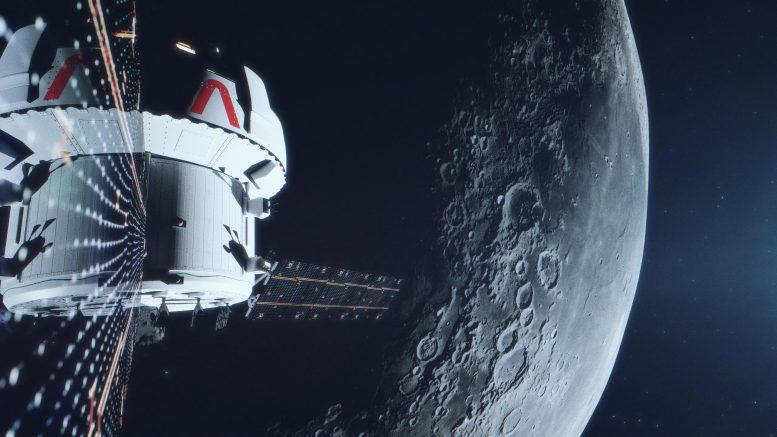
    Artemis I Lunar Flyby Artist Concept
    Artemis I is the first integrated flight test of NASA’s deep space exploration system: the Orion spacecraft, Space Launch System (SLS) rocket and the ground systems at Kennedy Space Center in Cape Canaveral, Florida. Credit: NASA/Liam Yanulis

    On the eighth day of the Artemis I mission, NASA’s Orion spacecraft continues to travel farther away from the Moon as it prepares to enter a distant retrograde orbit. The orbit is “distant” in the sense that it’s at a high altitude from the surface of the Moon, and it’s “retrograde” because Orion will travel around the Moon opposite the direction the Moon travels around Earth.

    Orion exited the gravitational sphere of influence of the Moon Tuesday, November 22, at 9:49 p.m. CST at a lunar altitude of 39,993 miles (64,362 km). The spacecraft will reach its farthest distance from the Moon on Friday, November 25. This will happen just before performing the next major burn to enter the orbit. The distant retrograde orbit insertion burn is the second in a pair of maneuvers required to propel Orion into the highly stable orbit that requires minimal fuel consumption while traveling around the Moon.
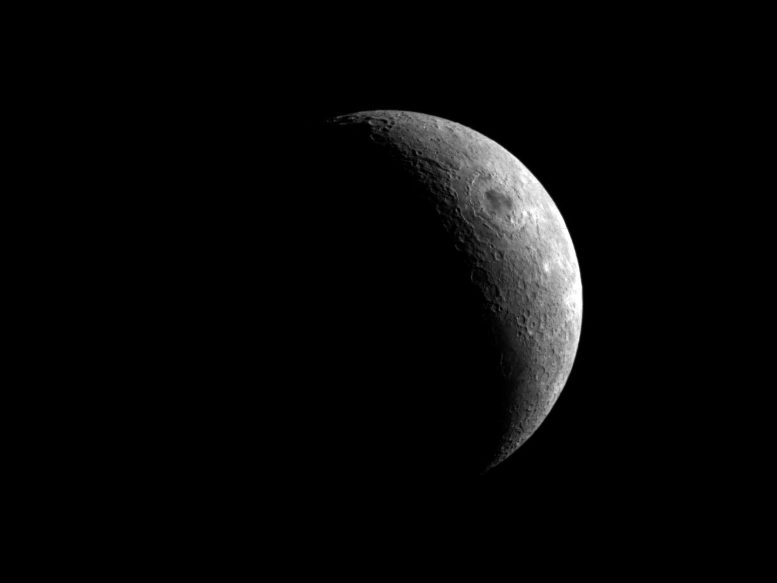
    Orion Optical Navigation Camera Far Side of the Moon
    Flight Day 7, Orion’s Optical Navigation camera captured the far side of the Moon, as the spacecraft orbited 81.1 miles (130.5 km) above the surface, heading for a Distant Retrograde Orbit. Orion uses the optical navigation camera to capture imagery of the Earth and the Moon at different phases and distances, providing an enhanced body of data to certify its effectiveness under different lighting conditions as a way to help orient the spacecraft on future missions with crew. Credit: NASA

    At 12:09 a.m. on Wednesday, NASA’s Mission Control Center at the agency’s Johnson Space Center in Houston unexpectedly lost data to and from the spacecraft for 47 minutes while reconfiguring the communication link between Orion and Deep Space Network. Teams have resolved the issue, and the spacecraft remains in a healthy configuration. Engineers are analyzing data to determine the cause of the problem.

    While in transit to the distant retrograde orbit, engineers conducted the first part of the propellant tank slosh development flight test, called prop slosh, which is scheduled during quiescent, or less active, parts of the mission. In the propellant slosh test, flight controllers fire the reaction control system thrusters when propellant tanks are filled to different levels. This allows engineers to measure the effect the propellant sloshing has on spacecraft trajectory and orientation as Orion moves through space. The test is performed after the outbound flyby burn and again after the return flyby burn to compare data at points in the mission with different levels of propellant onboard.


    Artemis All Access is your look at the latest in Artemis I, the people and technology behind the mission, and what is coming up next. This uncrewed flight test around the Moon will pave the way for a crewed flight test and future human lunar exploration as part of Artemis. Credit: NASA

    Propellant motion, or slosh, in space is difficult to model on Earth because liquid propellant moves differently in tanks in space than on Earth due to the lack of gravity. The reaction control thrusters are located on the sides of the service module in six sets of four. These engines are in fixed positions and can be fired individually as needed to move the spacecraft in different directions or rotate it into any position. Each engine provides about 50 pounds of thrust.

    As of Wednesday, November 23, a total of about 3,971 pounds of propellant has been used, about 147 pounds less than prelaunch expected values. There is more than 2,000 pounds of margin available over what is planned for use during the mission, an increase of about 74 pounds from prelaunch expected values.

    Just after 1 p.m. CST on November 23, Orion was traveling about 212,437 miles (341,884 km) from Earth and was more than 48,064 miles from the Moon, cruising at 2,837 miles per hour (4,566 km per hour).

    To follow the mission real-time, you can track Orion during its mission around the Moon and back, view a live stream from Orion’s cameras, and find the latest imagery and videos on Flickr. The second episode of Artemis All Access is now available as a recap of the last few days of the mission with a look ahead to what’s coming next.

    Never miss a breakthrough: Join the SciTechDaily newsletter.
    Follow us on Google and Google News.

    ARTEMIS Mission Moon NASA Orion Spacecraft
    Share. Facebook Twitter Pinterest LinkedIn Email Reddit

    Related Articles

    See the Far Side of the Moon: Incredibly Detailed Pictures From Artemis I Orion Close Lunar Flyby

    NASA Artemis I – Flight Day 10: Orion Spacecraft Enters Distant Retrograde Orbit

    NASA Artemis I – Flight Day Nine: Orion Spacecraft One Day Away from Distant Retrograde Insertion

    NASA Artemis I – Flight Day Seven: Orion To Exit Lunar Sphere of Influence

    NASA Orion Spacecraft Captures Stunning Views During Artemis I Lunar Flyby

    Behold! NASA’s Artemis I Orion Close Flyby of the Moon

    Artemis I Distant Retrograde Orbit: NASA’s Orion Spacecraft Will Travel 40,000 Miles Beyond the Moon

    NASA’s Additional Artemis I Test Objectives for Space Launch System Rocket and Orion Spacecraft

    The International Space Station Is Helping Us Get Back to the Moon – Here’s How

    Leave A Reply Cancel Reply

    • Facebook
    • Twitter
    • Pinterest
    • YouTube

    Don't Miss a Discovery

    Subscribe for the Latest in Science & Tech!

    Trending News

    Scientists May Have Found the Key to Jupiter and Saturn’s Moon Mystery

    Scientists Uncover Brain Changes That Link Pain to Depression

    Saunas May Do More Than Raise Body Temperature – They Activate Your Immune System

    Exercise in a Pill? Metformin Shows Surprising Effects in Cancer Patients

    Hidden Oceans of Magma Could Be Protecting Alien Life

    New Study Challenges Alzheimer’s Theories: It’s Not Just About Plaques

    Artificial Sweeteners May Harm Future Generations, Study Suggests

    Splashdown! NASA Artemis II Returns From Record-Breaking Moon Mission

    Follow SciTechDaily
    • Facebook
    • Twitter
    • YouTube
    • Pinterest
    • Newsletter
    • RSS
    SciTech News
    • Biology News
    • Chemistry News
    • Earth News
    • Health News
    • Physics News
    • Science News
    • Space News
    • Technology News
    Recent Posts
    • Scientists Make Breakthrough on 40-Year-Old 2D Physics Puzzle
    • As Cities Invade the Amazon, Yellow Fever Makes a Dangerous Comeback
    • “Asian Flush” May Be a Hidden Trigger for Deadly Heart Damage
    • AI Could Detect Early Signs of Alzheimer’s in Under a Minute – Far Before Traditional Tests
    • What if Dark Matter Has Two Forms? Bold New Hypothesis Could Explain a Cosmic Mystery
    Copyright © 1998 - 2026 SciTechDaily. All Rights Reserved.
    • Science News
    • About
    • Contact
    • Editorial Board
    • Privacy Policy
    • Terms of Use

    Type above and press Enter to search. Press Esc to cancel.