
Close Menu
    Facebook X (Twitter) Instagram
    SciTechDaily
    • Biology
    • Chemistry
    • Earth
    • Health
    • Physics
    • Science
    • Space
    • Technology
    Facebook X (Twitter) Pinterest YouTube RSS
    SciTechDaily
    Home»Space»NASA Artemis I – Orion Spacecraft Enters Moon Orbit
    Space

    NASA Artemis I – Orion Spacecraft Enters Moon Orbit

    By European Space Agency (ESA)November 26, 2022No Comments4 Mins Read
    Facebook Twitter Pinterest Telegram LinkedIn WhatsApp Email Reddit
    Share
    Facebook Twitter LinkedIn Pinterest Telegram Email Reddit
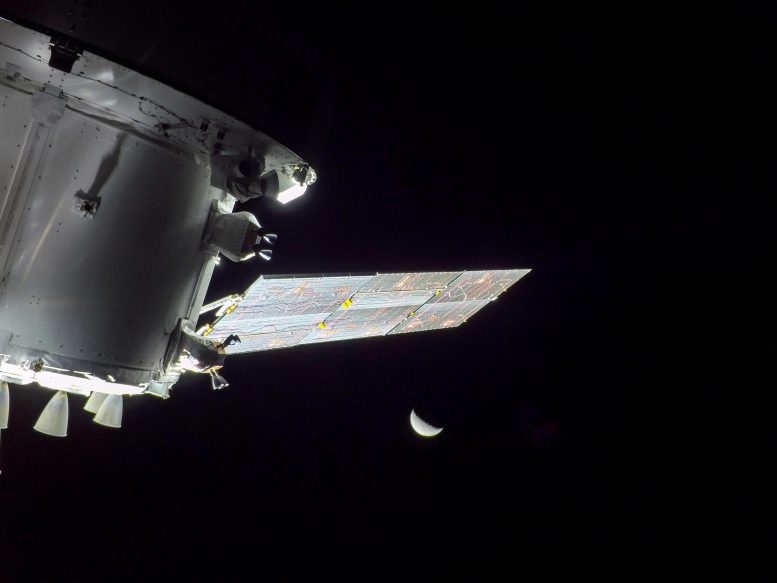
    European Service Module Solar Panels and Moon
    View of the Moon seen from ESA’s European Service Module that is powering NASA’s Orion spacecraft to the Moon and back, on flight day nine of the Artemis I mission, on November 24, 2022. NASA

    Yesterday at 4:52 p.m. CST  (23:52 CET, 22:52 GMT) the European Service Module’s auxiliary thrusters fired to put NASA’s Orion spacecraft into a lunar orbit, ten days after liftoff on Earth.

    The European Service Module is powering Orion to the Moon and back, providing electricity, propulsion, keeping electronics and the crew module at the right temperature. On the next Artemis missions, it will also provide water and air for astronauts.

    Artemis I is an uncrewed mission that is being used to demonstrate and test the Orion spacecraft’s capabilities. It also affords mission control the opportunity to get used to flying Orion and operating the European Service Module.
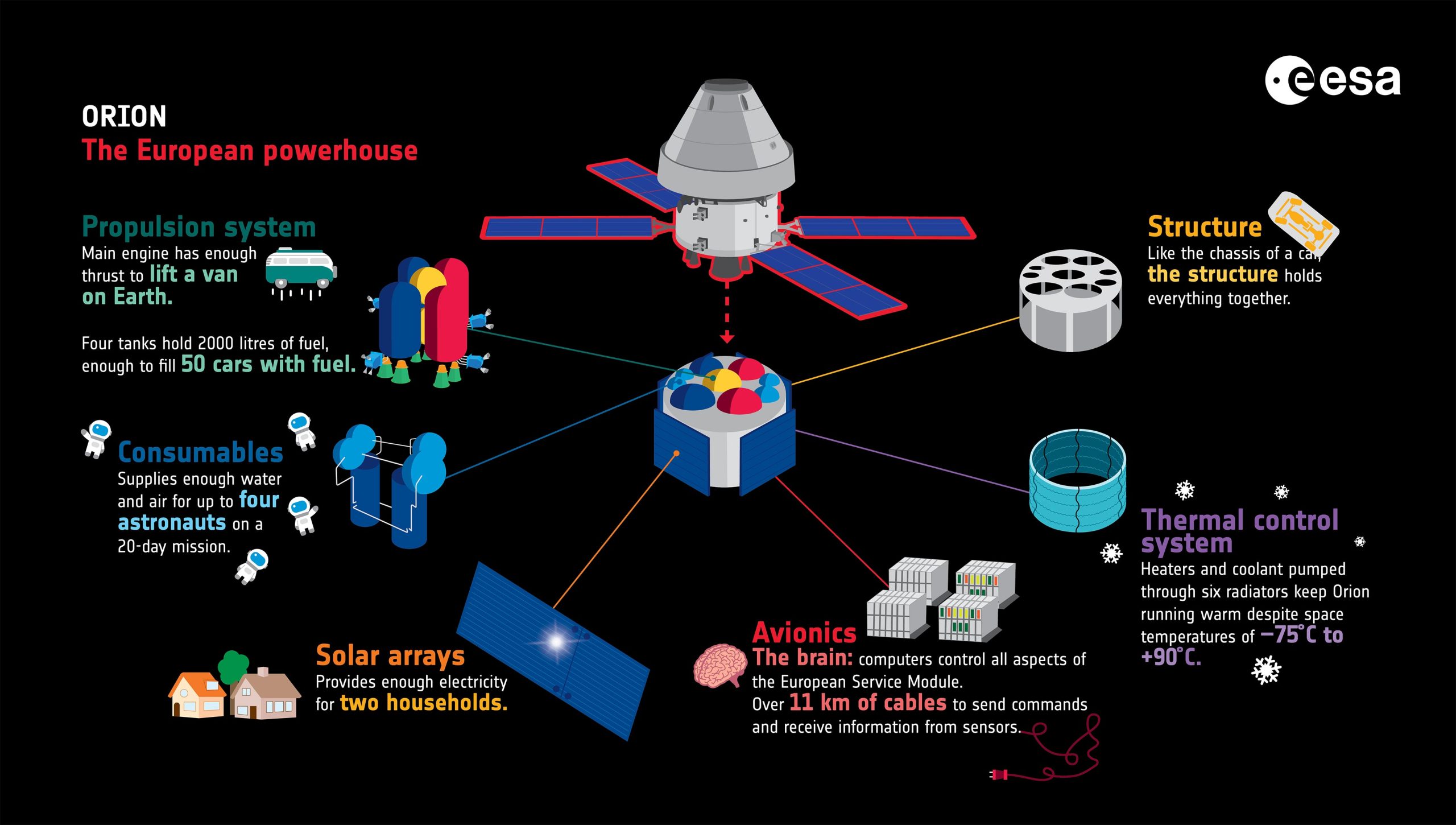
    Orion and the European Powerhouse
    ESA designed and oversaw the development of Orion’s service module, the part of the spacecraft that supplies air, electricity and propulsion. Much like a train engine pulls passenger carriages and supplies power, the European Service Module will take the Orion capsule to its destination and back. The Orion spacecraft is built by NASA with ESA providing the service module. The arrangement stems from the international partnership for the International Space Station. Credit: ESA–K.Oldenburg

    Distant lunar orbit

    Yesterday’s firing of the engines has pushed Orion in the opposite direction of travel to our Moon, and occurred relatively far away from the lunar surface, putting the spacecraft into a so-called distant retrograde orbit. This elongated orbit around the Moon uses little fuel. Orion’s mission profile will see it leave halfway before the full twelve-day orbit, firing its thrusters in six days to fly closer to the Moon on a final flyby and then slingshot back to Earth.
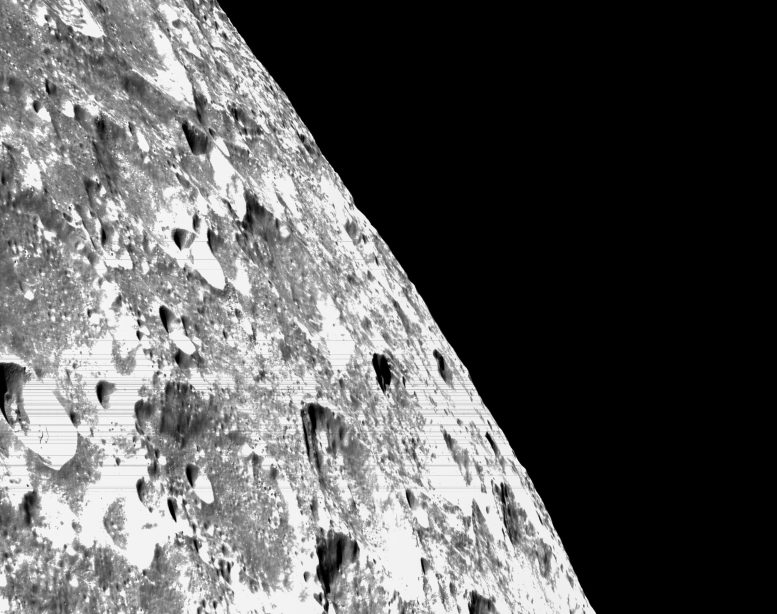
    Orion Far Side of Moon
    Picture of the far side of the Moon taken on flight day six of the Artemis I mission from the Orion spacecraft optical navigation camera. Credit: NASA

    ESA’s Philippe Deloo explains “The European Service Module is operating more fuel-efficiently than the Artemis mission designers had foreseen, and it produces more electrical power while consuming less – many things have impressed us on the module’s performance so far.”

    Orion spreading its X-wings

    The Artemis I mission is an opportunity to push the Orion spacecraft to its limits. Throughout the mission multiple demonstrations are taking place, testing the mission operations teams and allowing them to learn how the new spacecraft is behaving.
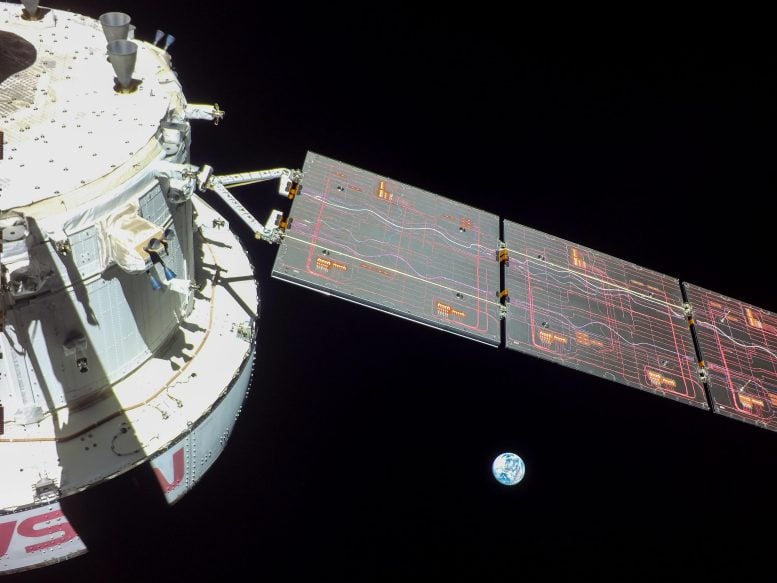
    European Service Module Solar Panels and Earth
    View of Earth seen from ESA’s European Service Module that is powering NASA’s Orion spacecraft to the Moon and back, on flight day nine of the Artemis I mission, on November 24, 2022. Credit: NASA

    “Mission control is enjoying pushing Orion and the European Service Module to their limits,” continues Philippe, “the years of planning, designing, and building to the highest specifications are paying off, the European Service Module is performing better than we could have ever expected and we have lots of data to analyze and learn from, to ensure we will be taking astronauts to the Moon in the safest and most efficient way possible.”

    As the first European Service Module has been earning its wings flying around the Moon, the second module is already almost complete – its solar wings are folded and packed in storage to be attached to the second Orion spacecraft next year. The second Artemis mission will have astronauts aboard and fly a less intensive route around the Moon and back.
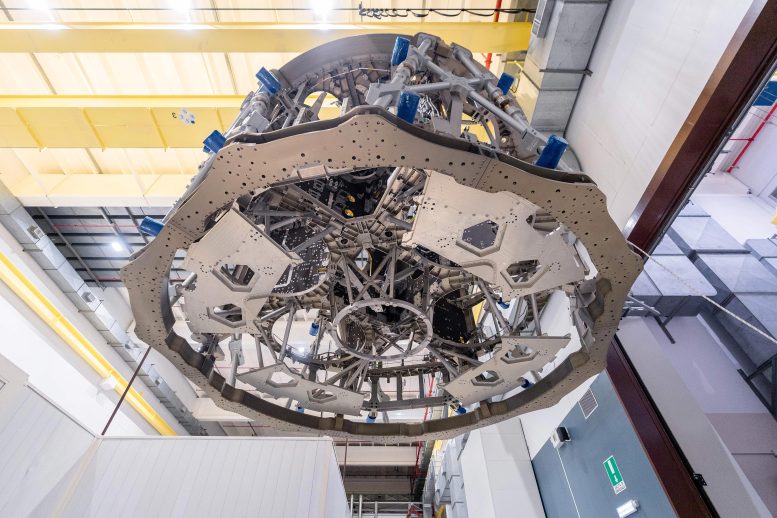
    Artemis IV Service Module Frame
    The fourth European Service Module structure to power astronauts on NASA’s Orion spacecraft to the Moon is now complete. The structure is seen here at a Thales Alenia Space site in Turin, Italy. Credit: Thales Alenia Space

    The third European Service Module – that will take astronauts to a Moon landing – is in production at the Airbus integration hall in Bremen, Germany, alongside the fourth European Service Module that will power the first ESA astronaut and European lunar Gateway element to lunar orbit. The structure for the fifth European Service Module is set to arrive in Bremen next month.
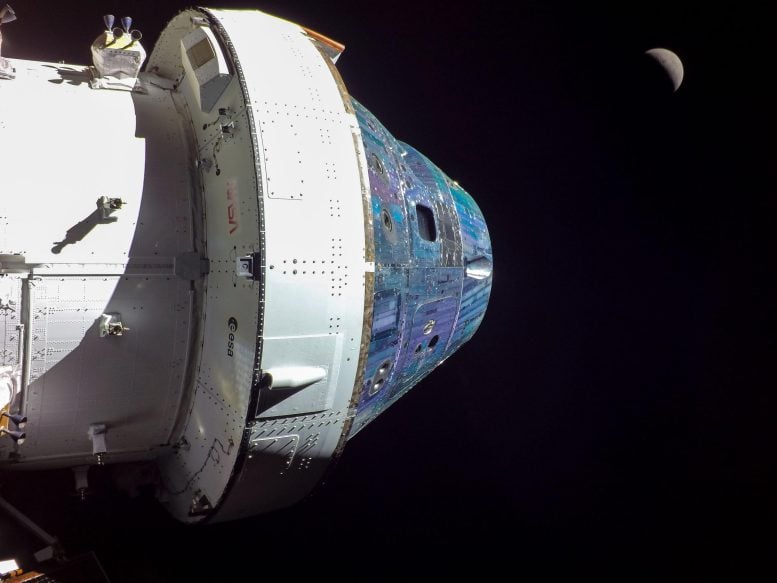
    Orion and Moon on Flight Day 8
    On Flight Day 8, NASA’s Orion spacecraft was two days away from reaching its distant retrograde orbit. The Moon is in view as Orion snaps a selfie using a camera mounted on one of its solar array at 10:57 p.m. EST. Credit: NASA

    “The demonstrated flight excellence of the European Service Module and Orion so far, together with ESA’s ambitious plans and newly announced astronauts make for an exciting immediate future for European human spaceflight” concludes Philippe.

    The mission is set to end with a splashdown in the Pacific Ocean on December 11.

    Never miss a breakthrough: Join the SciTechDaily newsletter.
    Follow us on Google and Google News.

    ARTEMIS Mission European Space Agency Moon Orion Spacecraft
    Share. Facebook Twitter Pinterest LinkedIn Email Reddit

    Related Articles

    NASA Artemis I – Flight Day Seven: Orion To Exit Lunar Sphere of Influence

    NASA Orion Spacecraft Captures Stunning Views During Artemis I Lunar Flyby

    Behold! NASA’s Artemis I Orion Close Flyby of the Moon

    Artemis I Distant Retrograde Orbit: NASA’s Orion Spacecraft Will Travel 40,000 Miles Beyond the Moon

    Artemis I: Mega Moon Rocket Ready for Launch

    NASA’s Additional Artemis I Test Objectives for Space Launch System Rocket and Orion Spacecraft

    A European Push to the Moon and Beyond

    Artemis 1 Moon Mission: Getting Ready to Rocket

    Orion Spacecraft Passes Tests – Ready for Final Artemis I Launch Preparations

    Leave A Reply Cancel Reply

    • Facebook
    • Twitter
    • Pinterest
    • YouTube

    Don't Miss a Discovery

    Subscribe for the Latest in Science & Tech!

    Trending News

    Scientists May Have Found the Key to Jupiter and Saturn’s Moon Mystery

    Scientists Uncover Brain Changes That Link Pain to Depression

    Saunas May Do More Than Raise Body Temperature – They Activate Your Immune System

    Exercise in a Pill? Metformin Shows Surprising Effects in Cancer Patients

    Hidden Oceans of Magma Could Be Protecting Alien Life

    New Study Challenges Alzheimer’s Theories: It’s Not Just About Plaques

    Artificial Sweeteners May Harm Future Generations, Study Suggests

    Splashdown! NASA Artemis II Returns From Record-Breaking Moon Mission

    Follow SciTechDaily
    • Facebook
    • Twitter
    • YouTube
    • Pinterest
    • Newsletter
    • RSS
    SciTech News
    • Biology News
    • Chemistry News
    • Earth News
    • Health News
    • Physics News
    • Science News
    • Space News
    • Technology News
    Recent Posts
    • This Strange Material Can Turn Superconductivity on and off Like a Switch
    • Scientists Discover Game-Changing New Way To Treat High Cholesterol
    • Breakthrough Drug Delays Rheumatoid Arthritis for Years After Treatment Ends
    • This Small Change to Your Exercise Routine Could Be the Secret to Living Longer
    • Physicists Discover a Strange New Kind of One-Dimensional Particle
    Copyright © 1998 - 2026 SciTechDaily. All Rights Reserved.
    • Science News
    • About
    • Contact
    • Editorial Board
    • Privacy Policy
    • Terms of Use

    Type above and press Enter to search. Press Esc to cancel.