
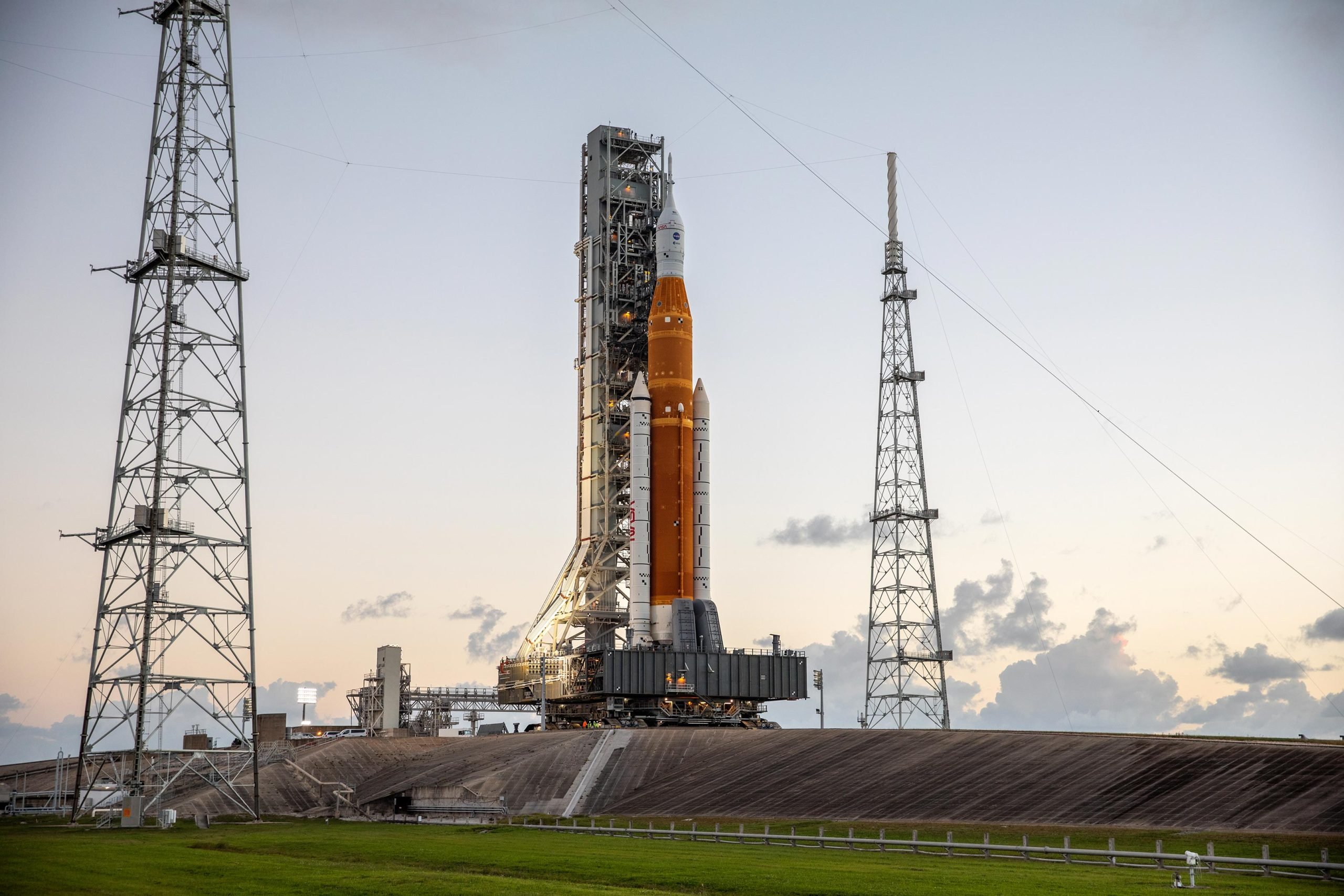
The Artemis I mega Moon rocket is on the launch pad at NASA’s Kennedy Space Center in Florida. This powerful Space Launch System (SLS) rocket is getting ready to launch the Orion spacecraft and its European Service Module. The first opportunity for launch is November 16 at 1:04 a.m. EST/local time (07:04 CET, 06:04 GMT).
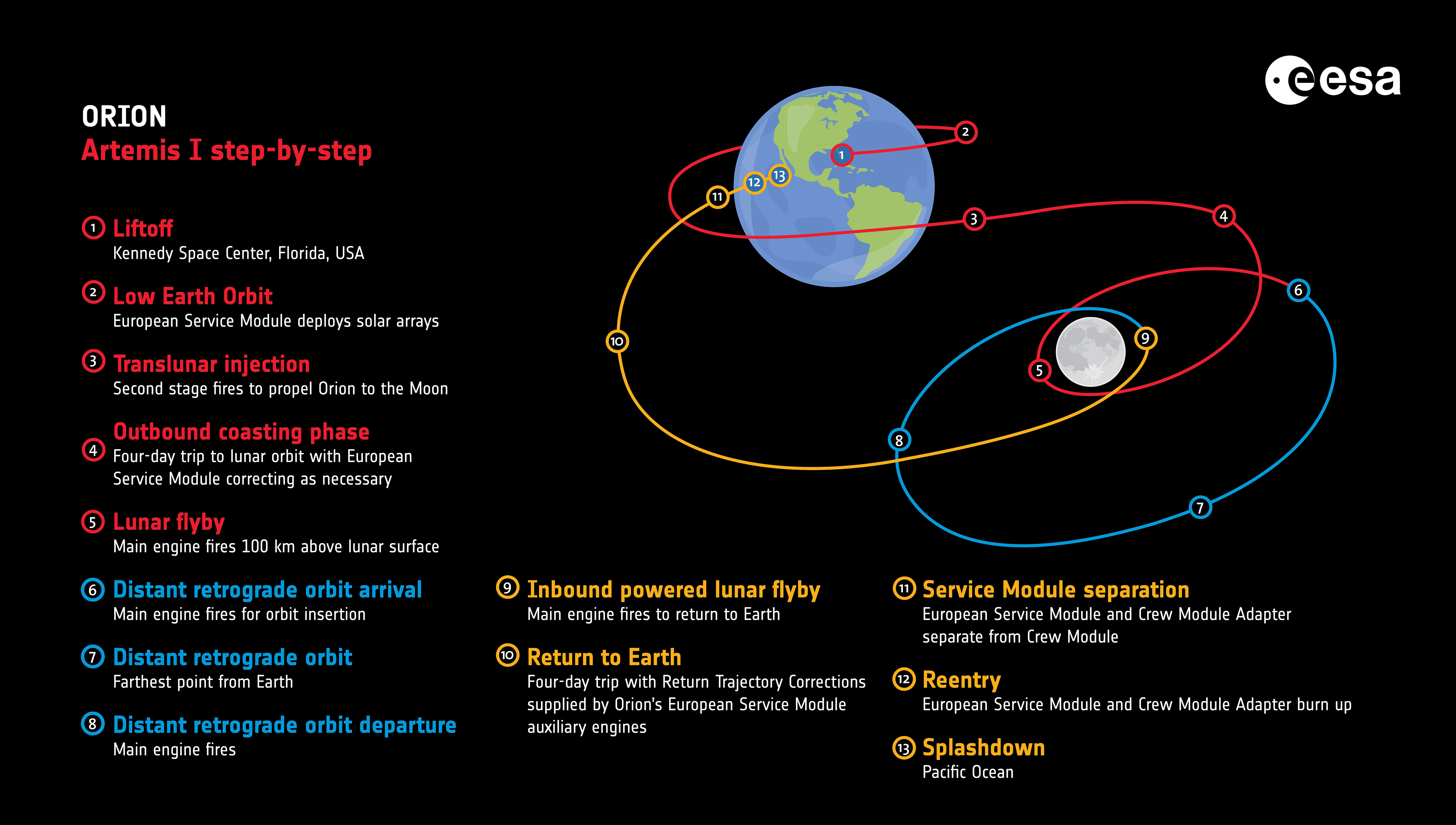
Artemis I is the first mission in a large program to send astronauts around and on the Moon sustainably. This uncrewed first launch will see the Orion spacecraft travel to the Moon, enter an elongated orbit around our satellite, and then return to Earth. The Orion spacecraft is powered by the European-built module that supplies electricity, propulsion, fuel, water, and air in addition to keeping the spacecraft operating at the right temperature.
Artemis to the Moon
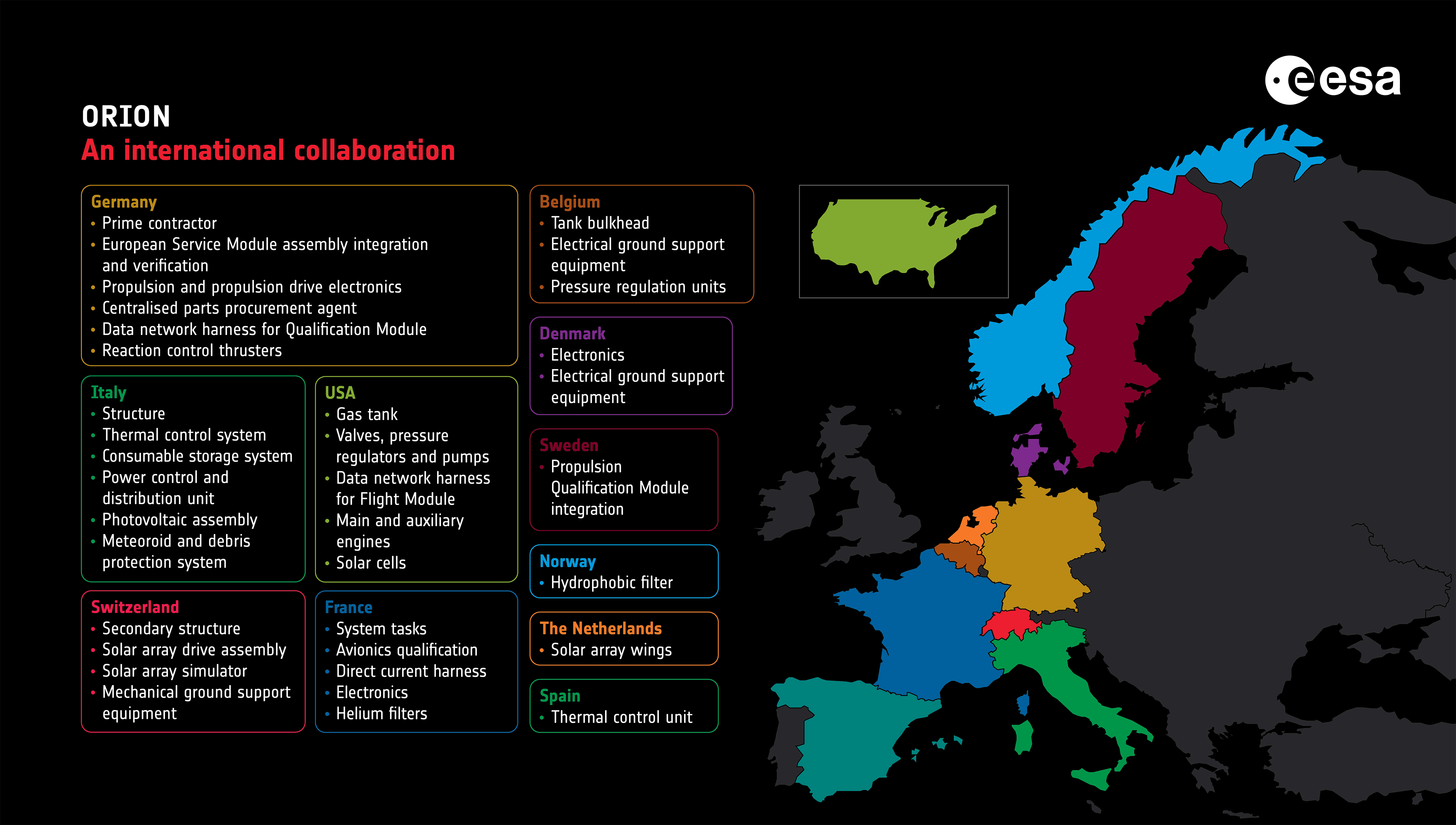
The European Service Modules are made from components supplied by over 20 companies in ten European Space Agency (ESA) Member States and the United States. As the first European Service Module sits atop the SLS rocket on the launchpad, the second is only 8 km (5 miles) away, as it is currently being integrated with the Orion crew capsule for the first crewed mission – Artemis II. The third and fourth European Service Modules – that will power astronauts to a Moon landing – are in production in Bremen, Germany.
ESA–K. Oldenburg
The Artemis program is an international endeavor to build a permanent outpost around and on the Moon. Modules for the lunar Gateway are being built in the United States and Europe, with the first European module – International Habitat – in production in Turin, Italy, and set for launch on the fourth Artemis mission alongside the Orion spacecraft.
The first Artemis launch this week is without humans, but three mannequins have been placed in the spacecraft’s seats to conduct scientific research. Fitted with more than 5600 sensors, two mannequins will measure the amount of radiation astronauts could be exposed to in future missions with unprecedented precision. ESA is also including active radiation dosimeters in the Crew Module to get more data on how radiation levels change on a mission to the Moon – building on the leadership developed over decades of radiation research on the International Space Station.
Dates
With a November 16 launch, the three-week Artemis I mission would end on December 11 with a splashdown in the Pacific Ocean. The European Service Module detaches from the Orion Crew Module before splashdown and burns up harmlessly in the atmosphere, its job complete after taking Orion to the Moon and back safely.
Backup Artemis I launch dates include November 19. Watch the launch live on ESA Web TV.
The Orion spacecraft with European Service Module will fly farther from Earth than any human-rated vehicle has ever flown before. This video gives an overview of the first mission – without astronauts – for Artemis, focusing on ESA’s European Service Module that powers the spacecraft. The spacecraft will perform a flyby of the Moon, using lunar gravity to gain speed and propel itself 70,000 km beyond the Moon, almost half a million km from Earth – further than any human has ever traveled, where it will inject itself in a Distant Retrograde Orbit around the Moon. On its return journey, Orion will do another flyby of the Moon before heading back to Earth. The total trip will take around 20 days, ending with a splashdown in the Pacific Ocean without the European Service Module – it separates and burns up harmlessly in the atmosphere. Credit: ESA – European Space Agency
Never miss a breakthrough: Join the SciTechDaily newsletter.
Follow us on Google and Google News.
6 Comments
Could the service module be left in orbit for use on other missions or taken back to the moon for use on the surface?
Unlikely. Orion needs its service module for power until just before re-entry, so leaving it around the moon isn’t an option. And by the time Orion re-enters Earth’s atmosphere, the service module is likely out of fuel and would be on the same low, degrading orbit as Orion put itself on for re-entry. Even if the ESM could boost itself back into orbit on fumes, it probably wouldn’t last there long enough for another mission to come get it. And that says nothing about the design life-span of its batteries and other components.
NASA has decided that re-usability isn’t a requirement for the Artemis missions, and you generally don’t want to add more weight/complexity to a spacecraft than is absolutely necessary, as every increase in weight means an exponential increase in fuel costs. The ESM is, sadly, single-use.
Stop wasting your time asking questions about the Artemis missions and the hardware involved… Nothing has or ever will go to space, as space itself is a fantasy land that only exists on paper and in the minds of sociopaths. Space is Fake. Wake Up. The clown show they are putting on for you is laughable and pathetic.
I mean you literally can see satellites orbiting the earth with the naked eye, but sure.
Another fake moon landing adherent. Wow, even Genesis speaks of the reality of the Cosmos and that God made two great lights. The greater light (sun) to rule the day, and the lesser light (moon) to rule the day. I guess your an atheist and a science denier. Sad.
These clowns saying space is fake, or the moon is fake or landing on the moon is fake seriously have issues. And the sad part is they probably still think the earth is flat. Hopefully these jokers aren’t breeding.