
Close Menu
    Facebook X (Twitter) Instagram
    SciTechDaily
    • Biology
    • Chemistry
    • Earth
    • Health
    • Physics
    • Science
    • Space
    • Technology
    Facebook X (Twitter) Pinterest YouTube RSS
    SciTechDaily
    Home»Space»Third European Service Module for Artemis Mission to Land Astronauts on the Moon
    Space

    Third European Service Module for Artemis Mission to Land Astronauts on the Moon

    By European Space AgencyMay 27, 2020No Comments4 Mins Read
    Facebook Twitter Pinterest Telegram LinkedIn WhatsApp Email Reddit
    Share
    Facebook Twitter LinkedIn Pinterest Telegram Email Reddit
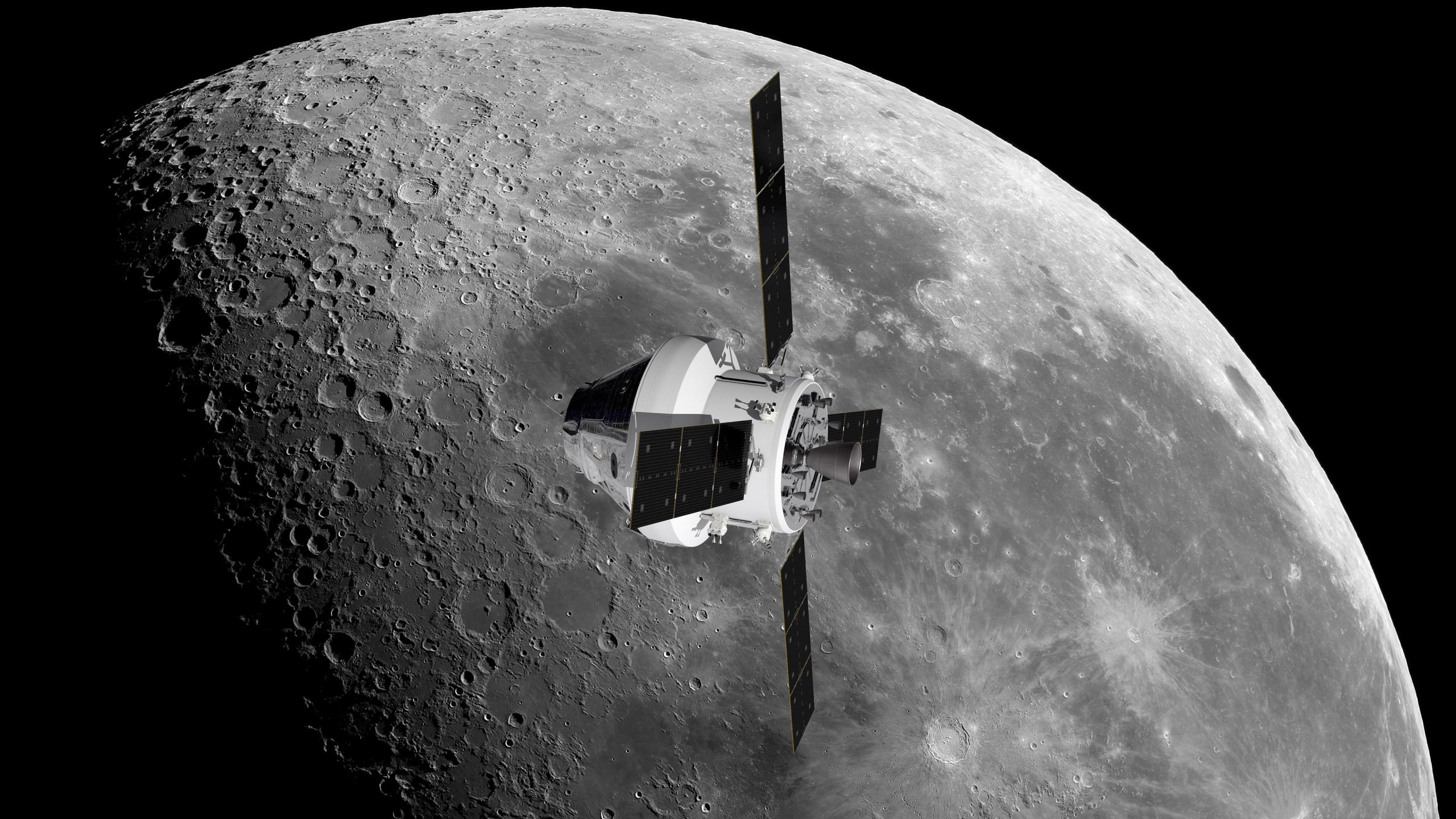
    Orion and European Service Module Orbiting Moon
    Artist’s impression of Orion over the Moon. Orion is NASA’s next spacecraft to send humans into space. It is designed to send astronauts further into space than ever before, beyond the Moon to asteroids and even Mars. When they return to Earth, the astronauts will enter our atmosphere at speeds over 32,000 km/h but the capsule will protect them and ensure a bumpy but safe landing. Credit: NASA/ESA/ATG Medialab

    It’s official: when astronauts land on the Moon in 2024 they will get there with help from the European Service Module. The European Space Agency signed a contract with Airbus to build the third European Service Module for NASA’s Orion spacecraft that will ferry the next astronauts to land on the Moon.

    NASA’s Artemis program is returning humans to the Moon with ESA’s European Service Module supplying everything needed to keep the astronauts alive on their trip in the crew module – water, air, propulsion, electricity, a comfortable temperature as well as acting as the chassis of the spacecraft.

    The third Artemis mission will fly astronauts to Earth’s natural satellite in 2024 – the first to land on the Moon since Apollo 17 following a hiatus of more than 50 years.

    Orion and European Service Module Over Moon
    Orion and European Service Module over the Moon. Credit: NASA/ESA/ATG Medialab

    ESA’s director of Human and Robotic Exploration David Parker said: “By entering into this agreement, we are again demonstrating that Europe is a strong and reliable partner in Artemis. The European Service Module represents a crucial contribution to this, allowing scientific research, development of key technologies, and international cooperation – inspiring missions that expand humankind’s presence beyond Low Earth Orbit.”
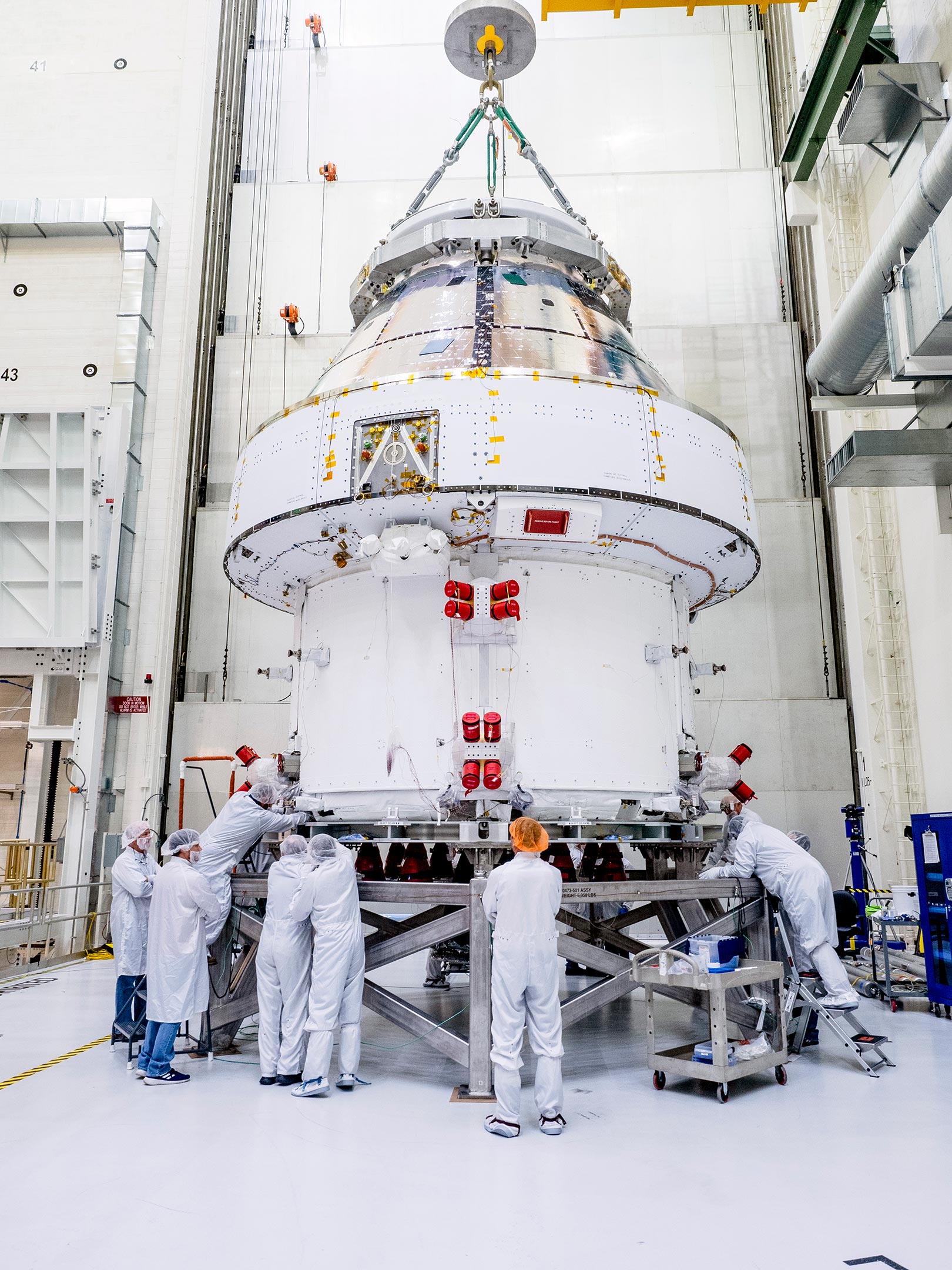
    Orion at Kennedy Space Center
    Orion at Kennedy Space Center. Credit: NASA–Rad Sinyak

    Over 20,000 parts and components are used in each European Service Module, from electrical equipment to engines, solar panels, fuel tanks, and life-support elements for the astronauts, as well as approximately 12 kilometers of cables.
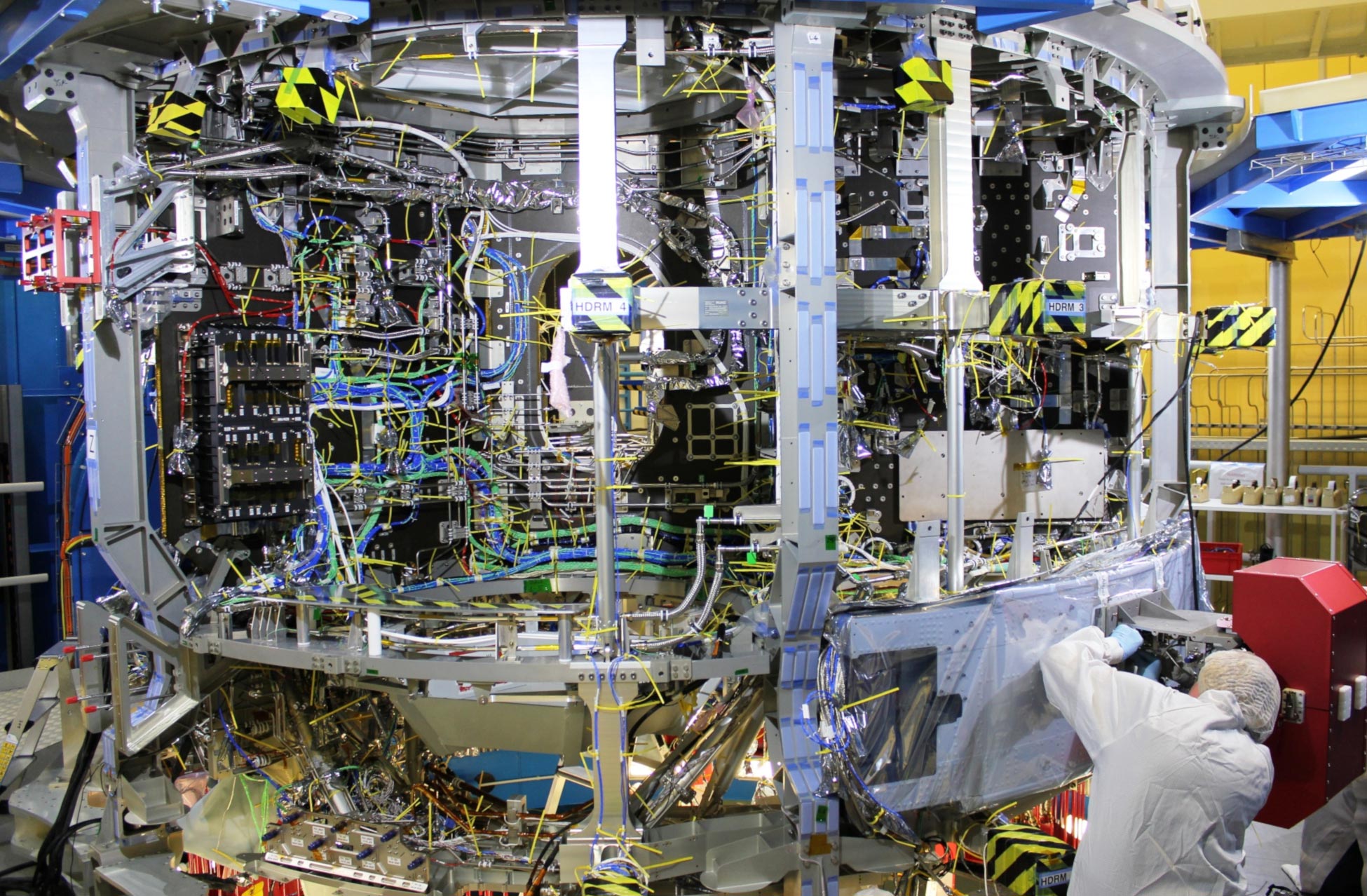
    European Service Module 2 Assembly
    The European Service Module-2 (ESM-2) is somewhat like the portal it appears to be in this image. By providing power and propulsion for the Orion spacecraft, it will transport humans back to the Moon, roughly fifty years after humankind first landed on its surface. Credit: Airbus

    “Our know-how and expertise will enable us to continue to facilitate future Moon missions through international partnerships,” says Andreas Hammer, Head of Space Exploration at Airbus. “By working together with our customers ESA and NASA as well as our industrial partner Lockheed Martin, we now have a reliable planning basis for the first three lunar missions. This contract is an endorsement of the joint approach combining the best of European and American space technologies.”

    Development and construction drew on experience building the Automated Transfer Vehicles that flew to the International Space Station with regular deliveries of test equipment, spare parts, food, air, water, and fuel.
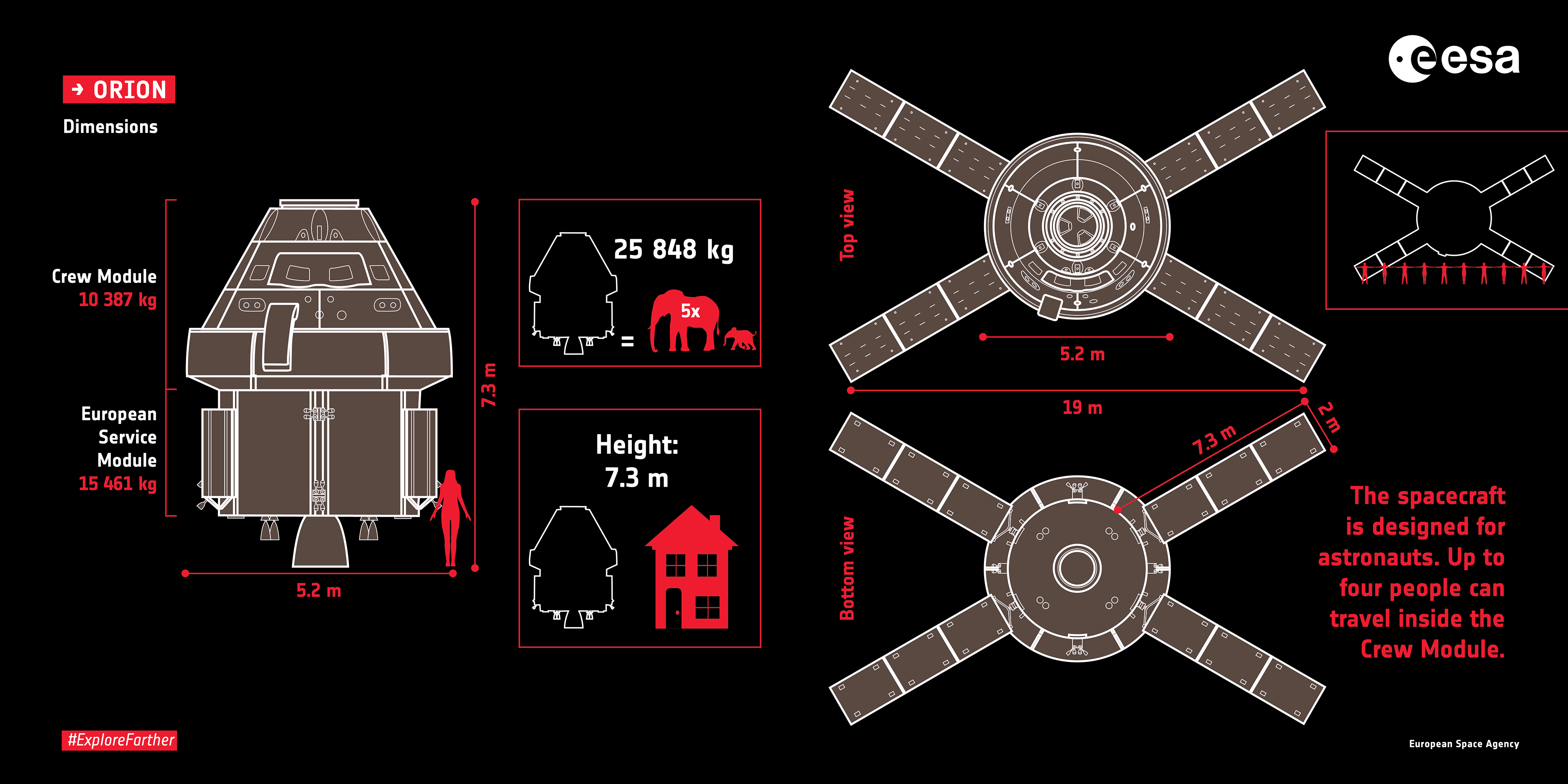
    Orion Dimensions
    Orion: dimensions. Credit: ESA–K. Oldenburg

    Orion is the size of a small house with the European Service Module taking up the first floor at four meters in diameter and height. It has four solar wings that extend 19 m across to generate enough energy to power two households. It carries 8.6 tonnes of fuel to power Orion’s main engine and 32 smaller thrusters that will keep it on course to the Moon and power the return home to Earth.

    The first European Service Module is being handed over to NASA at their Kennedy Space Center for an uncrewed launch next year, and the second is in production at the Airbus integration hall in Bremen, Germany.
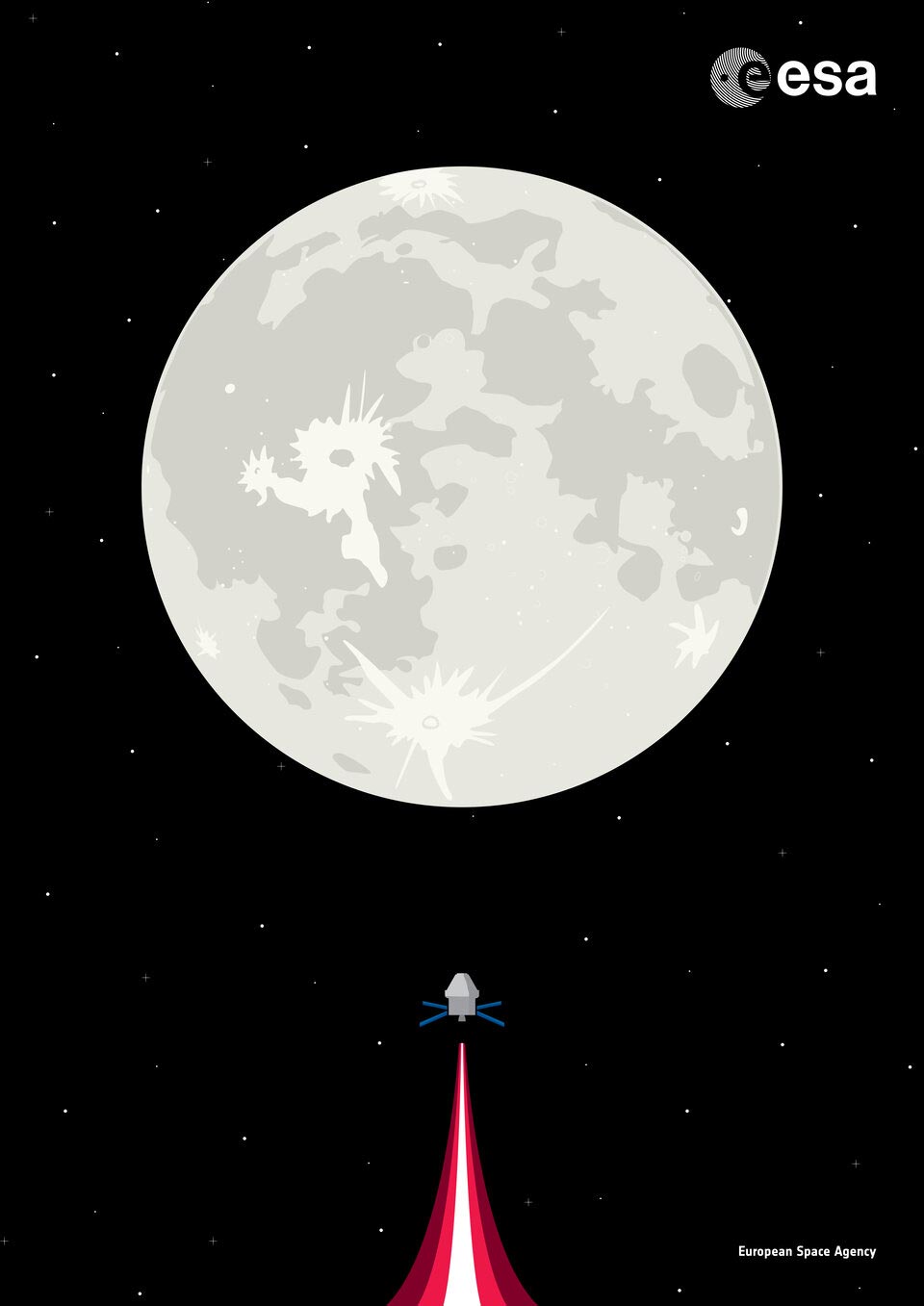
    ESA Powered to the Moon
    Powered to the Moon. Credit: ESA–K. Oldenburg

    Never miss a breakthrough: Join the SciTechDaily newsletter.
    Follow us on Google and Google News.

    ARTEMIS Mission European Space Agency Popular
    Share. Facebook Twitter Pinterest LinkedIn Email Reddit

    Related Articles

    Standing Tall: Massive Moon Rocket Milestone for Artemis

    Six Incredible Space Missions to Look Forward to in 2021

    Hubble Image of Peculiar Galaxy Pair Arp 116

    Images From ESA’s Mars Express Reveals the Features of Ladon Basin

    Clean Space Initiative to Target Orbital Debris

    Herschel Image of the Vela C Region

    Researchers Discover First Intermediate-Mass Black Hole

    ESA’s Vega Rocket Has Launched on Its Maiden Voyage, Carries 9 Satellites

    ESA’s Hershel Space Telescope Captures Incredible Views of Eagle Nebula

    Leave A Reply Cancel Reply

    • Facebook
    • Twitter
    • Pinterest
    • YouTube

    Don't Miss a Discovery

    Subscribe for the Latest in Science & Tech!

    Trending News

    The Universe Is Expanding Too Fast and Scientists Can’t Explain Why

    “Like Liquid Metal”: Scientists Create Strange Shape-Shifting Material

    Early Warning Signals of Esophageal Cancer May Be Hiding in Plain Sight

    Common Blood Pressure Drug Shows Surprising Power Against Deadly Antibiotic-Resistant Superbug

    Scientists Uncover Dangerous Connection Between Serotonin and Heart Valve Disease

    Scientists Discover a “Protector” Protein That Could Help Reverse Hair Loss

    Bone-Strengthening Discovery Could Reverse Osteoporosis

    Scientists Uncover Hidden Trigger Behind Stem Cell Aging

    Follow SciTechDaily
    • Facebook
    • Twitter
    • YouTube
    • Pinterest
    • Newsletter
    • RSS
    SciTech News
    • Biology News
    • Chemistry News
    • Earth News
    • Health News
    • Physics News
    • Science News
    • Space News
    • Technology News
    Recent Posts
    • A Common Diabetes Drug May Hold the Key to Stopping HIV From Coming Back
    • Ancient “Syphilis-Like” Disease in Vietnam Challenges Key Scientific Assumptions
    • Drinking Alcohol To Cope in Your 20s Could Damage Your Brain for Life
    • Scientists Crack Alfalfa’s Chromosome Mystery After Decades of Debate
    • Ancient Ant-Plant Alliance Collapses As Predatory Wasps Move In
    Copyright © 1998 - 2026 SciTechDaily. All Rights Reserved.
    • Science News
    • About
    • Contact
    • Editorial Board
    • Privacy Policy
    • Terms of Use

    Type above and press Enter to search. Press Esc to cancel.