
Close Menu
    Facebook X (Twitter) Instagram
    SciTechDaily
    • Biology
    • Chemistry
    • Earth
    • Health
    • Physics
    • Science
    • Space
    • Technology
    Facebook X (Twitter) Pinterest YouTube RSS
    SciTechDaily
    Home»Space»Orion Spacecraft Passes Tests – Ready for Final Artemis I Launch Preparations
    Space

    Orion Spacecraft Passes Tests – Ready for Final Artemis I Launch Preparations

    By European Space AgencyApril 3, 2020No Comments4 Mins Read
    Facebook Twitter Pinterest Telegram LinkedIn WhatsApp Email Reddit
    Share
    Facebook Twitter LinkedIn Pinterest Telegram Email Reddit
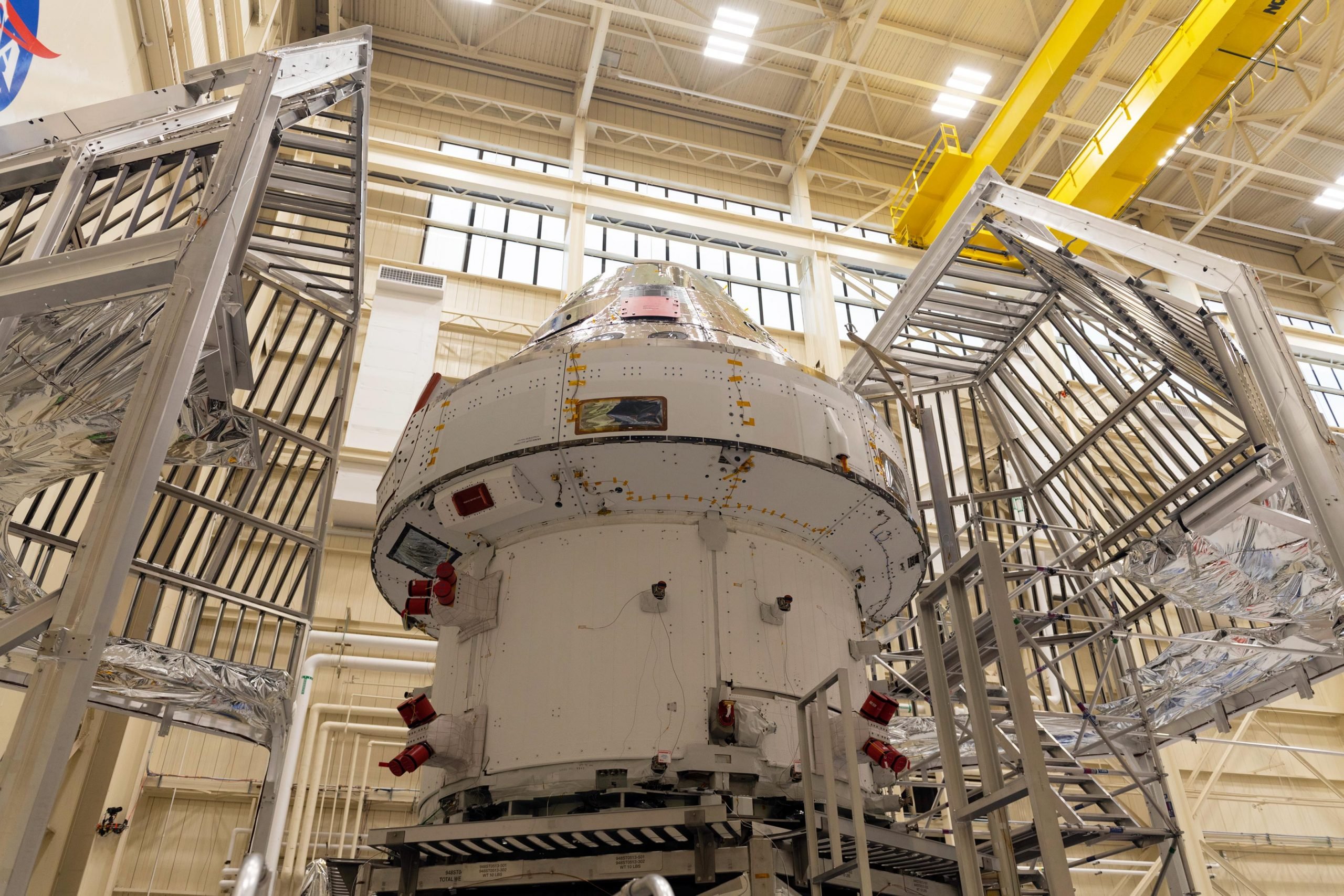
    Orion Spacecraft Encaged
    Here at NASA’s Plum Brook Station in Ohio, USA, Orion is being put into a thermal cage in preparation of getting its first feel of space in the world’s largest thermal vacuum chamber. Orion will be subjected to temperatures at Plum Brook ranging from –175°C to 75°C (-283°F to 167°F) in vacuum for over two months non-stop – the same temperatures it will experience in direct sunlight or in the shadow of Earth or the Moon while flying in space. In the picture, Orion is being placed in a cage, called the Thermal Enclosure Structure (TES), that will radiate infrared heat during the tests inside the vacuum chamber. Credit: ESA–S. Corvaja

    The Orion spacecraft that will fly on the Artemis 1 mission around the Moon has returned to NASA’s Kennedy Space Center in Florida, USA, after finishing space environment tests. The spacecraft, including ESA’s European Service Module, is now at its final destination before launch.

    Orion spent four months at NASA’s Plum Brook station where it was subjected to the vacuum and temperatures of –175°C to 75°C (-283°F to 167°F) it will experience on its flight to the Moon. After proving its space-worthiness, the electronics ­– including the thousands of parameters and functions of the European Service Module that control the engines, electrical power and steering the solar panels to face the Sun – were checked for electromagnetic interference.


    A timelapse video of the Orion spacecraft with European Service Module getting ready for thermal vacuum testing at NASA’s Plum Brook Station. The first Orion will fly farther from Earth on the Artemis I mission than any human-rated vehicle has ever flown before – but first it will undergo testing to ensure the spacecraft withstands the extremes of spaceflight.

    ESA’s Dominique Siruguet from the European Service Module integration and verification team says “The tests were successful and the behavior of the vehicle was good, passing all requirements.”

    Plum Brook station was chosen for the tests because thermal vacuum and electromagnetic compatibility could be performed in the same facility. This avoided additional transport of Orion, which is the size of a two-story house.

    Having passed its trials, the spacecraft was wrapped and moved by truck to an airport in Ohio for its return flight on NASA’s Super Guppy aircraft.
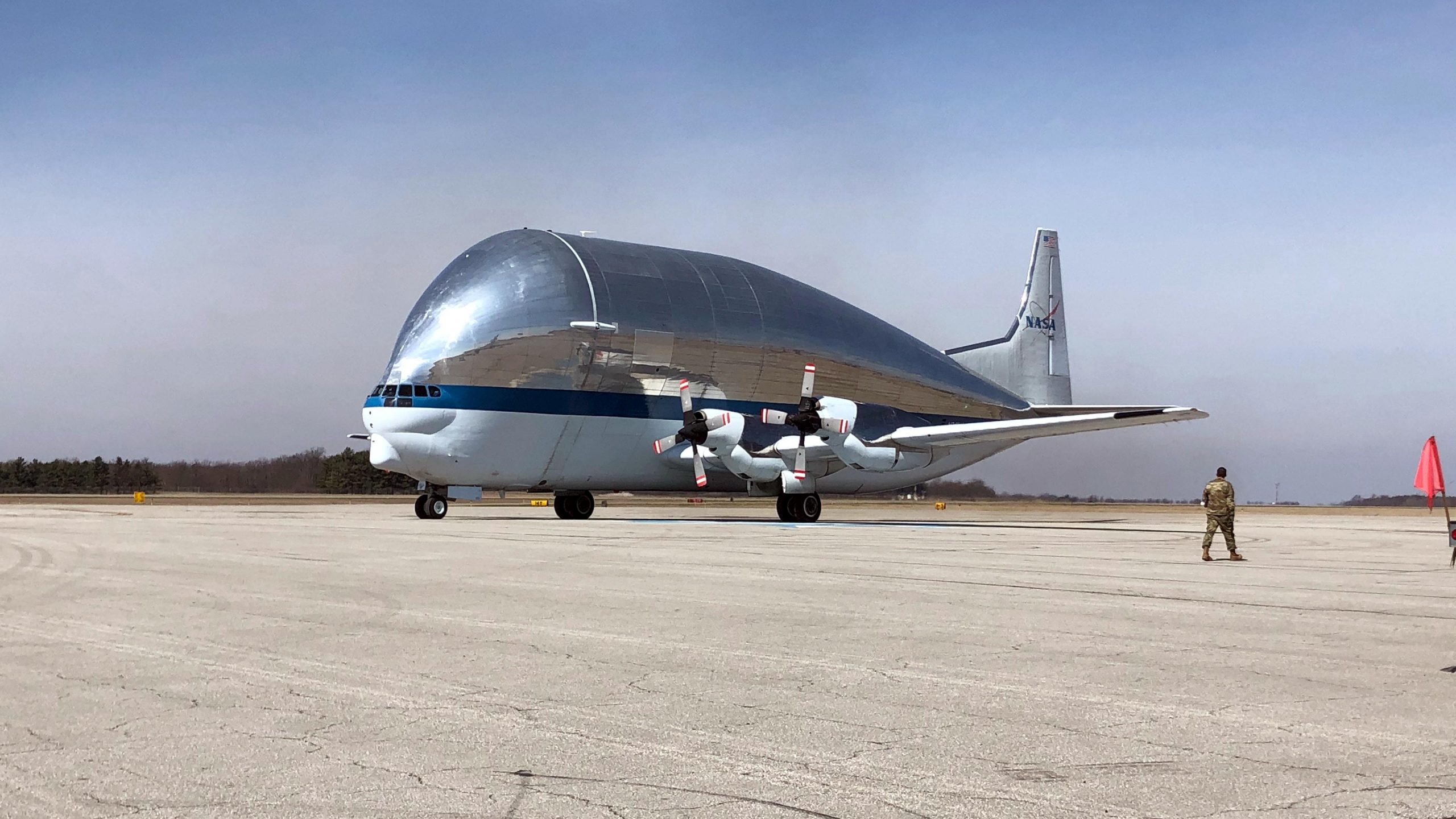
    Super Guppy Artemis 1 Orion Spacecraft
    Super Guppy leaves Ohio with Artemis 1 Orion spacecraft. After four months of rigorous testing at NASA’s Plum Brook Station, the Orion spacecraft for the Artemis 1 mission is certified and another step toward being ready for flight. Credit: NASA–Nicole Smith

    Adding wings to Orion

    The tests are not completely over for Orion, at Kennedy Space Center the crew module will be further prepared and more leak tests conducted. The European Service Module has tanks for fuel, oxygen, and water that are critical for the astronauts. The gas tanks are pressurized and are connected to many pipes and valves, so it is vital to make sure there are no leaks.

    Orion Spacecraft Exploded View
    An artist’s impression of the Orion spacecraft with ESA’s service module. The module sits directly below Orion’s crew capsule and provides propulsion, power, thermal control, and water and air for four astronauts. A number of elements are required only during launch and are discarded shortly before entering space. The Spacecraft Adapter attaches Orion to its launch vehicle. The Spacecraft Adapter Jettisonable Fairings offer aerodynamic protection during launch. When the vehicle is high enough above Earth, the fairings are jettisoned to fall into the ocean. Credit: NASA

    The solar wings that generate power during its mission will be installed, as well as protective covers called the Spacecraft Adapter Jettisoned fairings for the intense moments of launch on the world’s most powerful rocket.

    Later this year ESA will formally transfer ownership of the European Service Module to NASA and the spacecraft will move into the ground system phase where it will be united with the SLS rocket for a lift-off to the Moon.


    A look at the elements that make up the European service module that will provide power, water, air and electricity to NASA’s Orion Moon module.

    Orion is a key component of Artemis 1 – an uncrewed test flight around the Moon that paves the way for the Artemis 3 mission, which will land the first woman and next man on the lunar surface by 2024. ESA is designing and supplying the European Service Module for the Orion spacecraft. This provides electricity, water, oxygen, and nitrogen. It also keeps the spacecraft at the right temperature and on course, propelling it to the Moon and back once it has separated from the launcher.

    Never miss a breakthrough: Join the SciTechDaily newsletter.
    Follow us on Google and Google News.

    ARTEMIS Mission European Space Agency NASA Orion Spacecraft
    Share. Facebook Twitter Pinterest LinkedIn Email Reddit

    Related Articles

    NASA’s Orion Spacecraft for Artemis III Hits Major Milestone at Kennedy

    Artemis I: Mega Moon Rocket Ready for Launch

    A European Push to the Moon and Beyond

    Artemis I: NASA’s Bold Plans to Travel Beyond the Moon [Video]

    Welding Underway on Orion Crew Module for First Artemis Mission Landing Astronauts on the Moon

    Orion Spacecraft Ready to Fuel Up for NASA’s Artemis I Mission Beyond the Moon

    Six Incredible Space Missions to Look Forward to in 2021

    NASA Selects New Orion Program Manager: Catherine Koerner

    Orion Spacecraft Returns to Kennedy Space Center for Final Preparations Before Artemis I Launch

    Leave A Reply Cancel Reply

    • Facebook
    • Twitter
    • Pinterest
    • YouTube

    Don't Miss a Discovery

    Subscribe for the Latest in Science & Tech!

    Trending News

    Even Occasional Binge Drinking May Triple Liver Damage Risk

    Liftoff! NASA’s Artemis II Launch Sends Astronauts Around the Moon for First Time in 50 Years

    Scientists Discover New Way To Eliminate “Zombie Cells” Driving Aging

    This New Quantum Theory Could Change Everything We Know About the Big Bang

    This One Vitamin May Help Protect Your Brain From Dementia Years Later

    Stopping Weight-Loss Drugs Like Ozempic Can Quickly Erase Heart Benefits

    A 500-Million-Year-Old Surprise Is Forcing Scientists to Rethink Spider Evolution

    Coffee and Blood Pressure: What You Need To Know Before Your Next Cup

    Follow SciTechDaily
    • Facebook
    • Twitter
    • YouTube
    • Pinterest
    • Newsletter
    • RSS
    SciTech News
    • Biology News
    • Chemistry News
    • Earth News
    • Health News
    • Physics News
    • Science News
    • Space News
    • Technology News
    Recent Posts
    • Tiny 436-Million-Year-Old Fish Fossil Rewrites the Origins of Vertebrates
    • 1,800 Miles Down: Scientists Uncover Mysterious Movements at the Edge of Earth’s Core
    • Scientists Uncover Earth’s Hidden “Gold Kitchen” Beneath the Ocean Floor
    • You Don’t Need To Be Rich: New Study Reveals a Simple Life Is the Real Secret to Happiness
    • “Crazy Dice” Help Scientists Prove Only One 150-Year-Old Theory About Randomness Works
    Copyright © 1998 - 2026 SciTechDaily. All Rights Reserved.
    • Science News
    • About
    • Contact
    • Editorial Board
    • Privacy Policy
    • Terms of Use

    Type above and press Enter to search. Press Esc to cancel.