
Close Menu
    Facebook X (Twitter) Instagram
    SciTechDaily
    • Biology
    • Chemistry
    • Earth
    • Health
    • Physics
    • Science
    • Space
    • Technology
    Facebook X (Twitter) Pinterest YouTube RSS
    SciTechDaily
    Home»Space»NASA Extends Exploration for Juno and InSight Planetary Science Missions
    Space

    NASA Extends Exploration for Juno and InSight Planetary Science Missions

    By NASAJanuary 8, 2021No Comments3 Mins Read
    Facebook Twitter Pinterest Telegram LinkedIn WhatsApp Email Reddit
    Share
    Facebook Twitter LinkedIn Pinterest Telegram Email Reddit
    Juno Finds Changes in Jupiter's Magnetic Field
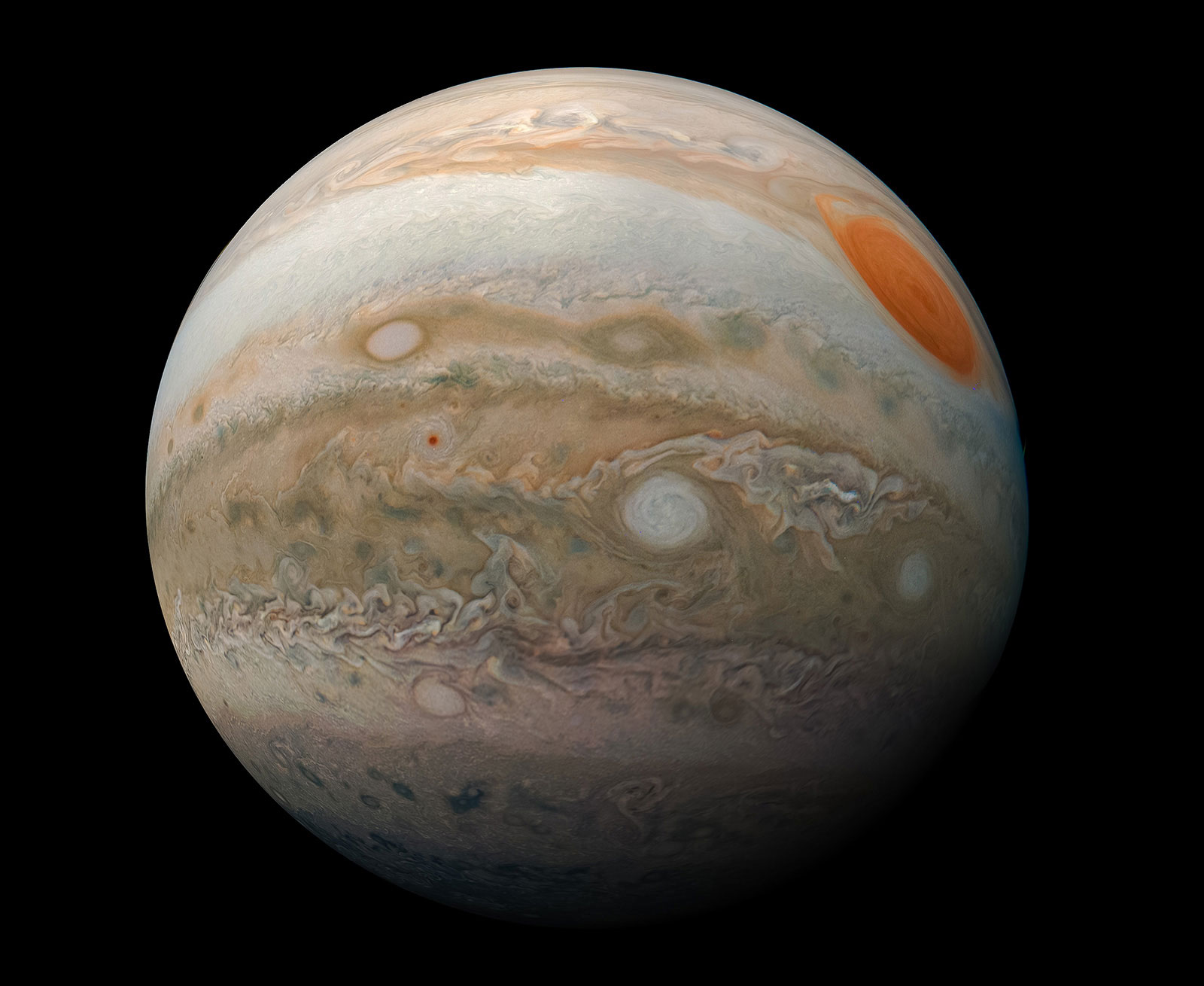
    This striking view of Jupiter’s Great Red Spot and turbulent southern hemisphere was captured by NASA’s Juno spacecraft as it performed a close pass of the gas giant planet. Credit: NASA/JPL-Caltech/SwRI/MSSS/Kevin M. Gill

    NASA Extends Two Key Planetary Missions

    As NASA prepares to send astronauts back to the Moon and on to Mars, the agency’s quest to seek answers about our solar system and beyond continues to inform those efforts and generate new discoveries. The agency has extended the missions of two spacecraft, following an external review of their scientific productivity.

    The missions — Juno and InSight — have each increased our understanding of our solar system, as well as spurred new sets of diverse questions.

    An independent review panel, comprised of experts with backgrounds in science, operations, and mission management, found the Juno and InSight missions have “produced exceptional science,” and recommended NASA continue both missions.

    A Broader Look at the Jovian System

    The Juno spacecraft and its mission team have made discoveries about Jupiter’s interior structure, magnetic field, and magnetosphere, and have found its atmospheric dynamics to be far more complex than scientists previously thought. Extended through September 2025, or its end of life (whichever comes first), the mission will not only continue key observations of Jupiter, but also will expand its investigations to the larger Jovian system including Jupiter’s rings and large moons, with targeted observations and close flybys planned of the moons Ganymede, Europa, and Io.
    NASA Mars InSight Deploys Instruments
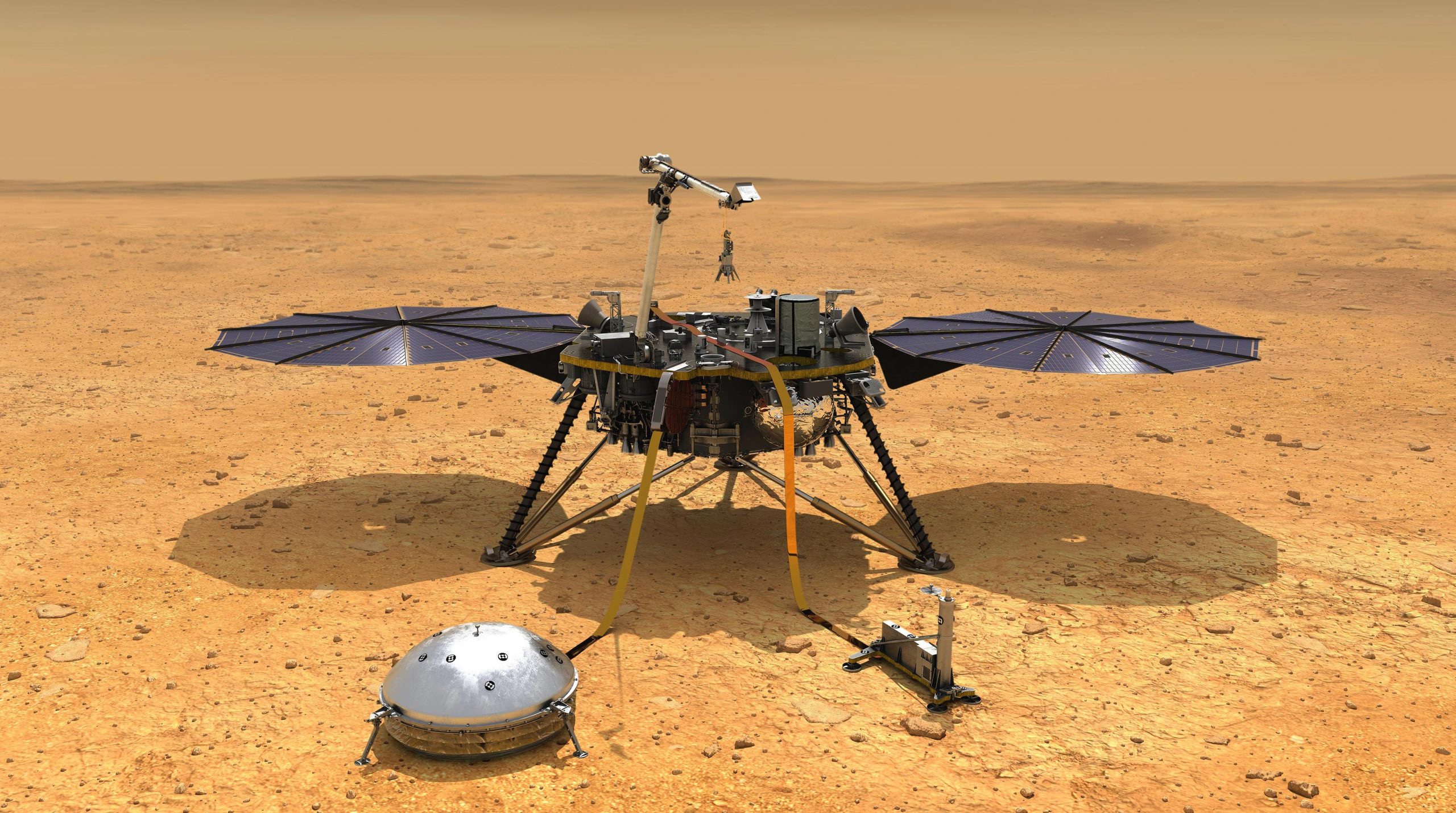
    This illustration shows NASA’s InSight spacecraft with its instruments deployed on the Martian surface. Credit: NASA/JPL-Caltech

    A Focus on Long-Term Seismic Data

    The InSight mission is extended for two years, running through December 2022. InSight’s spacecraft and team deployed and operated its highly sensitive seismometer to expand our understanding of Mars’ crust and mantle. Searching for and identifying Marsquakes, the mission team collected data clearly demonstrating the robust tectonic activity of the Red Planet, and enhanced our knowledge of the planet’s atmospheric dynamics, magnetic field, and interior structure. InSight’s extended mission will focus on producing a long-duration, high quality seismic dataset. Continued operation of its weather station and burial of the seismic tether using the spacecraft’s Instrument Deployment Arm (IDA), will contribute to the quality of this seismic dataset. The extended mission may continue deployment (at low priority) of the spacecraft’s Heat Probe and Physical Properties instrument (HP3), which remains close to the surface.

    “The Senior Review has validated that these two planetary science missions are likely to continue to bring new discoveries, and produce new questions about our solar system,” said Lori Glaze, director of the planetary science division at NASA Headquarters, Washington. “I thank the members of the Senior Review panel for their comprehensive analysis and thank the mission teams as well, who will now continue to provide exciting opportunities to refine our understanding of the dynamic science of Jupiter and Mars.”

    Extended missions leverage NASA’s large investments, allowing continued science operations at a cost far lower than developing a new mission. In some cases, the extensions allow missions to continue to acquire valuable long-duration datasets, while in other cases, they allow missions to visit new targets, with entirely new science goals.

    NASA’s Planetary Science Division currently operates more than a dozen spacecraft across the solar system.

    Never miss a breakthrough: Join the SciTechDaily newsletter.
    Follow us on Google and Google News.

    Juno Spacecraft Jupiter Mars NASA NASA InSight Lander
    Share. Facebook Twitter Pinterest LinkedIn Email Reddit

    Related Articles

    NASA’s Juno Exposes Sizzling Lava Lakes Beneath Io and Cyclonic Chaos on Jupiter

    Juno’s Close Call: How Jupiter’s Intense Radiation Sent It Into Safe Mode

    We Asked a NASA Expert: How Long Does It Take to Get to the Moon… Mars… Jupiter? [Video]

    A Meteor Strike Just Revealed a Hidden Seismic Highway on Mars

    NASA’s InSight Lander Fades Into Mars Dust: Final Images Unveiled

    NASA’s Farside Seismic Suite: Measuring Moonquakes With Help From Mars InSight Lander

    Counting Fireflies: Advanced Stellar Compass on NASA’s Juno Unravels Jupiter’s Radiation Dynamics

    Breathtaking Majesty: NASA’s Juno Captures Jupiter’s Colorful Chaos in Stunning Detail

    Juno Spacecraft Completes First Trajectory Correction Maneuver

    Leave A Reply Cancel Reply

    • Facebook
    • Twitter
    • Pinterest
    • YouTube

    Don't Miss a Discovery

    Subscribe for the Latest in Science & Tech!

    Trending News

    Scientists May Have Found the Key to Jupiter and Saturn’s Moon Mystery

    Scientists Uncover Brain Changes That Link Pain to Depression

    Saunas May Do More Than Raise Body Temperature – They Activate Your Immune System

    Exercise in a Pill? Metformin Shows Surprising Effects in Cancer Patients

    Hidden Oceans of Magma Could Be Protecting Alien Life

    New Study Challenges Alzheimer’s Theories: It’s Not Just About Plaques

    Artificial Sweeteners May Harm Future Generations, Study Suggests

    Splashdown! NASA Artemis II Returns From Record-Breaking Moon Mission

    Follow SciTechDaily
    • Facebook
    • Twitter
    • YouTube
    • Pinterest
    • Newsletter
    • RSS
    SciTech News
    • Biology News
    • Chemistry News
    • Earth News
    • Health News
    • Physics News
    • Science News
    • Space News
    • Technology News
    Recent Posts
    • Scientists Discover Unexpected Climate Benefit Hidden in Forest Soils
    • The Grand Canyon’s “Swiss Cheese” Rocks Hold a Critical Secret
    • Scientists Discover 430,000-Year-Old Wooden Tools, Rewriting Human History
    • Scientists Make Breakthrough on 40-Year-Old 2D Physics Puzzle
    • As Cities Invade the Amazon, Yellow Fever Makes a Dangerous Comeback
    Copyright © 1998 - 2026 SciTechDaily. All Rights Reserved.
    • Science News
    • About
    • Contact
    • Editorial Board
    • Privacy Policy
    • Terms of Use

    Type above and press Enter to search. Press Esc to cancel.