
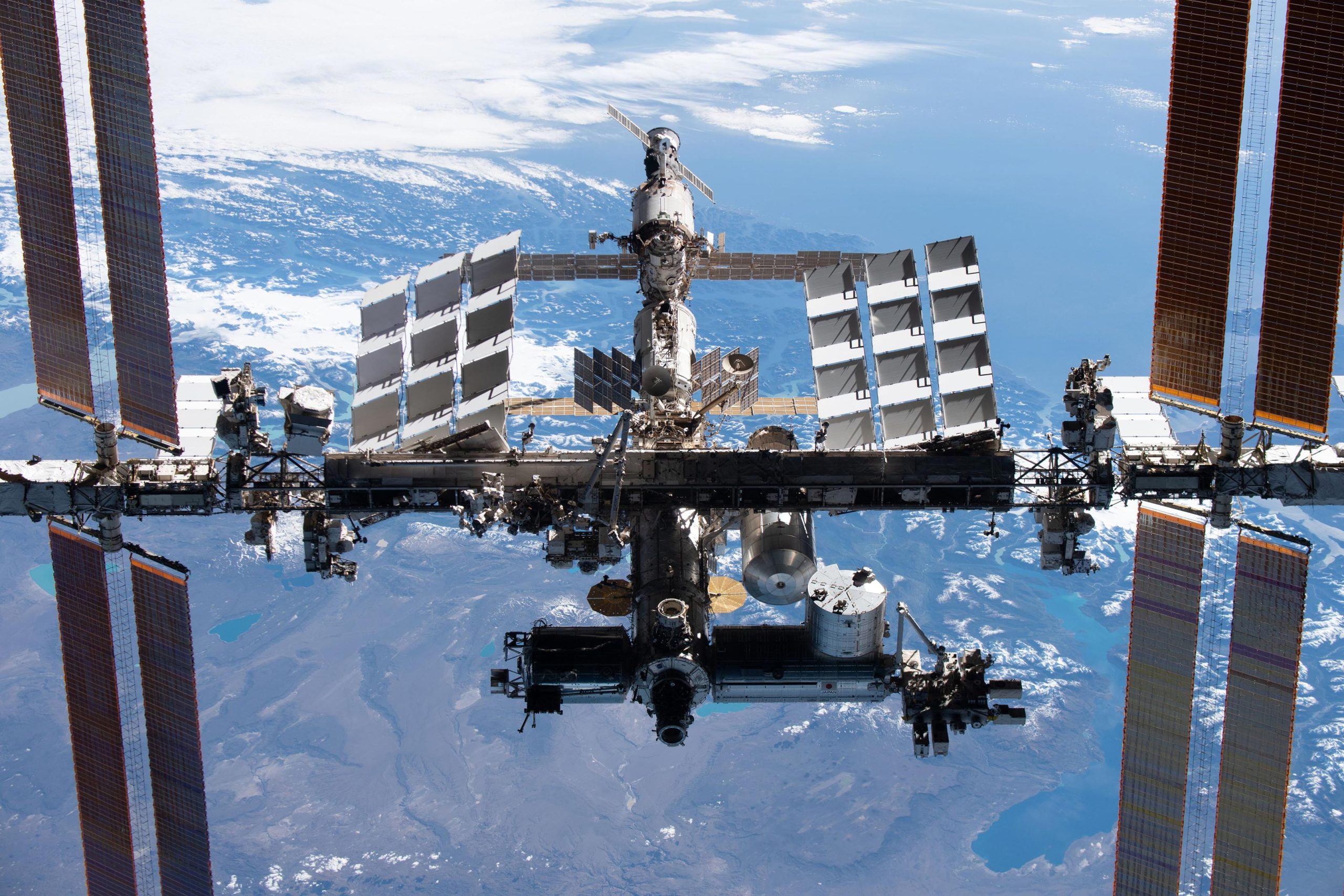
NASA has committed to maintaining the International Space Station until 2030 in partnership with international space agencies from Europe, Japan, Canada, and Russia. This commitment will foster ongoing scientific and technological research that benefits Earth, support lunar exploration through the Artemis program, and aid in the future human exploration of Mars. The ISS, a crucial platform for global collaboration, has enabled extensive research and educational initiatives involving numerous countries and students.
NASA Administrator Bill Nelson announced on December 31, 2021, the Biden-Harris Administration’s commitment to extend International Space Station (ISS) operations through 2030, and to work with our international partners in Europe (ESA, European Space Agency), Japan (JAXA, Japan Aerospace Exploration Agency), Canada (CSA, Canadian Space Agency), and Russia (State Space Corporation Roscosmos) to enable continuation of the groundbreaking research being conducted in this unique orbiting laboratory through the rest of this decade.
“The International Space Station is a beacon of peaceful international scientific collaboration and for more than 20 years has returned enormous scientific, educational, and technological developments to benefit humanity. I’m pleased that the Biden-Harris Administration has committed to continuing station operations through 2030,” Nelson said. “The United States’ continued participation on the ISS will enhance innovation and competitiveness, as well as advance the research and technology necessary to send the first woman and first person of color to the Moon under NASA’s Artemis program and pave the way for sending the first humans to Mars. As more and more nations are active in space, it’s more important than ever that the United States continues to lead the world in growing international alliances and modeling rules and norms for the peaceful and responsible use of space.”
Over the past two decades, the United States has maintained a continuous human presence in orbit around the Earth to test technologies, conduct scientific research, and develop skills needed to explore farther than ever before. The unique microgravity laboratory has hosted more than 3,000 research investigations from over 4,200 researchers across the world and is returning enormous scientific, educational, and technological developments to benefit people on Earth. Nearly 110 countries and areas have participated in activities aboard the station, including more than 1,500,000 students per year in STEM activities.
Instruments aboard the ISS, used in concert with free-flying instruments in other orbits, help us measure the stresses of drought and the health of forests to enable improved understanding of the interaction of carbon and climate at different time scales. Operating these and other climate-related instruments through the end of the decade will greatly increase our understanding of the climate cycle.
Extending operations through 2030 will continue another productive decade of research advancement and enable a seamless transition of capabilities in low-Earth orbit to one or more commercially owned and operated destinations in the late 2020s. The decision to extend operations and NASA’s recent awards to develop commercial space stations together ensure uninterrupted, continuous human presence and capabilities; both are critical facets of NASA’s International Space Station transition plan.
Never miss a breakthrough: Join the SciTechDaily newsletter.
Follow us on Google and Google News.