
Close Menu
    Facebook X (Twitter) Instagram
    SciTechDaily
    • Biology
    • Chemistry
    • Earth
    • Health
    • Physics
    • Science
    • Space
    • Technology
    Facebook X (Twitter) Pinterest YouTube RSS
    SciTechDaily
    Home»Space»NASA’s Cassini Spacecraft Completes Final Flyby of Titan
    Space

    NASA’s Cassini Spacecraft Completes Final Flyby of Titan

    By Preston Dyches, Jet Propulsion LaboratoryApril 25, 2017No Comments4 Mins Read
    Facebook Twitter Pinterest Telegram LinkedIn WhatsApp Email Reddit
    Share
    Facebook Twitter LinkedIn Pinterest Telegram Email Reddit
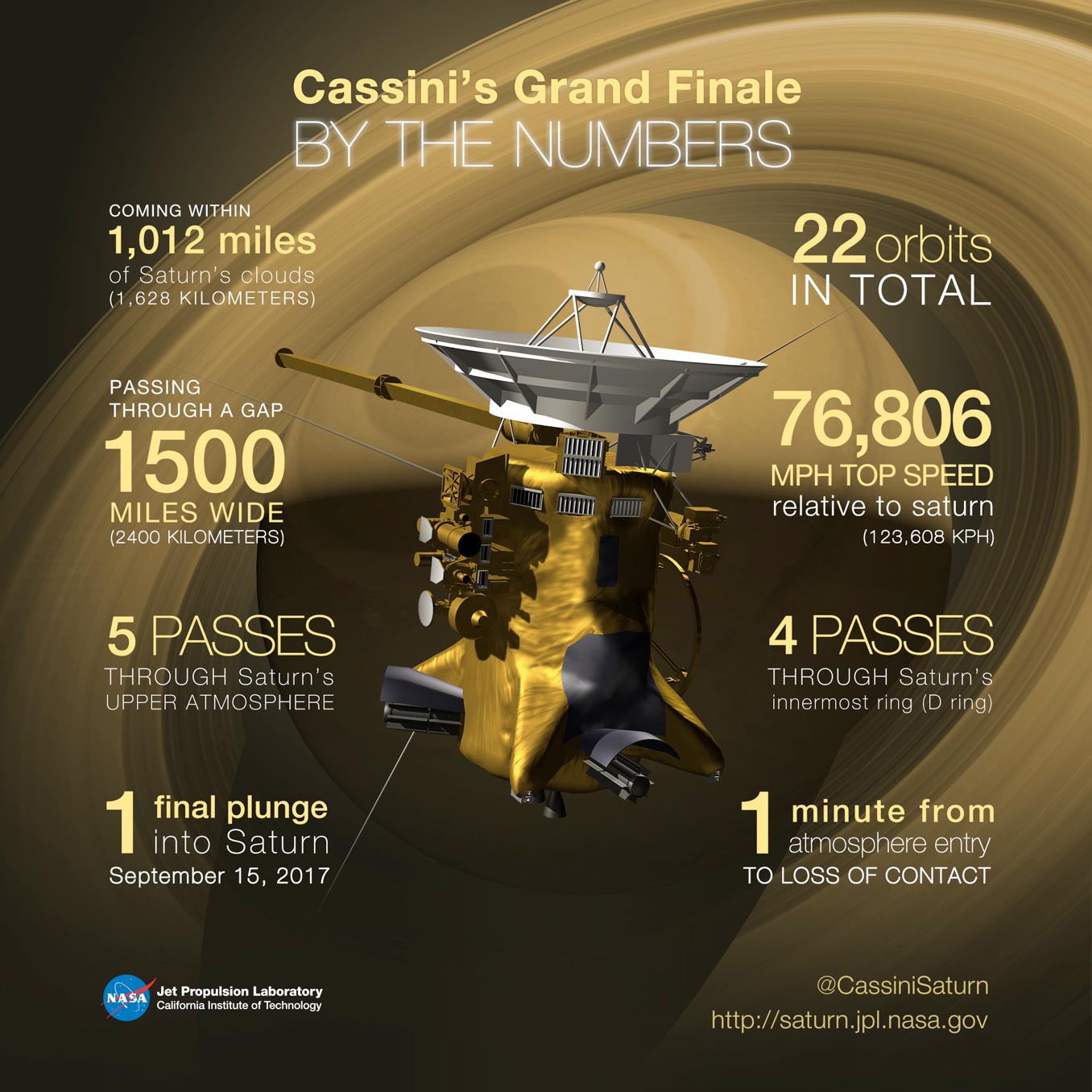
    Cassini Grand Finale Numbers Infographic
    Some key numbers for Cassini’s Grand Finale and final plunge into Saturn. Credit: NASA/JPL-Caltech

    NASA’s Cassini Spacecraft has completed its final flyby of Saturn’s moon Titan and will now begin its final set of 22 orbits around Saturn.

    The Cassini Spacecraft made its 127th and final close approach to Titan on April 21 at 11:08 p.m. PDT, passing at an altitude of about 608 miles (979 kilometers) above the moon’s surface.

    Cassini transmitted its images and other data to Earth following the encounter. Astronomers with Cassini’s radar investigation will be looking this week at their final set of new radar images of the hydrocarbon seas and lakes that spread across Titan’s north polar region. The planned imaging coverage includes a region previously seen by Cassini’s imaging cameras, but not by radar. The radar team also plans to use the new data to probe the depths and compositions of some of Titan’s small lakes for the first (and last) time, and look for further evidence of the evolving feature researchers have dubbed the “magic island.”

    Saturn Moon Titan Cassini Spacecraft Final Close Flyby
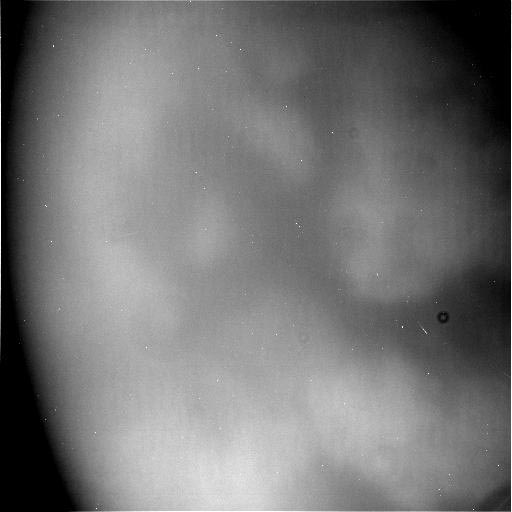
    This unprocessed image of Saturn’s moon Titan was captured by NASA’s Cassini spacecraft during its final close flyby of the hazy, planet-sized moon on April 21, 2017. Credit: NASA/JPL-Caltech/Space Science Institute

    “Cassini’s up-close exploration of Titan is now behind us, but the rich volume of data the spacecraft has collected will fuel scientific study for decades to come,” said Linda Spilker, the mission’s project scientist at NASA’s Jet Propulsion Laboratory in Pasadena, California.

    Gateway to the Grand Finale

    The flyby also put Cassini on course for its dramatic last act, known as the Grand Finale. As the spacecraft passed over Titan, the moon’s gravity bent its path, reshaping the robotic probe’s orbit slightly so that instead of passing just outside Saturn’s main rings, Cassini will begin a series of 22 dives between the rings and the planet on April 26. The mission will conclude with a science-rich plunge into Saturn’s atmosphere on September 15.
    Saturn Moon Titan NASA Cassini Spacecraft Final Close Flyby
    This unprocessed image of Saturn’s moon Titan was captured by NASA’s Cassini spacecraft during its final close flyby of the hazy, planet-sized moon on April 21, 2017. Credit: NASA/JPL-Caltech/Space Science Institute

    “With this flyby we’re committed to the Grand Finale,” said Earl Maize, Cassini project manager at JPL. “The spacecraft is now on a ballistic path, so that even if we were to forgo future small course adjustments using thrusters, we would still enter Saturn’s atmosphere on September 15 no matter what.”

    Cassini received a large increase in velocity of approximately 1,925 mph (precisely 860.5 meters per second) with respect to Saturn from the close encounter with Titan.

    Saturn Moon Titan NASA's Cassini Spacecraft Final Close Flyby
    This unprocessed image of Saturn’s moon Titan was captured by NASA’s Cassini spacecraft during its final close flyby of the hazy, planet-sized moon on April 21, 2017. Credit: NASA/JPL-Caltech/Space Science Institute

    After buzzing Titan, Cassini coasted onward, reaching the farthest point in its orbital path around Saturn at 8:46 p.m. PDT on April 22. This point, called apoapse, is where each new Cassini lap around Saturn begins. Technically, Cassini began its Grand Finale orbits at this time, but since the excitement of the finale begins in earnest on April 26 with the first ultra-close dive past Saturn, the mission is celebrating the latter milestone as the formal beginning of the finale.

    The spacecraft’s first finale dive will take place on April 26 at 2 a.m. PDT. The spacecraft will be out of contact during the dive and for about a day afterward while it makes science observations from close to the planet. The earliest time Cassini is scheduled to make radio contact with Earth is 12:05 a.m. PDT on April 27. Images and other data are expected to begin flowing in shortly after communication is established.


    A new narrated, 360-degree animated video gives viewers a sense of what it might be like to fly alongside Cassini as it makes one of its Grand Finale dives.


    The final chapter in a remarkable mission of exploration and discovery, Cassini’s Grand Finale is in many ways like a brand new mission. Twenty-two times, NASA’s Cassini spacecraft will dive through the unexplored space between Saturn and its rings. What we learn from these ultra-close passes over the planet could be some of the most exciting revelations ever returned by the long-lived spacecraft. This animated video tells the story of Cassini’s final, daring assignment and looks back at what the mission has accomplished.

    Never miss a breakthrough: Join the SciTechDaily newsletter.
    Follow us on Google and Google News.

    Astronomy Cassini-Huygens Mission Planetary Science Popular Saturn Titan
    Share. Facebook Twitter Pinterest LinkedIn Email Reddit

    Related Articles

    NASA’s Cassini Spacecraft Views a Cloudy Saturn and Titan

    Cassini Reveals Global Ocean in Saturn’s Moon Enceladus

    Cassini Reveals Incomplete Cooling Down of Saturn’s A Ring at Solar Equinox

    Cassini Reveals Titan’s Atmosphere Even More Earth-like Than Previously Thought

    Activity on Enceladus Could Be ‘Curtain Eruptions’

    Scientists Pinpoint the Position of Saturn

    Cassini Reveals Clues about Saturn’s Moon Titan

    Storm Spawns the Largest Tropospheric Vortex Ever Seen on Saturn

    Simulation May Explain Saturnian System

    Leave A Reply Cancel Reply

    • Facebook
    • Twitter
    • Pinterest
    • YouTube

    Don't Miss a Discovery

    Subscribe for the Latest in Science & Tech!

    Trending News

    New Pill Lowers Stubborn Blood Pressure and Protects the Kidneys

    Humans May Have Hidden Regenerative Powers, New Study Suggests

    Scientists Just Solved the Mystery of Why Crabs Walk Sideways

    Doctors Are Surprised by What This Vaccine Is Doing to the Heart

    This Popular Supplement May Boost Your Brain, Not Just Your Muscles

    Scientists Say This Simple Supplement May Actually Reverse Heart Disease

    Warming Oceans Could Trigger a Dangerous Methane Surge

    This Simple Movement Could Be Secretly Cleaning Your Brain

    Follow SciTechDaily
    • Facebook
    • Twitter
    • YouTube
    • Pinterest
    • Newsletter
    • RSS
    SciTech News
    • Biology News
    • Chemistry News
    • Earth News
    • Health News
    • Physics News
    • Science News
    • Space News
    • Technology News
    Recent Posts
    • Researchers Discover Efficient New Way To Split Hydrogen From Water for Energy
    • This Korean Skincare Ingredient Could Help Fight Deadly Superbugs
    • Giant Squid Detected off Western Australia in Stunning Deep-Sea Discovery
    • Popular Sugar-Free Sweetener Linked to Liver Disease, Study Warns
    • Why Weight Loss Isn’t Enough for Everyone at Risk of Diabetes
    Copyright © 1998 - 2026 SciTechDaily. All Rights Reserved.
    • Science News
    • About
    • Contact
    • Editorial Board
    • Privacy Policy
    • Terms of Use

    Type above and press Enter to search. Press Esc to cancel.