
Close Menu
    Facebook X (Twitter) Instagram
    SciTechDaily
    • Biology
    • Chemistry
    • Earth
    • Health
    • Physics
    • Science
    • Space
    • Technology
    Facebook X (Twitter) Pinterest YouTube RSS
    SciTechDaily
    Home»Space»NASA’s Interstellar Boundary Explorer Provides New Details on Solar System Boundary
    Space

    NASA’s Interstellar Boundary Explorer Provides New Details on Solar System Boundary

    By Maria Stothoff, Southwest Research Institute; Karen C. Fox, NASA's Goddard Space Flight CenterOctober 20, 20151 Comment3 Mins Read
    Facebook Twitter Pinterest Telegram LinkedIn WhatsApp Email Reddit
    Share
    Facebook Twitter LinkedIn Pinterest Telegram Email Reddit
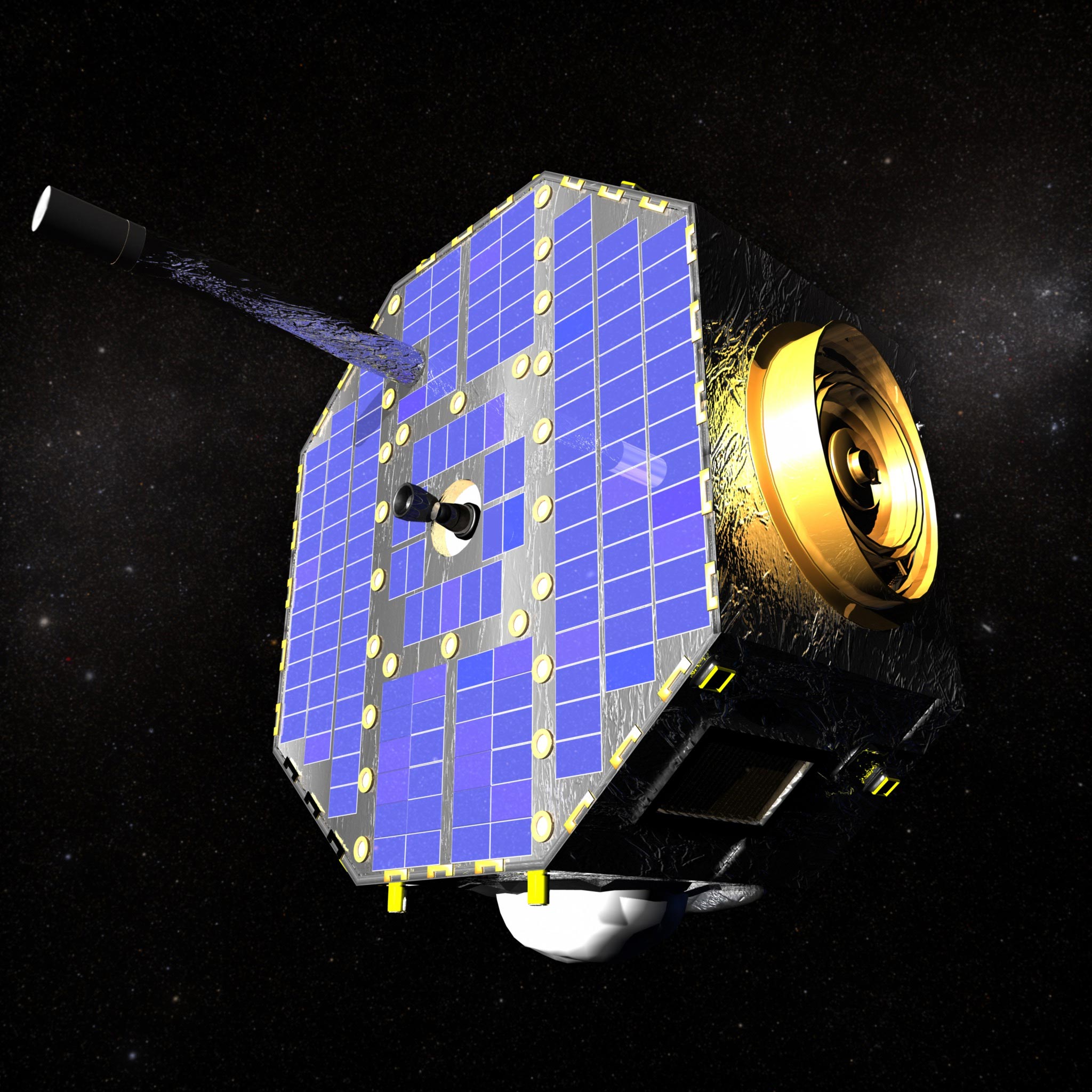
    Interstellar Boundary Explorer (IBEX) Spacecraft
    An artist’s rendition of NASA’s Interstellar Boundary Explorer, or IBEX, in space, where it collects observations of the boundaries of our solar system. Credit: NASA

    New research from NASA’s Interstellar Boundary Explorer (IBEX) mission provides the most definitive analyses, theories and results about local interstellar space to date. The new research is published in 14 papers in the October 2015 Astrophysical Journal Supplement.

    IBEX uses energetic neutral atom imaging to examine how our heliosphere, the magnetic bubble in which our sun and planets reside, interacts with interstellar space. IBEX created the first global maps showing these interactions and how they change over time. IBEX also directly measures interstellar neutral atoms flowing into the solar system; the journal’s special issue focuses on these particles.

    “Over the past six years, this fundamental work focused on our place in the solar system has become the gold standard for understanding our sun, our heliosphere, and the interstellar environment around us,” said David McComas, principal investigator of the IBEX mission at the Southwest Research Institute, or SwRI, in San Antonio, Texas.


    This animation shows how IBEX captures neutral atoms from beyond the boundaries of the solar system to observe our local interstellar neighborhood. Credit: NASA Goddard’s Conceptual Image Lab

    Eight papers highlight the interstellar helium measurements taken by IBEX and the joint European Space Agency and NASA Ulysses spacecraft, which launched in 1990. These are the only two spacecraft to have directly measured the local interstellar flow of these helium atoms. The studies resolved an inconsistency in the direction and temperature of the interstellar flow in the data gathered by Ulysses compared to those taken by IBEX. Both data sets now affirm that the local interstellar flow is significantly hotter than believed previously based on the Ulysses observations alone, and provide insight into the direction the heliosphere is moving through the local material in the galaxy, as well as how fast it is traveling.

    Two papers examine aspects of determining the composition of interstellar particles, looking closely at oxygen, helium, and neon, as well as how those and other particles are effectively measured. The final four papers discuss analysis techniques and related theoretical considerations, such as the effects of radiation pressure and how planetary gravity affects the course of neutral atoms as they travel through the heliosphere.

    “Collectively, these papers represent a huge step forward in our understanding of the interstellar medium in the heliophysics community,” said McComas.

    Initially, a two-year mission, funding for IBEX has been extended through 2017, with the potential for mission extensions beyond that. IBEX is one of NASA’s series of low-cost, rapidly developed Heliophysics Small Explorer space missions.

    “For a Small Explorer, the scientific output has been tremendous,” said Eric Christian, IBEX mission scientist at NASA’s Goddard Space Flight Center in Greenbelt, Maryland. “These 14 new papers seven years after launch show just how exciting a mission this is.”

    The Southwest Research Institute in San Antonio, Texas, leads IBEX with teams of national and international partners. NASA Goddard manages the Explorers Program for the agency’s Heliophysics Division within the Science Mission Directorate in Washington.

    Never miss a breakthrough: Join the SciTechDaily newsletter.
    Follow us on Google and Google News.

    Astronomy Astrophysics Cosmology Heliophysics IBEX NASA NASA Goddard Space Flight Center Solar System
    Share. Facebook Twitter Pinterest LinkedIn Email Reddit

    Related Articles

    Webb Explores Cosmic Dawn: Witnessing the First Galaxies Feeding on Cold Gas

    Hubble Detects Mysterious Ghostly Glow Surrounding Our Solar System 

    “Deflated Croissant” – Uncovering the True Shape of Our Solar System

    NASA’s Interstellar Boundary Explorer Charts 11 Years of Change to Heliosphere

    Astronomers Discover X-Ray Echoes from a Black Hole That Shattered a Passing Star

    NASA’s Solar and Heliospheric Observatory Celebrates 20 Years of Science

    NASA’s Voyager 1 Continues to Help Solve the Interstellar Medium Mystery

    IBEX Explores the Magnetic System Beyond the Solar Wind

    IBEX Reveals First View of the Solar System’s Tail, The Heliotail

    1 Comment

    1. Brian Tray on October 20, 2015 9:44 pm

      WOW….if this doesn’t support the model of cosmology put forward by electric universe theorists then what would??
      This is absolute vindication for Wal Thornhill, Donald Scott and others.
      AMAZING!! This work has to have 99.9% of cosmologists and astrophysicists running for cover.

      Reply
    Leave A Reply Cancel Reply

    • Facebook
    • Twitter
    • Pinterest
    • YouTube

    Don't Miss a Discovery

    Subscribe for the Latest in Science & Tech!

    Trending News

    Wasp Colonies Explode Into Violence After Losing Their Queen

    Scientists Create “Living Plastic” That Self-Destructs in Just Six Days

    Your Blood May Carry a 700-Million-Year-Old Secret

    Scientists Discover Some “Zombie Cells” May Actually Help You Live Longer

    Earth May Be Seeding Venus With Life, According to New Research

    What Scientists Found Inside a 117-Year-Old Woman Reveals New Clues to Long Life

    Scientists Discover Mysterious Creature Living in the Great Salt Lake – and It Exists Nowhere Else on Earth

    It’s Alive? Surprising Discovery Changes What We Know About Fog

    Follow SciTechDaily
    • Facebook
    • Twitter
    • YouTube
    • Pinterest
    • Newsletter
    • RSS
    SciTech News
    • Biology News
    • Chemistry News
    • Earth News
    • Health News
    • Physics News
    • Science News
    • Space News
    • Technology News
    Recent Posts
    • Scientists Discover a Bizarre Crocodile Cousin That Walked Like a Dinosaur
    • How Pigeons Find Their Way Home May Finally Be Solved
    • This Dinosaur Had the Claws of a Raptor but Hunted Like a Heron
    • Doctors May Need To Rethink Calcium and Vitamin D Recommendations After Major Review
    • Researchers Suspected Brain Inflammation in Long COVID but Found Something Else
    Copyright © 1998 - 2026 SciTechDaily. All Rights Reserved.
    • Science News
    • About
    • Contact
    • Editorial Board
    • Privacy Policy
    • Terms of Use

    Type above and press Enter to search. Press Esc to cancel.