
Close Menu
    Facebook X (Twitter) Instagram
    SciTechDaily
    • Biology
    • Chemistry
    • Earth
    • Health
    • Physics
    • Science
    • Space
    • Technology
    Facebook X (Twitter) Pinterest YouTube RSS
    SciTechDaily
    Home»Technology»NASA’s Jet Propulsion Laboratory: Creating Robots to Go Where Humans Can’t
    Technology

    NASA’s Jet Propulsion Laboratory: Creating Robots to Go Where Humans Can’t

    By Jet Propulsion LaboratoryJune 6, 2021No Comments3 Mins Read
    Facebook Twitter Pinterest Telegram LinkedIn WhatsApp Email Reddit
    Share
    Facebook Twitter LinkedIn Pinterest Telegram Email Reddit
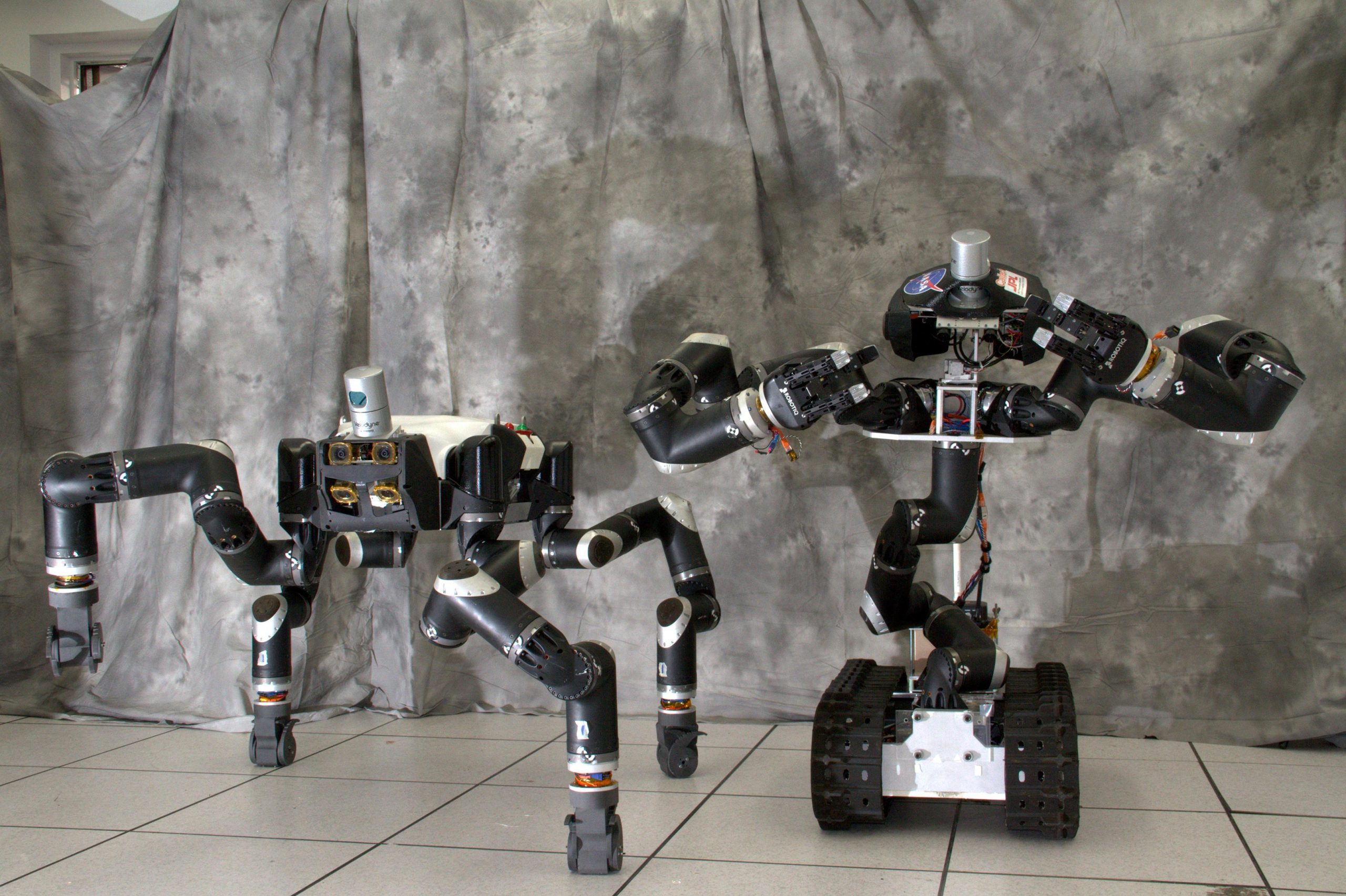
    JPL's RoboSimian and Surrogate Robots
    RoboSimian and Surrogate are robots that were designed and built at NASA’s Jet Propulsion Laboratory in Pasadena, California. Credit: JPL-Caltech

    From rock walls to icy moons, JPL’s next-gen robots climb, roll, and dive into space’s harshest terrains with autonomy and ingenuity.

    JPL is the lead NASA center for robotic exploration, which means we send robots, not humans, into space.

    NASA has plans in the works to overcome huge challenges and send humans to Mars. In the meantime, we’ve been sending rovers, landers, and orbiters to the surface of the Red Planet, and developing technologies to dispatch more advanced robots to other solar system destinations, such as the Moon, asteroids, and Jupiter’s icy moon Europa.

    Many locales include such obstacles as craggy cliffs, steep canyons, and slick ice covering a subsurface ocean. We need to design and build robots that can safely navigate and survive those challenging features and serve as our agile stand-in explorers.

    JPL has developed sophisticated software for all the Mars rovers we’ve sent that lets us maintain control here on Earth. Yet we also write software that allows the rovers to drive on the Martian surface as independently as possible, place instruments on the surface, and use their cameras and other instruments to see and sense their surroundings.

    Going Out on a Limb for Exploration

    To explore future solar system destinations, we’re experimenting with various designs using limbs and wheels.

    For example, a four-limbed, 64-fingered rover named LEMUR (Limbed Excursion Mechanical Utility Robot) was developed to scale rock walls by gripping with hundreds of tiny fish hooks on each finger. That test project led to a new generation of robots that can walk, climb, crawl, and even use grippers like a gecko to attach to surfaces.

    As for robots that roll … JPL is, in fact, reinventing the wheel, or at least various wheeled vehicles. The Axel Rover has two wheels and a link that trails behind, and a more recent DuAxel attaches two Axel Rovers to one another. They roll along as a duo until they encounter a steep slope. That’s when the two Axels separate, remaining attached only by a tether, while one rolls away to rappel down the slope, then return to its partner. Other two-wheelers include a small, foldable, shoebox-sized robot called A-PUFFER that could someday scour areas of the Moon not accessible to astronauts, and BRUIE, a submersible rover that could eventually explore the subsurface oceans of the solar system’s icy moons.

    These multiple configurations provide more options for exploring Earth’s Moon, Mars, and possibly Europa. And for above-surface exploration, prototype airships are being tested to fly through the atmospheres of Venus and Saturn’s moon Titan. Future helicopter designs are being developed, to follow up on the Mars Helicopter carried by the Mars 2020 Perseverance rover.

    Never miss a breakthrough: Join the SciTechDaily newsletter.
    Follow us on Google and Google News.

    JPL NASA Robotics
    Share. Facebook Twitter Pinterest LinkedIn Email Reddit

    Related Articles

    Could NASA’s Tiny Robots Discover Life on Europa?

    Moon’s New Scouts: NASA’s Autonomous Rovers Ready To Roll On Lunar Terrain

    Shape-Shifting Serpent of Space: NASA’s EELS Robot Revolutionizes Extraterrestrial Exploration

    NASA Revolutionary New Robotic Arm Really Knows How To Chill Out

    NASA Robots Compete in DARPA’s Subterranean Challenge Final

    NASA Aquatic Rover, Designed to Search for Alien Life, Goes for a Drive Under the Ice

    Engineers Developing ‘Hedgehog’ Robots That Hop and Tumble in Microgravity

    Ape-Like RoboSimian Robot in Development

    Robonaut 2: A Robotic Space Station Crew Member

    Leave A Reply Cancel Reply

    • Facebook
    • Twitter
    • Pinterest
    • YouTube

    Don't Miss a Discovery

    Subscribe for the Latest in Science & Tech!

    Trending News

    Popular Supplement Ingredient Linked to Shorter Lifespan in Men

    Scientists May Have Found a Way To Repair Nerve Damage in Multiple Sclerosis

    “Totally Unexpected” – Scientists Discover Pancreatic Cancer’s Fatal Addiction

    A Strange Quantum Effect May Explain One of Biology’s Greatest Mysteries

    James Webb Telescope Reveals the Universe’s Hidden Cosmic Web in Stunning Detail

    Scientists Identify Simple Supplement That Greatly Reduces Alzheimer’s Damage

    You May Have a Dangerous Type of Cholesterol Even if Your Tests Look Normal

    Your Blood Pressure Reading Could Be Wrong Because of One Simple Mistake

    Follow SciTechDaily
    • Facebook
    • Twitter
    • YouTube
    • Pinterest
    • Newsletter
    • RSS
    SciTech News
    • Biology News
    • Chemistry News
    • Earth News
    • Health News
    • Physics News
    • Science News
    • Space News
    • Technology News
    Recent Posts
    • Researchers Found a Surprisingly Realistic Way To Mine Asteroids for Mars
    • Europe Just Unveiled a Serious Rival to SpaceX’s Starship
    • Scientists May Have Solved Two of Fusion Energy’s Biggest Problems at Once
    • Scientists Discover Hidden “Switch” That Burns Fat and Could Treat Bone Disease
    • Deadly Hantavirus Outbreak on Cruise Ship Sparks Global Health Alert
    Copyright © 1998 - 2026 SciTechDaily. All Rights Reserved.
    • Science News
    • About
    • Contact
    • Editorial Board
    • Privacy Policy
    • Terms of Use

    Type above and press Enter to search. Press Esc to cancel.