

Lunar Trailblazer was set to map the Moon’s water in unprecedented detail but was lost after a communications failure soon after launch. Global tracking efforts failed to revive it, yet its technology and lessons learned will aid future missions.
Mission Ends After Communication Loss
NASA’s Lunar Trailblazer mission officially concluded on July 31 after repeated attempts to reestablish contact failed. Communication with the spacecraft was lost the day after its February 26 launch, and despite months of effort, two-way contact was never restored.
The spacecraft’s primary goal was to create detailed, high-resolution maps of water across the Moon’s surface, revealing its form, quantity, and seasonal changes. Such information would have been invaluable for upcoming robotic and crewed lunar missions, potential commercial ventures, and advancing scientific knowledge about how water cycles operate on airless worlds throughout the solar system.
Lunar Trailblazer launched alongside the second Intuitive Machines robotic lunar lander mission (IM-2) at 7:16 p.m. EST on February 26, riding aboard a SpaceX Falcon 9 from NASA’s Kennedy Space Center in Florida. The small satellite separated from the rocket approximately 48 minutes after liftoff and began its journey toward the Moon. Operators at Caltech’s IPAC in Pasadena established initial contact at 8:13 p.m. EST, but communication was lost the following day.
Without a working two-way communications link, the team could not fully diagnose technical issues or carry out the thruster maneuvers required to maintain the spacecraft’s trajectory.

High-Risk Missions and Lessons Learned
“At NASA, we undertake high-risk, high-reward missions like Lunar Trailblazer to find revolutionary ways of doing new science,” said Nicky Fox, associate administrator, Science Mission Directorate at NASA Headquarters in Washington. “While it was not the outcome we had hoped for, mission experiences like Lunar Trailblazer help us to learn and reduce the risk for future, low-cost small satellites to do innovative science as we prepare for a sustained human presence on the Moon. Thank you to the Lunar Trailblazer team for their dedication in working on and learning from this mission through to the end.”
Limited data received before contact was lost suggested the spacecraft’s solar arrays were not properly aligned with the Sun. As a result, its batteries could not recharge and were eventually depleted.
Global Effort to Regain Contact
For several months, collaborating organizations around the world — many of which volunteered their assistance — listened for the spacecraft’s radio signal and tracked its position. Ground radar and optical observations indicated that Lunar Trailblazer was in a slow spin as it headed farther into deep space.
“As Lunar Trailblazer drifted far beyond the Moon, our models showed that the solar panels might receive more sunlight, perhaps charging the spacecraft’s batteries to a point it could turn on its radio,” said Andrew Klesh, Lunar Trailblazer’s project systems engineer at NASA’s Jet Propulsion Laboratory in Southern California. “The global community’s support helped us better understand the spacecraft’s spin, pointing, and trajectory. In space exploration, collaboration is critical — this gave us the best chance to try to regain contact.”
However, as time passed, Lunar Trailblazer became too distant to recover as its telecommunications signals would have been too weak for the mission to receive telemetry and to command.
Technological Legacy Lives On
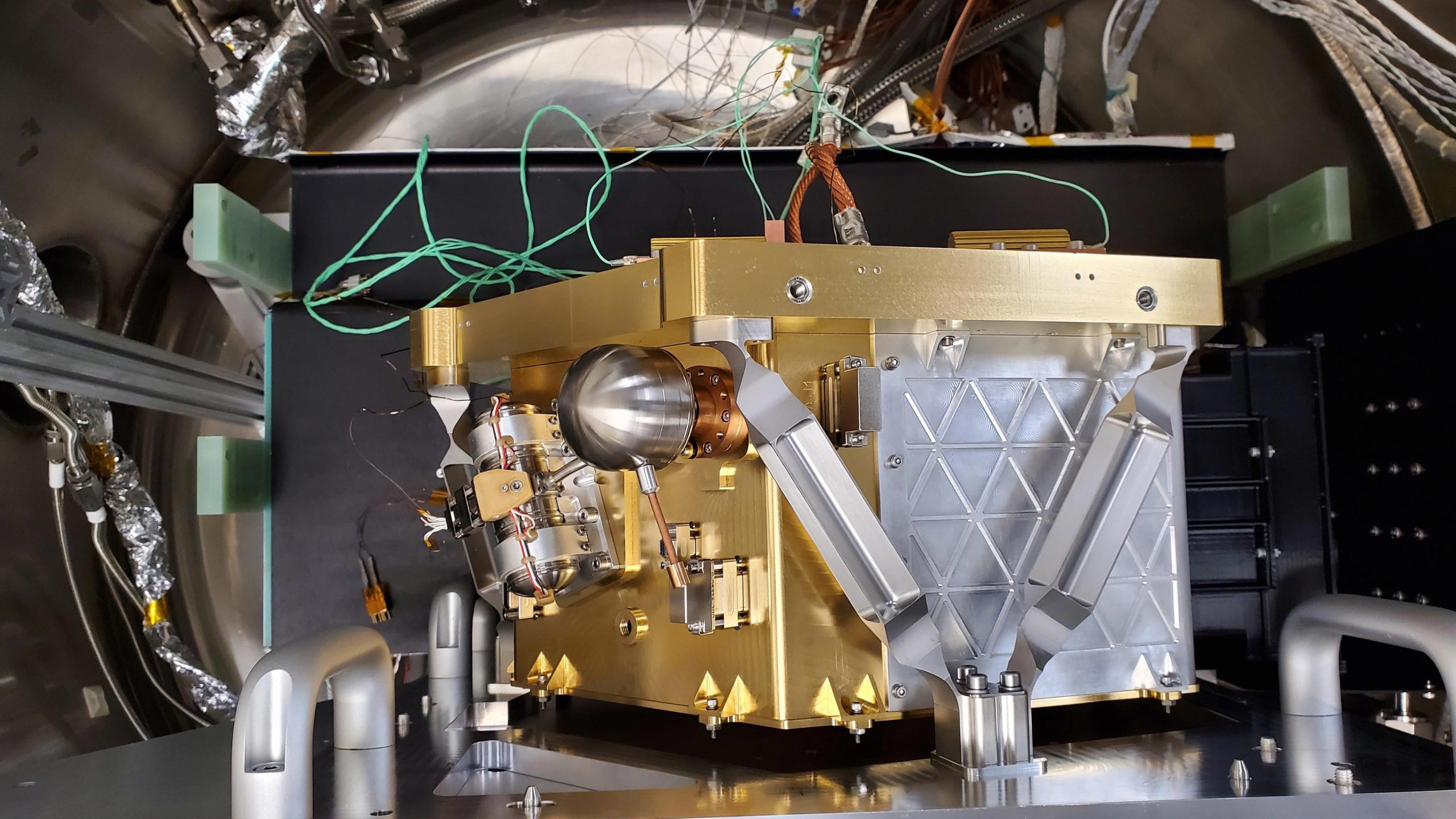
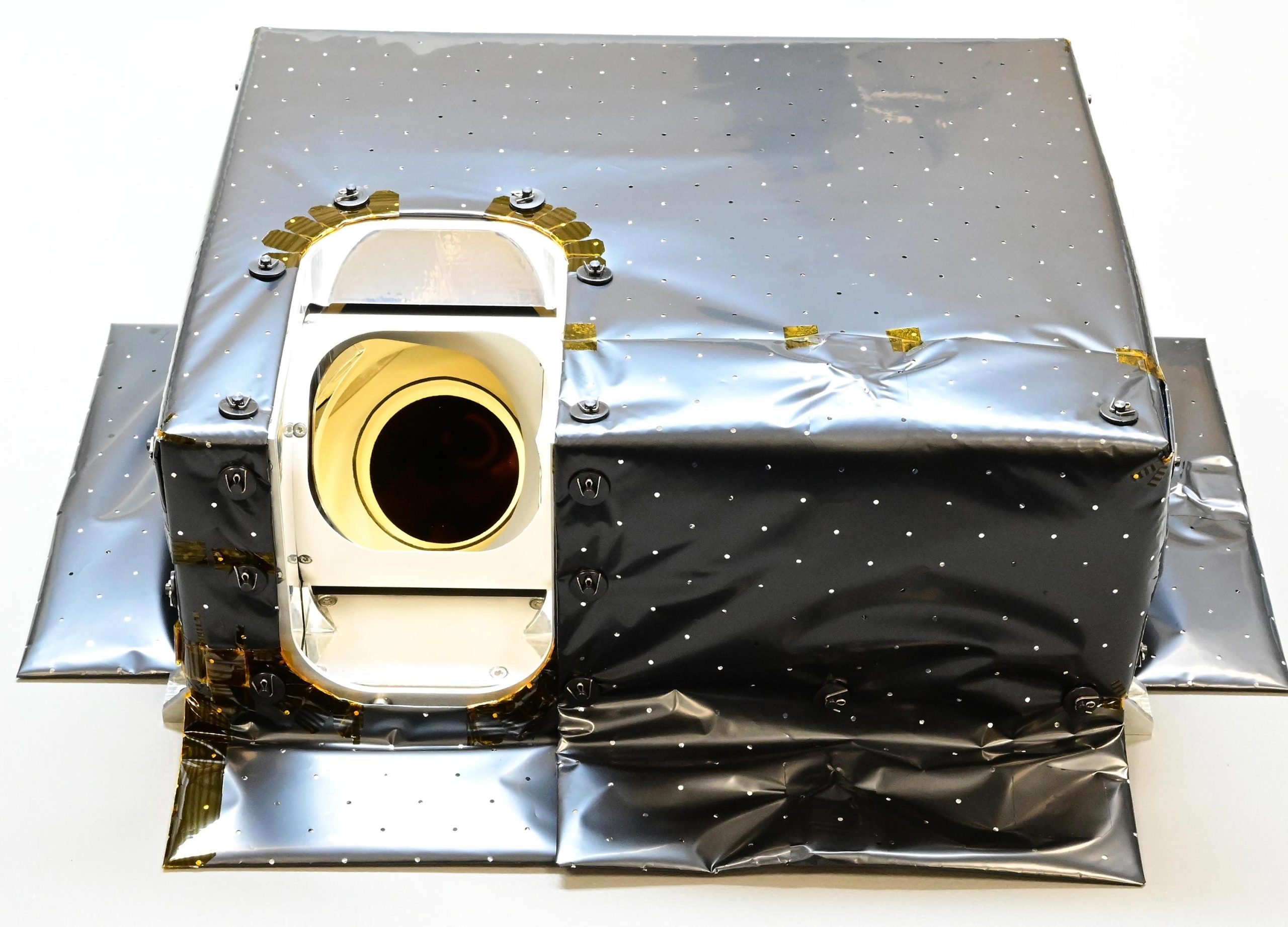
The small satellite’s High-resolution Volatiles and Minerals Moon Mapper (HVM3) imaging spectrometer was built by JPL to detect and map the locations of water and minerals. The mission’s Lunar Thermal Mapper (LTM) instrument was built by the University of Oxford in the United Kingdom and funded by the UK Space Agency to gather temperature data and determine the composition of silicate rocks and soils to improve understanding of why water content varies over time.
“We’re immensely disappointed that our spacecraft didn’t get to the Moon, but the two science instruments we developed, like the teams we brought together, are world class,” said Bethany Ehlmann, the mission’s principal investigator at Caltech. “This collective knowledge and the technology developed will cross-pollinate to other projects as the planetary science community continues work to better understand the Moon’s water.”
Future Missions to Benefit from Trailblazer Tech
Some of that technology will live on in the JPL-built Ultra Compact Imaging Spectrometer for the Moon (UCIS-Moon) instrument that NASA recently selected for a future orbital flight opportunity. The instrument, which has has an identical spectrometer design as HVM3, will provide the Moon’s highest spatial resolution data of surface lunar water and minerals.
More About Lunar Trailblazer
Lunar Trailblazer was a small, high-risk, high-reward Moon mission selected under NASA’s SIMPLEx (Small Innovative Missions for Planetary Exploration) program, which enables low-cost science spacecraft to hitch a ride with larger missions. In exchange for keeping costs down, SIMPLEx missions accept a higher level of risk and operate under lighter oversight, allowing NASA to test innovative mission approaches while expanding its portfolio of targeted science projects.
Led by Caltech, which manages JPL for NASA, the mission aimed to map water on the Moon in unprecedented detail. Caltech’s IPAC handled mission operations — including planning, scheduling, and activity sequencing — while NASA’s Jet Propulsion Laboratory provided systems engineering, mission assurance, navigation, and the High-resolution Volatiles and Minerals Moon Mapper (HVM3) instrument. The spacecraft itself came from Lockheed Martin Space, which also integrated the flight system and supported operations. The University of Oxford contributed the Lunar Thermal Mapper (LTM), funded by the UK Space Agency.
Lunar Trailblazer was part of NASA’s Lunar Discovery and Exploration Program and managed by the Planetary Missions Program Office at Marshall Space Flight Center in Huntsville, Alabama, for the agency’s Science Mission Directorate in Washington.
Never miss a breakthrough: Join the SciTechDaily newsletter.
Follow us on Google and Google News.
1 Comment
Well I guess “scientists” need AI to consider the obvious. various potentials could be collated into a space crafts and habitats design regime – and be tool that may help through early design stages.