
Close Menu
    Facebook X (Twitter) Instagram
    SciTechDaily
    • Biology
    • Chemistry
    • Earth
    • Health
    • Physics
    • Science
    • Space
    • Technology
    Facebook X (Twitter) Pinterest YouTube RSS
    SciTechDaily
    Home»Space»NASA’s Lunar Trailblazer: Major Milestone for Moon Water Mapping Spacecraft
    Space

    NASA’s Lunar Trailblazer: Major Milestone for Moon Water Mapping Spacecraft

    By NASASeptember 12, 2024No Comments4 Mins Read
    Facebook Twitter Pinterest Telegram LinkedIn WhatsApp Email Reddit
    Share
    Facebook Twitter LinkedIn Pinterest Telegram Email Reddit
    Lunar Trailblazer
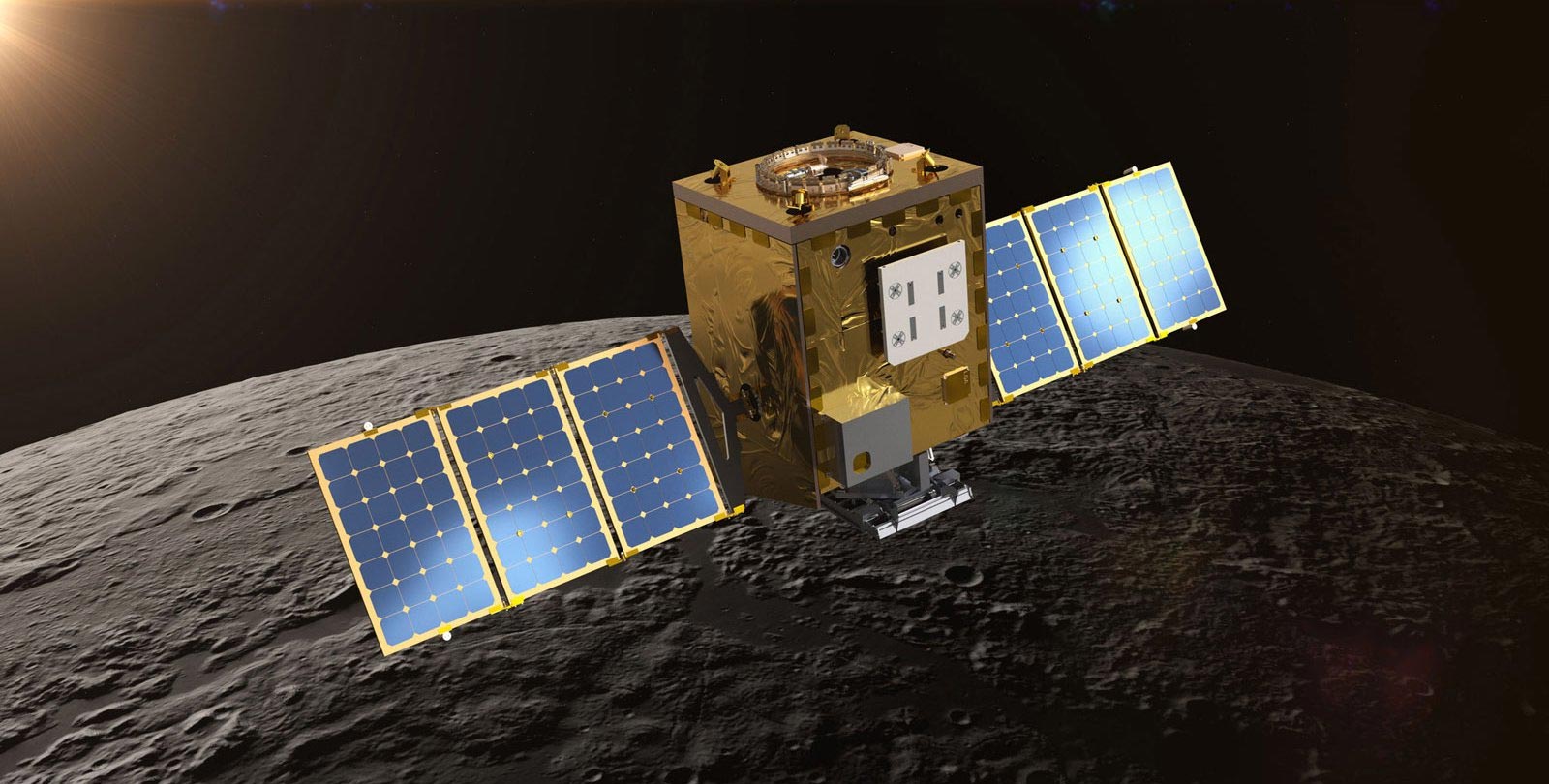
    Peering into the Moon’s permanently shadowed regions, Lunar Trailblazer will detect signatures of water ice in reflected light, and it will pinpoint the locations of micro-cold traps less than a football field in size. Credit: Lockheed Martin

    Lunar Trailblazer, a compact satellite developed by NASA and managed by Lockheed Martin and Caltech, has completed rigorous environmental tests and is undergoing final software trials.

    This preparation aims to ensure the satellite can withstand the extreme conditions of space and successfully execute its mission to map water resources on the Moon. The spacecraft is set to hitch a ride to the Moon as part of a commercial lunar lander mission in late 2024, promising critical data for future lunar exploration.

    Pre-Launch Testing and Development

    NASA’s Lunar Trailblazer spacecraft recently completed the shaking, chilling, baking, and other testing needed to ensure it can survive launch and the harsh conditions of space.

    Now that environmental testing is done, the spacecraft team at Lockheed Martin Space in Littleton, Colorado, is putting the orbiter and its science instruments through flight system software tests that simulate key aspects of launch, maneuvers, and the science mission while in orbit around the Moon.

    At the same time, the operations team led by IPAC at Caltech in Pasadena, California, is conducting tests to simulate commanding, communication with NASA’s Deep Space Network, and navigation.

    NASA Lunar Trailblazer Spacecraft in Clean Room
    NASA’s Lunar Trailblazer spacecraft in a clean room after undergoing environmental testing at Lockheed Martin Space. The tests mark the latest milestone as the mission prepares for launch in the fourth quarter of 2024 with an extended mission window reaching into January 2025. Credit: Lockheed Martin Space

    Mission Objectives and Satellite Details

    Just 440 pounds (200 kilograms) and 11.5 feet (3.5 meters) wide with its solar panels fully deployed, the small satellite will help scientists determine the abundance, location, and form of water on the Moon, as well as its variation over the course of a lunar day. This data will be key to our understanding of this crucial resource on the Moon for future exploration.

    The mission’s two science instruments were integrated with the spacecraft last year. The High-resolution Volatiles and Minerals Moon Mapper was developed by NASA’s Jet Propulsion Laboratory in Southern California, and the Lunar Thermal Mapper is from the University of Oxford and funded by the United Kingdom Space Agency.

    Lunar Trailblazer will launch as a “rideshare,” a secondary payload on the second lunar lander mission by Intuitive Machines, called IM-2, which is part of NASA’s CLPS (Commercial Lunar Payload Services) initiative. Launch preparations are expected to begin in the fourth quarter of 2024 with an extended mission window reaching into January 2025.

    About a month prior to launch, the Lunar Trailblazer spacecraft will ship from Lockheed Martin to NASA’s Kennedy Space Center in Florida. After final checkouts, it will be integrated into the launch vehicle.

    Mission Leadership and Framework

    The project is led by Principal Investigator Bethany Ehlmann of Caltech and managed by JPL, which is also providing systems engineering, navigation, and mission assurance. Caltech manages JPL for the agency.

    Lunar Trailblazer is part of NASA’s Small Innovative Missions for Planetary Exploration (SIMPLEx) program, which provides opportunities for low-cost, high-risk science missions that are responsive to requirements for flexibility. These lower-cost missions serve as an ideal platform for technical and architecture innovation, contributing to NASA’s science research and technology development objectives. SIMPLEx mission investigations are managed by the Planetary Missions Program Office at NASA’s Marshall Space Flight Center in Huntsville, Alabama, as part of the Discovery Program at NASA Headquarters in Washington. IPAC leads mission operations, including planning, scheduling, and sequencing all science and spacecraft activities.

    Never miss a breakthrough: Join the SciTechDaily newsletter.
    Follow us on Google and Google News.

    Lunar Trailblazer Moon NASA
    Share. Facebook Twitter Pinterest LinkedIn Email Reddit

    Related Articles

    A Secret Water Supply on the Moon? NASA’s Lunar Trailblazer Aims to Find It

    NASA’s Genius Plan to Use Gravity to Reach the Moon

    Watch Live: SpaceX Launch of Intuitive Machines IM-2 Lunar Lander and NASA’s Lunar Trailblazer

    Ice Hunt: How NASA’s Lunar Trailblazer Could Transform Moon Exploration

    NASA’s Lunar Trailblazer: Final Instrument Locked and Loaded for Moon Water Exploration

    Lunar Trailblazer: NASA Approves New Satellite to Map the Moon’s Surface

    Moon Data Allows Creation of Detailed Lunar 3-D Map

    NASA Plans Space Outpost on the Far Side of the Moon at Earth Moon Lagrange Point 2

    NASA’s GRAIL Mission Returns Video From Far Side of the Moon

    Leave A Reply Cancel Reply

    • Facebook
    • Twitter
    • Pinterest
    • YouTube

    Don't Miss a Discovery

    Subscribe for the Latest in Science & Tech!

    Trending News

    Millions Take These IBS Drugs, But a New Study Finds Serious Risks

    Scientists Unlock Hidden Secrets of 2,300-Year-Old Mummies Using Cutting-Edge CT Scanner

    Bread Might Be Making You Gain Weight Even Without Eating More Calories

    Scientists Discover Massive Magma Reservoir Beneath Tuscany

    Europe’s Most Active Volcano Just Got Stranger – Here’s Why Scientists Are Rethinking It

    Alzheimer’s Symptoms May Start Outside the Brain, Study Finds

    Millions Take This Popular Supplement – Scientists Discover a Concerning Link to Heart Failure

    The Universe Is Expanding Too Fast and Scientists Can’t Explain Why

    Follow SciTechDaily
    • Facebook
    • Twitter
    • YouTube
    • Pinterest
    • Newsletter
    • RSS
    SciTech News
    • Biology News
    • Chemistry News
    • Earth News
    • Health News
    • Physics News
    • Science News
    • Space News
    • Technology News
    Recent Posts
    • U.S. Waste Holds $5.7 Billion Worth of Crop Nutrients
    • Scientists Say a Hidden Structure May Exist Inside Earth’s Core
    • Doctors Surprised by the Power of a Simple Drug Against Colon Cancer
    • Why Popular Diabetes Drugs Like Ozempic Don’t Work for Everyone: The “Genetic Glitch”
    • Scientists Create Improved Insulin Cells That Reverse Diabetes in Mice
    Copyright © 1998 - 2026 SciTechDaily. All Rights Reserved.
    • Science News
    • About
    • Contact
    • Editorial Board
    • Privacy Policy
    • Terms of Use

    Type above and press Enter to search. Press Esc to cancel.