
Close Menu
    Facebook X (Twitter) Instagram
    SciTechDaily
    • Biology
    • Chemistry
    • Earth
    • Health
    • Physics
    • Science
    • Space
    • Technology
    Facebook X (Twitter) Pinterest YouTube RSS
    SciTechDaily
    Home»Space»NASA’s Planet Hunter TESS Creates a Cosmic Vista of the Northern Sky – Imaged 75% of the Sky So Far
    Space

    NASA’s Planet Hunter TESS Creates a Cosmic Vista of the Northern Sky – Imaged 75% of the Sky So Far

    By Francis Reddy, NASA’s Goddard Space Flight CenterOctober 13, 2020No Comments5 Mins Read
    Facebook Twitter Pinterest Telegram LinkedIn WhatsApp Email Reddit
    Share
    Facebook Twitter LinkedIn Pinterest Telegram Email Reddit
    TESS Northern Panorama
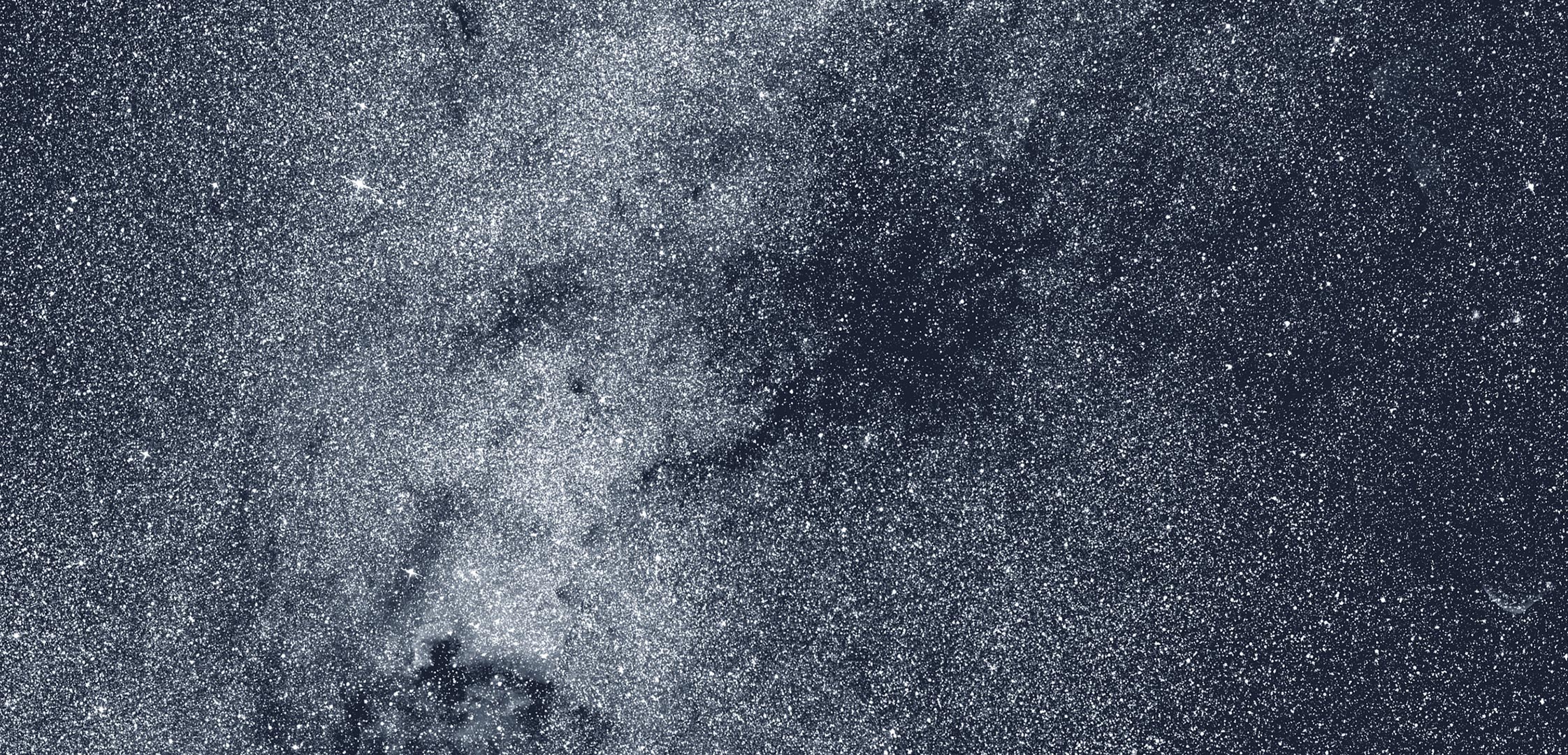
    This detail of the TESS northern panorama features a region in the constellation Cygnus. At center, the sprawling dark nebula Le Gentil 3, a vast cloud of interstellar dust, obscures the light of more distant stars. A prominent tendril extending to the lower left points toward the bright North America Nebula, glowing gas so named for its resemblance to the continent. Credit: NASA/MIT/TESS and Ethan Kruse (USRA)

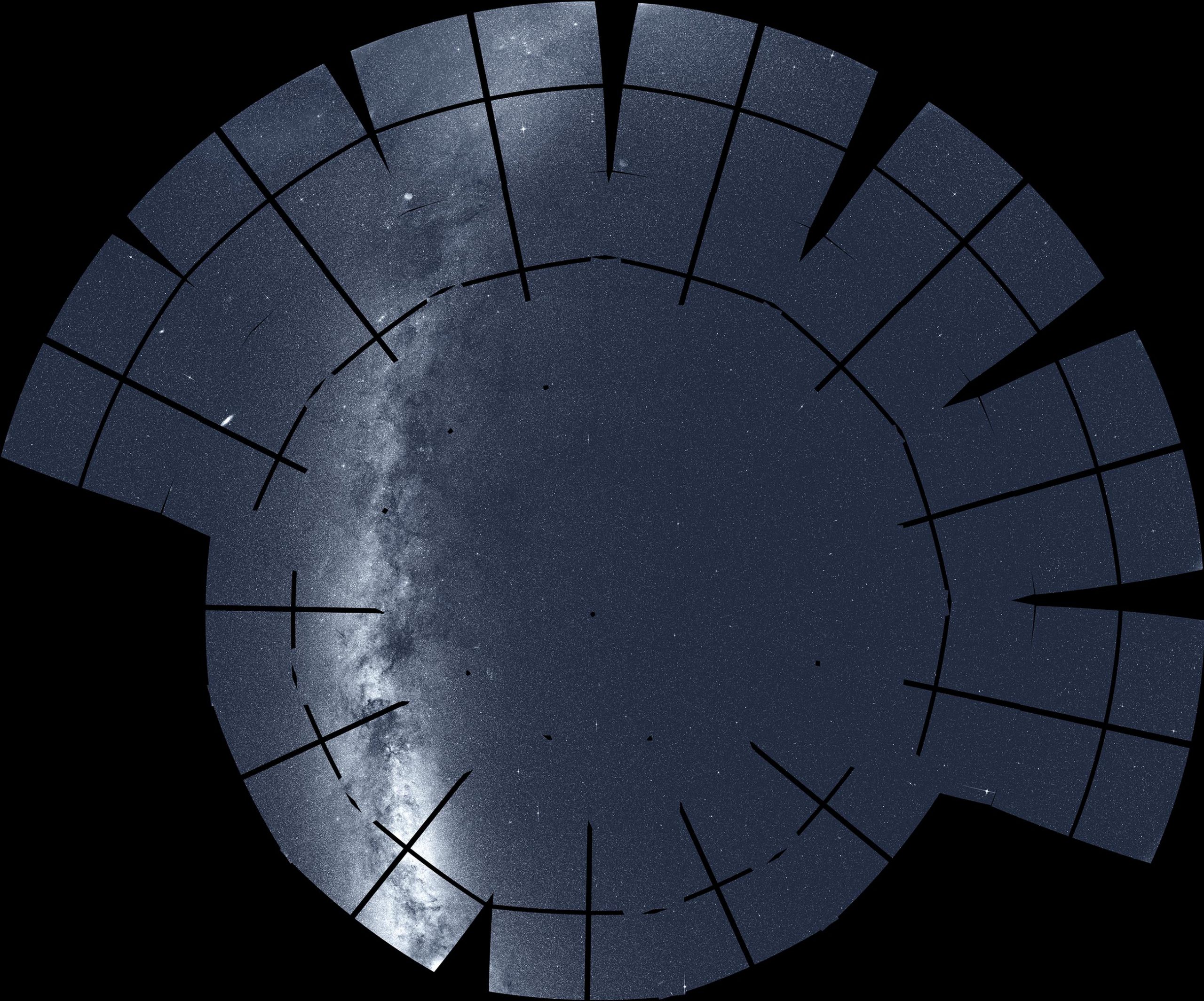
    Familiar stars shine, nebulae glow, and nearby galaxies tantalize in a new panorama of the northern sky assembled from 208 pictures captured by NASA’s Transiting Exoplanet Survey Satellite (TESS). The planet hunter imaged about 75% of the sky in a two-year-long survey and is still going strong.

    TESS has discovered 74 exoplanets, or worlds beyond our solar system. Astronomers are sifting through some 1,200 additional exoplanet candidates, where potential new worlds await confirmation. More than 600 of these candidates lie in the northern sky.


    NASA’s Transiting Exoplanet Survey Satellite (TESS) spent nearly a year imaging the northern sky in its search for worlds beyond our solar system. Tour this panorama to see what TESS has found so far. Credit: NASA’s Goddard Space Flight Center

    TESS locates planets by simultaneously monitoring many stars over large regions of the sky and watching for tiny changes in their brightness. When a planet passes in front of its host star from our perspective, it blocks some of the star’s light, causing it to temporarily dim. This event is called a transit, and it repeats with every orbit of the planet around the star. This technique has proven to be the most successful planet-finding strategy so far, accounting for about three quarters of the nearly 4,300 exoplanets now known. The data collected also allow for the study of other phenomena such as stellar variations and supernova explosions in unprecedented detail.

    The northern mosaic covers less of the sky than its southern counterpart, which was imaged during the mission’s first year of operations. For about half of the northern sectors, the team decided to angle the cameras further north to minimize the impact of scattered light from Earth and the Moon. This results in a prominent gap in coverage.
    TESS Northern Sky Vista
    This mosaic of the northern sky incorporates 208 images taken by NASA’s Transiting Exoplanet Survey Satellite (TESS) during its second year of science operations, completed in July 2020. The mission split the northern sky into 13 sectors, each of which was imaged for nearly a month by the spacecraft’s four cameras. Among the many notable celestial objects visible: the glowing arc and obscuring dust clouds of the Milky Way (left), our home galaxy seen edgewise; the Andromeda galaxy (oval, center left), our nearest large galactic neighbor located 2.5 million light-years away; and the North America Nebula (lower left), part of a stellar factory complex 1,700 light-years away. The prominent dark lines are gaps between the detectors in TESS’s camera system. Credit: NASA/MIT/TESS and Ethan Kruse (USRA)

    The northern panorama represents only a glimpse of the data TESS has returned. The mission splits each celestial hemisphere into 13 sectors. TESS imaged each sector for nearly a month using four cameras, which carry a total of 16 sensors called charge-coupled devices (CCDs). During its primary mission, the cameras captured a full sector of the sky every 30 minutes. This means each CCD acquired nearly 30,800 full science images. Adding in other measurements, TESS has beamed back more than 40 terabytes so far – equivalent to streaming some 12,000 high-definition movies.

    Remarkably, these numbers will rise sharply over the next year. TESS has now begun its extended mission, during which it will spend another year imaging the southern sky. The satellite will revisit planets discovered in its first year, find new ones, and fill in coverage gaps from its initial survey. Improvements to the satellite’s data collection and processing now allow TESS to return full sector images every 10 minutes and measure the brightness of thousands of stars every 20 seconds – all while continuing its previous strategy of measuring the brightness of tens of thousands of stars every two minutes.


    This animated all-sky map shows how the 416 images in the TESS northern and southern mosaics fit together. The images of each sector appear in the order TESS captured them. In this plot, the ecliptic – the plane of Earth’s orbit and the apparent yearly path of the Sun through the stars – runs straight across the middle of the map. Credit: NASA/MIT/TESS and Ethan Kruse (USRA)

    “These changes promise to make TESS’s extended mission even more fruitful,” said Padi Boyd, the mission’s project scientist at NASA’s Goddard Space Flight Center in Greenbelt, Maryland. “Making high-precision measurements of stellar brightness at these frequencies makes TESS an extraordinary new resource for studying flaring and pulsating stars and other transient phenomena, as well as for exploring the science of transiting exoplanets.”

    TESS is a NASA Astrophysics Explorer mission led and operated by MIT in Cambridge, Massachusetts, and managed by NASA’s Goddard Space Flight Center. Additional partners include Northrop Grumman, based in Falls Church, Virginia; NASA’s Ames Research Center in California’s Silicon Valley; the Harvard-Smithsonian Center for Astrophysics in Cambridge, Massachusetts; MIT’s Lincoln Laboratory; and the Space Telescope Science Institute in Baltimore. More than a dozen universities, research institutes, and observatories worldwide are participants in the mission.

    Never miss a breakthrough: Join the SciTechDaily newsletter.
    Follow us on Google and Google News.

    Astronomy Astrophysics NASA NASA Goddard Space Flight Center TESS
    Share. Facebook Twitter Pinterest LinkedIn Email Reddit

    Related Articles

    Worlds Beyond Our Solar System: NASA’s TESS Discovers Stellar Siblings Host “Teenage” Exoplanets

    NASA Investigates an “Old Faithful” Active Galaxy That Erupts Every 114 Days

    Swift, TESS Catch Eruptions from an Active Galaxy [Video]

    NASA’s TESS Creates a Cosmic Vista of the Northern Sky [Video]

    World Discovered Orbiting a Unique Young Star Provides Astronomers With a One-of-Kind Laboratory

    Perplexing Stellar Pulsations: Regular Rhythms Discovered in Mysterious Pulsating Stars

    Astronomers Discover a Super-Jupiter Around a Massive Star

    NASA Discovers a Surprising Trend in Galaxy Evolution

    Satellites Monitor the Colliding Winds of O-Type Stars

    Leave A Reply Cancel Reply

    • Facebook
    • Twitter
    • Pinterest
    • YouTube

    Don't Miss a Discovery

    Subscribe for the Latest in Science & Tech!

    Trending News

    Largest-Ever Study Finds Medicinal Cannabis Ineffective for Anxiety, Depression, PTSD

    250-Million-Year-Old Egg Solves One of Evolution’s Biggest Mysteries

    Living With Roommates Might Be Changing Your Gut Microbiome Without You Knowing

    Century-Old Cleaning Chemical Linked to 500% Increased Risk of Parkinson’s Disease

    What if Your Memories Never Happened? Physicists Take a New Look at the Boltzmann Brain Paradox

    One of the Universe’s Largest Stars May Be Getting Ready To Explode

    Scientists Discover Enzyme That Could Supercharge Ozempic-Like Weight Loss Drugs

    Popular Sweetener Linked to DNA Damage – “It’s Something You Should Not Be Eating”

    Follow SciTechDaily
    • Facebook
    • Twitter
    • YouTube
    • Pinterest
    • Newsletter
    • RSS
    SciTech News
    • Biology News
    • Chemistry News
    • Earth News
    • Health News
    • Physics News
    • Science News
    • Space News
    • Technology News
    Recent Posts
    • Scientists Say This Overlooked Organ Could Hold the Key to Longer Life
    • Want Less Stress? Landmark Study Points to a Simple Habit
    • Scientists Reveal Eating Fruits and Vegetables May Increase Your Risk of Lung Cancer
    • AI Reveals Explosive Growth of Floating Algae Across the World’s Oceans
    • 5.5 Million Bees Discovered Living Beneath a New York Cemetery
    Copyright © 1998 - 2026 SciTechDaily. All Rights Reserved.
    • Science News
    • About
    • Contact
    • Editorial Board
    • Privacy Policy
    • Terms of Use

    Type above and press Enter to search. Press Esc to cancel.